
Best Running Shoes For Plantar Fasciitis (2026): 8 Tested Picks From a Runner Who's Dealt With This Horrible Heel Pain
Shoes don't cure plantar fasciitis but the wrong ones keep you stuck in this injury cycle. My 8 tested picks for heel pain, from the Kayano 32 to the Bondi 9, plus what actually helps recovery.

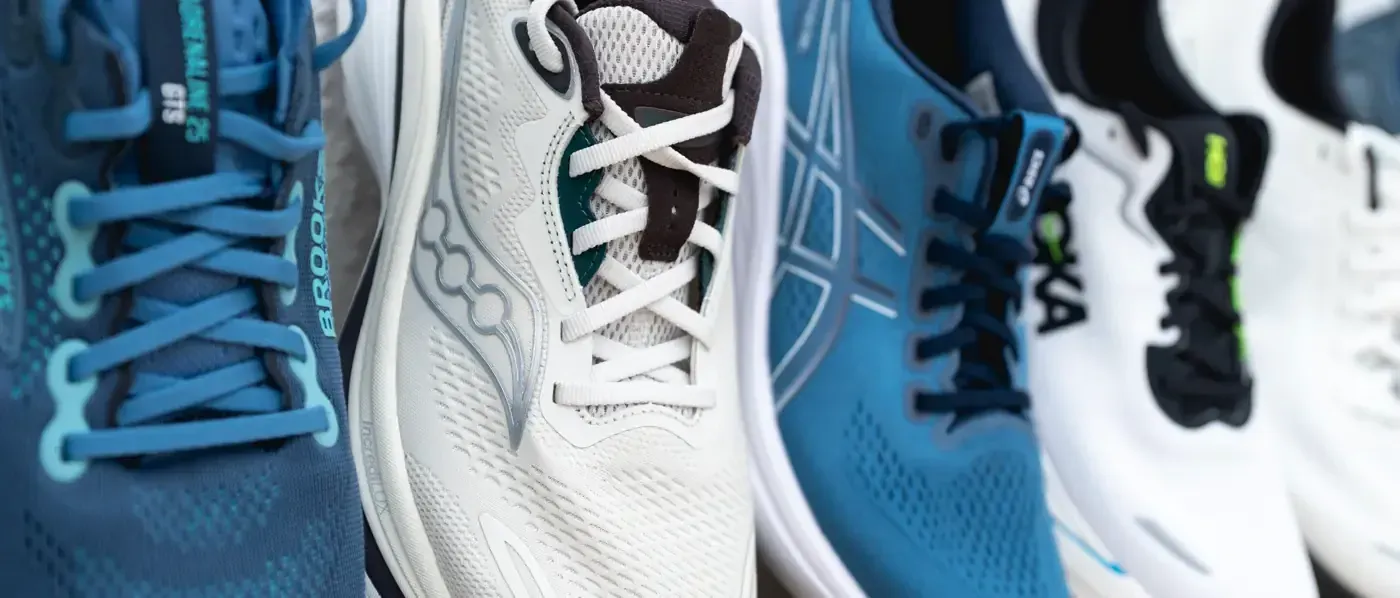
If the first few steps out of bed feel like standing on a stone bruise, you already know what plantar fasciitis is, and you're probably wondering whether a different pair of running shoes will fix it.
Here's the honest answer before we get into the picks: shoes don't cure plantar fasciitis. They can't.
But the wrong shoes will absolutely keep you stuck in the pain cycle, and the right ones genuinely help as they reduce the strain on the plantar fascia with every step, which is what gives the tissue a chance to calm down and heal.
This roundup features eight shoes I've personally tested, every one chosen against the criteria podiatrists and biomechanics researchers actually agree on for plantar fasciitis.
Running With Plantar Fasciitis: The Recovery Roadmap
The exact recovery protocol that got me back to pain-free running after a stubborn plantar fasciitis flare up; no filler, just what actually works for runners.
 Alastair Dixon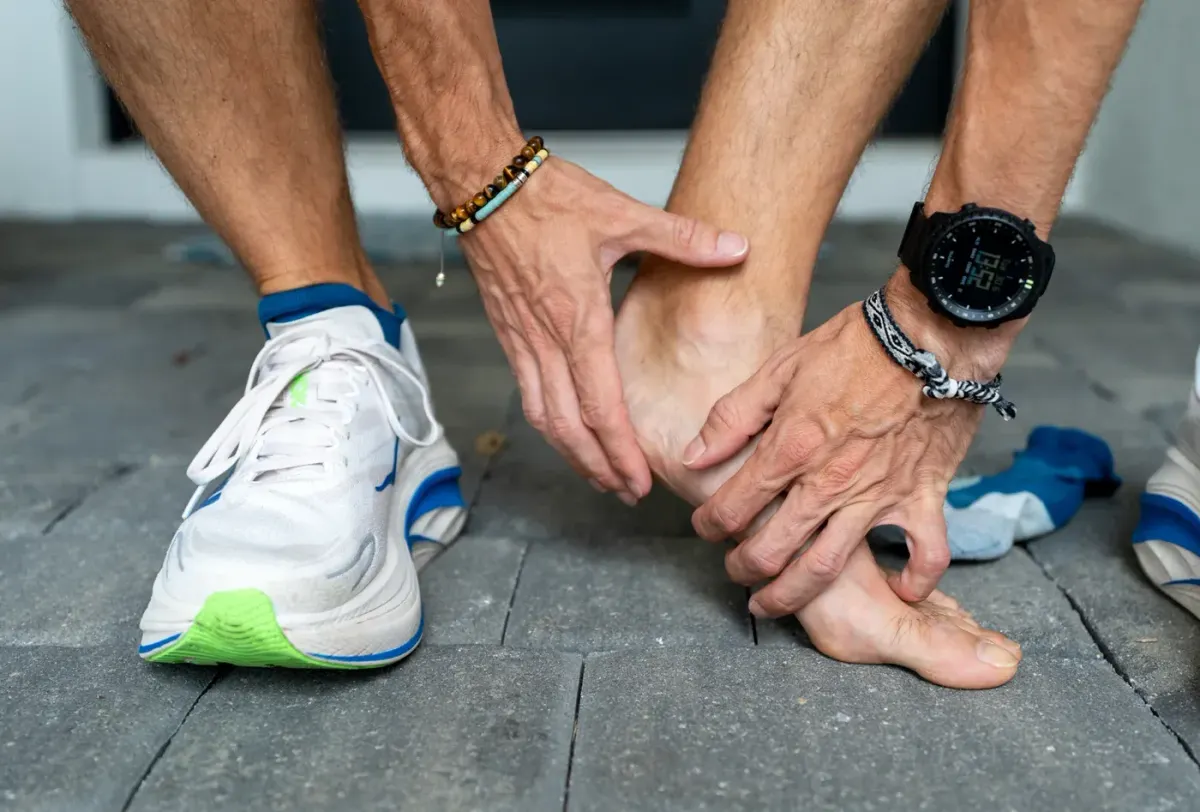
To learn how to get rid of that stabbing heel pain, for good, read my Plantar Fasciitis Recovery Roadmap, next.
If you purchase gear through links in this article, I may earn a small affiliate commission. For my training tools, exclusive content, newsletter, and more perks become a member, (it's free!). -Alastair ✌🏼
What is plantar fasciitis?
Plantar fasciitis is an overuse injury of the plantar fascia, the thick band of connective tissue that runs from your heel to your toes and acts like a bowstring supporting your arch. When it's repeatedly overloaded (by a spike in mileage, weak foot and calf muscles, tight calves, or unsupportive footwear) it develops small tears and becomes inflamed.
The classic symptom is sharp, stabbing heel pain that's worst with your first steps in the morning, eases as the tissue warms up, then returns after runs or long periods of standing.
Mild cases settle in a few weeks; stubborn ones can take six months or more if you train through them. And footwear matters here more than for almost any other running injury, because the shoe directly supports (or fails to support) the exact structure that's injured.
Quick picks
- Best overall: Gel-Kayano 32, premium stability, structured arch, APMA Seal of Acceptance
- Best traditional stability: Adrenaline GTS 25, GuideRails, firm heel counter, 10mm drop
- Best value: Fresh Foam X 860v15, plush stability with the widest width range here
- Best max-cushion stability: Gaviota 6, full-length H-Frame support, deep cushioning, wide base
- Best plush stability for long runs: Hurricane 26, 41mm of soft incrediLUX at only 9.3 oz
- Best max-cushion neutral: Bondi 9, 43mm stack, planted platform, the podiatrist favorite
- Best for walking and standing: Ghost Max 3, max cushion, rocker geometry, all-day comfort
- Best lightweight stability: Arahi 9, supportive but light enough to pick up the pace, now with a cooler upper
Best Running Shoe Brands 2026: Ranked by 17 Category Wins
After testing every major running shoe brand this year, here are the brands making the best running shoes right now, ranked by category wins.
 Alastair Dixon
Curious which brand is winning overall, right now? My best running shoe brands ranking tallies the podiums from all seventeen of my category roundups.
What to look for in a running shoe for plantar fasciitis
These criteria come from podiatrists and sports-medicine sources who treat plantar fasciitis, plus biomechanics research and lab testing. They overlap with what you'd want for shin splints, but plantar fasciitis has its own emphases; heel support and arch support do more of the work here.
1 - Strong, appropriate arch support
This is the big one. The plantar fascia supports your arch; a shoe that supports the arch with it takes load off the injured tissue.
But more is not always better; podiatrists are clear that a shoe with too much arch support for a flatter foot can press into the arch and make things worse. Most runners do best with a structured neutral or mild-stability shoe that matches their arch height, modified with an insert only if needed.
The 11 Best Stability Running Shoes, Right Now
Supportive, cushioned running shoes built to keep your stride steady during daily runs, longer efforts, and recovery days.
 Alastair Dixon
If you're not sure whether you overpronate, my best stability running shoes guide explains how to tell, and if your arches are flat, my best running shoes for flat feet roundup covers whether that actually means you need support at all.
2 - A firm heel counter and deep heel cup
Press the back of any shoe you're considering; it should resist, not collapse. A firm heel counter plus a deep, cradling heel cup stabilizes the rearfoot, limits excess motion, and reduces the tug on the fascia where it attaches to the heel bone. This is the single easiest feature to check in a store.
3 - Generous, well-tuned cushioning
Heel cushioning reduces the impact load traveling into the heel and fascia. Podiatrists caution against extremes; too soft lets the foot sink and destabilize, too firm transmits more shock. You want substantial, supportive cushioning, not a marshmallow.
4 - Some structure; the shoe shouldn't fold in half
It should have torsional rigidity (resist twisting) and bend only at the forefoot, where toe-off naturally happens. A stiffer forefoot or a rocker is actually beneficial for plantar fasciitis because it limits how far the toes bend up (dorsiflexion), which reduces the windlass-mechanism stretch on the fascia with each stride.
5 - A moderate-to-higher heel-to-toe drop
A higher drop (8mm or more is a safe starting point) takes tension off the Achilles and calf complex, which both connect to the plantar fascia through the heel.
Low-drop and zero-drop shoes increase the stretch on that whole posterior chain, which is why they're a common trigger and a poor choice during a flare-up. If you want the full explanation, I break it down in my running shoe drops explainer.
6 - A removable insole
A removable sockliner lets you swap in a custom orthotic or an over-the-counter arch support if your podiatrist recommends one. Most quality running shoes have this, but it's worth confirming.
7 - The right fit, including width
A secure midfoot and heel lock stops compensatory gripping that travels into the fascia, and a roomy toe box lets the foot splay naturally. If you have wide feet, get the wide version; a cramped forefoot changes how you load the foot.
All weights listed are for a US men's size 9, my pairs.
1. ASICS Gel-Kayano 32 — Best Overall
Price: $165 at REI
ASICS Gel-Kayano 32 review: Smooth stability, plush comfort refined
ASICS’ flagship stability shoe evolves with a livelier ride, adaptive support, and max-cushioned comfort for long miles, recovery jogs, all day wear.
 Alastair Dixon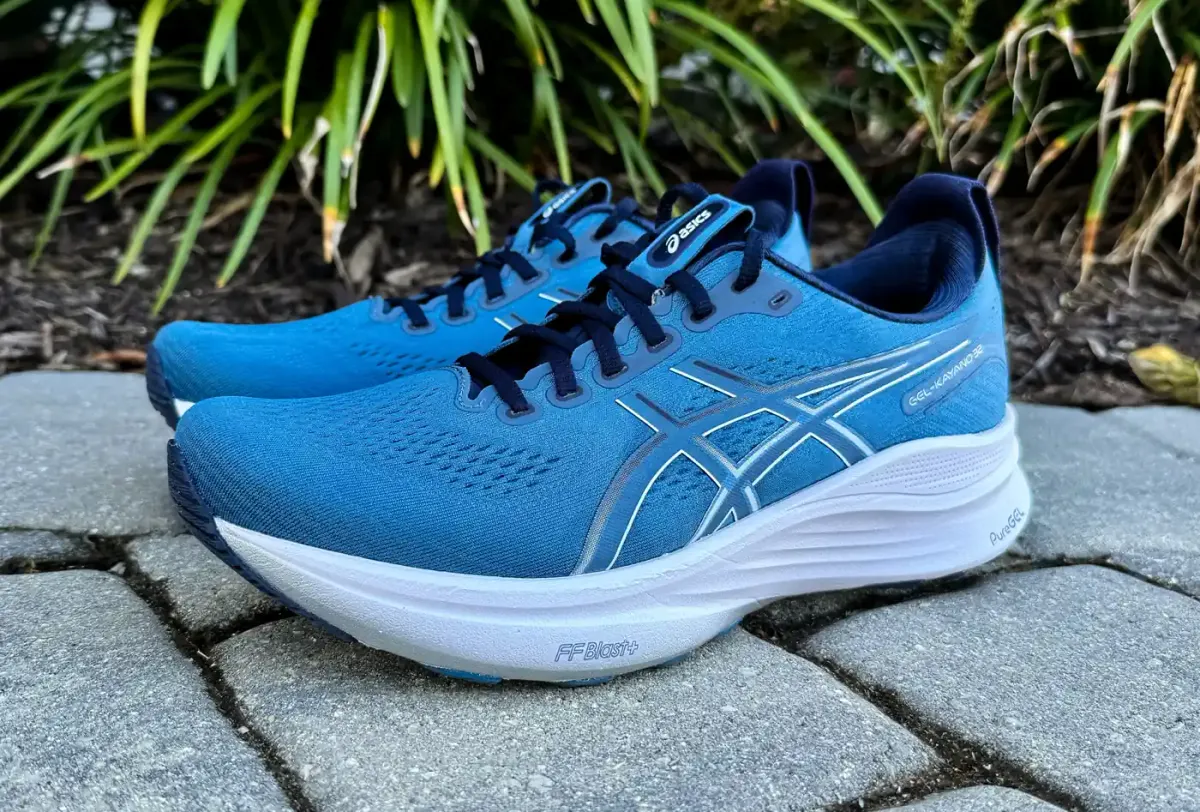
Stack: 40mm heel / 32mm forefoot · Drop: 8mm · Weight: 10.5 oz (298g) · Best for: Runners who want premium, structured support with proven podiatrist credentials
If you want one shoe that ticks every plantar fasciitis box, start here. The Kayano is ASICS' flagship stability shoe, the one podiatry articles reach for again and again, and it carries the American Podiatric Medical Association (APMA) Seal of Acceptance.
Everything plantar fasciitis needs is here: structured arch support from the 4D Guidance System that adapts in real time without a harsh medial post, a firm heel counter with a deep cup, FF Blast Plus cushioning with PureGEL in the heel that absorbs morning-stiff impact without going mushy, an 8mm drop in the protective range, high torsional rigidity, and a removable sockliner if you run orthotics. It's a genuinely excellent walking and standing shoe too, which matters when every step counts.
The trade-offs: it's not light or cheap, and the toe box runs snug on the lateral side, so broader feet should go straight for the wide or extra-wide widths. A bonus from my testing: it's livelier than the Kayano's reputation suggests.
Buy them for: overpronation, structured support, a podiatrist-backed choice, heavier runners. Skip them if: you're a neutral runner with high arches (look at the Bondi 9 or Ghost Max 3), or you want a light, fast ride.
2. Brooks Adrenaline GTS 25 — Best Traditional Stability
Price: $155 at brooksrunning.com
Brooks Adrenaline GTS 25 review: softer cushioning, roomier fit, same reliable support
Comfort meets consistency but this one’s more of a side-step than a leap forward.
 Alastair Dixon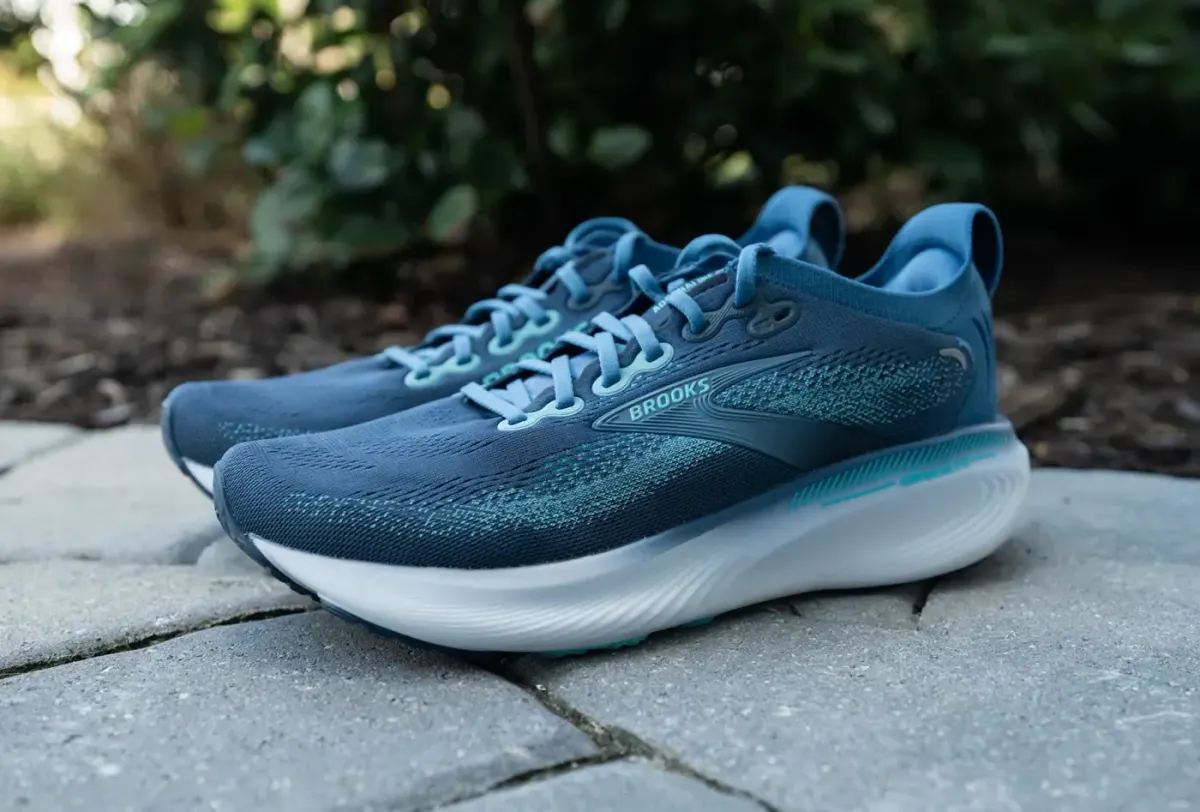
Stack: 37mm heel / 27mm forefoot · Drop: 10mm · Weight: 10.2 oz (289g) · Best for: Mild-to-moderate overpronators who want the classic, dependable stability formula
The Adrenaline GTS 25 is the textbook first-stability-shoe recommendation, and for plantar fasciitis it's a strong, safe choice. The headline feature for fascia sufferers is the 10mm drop, the highest of any shoe on this list, which takes meaningful tension off the Achilles and calf, easing the pull on the plantar fascia.
GuideRails provide gentle support on either side of the foot, engaging only when your gait drifts. The heel counter is firm, the platform is medially flared for a planted landing, torsional rigidity is solid, and Brooks added cushioning across the board in the 25, so there's more shock absorption underfoot than any previous Adrenaline. The roomier toe box and looser midfoot of this version are a quiet win for this injury too.
What you give up is excitement: DNA Loft v3 isn't a lively foam. But for managing plantar fasciitis, predictable and supportive is exactly the brief.
Buy them for: mild-to-moderate overpronation, the classic stability feel, the highest drop on this list, beginners. Skip them if: you want a soft or responsive ride, or you're a neutral runner.
3. New Balance Fresh Foam X 860v15 — Best Value
Price: $150 at New Balance
New Balance Fresh Foam X 860v15 review: the plush stability daily trainer reinvented
More cushion, a refined Stability Plane, and a seriously comfortable ride but is the extra weight worth it for your training?
 Alastair Dixon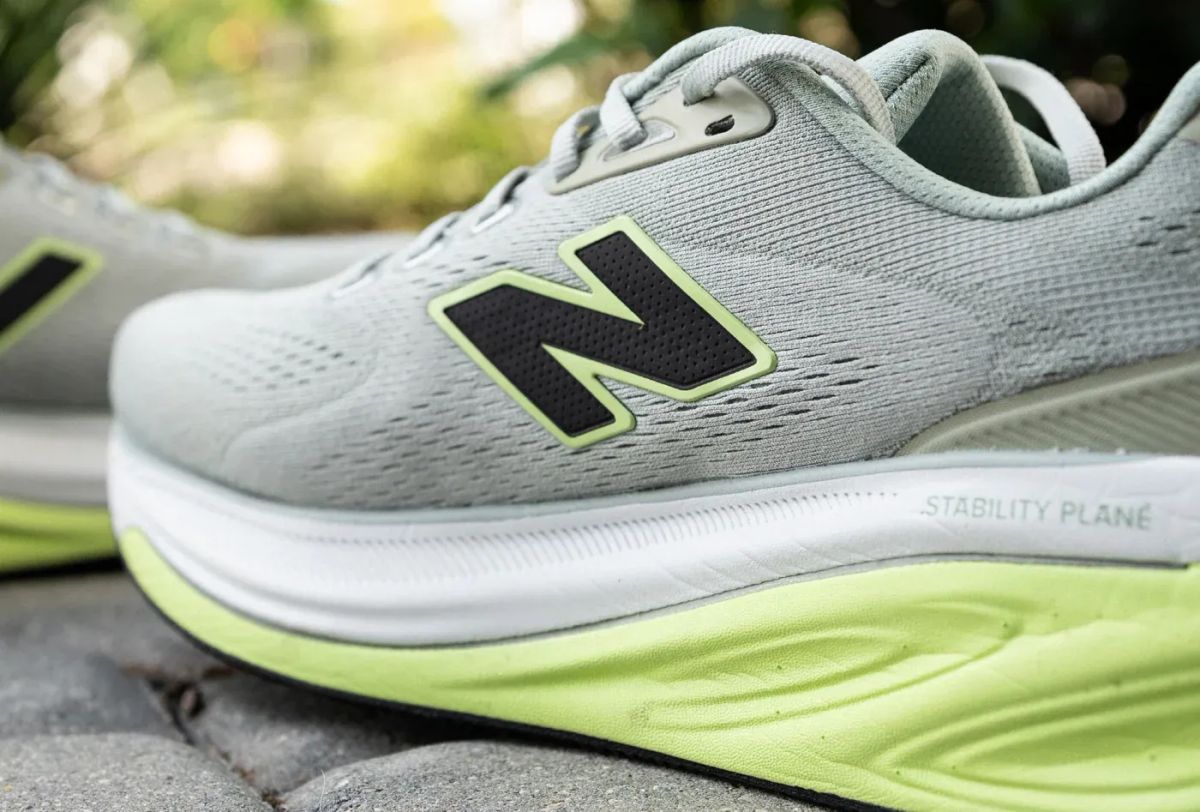
Stack: 43mm heel / 35mm forefoot · Drop: 8mm · Weight: 11.5 oz (326g, my 2E wide pair) · Best for: Runners who want genuine stability and max cushion without the premium price
The 860v15 is the value pick on this list, and it doesn't feel like a compromise. New Balance's stability workhorse pairs a tall 43mm heel stack of dual-density Fresh Foam X (soft absorptive top layer, firmer supportive base) with a refined Stability Plane that acts like a gentle guide rail rather than a blunt correction, plus a structured heel, an 8mm drop, rocker geometry, and a removable insole for orthotic users.
The single most useful thing here for fascia sufferers, though, is width: Narrow, Standard, Wide, and X-Wide for both men and women. Plantar fasciitis fit problems are often width problems, and few brands match New Balance's range. As a plush, protective daily workhorse and an excellent all-day walking shoe at this price, it's the best-value plantar fasciitis shoe I've tested.
Buy them for: value, width options, mild overpronation, orthotic users, walking double-duty. Skip them if: weight bothers you (it's the heaviest shoe here), you run in serious heat (the upper isn't very breathable), or you want any speed from your daily trainer.
4. Hoka Gaviota 6 — Best Max-Cushion Stability
Price: $180 at REI.com
Hoka Gaviota 6 review: max cushioning with real stability support for daily miles
Bondi-like softness meets enhanced H-Frame guidance; ideal for runners and walkers who want plush comfort without sloppy landings.
Alastair Dixon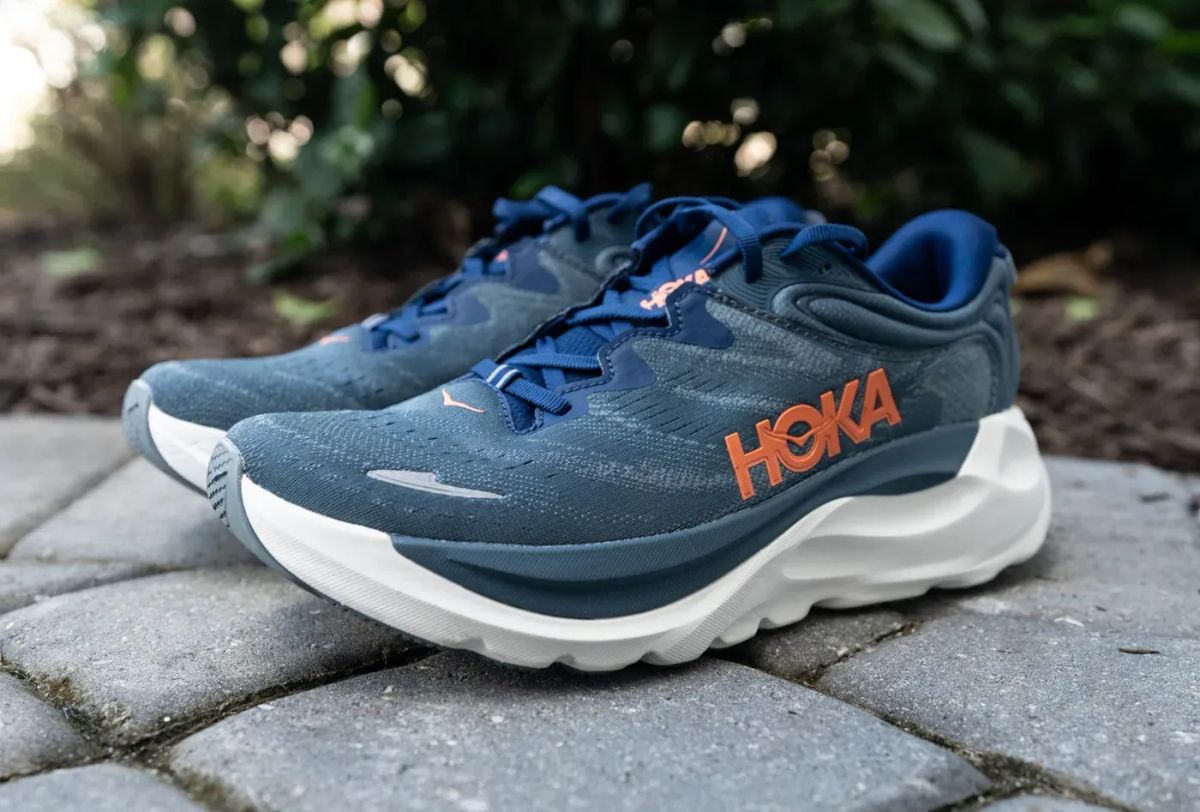
Stack: 39mm heel / 33mm forefoot · Drop: 6mm · Weight: 10 oz (283g) · Best for: Overpronators who want maximum cushioning with full-length support
If you overpronate and want the most cushioning you can get with real stability built in, the Gaviota 6 is the pick. The enhanced H-Frame system runs the full length of the shoe, using a firmer foam embedded into a softer CMEVA midsole to support the foot without an aggressive medial post, and it cradles the heel with clear boundaries that never feel rigid.
The forefoot platform is genuinely huge, so landings are planted and the rearfoot stays controlled, the Meta-Rocker delivers the smooth roll-through that sore fasciae love, and it comes in wide and extra-wide too.
The one caveat: the 6mm drop is lower than the 8mm-plus I'd ideally recommend. The deep heel cushioning and rocker compensate well, but if you've been running in high-drop shoes, transition into the Gaviota gradually over your first week.
Buy them for: overpronation, maximum cushioning, wide feet, the rocker ride. Skip them if: you specifically need a higher drop, or you're a neutral runner (the Bondi 9 is the neutral equivalent).
5. Saucony Hurricane 26 — Best Plush Stability For Long Runs
Price: $170 at Saucony.com
Saucony Hurricane 26 review: lighter, softer, livelier
Lighter, softer, and more responsive thanks to new incrediLUX foam. Saucony’s max-cushion stability trainer gets its most enjoyable update in years.
Alastair Dixon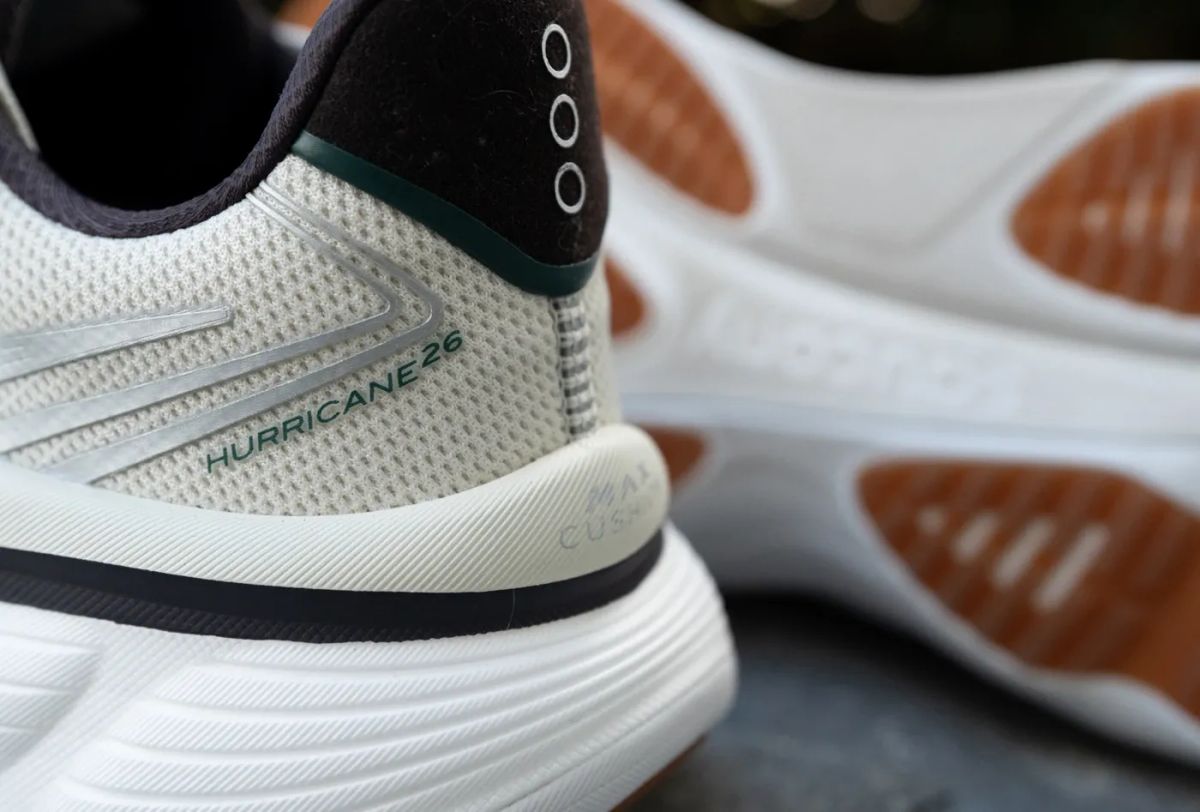
Stack: 41mm heel / 35mm forefoot · Drop: 6mm · Weight: 9.3 oz (264g) · Best for: Overpronators who want premium, plush cushioning for long runs and recovery miles
The Hurricane 26 is Saucony's premium max-cushion stability shoe, and for plantar fasciitis sufferers who log longer distances it's a standout: a deep 41mm heel of Saucony's new incrediLUX foam, soft and lively rather than mushy, wrapped in a supportive upper and a wide planted platform that keep the rearfoot organized.
Here's what makes it special in this category: at 9.3 oz it's the lightest support shoe on this list by a wide margin, so you get Gaviota-class protection with noticeably less to swing per stride on the longer easy runs where heel fatigue sets in. The ride is also more forgiving and enjoyable than a firmer stability shoe like the Kayano.
Like the Gaviota, the 6mm drop sits below my preferred range, offset by the sheer depth of heel cushioning; transition gradually if you're coming from high-drop shoes.
Buy them for: overpronation, long runs, plush cushioning, recovery miles, anyone who finds other stability shoes too heavy. Skip them if: you specifically need a higher drop, or you're on a tight budget.
6. Hoka Bondi 9 — Best Max-Cushion Neutral
Price: $175 at REI
Hoka Bondi 9 Review: Best Recovery Day Trainer?
A runner’s take on the Hoka Bondi 9; how the supercritical EVA performs on recovery runs and where it fits in a training rotation.
Alastair Dixon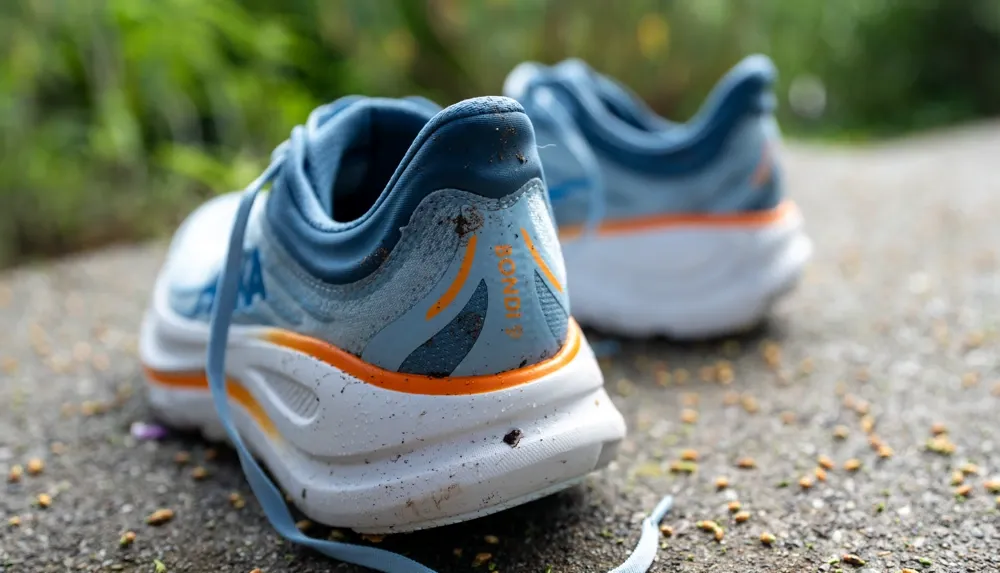
Stack: 43mm heel / 38mm forefoot · Drop: 5mm · Weight: 10.9 oz (309g) · Best for: Neutral runners who want maximum cushioning and the most-recommended plantar fasciitis shoe
If you're a neutral runner (you don't overpronate), the Bondi 9 is the plantar fasciitis pick. It's the shoe podiatrists name more than almost any other for heel pain, and for good reason: it pairs the tallest stack on this list (43mm heel) with a surprising amount of inherent stability for a neutral shoe.
The new supercritical EVA midsole lands soft and recovers quickly, resilient rather than mushy. The Active Foot Frame seats your heel down into the midsole and the raised sidewalls cradle the foot under load, giving sensitive fasciae a planted, controlled landing without any corrective hardware, while the Meta-Rocker smooths the transition and the wide, flared platform keeps that towering stack planted.
It comes in wide widths, and the full rubber coverage in its high-wear zones makes it genuinely built for long days of standing and walking too. It's a little on the heavy side, and some runners need the racer's loop heel-lock lacing to fully shut down heel slip; plan for that rather than being surprised by it.
Buy them for: neutral gait, maximum cushioning, walking and standing, the podiatrist-favorite reputation. Skip them if: you overpronate (look at the Gaviota 6 or Kayano 32 instead), or your fascia is very sensitive to calf tension and needs a higher drop (that's the Adrenaline).
7. Brooks Ghost Max 3 — Best For Walking And Standing
Price: $165 at Brooks
Brooks Ghost Max 3 review: Subtle Tweaks, Big Improvements
Roomier, cooler, and more cushioned, Brooks refines the Ghost Max formula with subtle upgrades that make all the difference.
 Alastair Dixon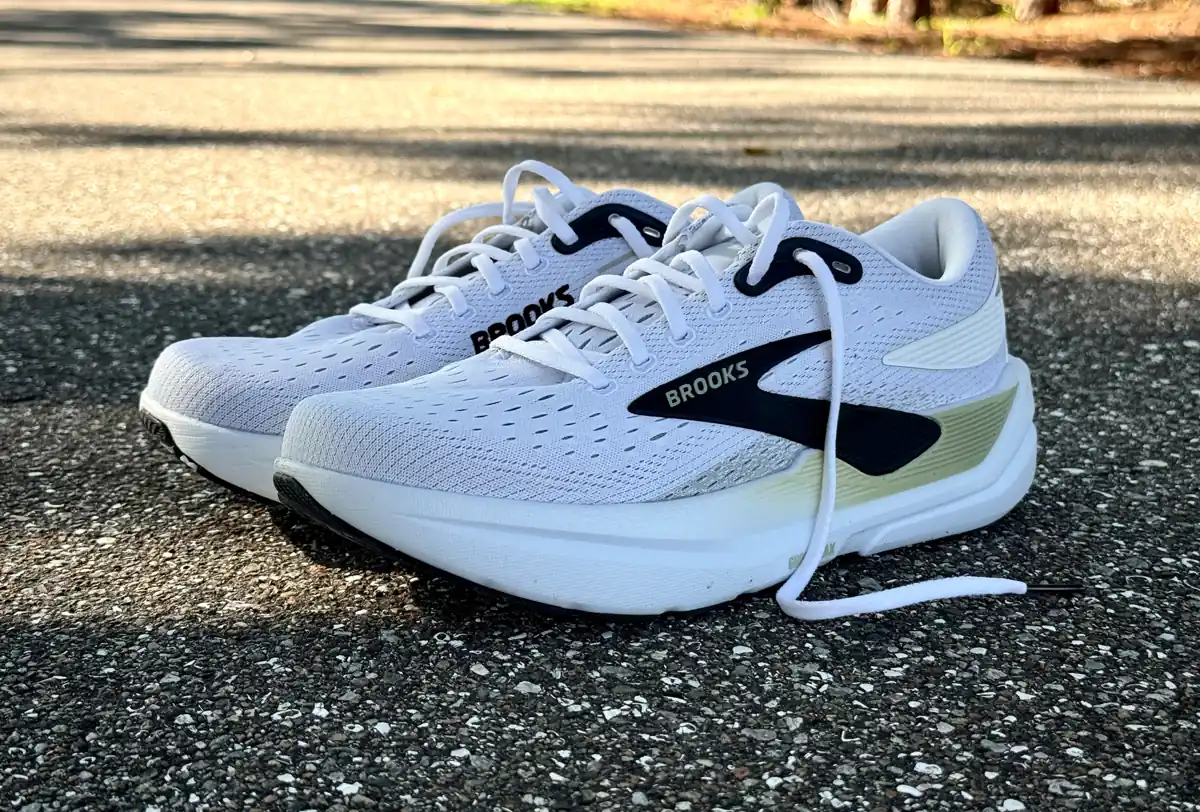
Stack: 39mm heel / 33mm forefoot · Drop: 6mm · Weight: 10.8 oz (306g) · Best for: Runners and walkers who want max-cushion neutral comfort with a protective rocker, especially for time on their feet
The Ghost Max 3 is the pick if a big part of your plantar fasciitis battle is time on your feet (walking, commuting, standing all day) alongside your running. It's a max-cushion neutral shoe with a generous stack of DNA Loft v3, a wide stable base, and GlideRoll rocker geometry that smooths the heel-to-toe transition, running and walking alike.
In my testing the rocker works subtly, with the plush foam doing most of the transition work; the result is a gentle, no-surprises cruise with 33mm of protection under the forefoot. Fit is a bonus too: it runs roomy through both the heel and forefoot, which suits wide and high-volume feet straight out of the box (narrow-footed runners should use the racer's loop lacing to lock the heel, since heel slippage means compensatory gripping that travels into the fascia).
Buy them for: neutral runners, walkers, anyone on their feet all day, wide or high-volume feet. Skip them if: you overpronate, or you want a responsive shoe for faster running (you feel its bulk the moment you pick up the pace).
8. Hoka Arahi 9 — Best Lightweight Stability
Price: $155 at REI
Hoka Arahi 9 Review: Cooler, Softer, Same Smooth Ride
I tested the Hoka Arahi 9; weighing in at 9.7 oz in a US 9, it has a cooler upper, slightly softer ride, and the Arahi 8’s smooth roll left intact.
 Alastair Dixon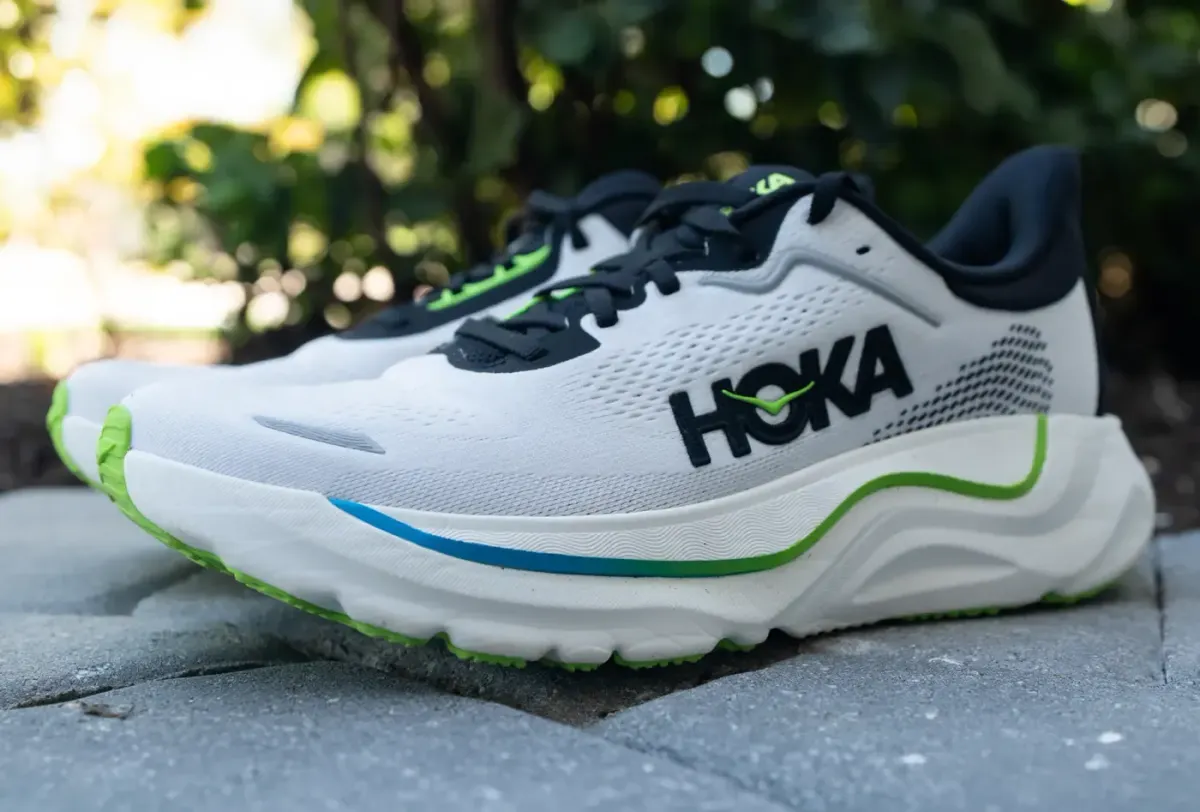
Stack: 39mm heel / 31mm forefoot · Drop: 8mm · Weight: 9.7 oz (275g) · Best for: Overpronators who want plantar fasciitis support without a heavy shoe, and the option to pick up the pace
Most stability shoes on this list are on the heavier side. The Arahi 9 is one of the two exceptions; it's Hoka's lightweight stability trainer, and it proves you don't have to choose between support and a shoe that doesn't feel like a brick.
The enhanced H-Frame places firmer foam in an open H shape that supports both sides of the foot, embedded in the midsole so it keeps your stride aligned like a quiet support net rather than a corrective barrier; it engages most when fatigue sets in, which is exactly when a fascia-friendly gait tends to fall apart.
You still get a structured heel with a redesigned collar and extended heel pull for a cleaner lock, an 8mm drop right in the protective range, and a smooth Meta-Rocker transition, plus enough midsole response to handle a faster day if your recovery allows it; rare in this category. Version 9 softened the dual-density CMEVA a step, and the new engineered mesh finally breathes properly, which fixes the one complaint I had with the Arahi 8. It comes in standard and wide.
The trade-off versus the Gaviota is cushioning depth; for severe heel pain that needs the deepest possible protection, the Gaviota or Bondi is the better call.
Buy them for: overpronation, runners who want a lighter stability shoe, mixed easy-and-faster running, hot climates. Skip them if: you want maximum cushioning, or you have severe heel pain.
Fit notes for women and men
The criteria don't change by gender; the fit does. Women typically have a narrower heel relative to the forefoot, so women's-specific lasts (not downsized men's shoes) matter for locking the heel, and heel slippage means the foot grips and compensates.
The Gel-Kayano 32, Adrenaline GTS 25, and 860v15 are all built on true women's lasts in multiple widths (the 860v15 runs Narrow through X-Wide), and the women's Bondi 9 in wide is the neutral max-cushion choice.
One caution: arch height varies hugely from person to person and isn't determined by gender, so match support to your own arch rather than to a "women's plantar fasciitis shoe" label.
For men, the same picks lead: Kayano 32 for structured premium support, Adrenaline GTS 25 for traditional stability with the highest drop here, Bondi 9 for neutral max cushion, all in wide options.
Best running shoes for heavy runners in 2026 (tested)
Cushioned, stable, and durable picks for bigger runners, tested and reviewed by a runner who knows what actually matters underfoot.
 Alastair Dixon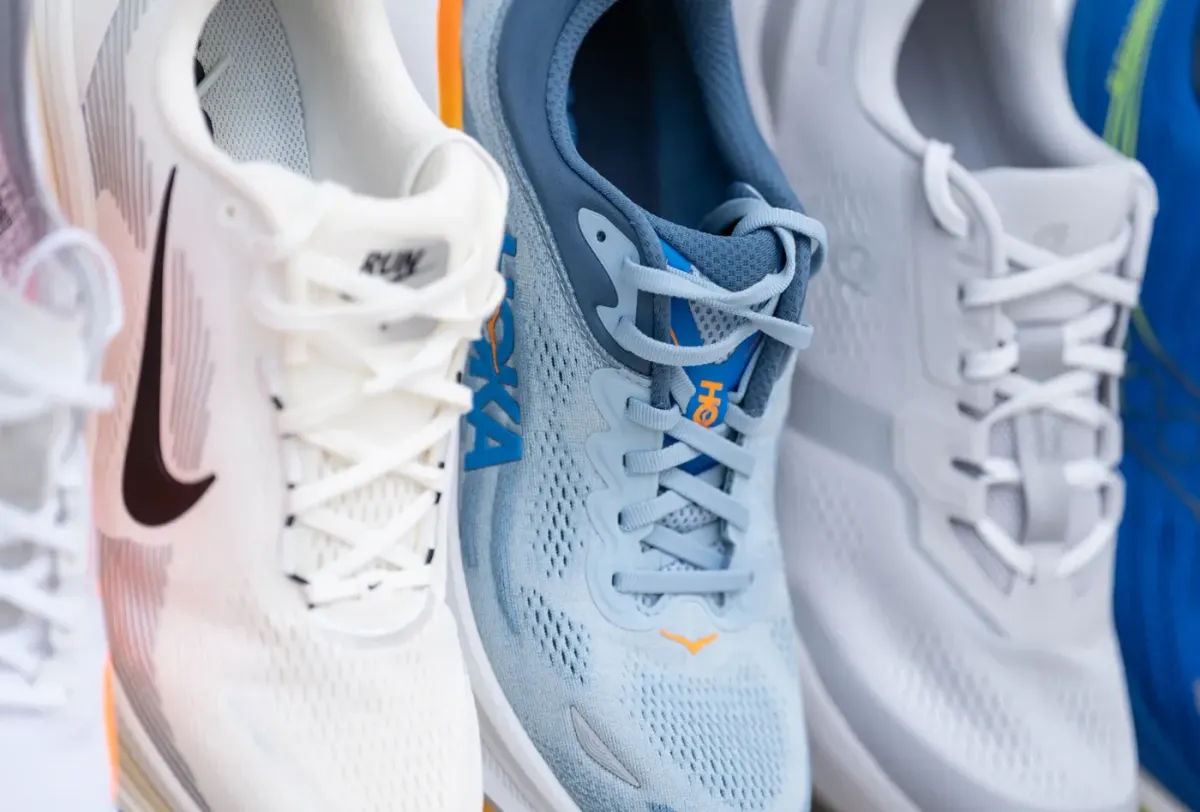
Heavier runners should favor the Gaviota 6, Bondi 9, and Kayano 32, whose wide bases and durable builds handle repeated impact best; the lighter Arahi 9 suits lighter runners or mild, improving cases.
Can you run with plantar fasciitis at all?
Sometimes, but cautiously, and only if it's mild. The general rule runners and physical therapists use: if pain stays at roughly 3 out of 10 or below, doesn't get progressively worse during the run, and settles within 24 hours, gentle running may be okay.
If pain climbs during the run, makes you alter your gait, or is still elevated the next morning, that's your signal to stop and let it recover.
If running is off the table for a while, walking is usually fine and worth keeping up for fitness, and the Bondi 9 and Ghost Max 3 are as good for walking as for running.
Cross-training that offloads the fascia (cycling, swimming, the elliptical) keeps fitness without the repetitive heel impact.
Shoes don't fix plantar fasciitis, what actually does
The right shoes reduce the load on your plantar fascia, but they don't address why it got overloaded. Recovery comes from changing what caused it:
- Reduce your training load. Most flare-ups follow a spike in mileage or intensity. Cut back to pain-free volume and rebuild slowly; no more than roughly 10% per week.
- Stretch and strengthen. Calf stretches, plantar fascia stretches (rolling the arch over a ball or a frozen bottle), and progressive foot and calf strengthening, heel raises in particular. Tight calves pull on the fascia; weak feet can't support the arch.
- Mind the mornings. The fascia tightens overnight. Calf and foot stretches before you get out of bed, and supportive footwear from the moment you stand up (not barefoot on hard floors) make a real difference.
- Don't go barefoot around the house. Time spent padding around on hard floors undoes the work your running shoes are doing.
- Replace worn-out shoes. If your shoes are past 300-500 miles and your heel is flaring, that's worth acting on.
- See a professional if it's not improving. After a few weeks of sensible self-management, a physical therapist or podiatrist can assess your gait, check whether an orthotic would help, and rule out other causes of heel pain.
The shoes on this list are the support cast. The recovery work is the lead. For the full protocol, read my Plantar Fasciitis Recovery Roadmap.
How I picked these
I run extensively in every shoe I review. For this list I started from the criteria podiatrists and biomechanics research actually agree on for plantar fasciitis and only included shoes I've personally tested so I can speak to how they feel over real miles.
If a shoe folded too easily, lacked a structured heel, or sat too low to protect the heel, it didn't make the cut.
What's deliberately not here: no carbon-plated racers, no minimalist or zero-drop shoes. Racers pair aggressive geometry with low-structure uppers, and minimalist shoes increase the stretch on the fascia and posterior chain; both are poor choices during a flare-up.
If you want to see the full range of what I've tested, visit my reviews page.
If your pain is in the shin rather than the heel, that's likely a different injury; my roundup of the best running shoes for shin splints covers that case.
Best Running Shoes For Shin Splints (2026): 6 Tested Picks
Shoes don’t fix shin splints, but the wrong ones make it worse. My six tested picks for runners dealing with MTSS, plus what actually helps recovery
 Alastair Dixon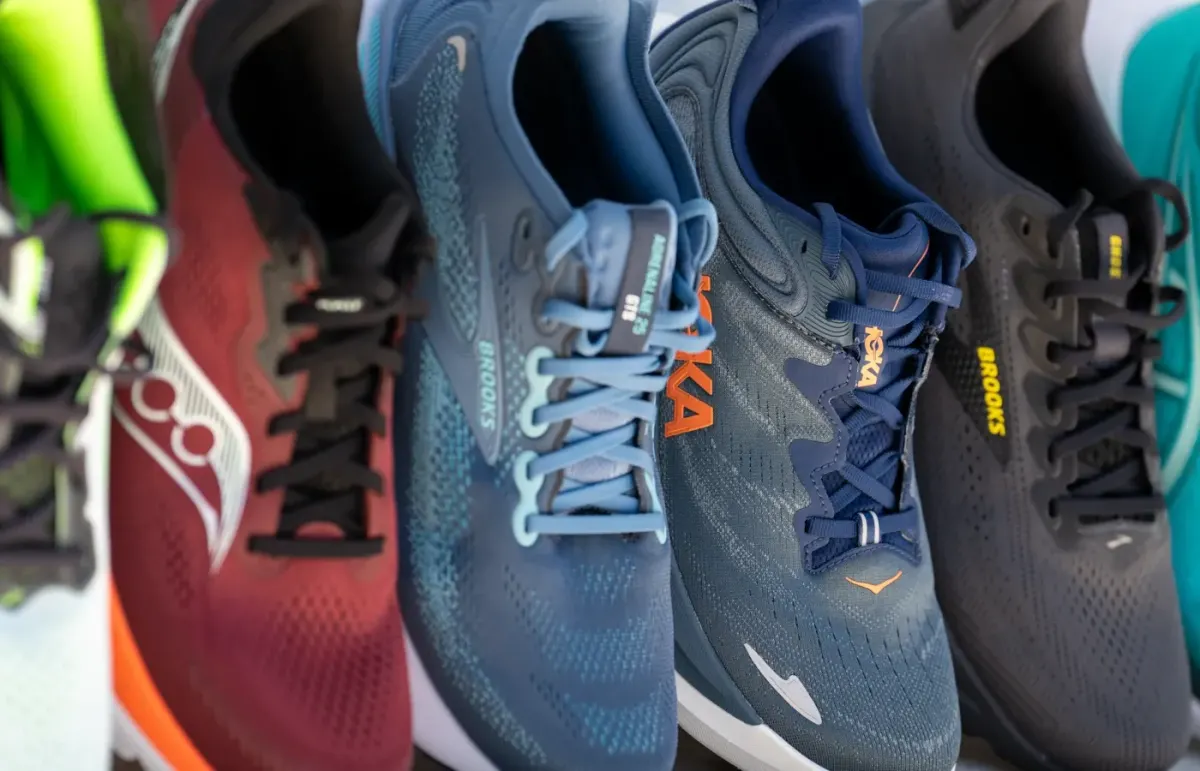
And if the pain is at the back of the heel rather than underneath it, that's the Achilles; my best running shoes for Achilles tendonitis roundup holds a stricter drop line for that one.
Best Running Shoes For Achilles Tendonitis: 8 Tested Picks
Shoes don’t cure Achilles tendonitis, but drop and rocker measurably reduce tendon strain. My 8 tested picks, plus what actually heals it.
 Alastair Dixon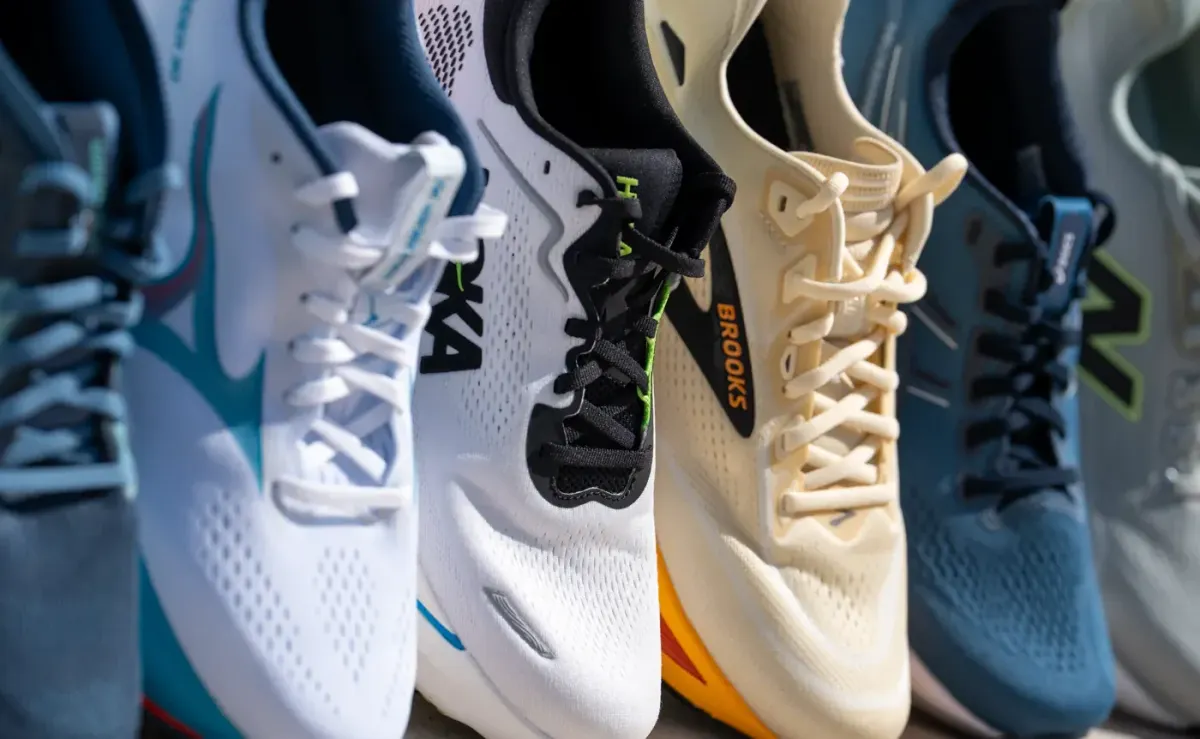
Frequently asked questions
Are Hoka shoes good for plantar fasciitis? Generally yes. Hoka's deep cushioning, wide platforms, and rocker geometry are all helpful for plantar fasciitis; the rocker in particular reduces the stretch on the fascia at toe-off. The exception is Hoka's faster, lower-stack models (the Mach and Cielo lines); stick to their max-cushion daily trainers.
Which Hoka shoe is best for plantar fasciitis? For neutral runners, the Bondi 9: the tallest stack, a planted Active Foot Frame design, and a podiatrist-favorite reputation. For overpronators, the Gaviota 6, which adds full-length H-Frame stability. For a lighter option with support, the Arahi 9. The Bondi also doubles as one of the best Hokas for walking and standing.
Are Brooks shoes good for plantar fasciitis? Yes; Brooks is one of the brands podiatrists most often recommend for plantar fasciitis. The Adrenaline GTS 25 offers GuideRails support and the highest drop on this list (10mm), which takes tension off the Achilles and fascia. The Ghost Max 3 is the neutral, rockered, walking-friendly option.
How long does plantar fasciitis take to heal? It varies widely. Mild cases caught early, with sensible rest and the right footwear, can settle in a few weeks. Moderate cases needing a full rehab routine often take a few months, and stubborn cases (especially in runners who train through the pain) can take six months or longer. If there's no improvement after a few weeks of self-management, see a physical therapist or podiatrist.
If you haven't already, signup for my free newsletter, and subscribe to my YouTube Channel for more content like this. 👉🏼 And for an inside look at what's comes into my studio with unboxings, lace up reels, and short form reviews, follow me on Instagram, and TikTok. -Alastair
Written by

Subscribe to new posts
reviews, training tips, and thoughtful stories for runners








Member discussion