
Best Running Shoes For Shin Splints (2026): What Actually Helps, From a Runner Who's Been There
Shoes don't fix shin splints, but the wrong ones make it worse. My six tested picks for runners dealing with MTSS, plus what actually helps recovery

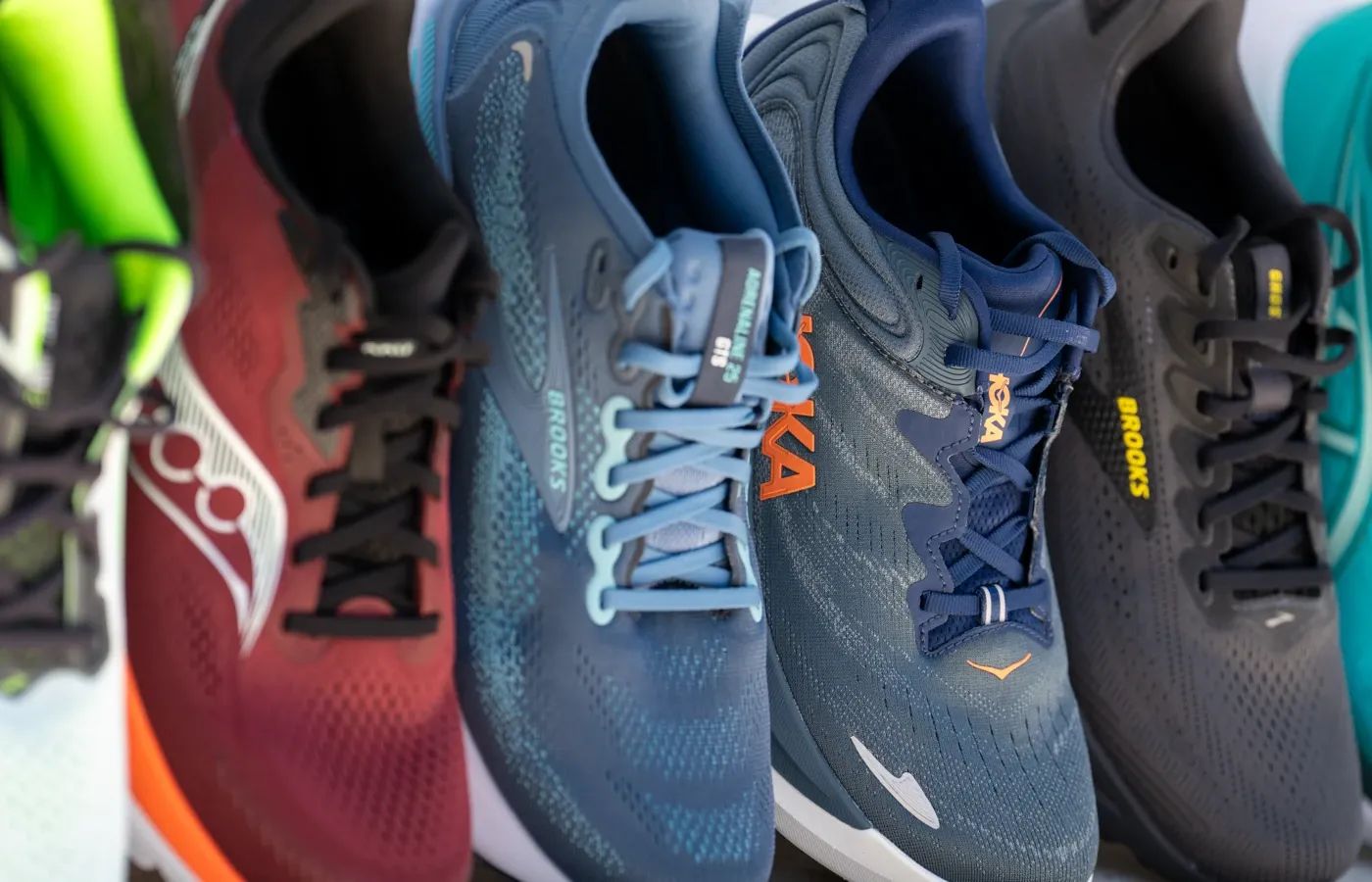
If your shins are screaming halfway through a run, I'm going to tell you something up front that most "best shoes for shin splints" lists won't: shoes don't fix shin splints.
They can absolutely make things worse if they're wrong for you, and they can absolutely help you recover faster if they're right, but the actual fix is upstream of your feet. Rest, gradual load progression, calf and hip strength work, and a sane training plan are what get you back to pain-free miles.
I covered the full recovery protocol in my shin splints recovery roadmap — read that first if you haven't. This roundup article is the gear companion: the shoes I'd reach for if I were dealing with medial tibial stress syndrome (the proper name for shin splints) right now, why they help, and what to look for if none of them fit your foot.
Shin Splints Recovery Roadmap: How to Get Rid of Lower Leg Pain
The exact recovery plan that got me back to pain-free running after a brutal training block; no fluff, just the stuff that actually works.
 Alastair Dixon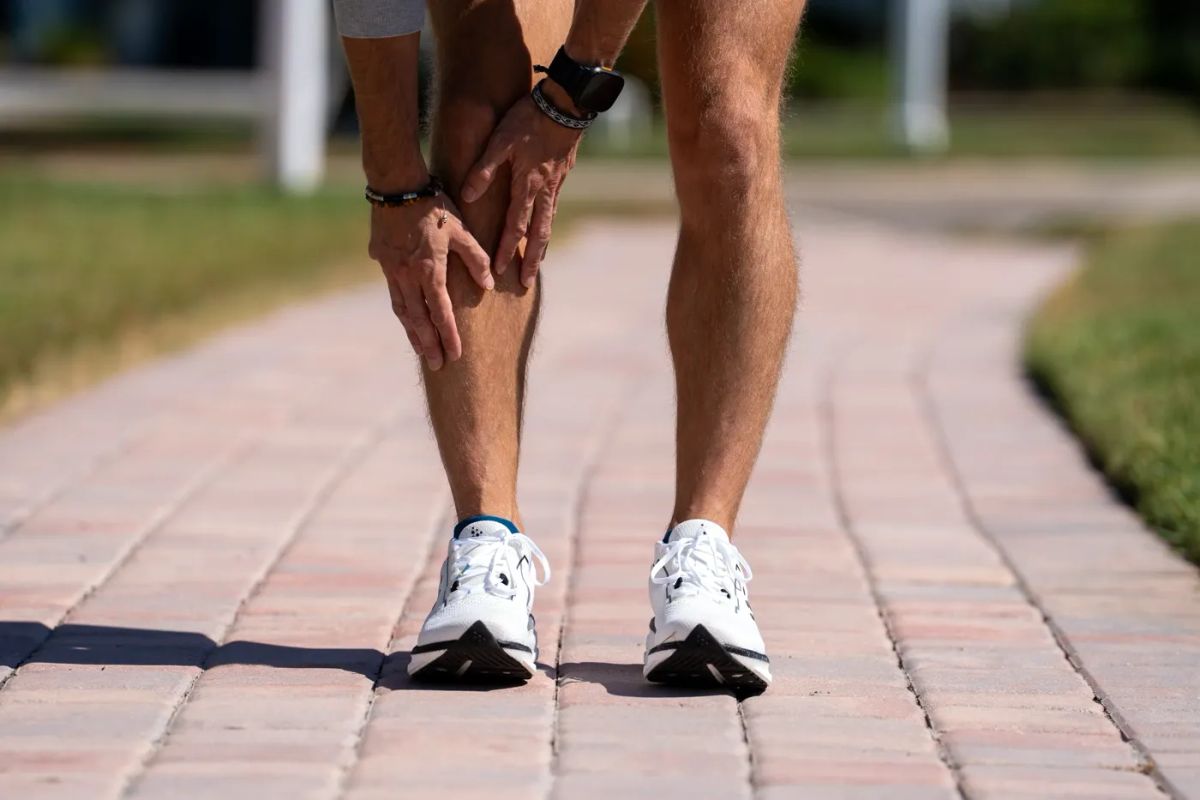
If you've ended up here because outer-knee pain is your problem rather than shin pain, the play is different; my IT band recovery roadmap is the right starting point instead.
If you purchase gear through links in this article, I may earn a small affiliate commission. For my training tools, exclusive content, newsletter, and more perks become a member, (it's free!). -Alastair ✌🏼
What are shin splints?
Shin splints, clinically called medial tibial stress syndrome, or MTSS, is a bone-stress injury that causes pain along the inner edge of the tibia (shinbone).
What do shin splints feel like? Usually a dull, achy soreness along the inside-front of the lower leg that gets sharper with impact. The pain often shows up a few minutes into a run, eases briefly, then returns harder as you keep going. Left alone, mild shin splints typically settle in 2-4 weeks; recurring or stubborn cases can take 6-12 weeks if you keep training through them.
Shoes don't cause shin splints in most cases; training spikes and weak calves do, but the wrong shoes can absolutely accelerate this injury, and the right shoes can take meaningful load off the tissue while you recover. That's what this roundup is for.
Pain at the back of the heel is a different problem again; see my best running shoes for Achilles tendonitis.
Best Running Shoes For Achilles Tendonitis: 8 Tested Picks
Shoes don’t cure Achilles tendonitis, but drop and rocker measurably reduce tendon strain. My 8 tested picks, plus what actually heals it.
 Alastair Dixon
Quick picks
- Best overall (max-cushion stability): Hoka Gaviota 6; 39mm heel stack, H-Frame support, 120mm wide forefoot platform
- Best traditional stability daily trainer: Brooks Adrenaline GTS 25; 10mm drop, GuideRails, predictable as the sunrise
- Best gentle stability: Saucony Guide 19; CenterPath cradle, wide base, soft new PWRRUN
- Best max-cushion neutral: Brooks Glycerin 23; DNA Tuned foam, 38mm stack, 8mm drop
- Best for heel strikers who don't overpronate: Brooks Ghost 17; 10mm drop, balanced cushion, no-nonsense
- Best premium stability: ASICS Gel-Kayano 32; 40mm stack, 8mm drop, 4D Guidance System, APMA-accepted
Best Running Shoe Brands 2026: Ranked by 17 Category Wins
After testing every major running shoe brand this year, here are the brands making the best running shoes right now, ranked by category wins.
 Alastair Dixon
Curious which brand is winning overall? My best running shoe brands ranking tallies the podiums from all seventeen of my category roundups.
What actually makes a shoe "shin-splint friendly"
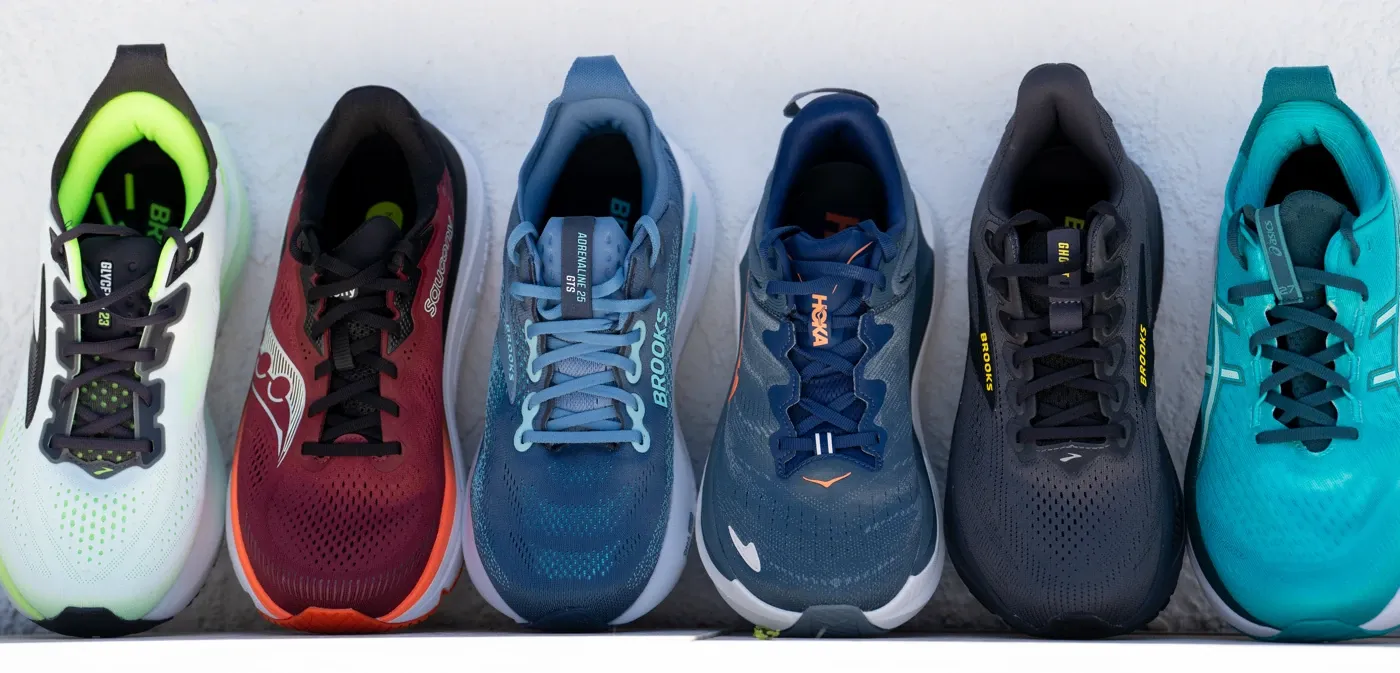
Before the picks, here's what I look for. The sweet spot for most runners is supportive, cushioned running shoes for shin splints; daily trainers with stability elements where they're needed, not racing flats with carbon plates while you're recovering.
1. High cushioning and stack height (heel ≥ 35mm). Shin splints are a repetitive-impact injury. Anything that softens ground reaction forces gives the tibia and surrounding tissue less to absorb. Worn-out shoes can lose up to 40% of their shock absorption, which is why so many shin splint flare-ups start a few months after someone's "favorite" pair quietly aged out. Look for a heel stack of at least 35mm and softer foams (DNA LOFT v3, DNA Tuned, PWRRUN, FF Blast Plus with PureGEL, CMEVA with stability framing) over legacy EVA.
2. Stability and pronation control if you overpronate. Overpronation collapses the arch and pulls hard on the tibialis posterior; exactly the muscle group involved in medial tibial stress syndrome. You don't need an aggressive medial post to fix this; modern guidance systems like Brooks GuideRails, Saucony CenterPath, and Hoka's H-Frame work better because they steer rather than overcorrect. If you don't overpronate, you don't need stability, a wide, well-cushioned neutral shoe is fine. If you're not sure where you sit on this, my stability running shoes roundup walks through how to tell.
3. A wide, planted base. A heel platform over 90mm and a forefoot ideally over 100mm cuts down on the micro-wobble that forces your shin muscles to keep stabilising the foot. This is one of the most underrated specs and one of the easiest to check on a brand's product page.
4. Torsional rigidity. Try to twist the shoe like a dishcloth. If it folds easily, it's letting your foot rotate through the stride and your lower-leg stabilisers have to work overtime to compensate. A stiffer torsional flex is what you want.
5. Moderate-to-higher heel-to-toe drop (8-10mm preferred). Higher drops shift load away from the calf complex (which attaches to the back of the tibia) and toward the quads, knees, and hips. If you've been running in 4mm or zero-drop shoes and you've developed shin splints, this is the first thing I'd change. A few of the shoes below sit at 6mm drop, which is the modern compromise; they work because their cushioning, platform width, and rocker geometry are doing the work the drop would normally do. If you want a primer on why drop matters, I broke it down in my running shoe drops explainer.
6. Rocker geometry. A curved sole eases the heel-strike transition and offloads the calf/shin during push-off. You feel less like you're heel-braking and more like you're rolling forward.
7. Fit that doesn't compensate. A poorly fitting shoe (heel slip, tight toe box, too narrow) makes your foot do small corrective movements all stride long, and those compensations travel straight up the chain to your shins. If you have wider feet, get the wide version.
Now for my recommendations...
1. Hoka Gaviota 6 — Best Overall
Hoka Gaviota 6 review: max cushioning with real stability support for daily miles
Bondi-like softness meets enhanced H-Frame guidance; ideal for runners and walkers who want plush comfort without sloppy landings.
 Alastair Dixon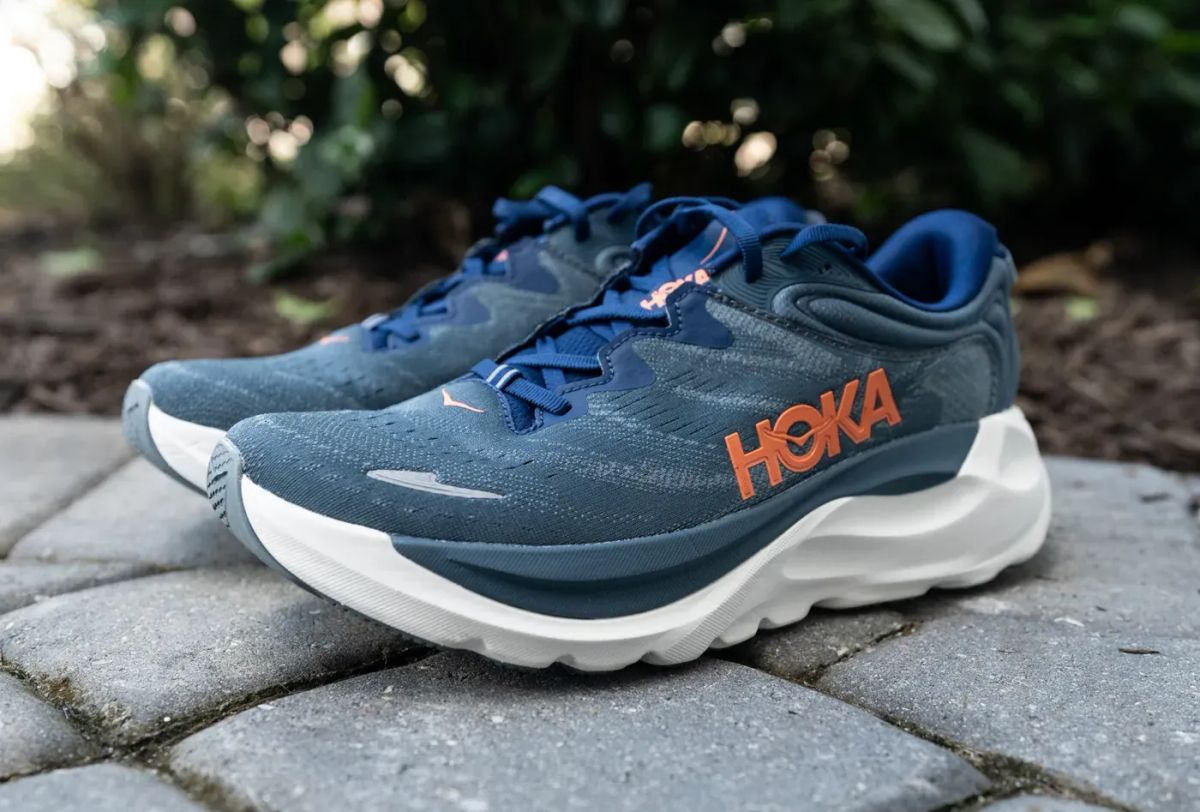
Stack: 39mm heel / 33mm forefoot · Drop: 6mm · Weight: 10oz (M9) · Best for: Overpronators who want max cushion and full-length stability
If you're an overpronator dealing with shin splints, this is where I'd start. The Gaviota 6 is the most shin-splint-friendly shoe in Hoka's lineup right now, and it ticks almost every box on the list above.
The H-Frame stability system runs the full length of the shoe and uses a firmer second foam embedded into a softer CMEVA midsole. The result is a wide, planted feel without the aggressive medial post that older stability shoes used to ram into your arch. The forefoot platform is sizeable so landings are properly planted, which is exactly the stability shin splints need.
Torsional rigidity is high. Hoka's Meta-Rocker handles the heel-to-toe transition so you're not breaking through your calves on every heel strike. And it comes in wide and extra-wide options, which matters for shin splints because cramped feet alter your gait.
The trade-off: the CMEVA foam feels a generation behind what brands like Saucony are doing; you won't get a peppy ride here. But for the use case (easy mileage, recovery, building base) that's not the point.
Buy them for: Overpronation, wide feet, return-from-injury runners, max-cushion fans. Skip them if: You're a neutral runner with no overpronation, or you specifically need a higher drop.
2. Saucony Hurricane 26 — Best Lightweight Max-Cushion Stability
Price: $170 at Saucony.com
Saucony Hurricane 26 review: lighter, softer, livelier
Lighter, softer, and more responsive thanks to new incrediLUX foam. Saucony’s max-cushion stability trainer gets its most enjoyable update in years.
 Alastair Dixon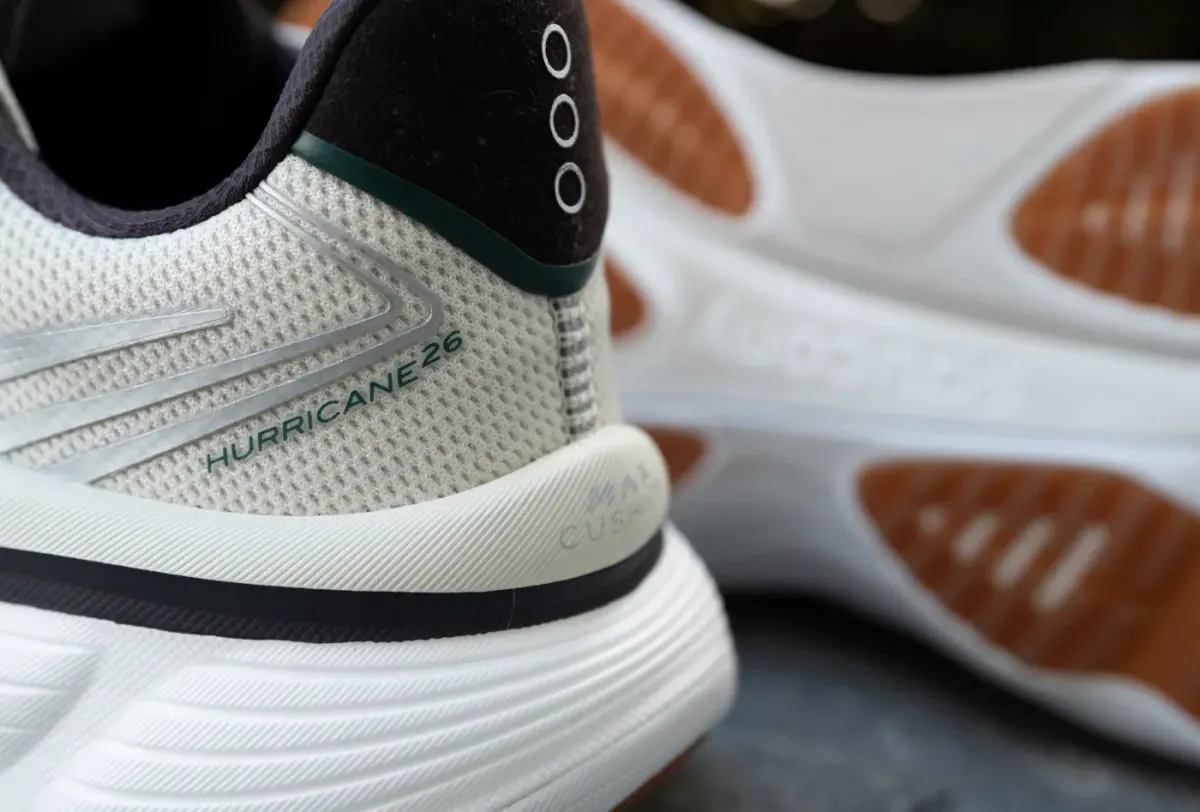
Stack: 41mm heel / 35mm forefoot · Drop: 6mm · Weight: 9.3 oz (264g) · Best for: Overpronators who want maximum foam without maximum weight
New to this list since I first published it, and it earns the spot: the Hurricane 26 now sits at the top of my stability roundup, and its case for shin splints is compelling.
The 41mm heel is the tallest stack here, and the new incrediLUX foam is soft, lively, and genuinely absorbs impact rather than just feeling thick. Both stack numbers clear the thresholds in my criteria comfortably, and the wide platform keeps landings calm.
What makes it special for a bone-stress injury is the weight. At 9.3 oz you get Gaviota-class protection with over half an ounce less to swing per stride, which adds up over a cautious return-to-running block. The 6mm drop is lower than my preferred range, but like the Guide and Gaviota, the deep cushioning and platform do the offloading work the drop normally would.
Buy them for: max cushion with support, a softer and livelier ride than the Gaviota, everyday miles. Skip them if: you want a firmer, more traditional stability feel or a higher drop.
3. Brooks Adrenaline GTS 25 — Best Traditional Stability Daily Trainer
Brooks Adrenaline GTS 25 review: softer cushioning, roomier fit, same reliable support
Comfort meets consistency but this one’s more of a side-step than a leap forward.
 Alastair Dixon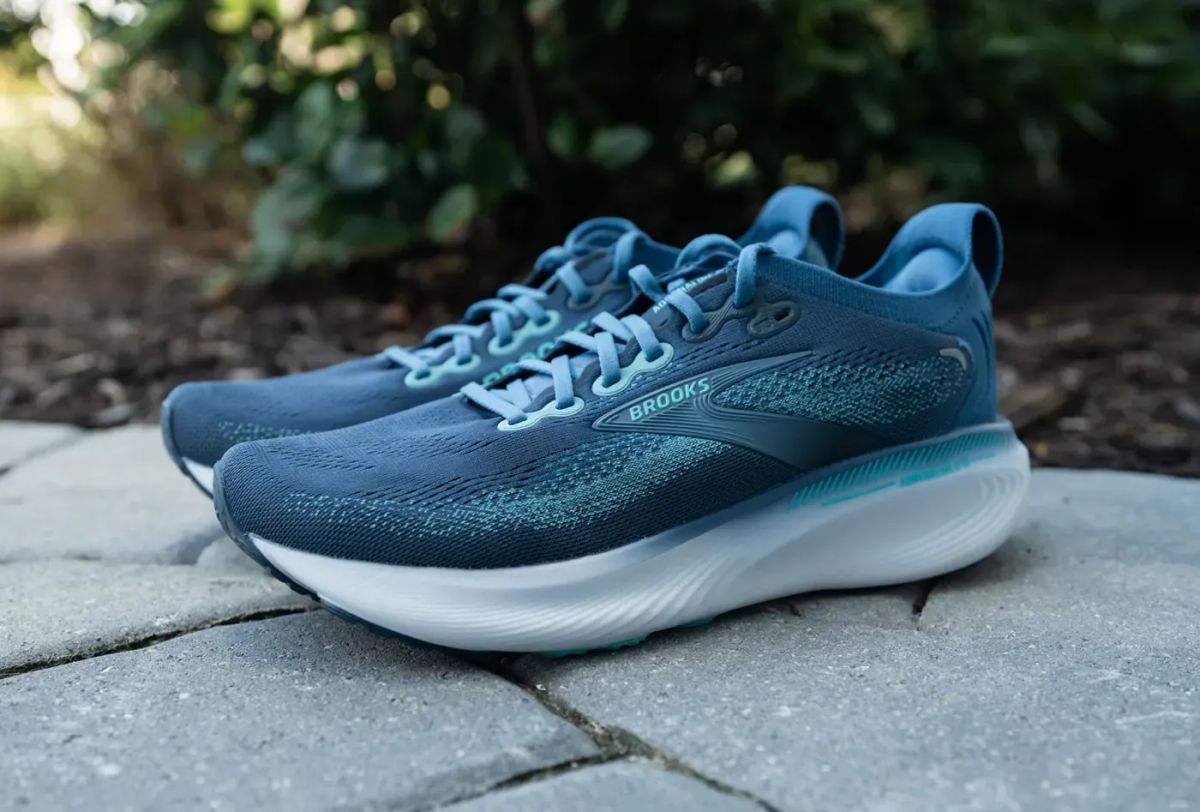
Stack: 37mm heel / 27mm forefoot · Drop: 10mm · Weight: 10.2 oz (289g) · Best for: Mild-to-moderate overpronators who want the classic stability formula
If the Gaviota feels like overkill, the Adrenaline GTS 25 is the textbook answer. It's been the default first-stability-shoe recommendation at running stores for a reason: it just works. And the 25 fixed a couple of the things that bugged me about earlier versions.
The drop came down from 12mm to 10mm, which is still ideal territory for shin splint recovery. Brooks added 3mm of DNA LOFT v3 cushioning in the forefoot and 1mm in the heel, so you're now sitting on more foam than any previous Adrenaline. GuideRails do their thing on either side of the foot; gentle pressure that steers, not corrects.
The platform isn't quite as wide as the Gaviota's, but it's well-engineered: medially flared, with a lateral cutout that compresses on landing. Torsional rigidity is solid. There's a real medial post in the midfoot and heel that feels aggressive the first 30 miles and then settles in.
What you give up: it's not the most exciting ride underfoot; DNA LOFT v3 isn't winning any energy-return contests in 2026. But for the runner trying to nurse their shins back to health, "boring and predictable" is exactly the brief.
Buy them for: Mild overpronation, classic stability feel, beginners. Skip them if: You want a soft, modern bouncy ride or you're a neutral runner.
4. Saucony Guide 19 — Best Gentle Stability
Saucony Guide 19 boosts comfort with a softer foam and upgraded outsole durability
A smooth, steady daily trainer for runners who want guided support without the fuss.
 Alastair Dixon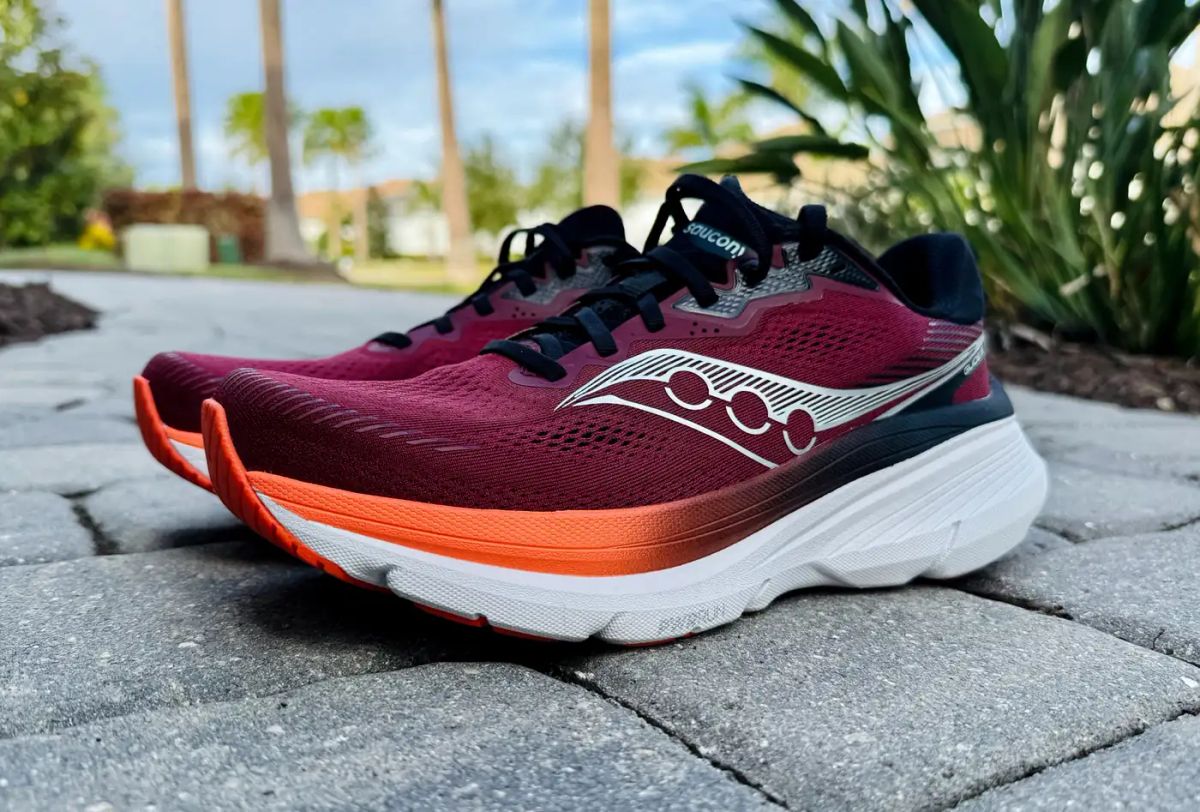
Stack: 35mm heel / 29mm forefoot · Drop: 6mm · Weight: 10.4 oz (295g) · Best for: Runners who need some stability but hate feeling too locked in
The Guide 19 is the shoe I'd recommend to someone who isn't sure whether they need stability. Saucony's CenterPath system uses high sidewalls to cradle the foot rather than push it back, so neutral runners and mild overpronators both get something out of it. There's no firm medial post. The wide base does most of the work.
Saucony re-tuned the PWRRUN foam for v19. It's still EVA-based, but softer and bouncier than v18; closer to what you'd expect from a max-cushioned trainer. The 35/29mm stack pushes it into max-cushion territory even though the number on the box doesn't scream it. Combined with the gentle rocker, the ride is smooth and forgiving on tired legs.
Like the Gaviota, it's a 6mm drop; lower than I'd normally prescribe for active shin splints, but the deep heel cushioning and the rocker offset that effectively. If you've been running in high-drop shoes and want to step down, transition gradually.
Buy them for: Gentle stability needs, easy/recovery miles, wide toe box, anyone who hates feeling "over-corrected" by their shoes. Skip them if: You want responsive pop or aggressive stability for serious overpronation.
5. Brooks Glycerin 23 — Best Max-Cushion Neutral
Brooks Glycerin 23 review: a more forgiving forefoot, same heel-led cruise feel
The ride feels more refined and more forgiving up front, but it remains a heel-led, cruise-focused trainer for new runners.
 Alastair Dixon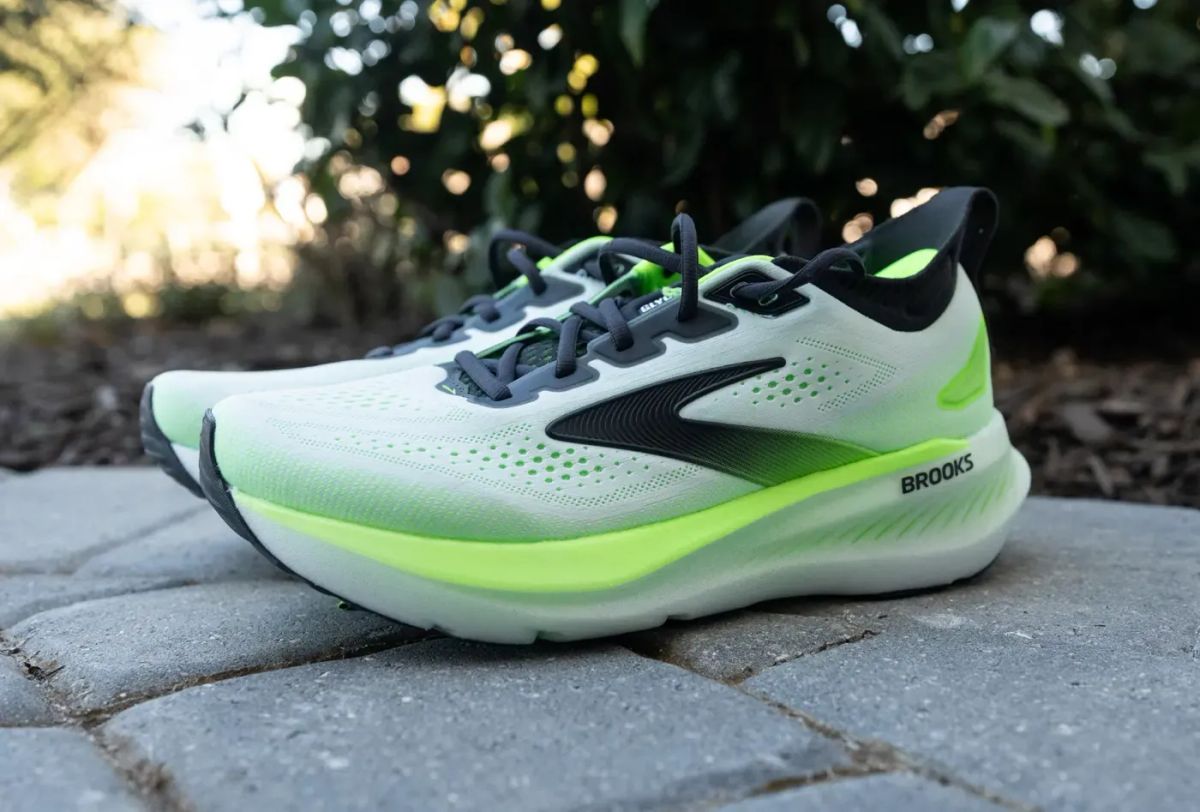
Stack: 38mm heel / 30mm forefoot · Drop: 8mm · Weight: 10.7 oz (303g) · Best for: Neutral runners who don't overpronate but need maximum shock absorption
If your gait analysis says you're a neutral runner and your shin splints are coming from impact rather than pronation, the Glycerin 23 is the move. It's Brooks' premium neutral daily trainer, and the DNA Tuned foam is genuinely one of the better cushioning systems I've run in this year.
The nitrogen-infused midsole uses larger cells in the heel (for soft landings) and smaller cells in the forefoot (for a slightly firmer toe-off). The drop came down from 10mm to 8mm in this version, which is still well within shin-splint-friendly range. 38mm of heel stack means proper impact absorption, and the platform is wide enough to feel planted without being overbuilt.
There's a Glycerin GTS 23 if you want the same shoe with GuideRails added; that's a legitimate option if you sit on the line between neutral and mild stability. For shin splints specifically, I'd lean toward the GTS variant if there's any chance you overpronate, because adding gentle guidance costs you very little.
Buy them for: Neutral gait, max-cushion fans, long easy miles. Skip them if: You overpronate (look at the GTS version), you want speed-day responsiveness, or your budget is tight ($175 is steep).
6. Brooks Ghost 18 — Best Mid-Stack Neutral for Heel Strikers
Price: $150 at brooksrunning.com
Brooks Ghost 18 review: softer, smoother, more refined
I tested Brooks’ best-selling daily trainer in Florida heat to see if the new upper, tongue, and ride upgrades live up to the Ghost name.
 Alastair Dixon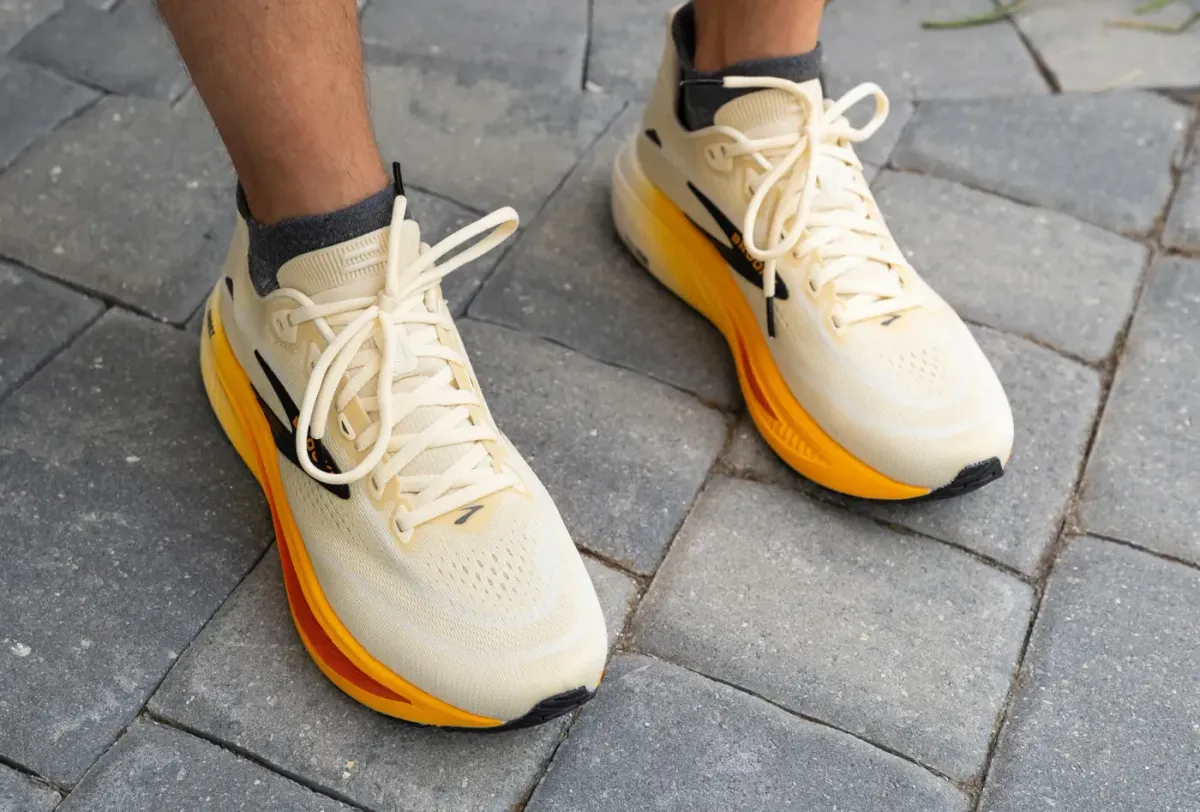
Stack: 36mm heel / 26mm forefoot · Drop: 10mm · Weight: 10.6 oz (301g) · Best for: Heel-striking neutral runners who want a no-fuss daily trainer
The Ghost 18 is the safest neutral pick on this list for someone with a textbook heel strike and shin splints. The 10mm drop genuinely matters for shin recovery; it takes meaningful load off the calf complex. The 36mm heel stack scrapes the threshold of "max cushion" without going over, and shock absorption through the heel is excellent.
What surprised me in testing this version is that it rides softer and lower-feeling than its spec sheet suggests, while DNA Loft v3 stays predictable, durable, and consistent deep into longer runs; exactly what tender shins want. The new upper also breathes meaningfully better than before, which matters if your recovery miles happen in heat.
This is the shoe for someone who doesn't want to think about their shoes. The Ghost won't change your life, it'll just quietly do its job while your shins heal.
Buy them for: heel strikers, neutral runners, beginners, anyone who wants a workhorse. Skip them if: you overpronate, you want plush max-cushion, or you have wide feet (the toe box runs slightly tapered; get the 2E or 4E version).
7. ASICS Gel-Kayano 32 — Best Premium Stability
ASICS Gel-Kayano 32 review: Smooth stability, plush comfort refined
ASICS’ flagship stability shoe evolves with a livelier ride, adaptive support, and max-cushioned comfort for long miles, recovery jogs, all day wear.
 Alastair Dixon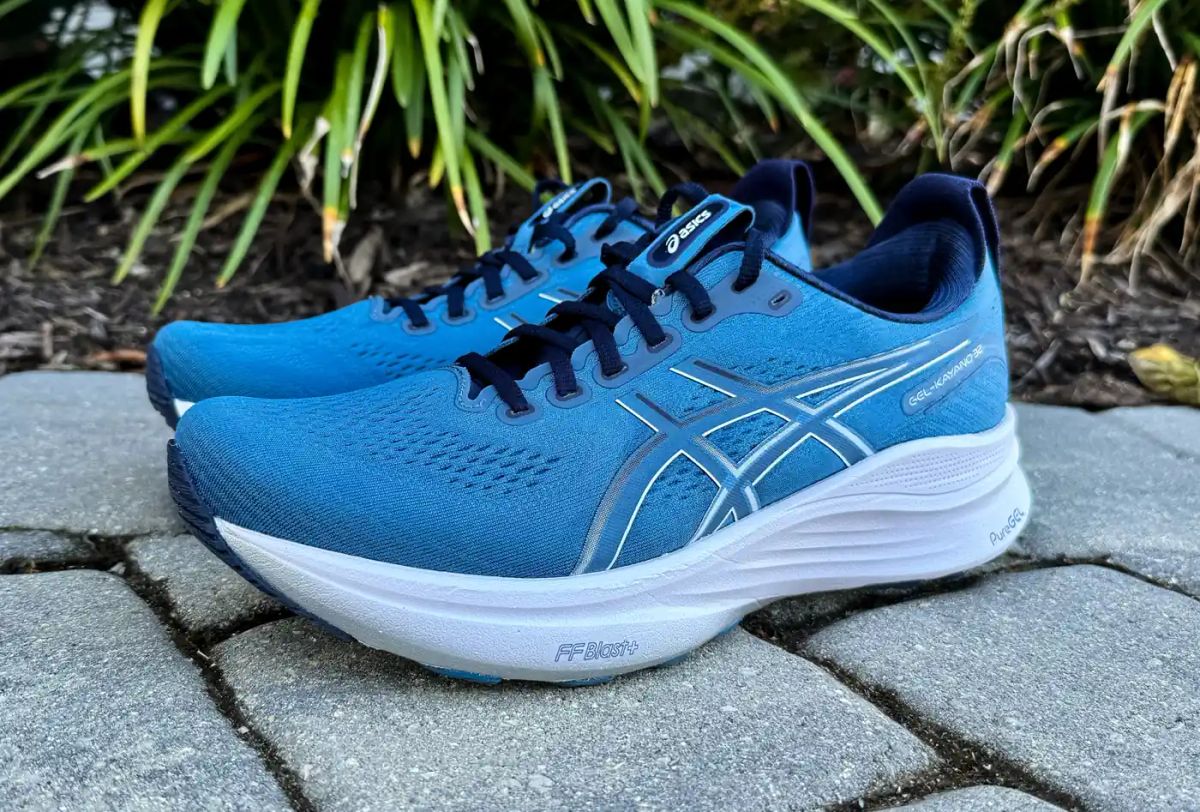
Stack: 40mm heel / 32mm forefoot · Drop: 8mm · Weight: 10.5oz (M9) · Best for: Overpronators who want premium max-cushion stability with a structured, supportive ride
If the Gaviota 6 is the max-cushion stability pick and the Adrenaline GTS 25 is the traditional one, the Kayano 32 is the premium one; and for shin splints, it's one of the most complete shoes on this list. It has a specific torsional rigidity that is exactly what you want for shin splints; it keeps the foot aligned through every transition so your lower-leg stabilisers aren't fighting the shoe.
ASICS brought the drop down from the long-standing 10mm to 8mm by adding 2mm of forefoot foam which lands it right in the shin-splint-friendly range while still being high enough to take meaningful load off the calf complex. The FF Blast+ midsole with PureGEL in the heel absorbs impact well, and the 4D Guidance System handles overpronation without an aggressive medial post; it steers the foot rather than blocking it, the same modern approach that makes the Gaviota and Adrenaline work.
One detail worth knowing for shin splints specifically is that the Kayano 32 carries the American Podiatric Medical Association (APMA) Seal of Acceptance, and it comes in wide and extra-wide widths. It's also a genuinely good walking and standing shoe, which matters if you're cross-training on tender shins.
Buy them for: Overpronation, premium stability with max cushion, heavier runners, runners who also want a walking/standing shoe. Skip them if: You're a neutral runner with no overpronation, you want a light or responsive ride, or budget is tight.
Best running shoes for shin splints for women
The criteria for women are the same as for men; high cushioning, a wide planted base, torsional rigidity, a moderate-to-higher drop. What changes is the typical fit.
Women tend to have a narrower heel relative to forefoot width, a higher arch on average, and a Q-angle that puts slightly more pronation load through the medial side of the foot.
That makes the Saucony Guide 19 and Brooks Adrenaline GTS 25 especially strong picks for women dealing with shin splints, both are widely available in women's-specific lasts (not just downsized men's shoes), both have proven heel lockdown, and both have gentle stability that suits the typical female biomechanics without overcorrecting.
If you have a wider forefoot, the Hoka Gaviota 6 is available in wide and extra-wide women's options and is the one I'd recommend for women whose toes feel cramped in standard Brooks or Saucony fits. For neutral runners, the women's Brooks Glycerin 23 comes in narrow and wide widths in addition to standard; useful if your usual struggle is heel slip in max-cushioned shoes.
The Kayano 32 women's version comes in multiple widths, and is another great option worth considering.
Best running shoes for shin splints for men
For men, the highest-leverage picks for shin splints are the same Tier 1 trio; Hoka Gaviota 6 if you overpronate and want max cushion, Brooks Adrenaline GTS 25 for traditional stability with a 10mm drop, and Brooks Glycerin 23 if you're neutral and want premium cushioning.
The men's versions of all three come in wide and extra-wide widths, which matters more than runners often realise: roughly 25% of male runners have feet wide enough that standard widths force compensatory toe-curling, which travels up the chain to the shins.
If you're a heavier runner (200lb+), the Kayano 32, Gaviota 6 and Glycerin 23 hold up better than the Adrenaline GTS 25 under repeated impact. The Ghost 17 is too lightly cushioned for heavier runners with active shin splints; its 36.5mm heel stack is on the borderline.
Best running shoes for heavy runners in 2026 (tested)
Cushioned, stable, and durable picks for bigger runners, tested and reviewed by a runner who knows what actually matters underfoot.
 Alastair Dixon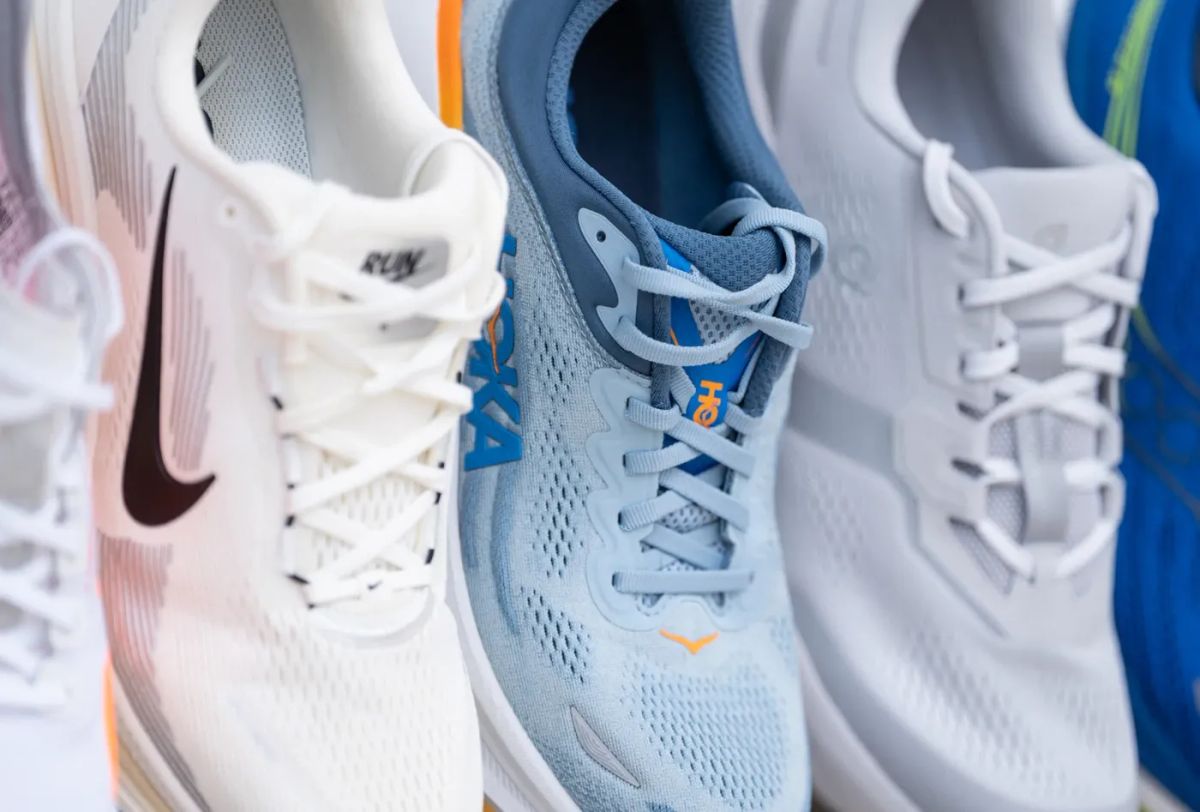
Best shoes for shin splints if you're walking, not running
If running is off the table for a few weeks and you're walking to maintain fitness, the criteria shifts slightly. You don't need as much torsional rigidity (walking strides have less rotational force) but cushioning and drop matter even more because walking spends longer in heel-contact than running does.
The Hoka Gaviota 6 doubles as one of the best walking shoes for shin splints. Its rocker geometry is forgiving at walking pace, the H-Frame stability handles overpronation, and the 39mm heel stack absorbs impact at any speed.
The Brooks Ghost 18 is the lighter, lower-budget alternative for neutral walkers. For pure all-day walking and standing on tender shins, the Hoka Bondi range (the neutral max-cushion sibling of the Gaviota) is also worth considering.
Shoes don't fix shin splints, what actually does
I said it at the top and I'll say it again because it matters: the right shoes reduce risk and help you tolerate the recovery miles, but they don't address the underlying problem.
Shin splints are an overload injury. The repetitive impact of running has exceeded what your tibia, the surrounding muscles, and the periosteum can absorb and adapt to. The two things that almost always need to change are training load and strength. A few specific lessons from my recovery roadmap:
- Back off the volume. Most shin splint flare-ups follow a recent jump in mileage, pace, or both. If you've added more than 10% per week, that's almost certainly part of the story. Cut back to pain-free mileage, even if that's two miles, and build from there.
- Strengthen calves, hips, and glutes. Heel raises (single-leg, double-leg, bent-knee for soleus), banded hip work, single-leg balance. Twice a week, every week. This is non-negotiable.
- Check your cadence. Overstriding lands your foot ahead of your center of mass and increases tibial loading. If you're consistently below 165 steps per minute, work toward 170-180. Use a metronome or a watch alert. (Here's my full guide on how to master your running cadence if you want to dig into the why.)
- Don't switch to a radically different shoe in the middle of a flare-up. Going from a 10mm drop to a 4mm drop, or from a firm shoe to a max-stack one overnight, is its own injury risk. Transition gradually.
- Replace shoes regularly. Most road shoes are done at 250-500 miles. If your cushioning feels flat and your shins are flaring, your shoes might be telling you something.
For the full protocol, including the specific exercises, return-to-running progression, and what to do if pain doesn't settle after two weeks, read my shin splints recovery roadmap. The shoes on this list are the support cast. The recovery work is the lead.
How I picked these
I run in every shoe I review. For this list, I started with stack height, platform width, torsional rigidity, drop, rocker, and only included shoes from my personal review library so I could speak to how they actually feel over miles, not just on paper. If a shoe didn't have at least 35mm of heel stack or a wide enough base to feel planted, it didn't make the cut.
Notable absences worth mentioning: I'm not putting carbon-plated racers on this list (Endorphin Pro, Vaporfly, Alphafly) even though some of them have huge stack heights. They're built to encourage faster turnover and aggressive transitions; exactly what you don't want when your shins are angry.
The Altra Experience Flow 3 I reviewed earlier this year is also out, because zero/low drop is wrong for active shin splints regardless of how well-cushioned the rest of the shoe is.
If you don't see your shoe here and you want me to test something specific, drop me a line. And if you're nursing a current flare-up; read the recovery roadmap first, pick one shoe from the list above that matches your gait, and give your body the time it actually needs.
Pain-free miles are coming back; just give the process the respect it asks for.
Frequently asked questions
Can shoes cause shin splints?
Not on their own but they can absolutely contribute. The two ways shoes drive shin splint risk are (1) cushioning that's worn out (most road shoes lose meaningful shock absorption between 250-500 miles), and (2) a sudden change in shoe characteristics that the body hasn't adapted to.
Going from a 10mm drop to a 4mm drop overnight, switching from cushioned to minimalist, or jumping into carbon-plated racers for training runs are all classic triggers. The shoe is rarely the root cause, but it's often the straw that breaks the camel's back when training load is already too high.
Are Hoka shoes good for shin splints?
Yes, generally. Hoka built its reputation on max cushioning and wide platforms, which are both shin-splint-friendly features. The Gaviota 6 is my top overall pick on this list, and the Bondi range (neutral max cushion) is also strong if you don't need stability.
The exception is Hoka's faster, lower-stack models (the Mach line and the Cielo X1 racers) which are not what you want during a flare-up. Stick to Hoka's daily trainers and recovery shoes, not their tempo or race shoes.
Are zero-drop shoes good for shin splints?
No. At least not during active shin splints. Zero-drop and low-drop shoes (Altra, Vivobarefoot, most minimalist brands) put more load through the calf complex and Achilles, which then pull harder on the periosteum of the tibia.
If you've developed shin splints in a zero-drop shoe, that drop is almost certainly part of the problem. Once you're recovered, many runners do well in low-drop shoes long-term, but it requires gradual adaptation over months; not weeks.
Will shoe inserts help shin splints?
Sometimes, but not as a first-line fix. If you overpronate significantly and your current shoe has no stability features, an over-the-counter arch support insert (Superfeet, Powerstep, or a custom orthotic) can help reduce the pull on the tibialis posterior.
But the more sustainable answer is a properly stability-cushioned shoe like the Gaviota 6, Adrenaline GTS 25, or Guide 19; these are engineered to do what an insert tries to do. If you've already got the right shoe and shin splints persist, then inserts (or a podiatrist consult) become the next step.
How long do shin splints last?
For mild cases with sensible rest and shoe changes, 2-4 weeks. For moderate cases that need active rehab (calf strength work, cadence retraining, training load adjustment) 4-8 weeks is typical. Stubborn or recurring shin splints can take 8-12 weeks and warrant a professional gait assessment to find the underlying cause.
If pain doesn't improve at all after 2 weeks of rest and the right shoes, see a sports physio to rule out a tibial stress fracture, which presents similarly but requires different management.
If you haven't already, signup for my free newsletter, and subscribe to my YouTube Channel for more content like this. -Alastair
Written by

Subscribe to new posts
reviews, training tips, and thoughtful stories for runners








Member discussion