
Shin splints recovery roadmap: how to get rid of that stabbing pain in your lower leg, for good
The exact recovery plan that got me back to pain-free running after a brutal training block; no fluff, just the stuff that actually works.

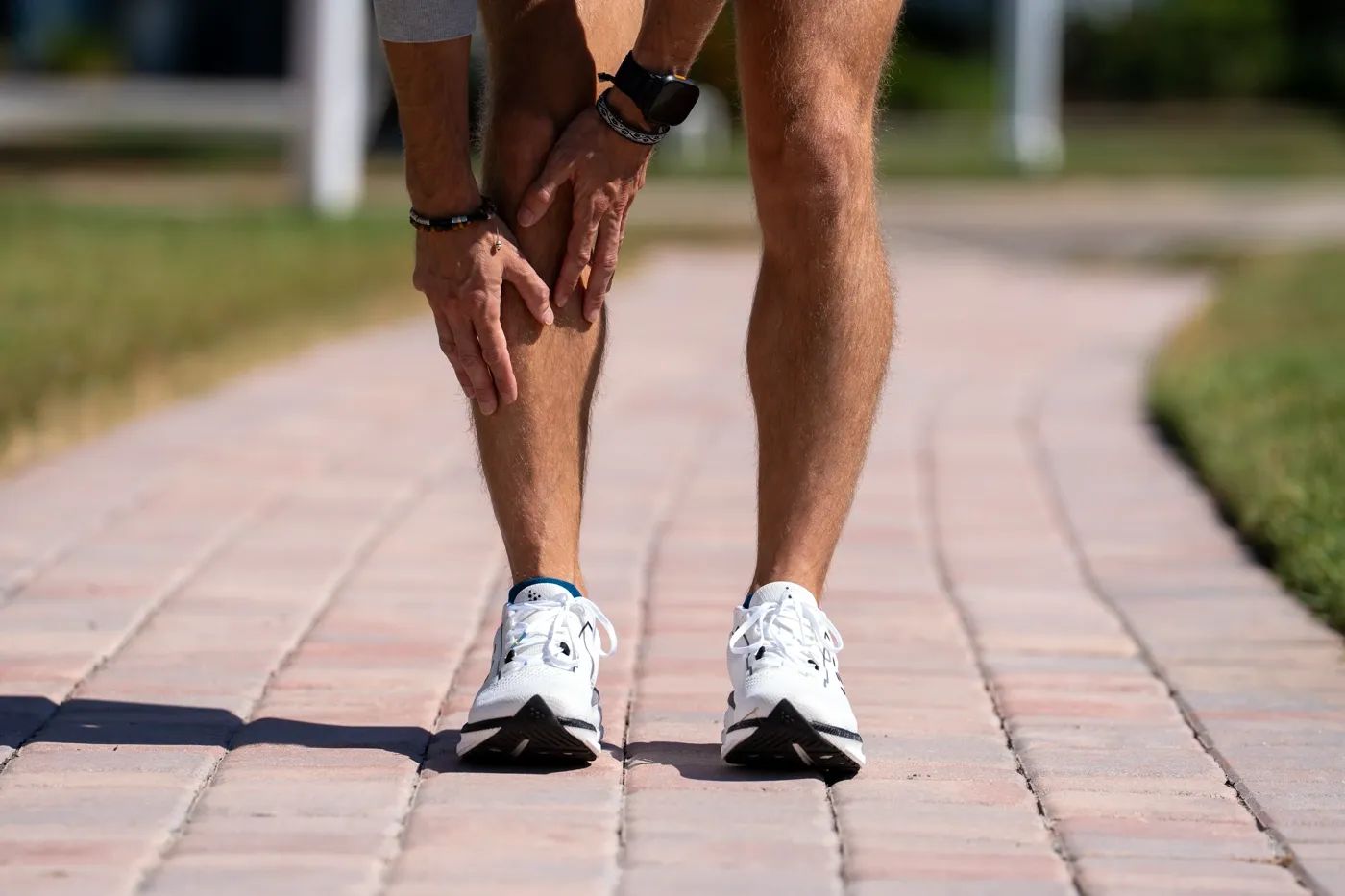
If you've ever been a mile into an easy run and felt that sharp, tender ache start to bloom along the front or inside of your shinbone… yeah, I know that feeling well.
It starts as a dull tightness you can almost ignore. Then it sharpens. By mile two it's a pulsing, bruise-like pain along your tibia that doesn't really go away when you slow down. By the time you've stopped, walking down stairs is uncomfortable, and you're already mentally rearranging your training week.
That, my friend, is most likely shin splints (or medial tibial stress syndrome if we're using the medical term), and if you're a runner who's pushing yourself, it's one of the most common injuries you'll bump into; it was one of my first running issues when initially started running.
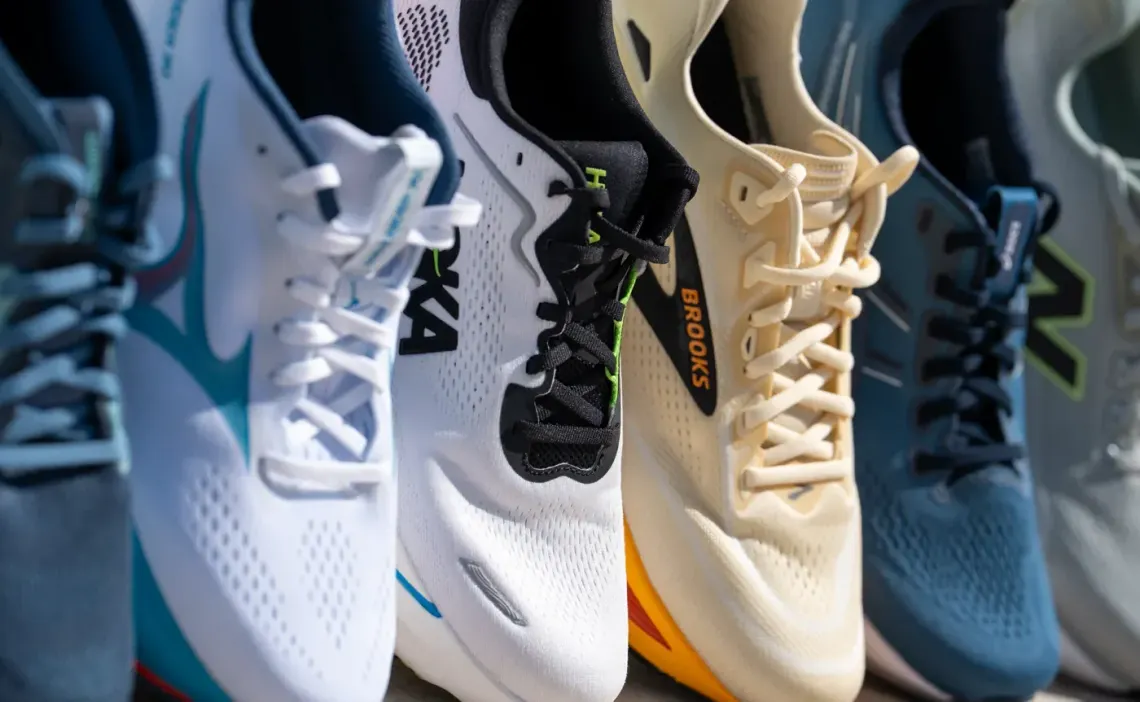
Best Running Shoes For Shin Splints (2026): 6 Tested Picks
Shoes don’t fix shin splints, but the wrong ones make it worse. My six tested picks for runners dealing with MTSS, plus what actually helps recovery
 Alastair Dixon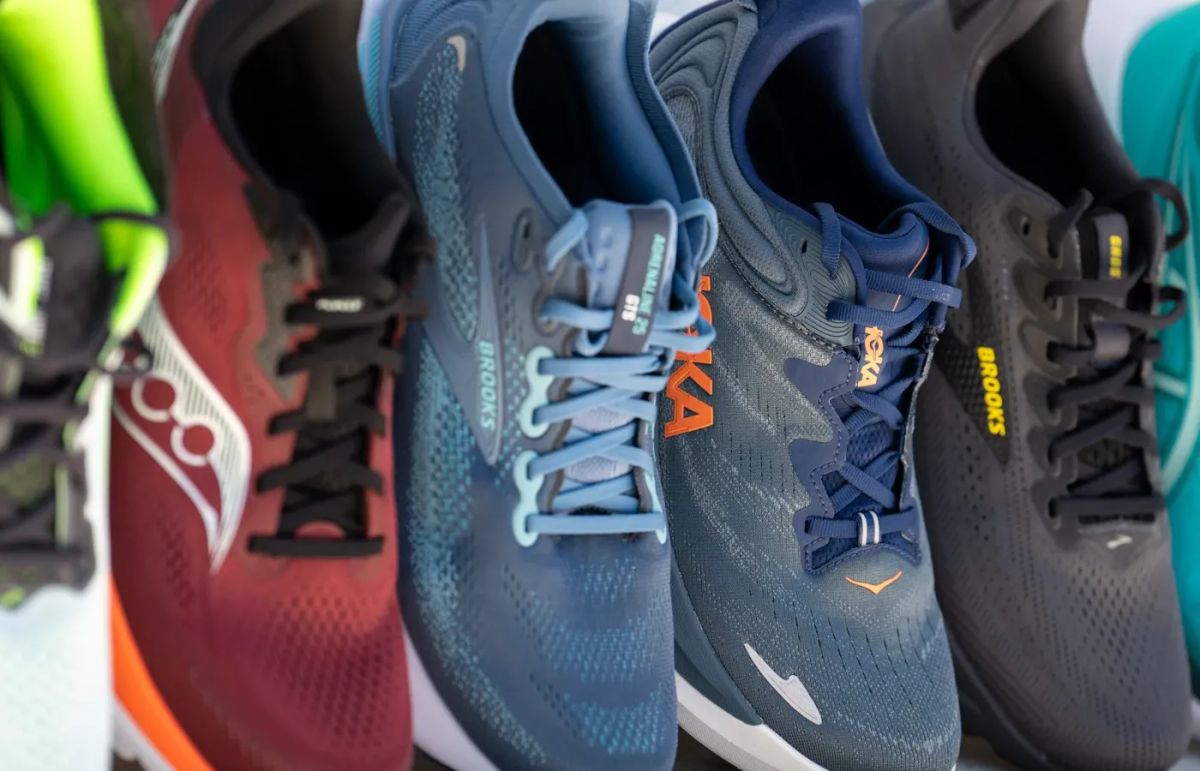
The good news is that most runners are back to pain-free miles in 3 to 6 weeks if they treat shin splints the right way. The bad news is most runners don't treat it the right way, which is why it drags on for months and, in some cases, develops into a stress fracture.
Let's fix that.
The 10 Biggest Mistakes New Runners Make (and How to Avoid Them)
Beginner runner traps that kill your momentum: Fix them fast and hit the ground running (literally)
 Alastair Dixon
What are shin splints, actually?
Shin splints is the catch-all name runners use for a specific type of overuse injury along the tibia (your shinbone). The medical world calls it medial tibial stress syndrome (MTSS) because the pain typically shows up along the medial (inner) edge of the tibia, where a bunch of lower-leg muscles attach to the bone.
What's actually happening down there?
When you run, your tibia and the surrounding muscles, tendons, and connective tissue absorb a huge amount of repetitive impact, literally thousands of impacts per mile. If your body isn't conditioned for that load, or you've ramped it up too fast, the tissues that connect muscle to bone start getting inflamed and irritated.
The bone itself can even start reacting (this is called bone-stress reaction, and if you ignore it long enough, it becomes a stress fracture).
So shin splints isn't really one injury. It's an umbrella term covering a few related conditions:
- Medial shin splints (the most common) — pain along the inside of the shin from the muscles pulling on the bone.
- Anterior shin splints — pain along the front/outside of the shin, usually involving the tibialis anterior (the muscle that lifts your toes when you walk).
- Tibial bone-stress reaction — when the bone itself starts to fatigue. This is the precursor to a stress fracture.
- Chronic exertional compartment syndrome — rarer, but feels similar. Pain builds during exercise and goes away fast at rest.
For most runners reading this, it's the first two; and that's what this roadmap is built to fix as they're what I have had my own personal experience with.
It accounts for somewhere around 13 to 20% of all running injuries and hits beginners and runners returning from a layoff hardest, though I've watched plenty of experienced runners (myself included) get blindsided by it after a sudden training jump.
How shin splints actually feel (the symptoms to look for)
- A dull, aching pain along the inside or front of your shinbone, usually in the lower two-thirds of the tibia
- Pain that's worse at the start of a run, sometimes eases mid-run, then comes back hard afterward
- Tenderness when you press along the inside edge of your tibia — and we're talking a 4–6 inch zone of soreness, not a single pinpoint spot (that's a red flag for a stress fracture, more on this below)
- Mild swelling in the lower leg
- Pain when you go up on your toes or flex your foot upward
- It tends to feel bruise-like rather than sharp or shooting
If your pain is a single pinpoint spot on the bone, hurts when you hop on one leg, wakes you up at night, or doesn't improve with rest in a few days, that is not normal shin splints, that's a possible stress fracture, and you need to stop running and get it imaged. I cannot stress this enough.
For everyone else, keep reading...
Why runners keep getting shin splints (the real causes)
Here's where it gets useful, because if you understand why it happened, you'll know exactly what to fix.
The big culprits I see (and have lived through myself):
- Too much, too soon. The number one cause, full stop. You bumped your mileage by more than 10% in a week. You added speedwork while still building base. You went from couch to 5K in 4 weeks instead of 8. The bone and connective tissue can't adapt that fast.
- Worn-out or wrong shoes. Old shoes with flattened midsoles don't absorb impact anymore. The wrong shoes for your gait (under-pronator in a stability shoe, etc.) make it worse.
- Hard, unforgiving surfaces. Concrete is brutal on the shins. Asphalt is meaningfully better. Trail and treadmill are better still.
- Weak calves and weak tibialis anterior. If the muscles around your shin can't take the load, the bone has to.
- Low cadence / overstriding. Landing with your foot way out in front of your body sends more shock through the tibia. I've written about how to master your running cadence and it's directly relevant here as cadence is one of the easiest shin-splints risk factors to fix.
- Foot mechanics. Flat feet or very high arches both load the tibia differently than a neutral arch.
- Nutritional gaps. Low vitamin D, low calcium, low energy availability (especially in women) all weaken bone-stress tolerance.
- A sudden surface change. Switching from grass to road, or from treadmill to outdoor, can trigger it.
For me, that first round, it was honestly all three of the top reasons stacked: too much mileage, too fast, on dead shoes. My body sent me the bill.
The 60-second self-check (do this at home before you go further)
This isn't a diagnosis (only an X-ray or MRI can definitively rule out a stress fracture). But it's a useful filter.
The palpation test: Sit down. Run your fingers firmly along the inside edge of your tibia, from just below the knee down to the ankle. If you feel a diffuse band of tenderness (a 4-inch+ zone of soreness), that's consistent with shin splints. If it's one tiny, sharply painful spot, that's not.
The single-leg hop test: Stand on the painful leg and do 10 small hops in place. Mild discomfort? Probably shin splints. Sharp, localised, "no thank you" bone pain? Stop, and see a sports doc. Don't run again until you've ruled out a stress fracture.
If you've passed those checks, you're almost certainly dealing with shin splints, and the roadmap below will get you back.
My step-by-step shin splints recovery roadmap
Same framework I used in the IT band recovery roadmap, tailored for shin splints because the recovery levers are completely different. Three phases. SKIP NOTHING.
Phase 1: Calm it down (week 1–2, or until you can walk pain-free)
Goal: Stop loading the tibia, take the inflammation down, and let the bone start to heal.
This is the phase where most runners screw up by trying to "just take it easy" instead of fully backing off. Don't be one of them, be the smart runner.
- Stop running. Yes, completely. Shin splints needs a real load-off period to heal. Running through it is the single fastest way to turn a 3-week problem into a 3-month stress fracture.
- Swap to zero-impact cross-training. Pool running, cycling (low resistance, high cadence), and elliptical are your friends. Avoid jumping rope, plyometrics, and anything that loads the shins.
- Ice the painful area for 10–15 minutes, 2–3 times a day, especially after any activity. A frozen water bottle rolled along the inside of the shin is brilliant for this.
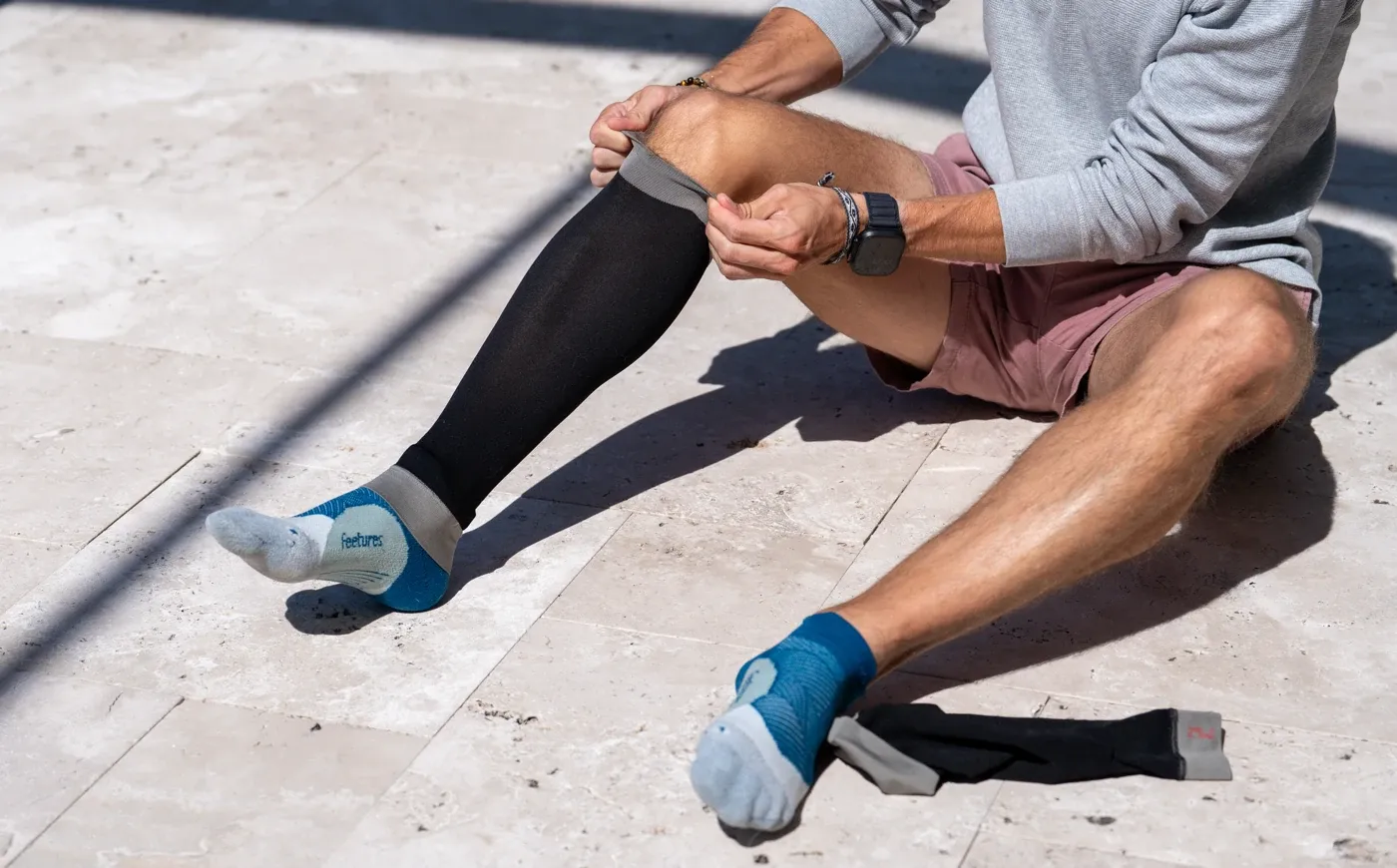
- Compression. A calf compression sleeve (like this CEP one on Amazon) worn during the day reduces inflammation and feels great. I wore one daily for the first two weeks.
- Anti-inflammatory eating. Your body is trying to repair connective tissue and bone, give it the raw materials in needs. Heavy on the salmon, blueberries, leafy greens, walnuts, turmeric, and extra virgin olive oil. I covered this in detail in my runner's diet guide. NSAIDs (ibuprofen) can help short-term but I prefer the food-first approach where possible because there's emerging evidence NSAIDs may actually slow bone healing.
- Sleep + protein. Bone-stress recovery is mostly an overnight job. 7–9 hours, and aim for 1.6–2.0g of protein per kg of bodyweight daily.
- Walk, don't run. Walking is fine and actually helpful, but if walking hurts, even that is too much. Pull back further.
Most runners feel significantly better after 7–10 days if they actually respect the rest period. If you don't, it's a sign you may be dealing with more than basic shin splints; if that is the case, I recommend seeing a sports physio.
Phase 2: Rebuild the system (weeks 2–5)
Goal: Strengthen the muscles around the tibia so they share the load properly, fix the mechanics that caused it, and get the bone ready to absorb impact again.
This is where most clinical "shin splints" articles fall apart, because they tell you to rest and that's it. Rest alone doesn't fix the reason you got shin splints in the first place. Strength does. Mechanics do.
Do these 4 times a week, 2–3 sets each, when you can do them pain-free:
1. Eccentric calf raises (the single most important exercise)
Stand with both feet on the edge of a step, heels hanging off. Rise up onto both toes, then shift all your weight to the injured leg and slowly lower that heel down for 3–4 seconds. Use both feet to go up, one foot to go down. Start with 2 sets of 10, build to 3 sets of 15. This builds calf strength and loads the tibia in a way that triggers bone adaptation.
2. Anterior tibialis raises
The muscle on the front of your shin is criminally weak in most runners. Sit on a chair, heels on the floor, lift your toes and the front of your foot upward as high as you can. Hold for 2 seconds, lower slowly. 3 sets of 20. Add a very small dumbbell on your toes once it's easy. These are awkward but transformative; this single exercise prevented every shin-splint flare-up since my first round.
3. Single-leg balance work
Stand on the injured leg for 30 seconds, then 60. Progress to doing it with eyes closed. Then on a couch cushion. This rebuilds the small stabilisers in the ankle that take a beating when shin splints happen.
4. Toe walks and heel walks
Walk on your toes for 20 metres, then on your heels for 20 metres. Three rounds. This fires up both the calves and the anterior tibialis at the same time. Looks ridiculous, works brilliantly.
5. Glute bridges and side-lying hip abduction
Yes, weak glutes can cause shin splints too; when your hip stabilisers are sleepy, your lower leg overcompensates. 2 sets of 15 of each.
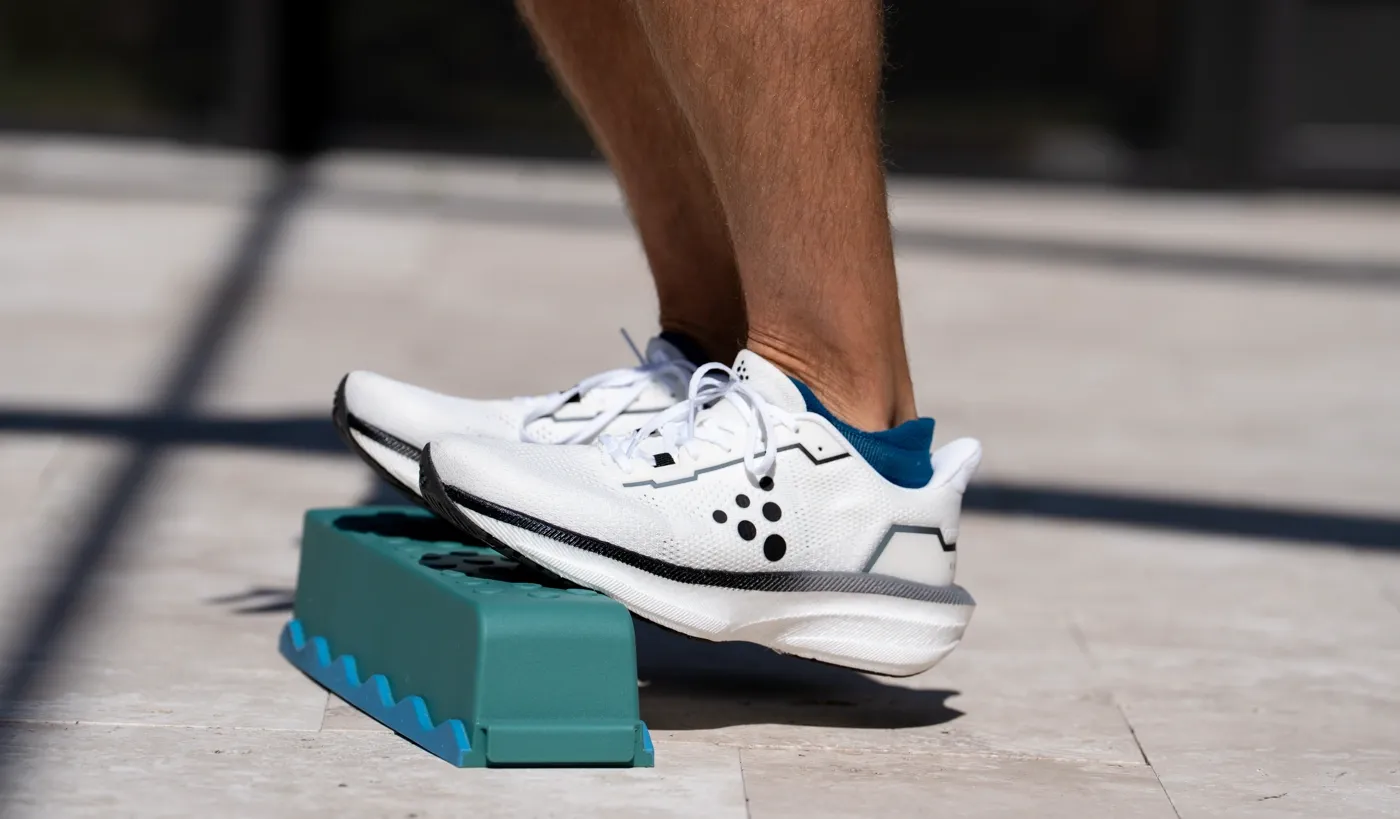
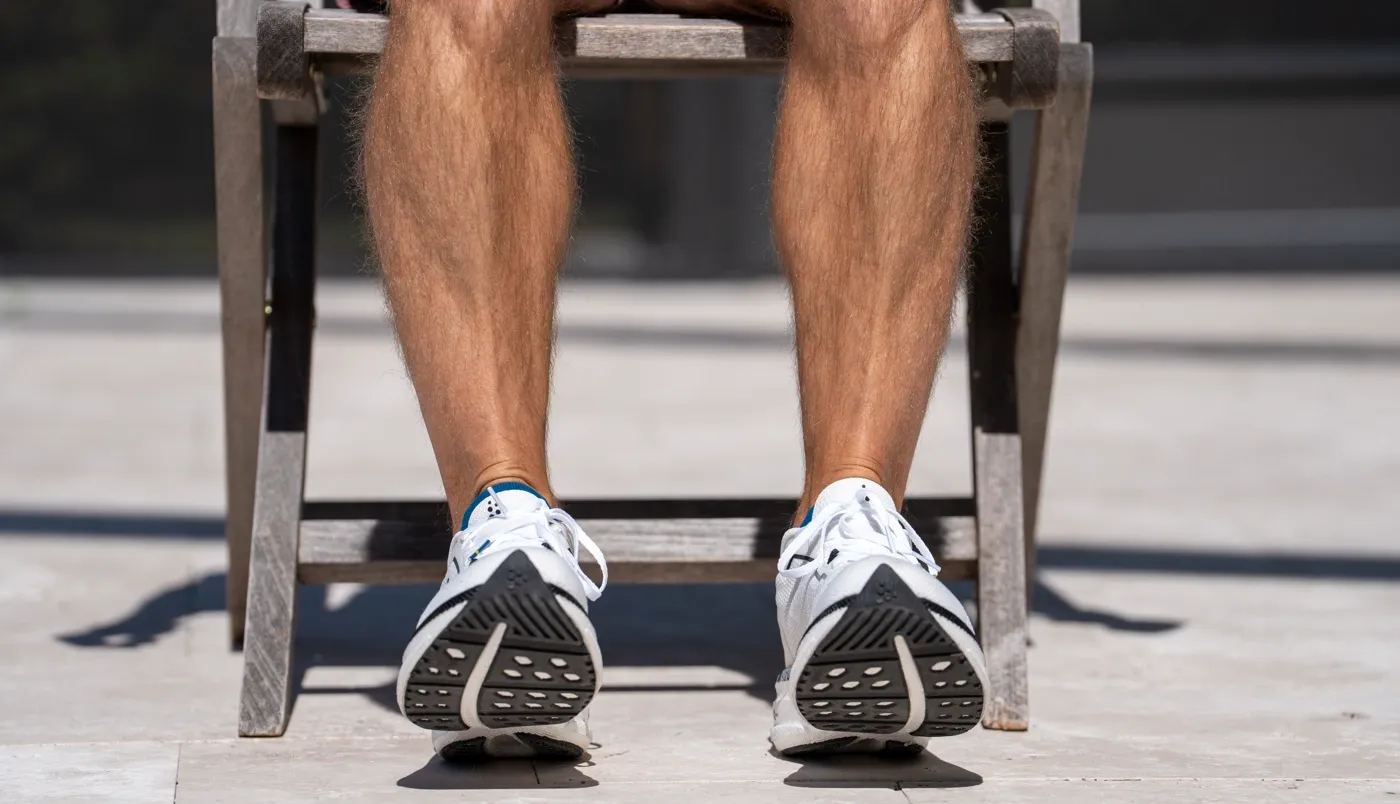
Eccentric calf raises (left), Anterior tibialis raises (right)
Stretching matters too, but only as a support player. Daily calf stretches against a wall (15–30 seconds each, both straight-knee and bent-knee versions to get gastrocnemius and soleus). I cover the full set in my best stretches for runners guide.
Phase 3: Return to running (start when you can hop pain-free on the injured leg)
This is the phase where you can undo all of the previous four weeks if you rush. Don't rush.
- Week 1 of return: 2 runs, both 20 minutes max, 1-minute run / 1-minute walk intervals, on a soft surface (treadmill or trail).
- Week 2: 3 runs, building to 25 minutes of continuous easy running, still on soft surface.
- Week 3: Add a 4th run, allow one road run.
- Week 4 onwards: Apply the 10% rule religiously. Never bump weekly mileage by more than 10% week-over-week. Keep doing the strength work 2x/week, forever.
No speedwork. No hills. No long runs over 60 minutes. Not until you have 3 fully pain-free weeks under your belt.
Cadence check: try to land with your foot under your hip, not way out in front. Aim for a cadence of roughly 170–180 steps per minute. If you're closer to 155–160, you're likely overstriding, and that's directly loading your shins. Working on cadence is one of the highest-leverage things you can change.
How to master your running cadence (and why it matters)
Your running cadence affects more than you think—here’s how to measure it, adjust it, and use it to run stronger and with fewer injuries.
 Alastair Dixon
Good running form helps too, so read my proper running form guide if you haven't already.
Should you tape your shins?
A lot of runners ask about this. Honest answer: K-tape can provide mild proprioceptive feedback and a small amount of compression, which some people find reduces pain during the return-to-running phase. It doesn't fix the problem. It's a Band-Aid, not a cure.
If you want to try it, use two strips of K-tape applied along the inner shin, from below the knee to just above the ankle, with about 25% stretch. YouTube has good tutorials.
But please don't use tape as an excuse to keep running when you shouldn't be running. That's how stress fractures happen.
Prevention: how to never deal with this again
Once you've recovered, this is non-negotiable if you want to stay healthy:
- Build mileage by no more than 10% per week. Boring but it works, and if you need a sensible training plan to help you get to your desired base; my training plan generator is where you need to head next.
- Keep doing the strength work — eccentric calf raises and tibialis anterior raises, 2x per week, forever. Takes 8 minutes. Saves potentially months.
- Replace your shoes every 300–500 miles. Old foam is dead foam. My full guide to the best running shoes for shin splints.
- Rotate your shoes. Two pairs in rotation means each pair has 48 hours of foam decompression between runs, and you load your feet slightly differently in each pair. This alone reduces injury risk meaningfully.
- Don't run exclusively on concrete. Mix in trail, treadmill, or asphalt.
- Get your cadence above 170 spm if you're not already there.
- Don't skip your warm-ups. 10 minutes of brisk walking and dynamic drills before you start running properly.
- Listen to your body at the first twinge. A day off at the first sign of shin tenderness can save you 6 weeks later. I learned this one the hard way.
Best stretches for runners: dynamic warm-ups, static recovery routines
Dynamic stretches help prepare your body to run; static stretches support recovery and mobility after. Here’s how to use both.
 Alastair Dixon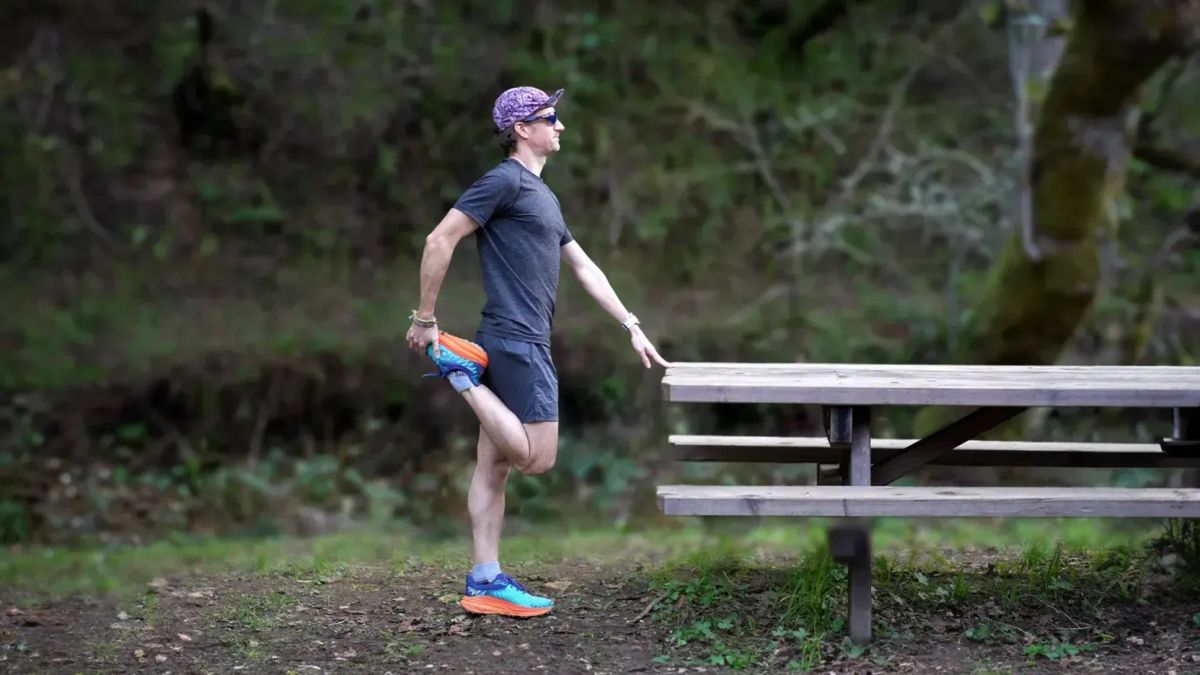
Common questions about shin splints
How long do shin splints take to heal? For most runners, 3 to 6 weeks if you respect the rest period and do the strengthening work. Ignore it and try to run through it, and you're looking at 3 to 6 months, or a stress fracture that takes longer still.
Can you run with shin splints? Technically yes, but you shouldn't. Running on inflamed bone tissue is exactly how you turn shin splints into a stress fracture. The risk-reward math is terrible. Take 2–3 weeks off now, save yourself months later.
What's the difference between shin splints and a stress fracture? Shin splints = diffuse pain along a 4+ inch zone, usually improves with rest within days. Stress fracture = pinpoint pain in one spot on the bone, hurts when you hop on one leg, can wake you up at night, doesn't improve much with rest. If in doubt, get it imaged; an MRI is the gold standard.
Why do shin splints come back? Because most runners treat the symptom (rest until pain stops) without fixing the cause (weak calves, weak tib-ant, dead shoes, low cadence, too-fast mileage build). The strength work in Phase 2 is what stops them coming back.
Are shin splints permanent? No. With proper rehab, they go away completely and don't have to return.
Should I see a doctor? Definitely yes if: pain is pinpoint and intense, doesn't improve in 2 weeks of rest, you have night pain, or you suspect a stress fracture. Otherwise, a good sports physio or running coach is worth their weight in gold.
The bottom line (my verdict after coming out the other side)
I got hit hard with shin splints during my first ever half marathon training block (many years ago) where I'd just bumped my weekly mileage too fast (classic too much, too soon).
I tried to push through; that made it worse. I tried to "just rest" for a week and run again; it came back within two miles. What finally fixed it was the exact plan above.
Shin splints feels worse than it is. The moment you accept that 2 to 4 weeks of structured rest plus a real strength routine beats two months of bargaining with your training plan, the recovery actually starts.
The runners I see suffer with this for months aren't unlucky, they're stubborn. They take 4 days off, run, hurt, take 4 more days off, run, hurt, and so on. That cycle just keeps the bone-stress reaction simmering.
Two to three full weeks off. Eccentric calf raises 4 times a week. Tibialis anterior raises like your running life depends on it (it does). A proper cadence check. New shoes if yours are old.
That's the whole recovery. It's not flashy, it's not a secret, it's just consistent.
I've been running shin-splint-free for over 12 years now since fixing this properly. You will be too.
If you've got questions on any of the exercises or where you are in the recovery process, drop them in the comments or hit reply on the newsletter, I read and answer every one.
Keep the miles coming (smartly).
-Alastair ✌🏼
Written by

Subscribe to new posts
reviews, training tips, and thoughtful stories for runners








Member discussion