
Achilles Tendinitis Recovery Roadmap: How to Get Rid of that Back-of-Heel Pain, For Good
The exact recovery protocol that got me back to pain-free running after Achilles tendinitis, twice. Phase-by-phase loading plan, no filler.

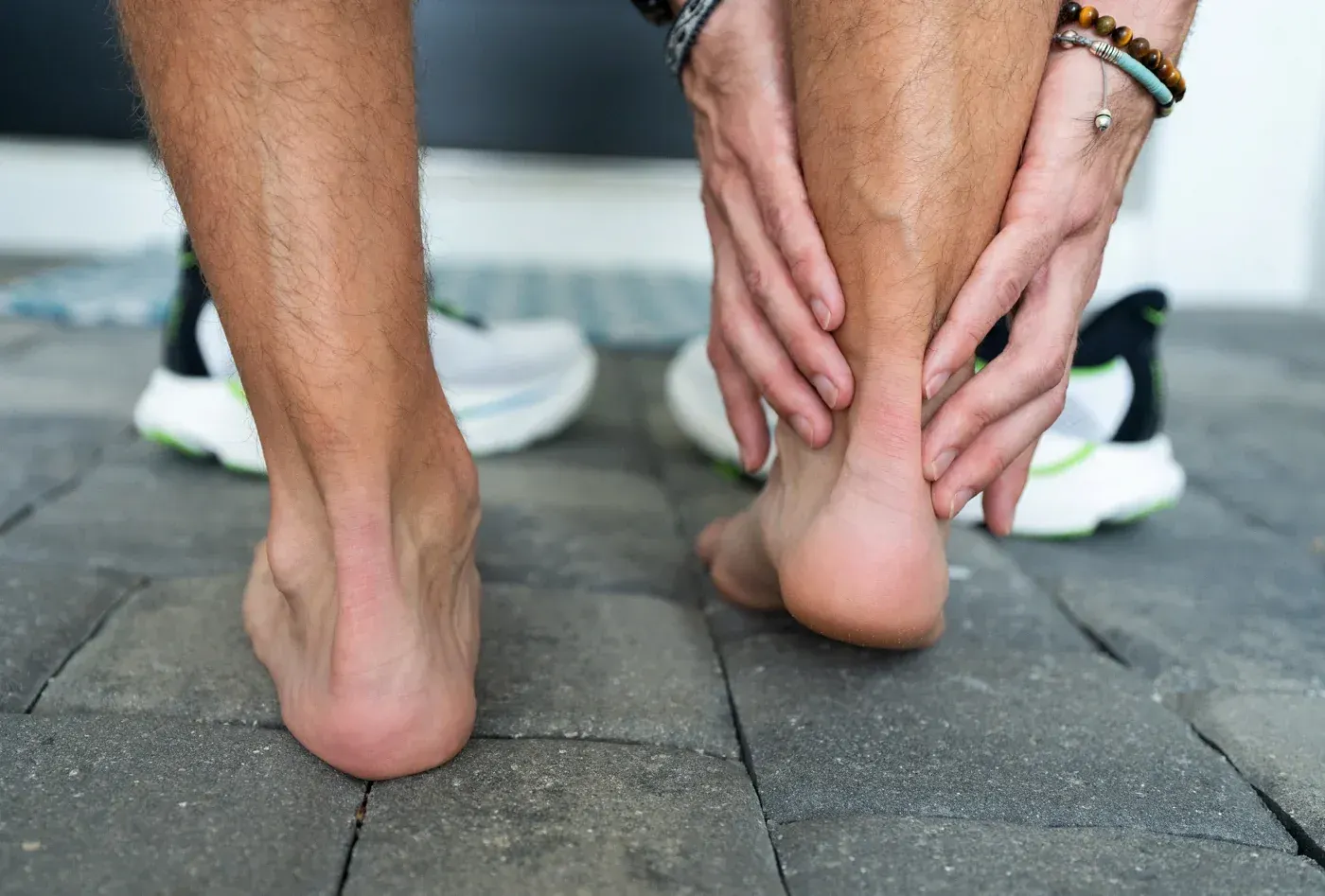
You know the one. You roll out of bed, take those first stiff (and often very painful) steps toward the coffee maker, and there it is: a sharp, burning ache right above your heel that makes you wince. Or it hits two miles into an easy run, forcing you to limp home wondering if you'll ever get back out there without that constant "am I about to snap something?" feeling.
That's Achilles tendinitis (also called Achilles tendonitis or Achilles tendinopathy), and if you're a seasoned runner it has probably shown up in your log more than once. I've dealt with it twice; once during a 50km ultramarathon block, and again last summer when I pushed the volume too fast after a steady mileage off-season.
The good news: it's one of the most fixable running injuries there is, if you treat it the right way. The bad news: most runners don't. They either rest passively and wait (it comes straight back), or they train through it while doing nothing else (which turns a 6-week problem into a 6-month one).
This roadmap is exactly what got me back to pain-free miles both times, built around what sports medicine actually agrees on. No magic cures, just the stuff that works in the real world. I've also written companion roadmaps for plantar fasciitis, IT Band syndrome, and shin splints if your pain lives somewhere else.
What is Achilles tendinitis? (And what's actually happening back there)
The Achilles tendon is the thickest, strongest tendon in your body. It connects your calf muscles (gastrocnemius and soleus) to your heel bone and does the heavy lifting every time you push off during a stride.
Achilles tendinitis is irritation and degeneration of that tendon from repetitive overload.
Despite the name, it's not usually classic inflammation anymore; modern research calls it tendinopathy, because the tendon fibers break down and lose their normal structure under loads they weren't ready for. It accounts for roughly 6-17% of running injuries, and once it gets grumpy it loves to linger if you keep poking it.
Here's the detail that matters more than anything else in this article, because it changes your rehab: it comes in two flavors.
- Mid-portion: pain 2-6 cm above the heel bone, in the meaty middle of the tendon. This is the most common type in runners, and it responds brilliantly to the classic loading protocols.
- Insertional: pain right where the tendon attaches to the heel bone. This one is more stubborn, and (critically) it gets aggravated by the deep-stretch positions that help mid-portion cases.
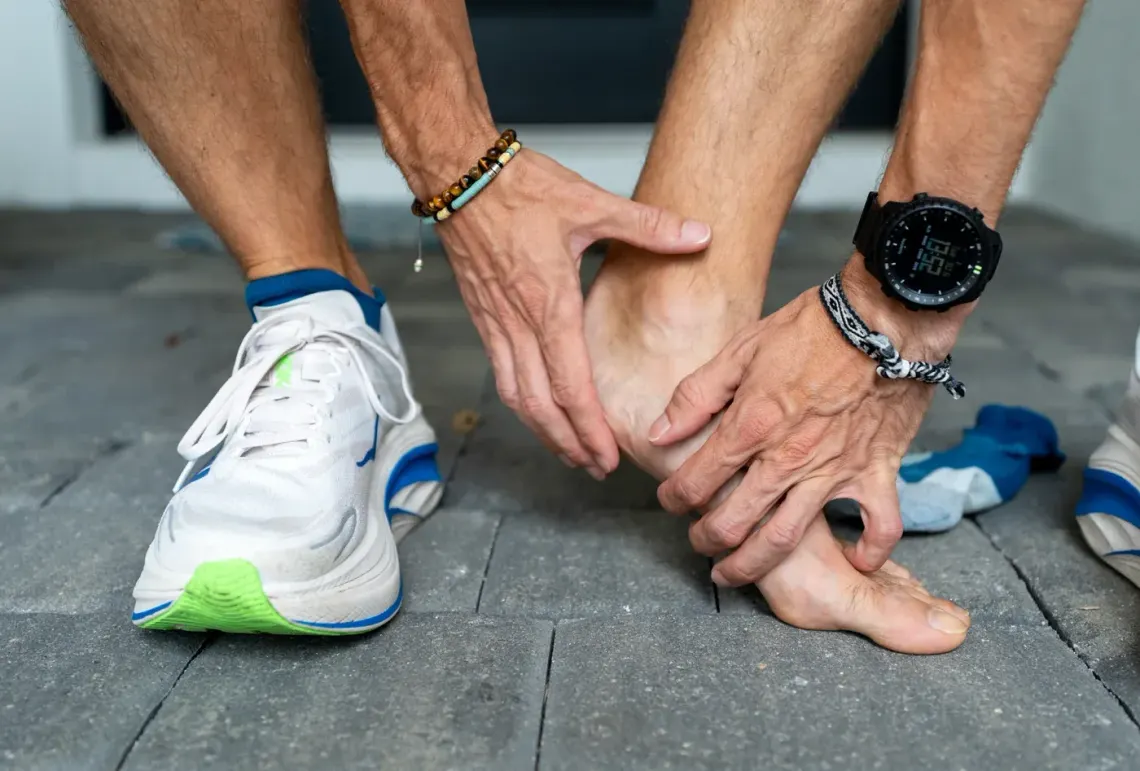
Pinch your way down the tendon and note where it hurts. You'll use that answer in Phase 2.
What it feels like
- Stiffness and pain at the back of the heel first thing in the morning or after sitting (I found heat and gentle movement helped a lot before I could walk normally in the morning)
- An ache or sharp pain above the heel that warms up a bit during a run, then comes back worse afterward
- Swelling or a "sausage-like" thickening of the tendon
- Pain going up or down stairs, or pushing off
- Sometimes a creaking or grinding sensation (crepitus) when you move the ankle
- Calms with rest, roars back the second you try to run again
If you're reading this while hobbling around the house... yep, you're in the right place.
What it's not
If your pain is at the bottom of the heel rather than the back, that's a different injury: read my plantar fasciitis recovery roadmap instead.
Running With Plantar Fasciitis: The Recovery Roadmap
The exact recovery protocol that got me back to pain-free running after a stubborn plantar fasciitis flare up; no filler, just what actually works for runners.
 Alastair Dixon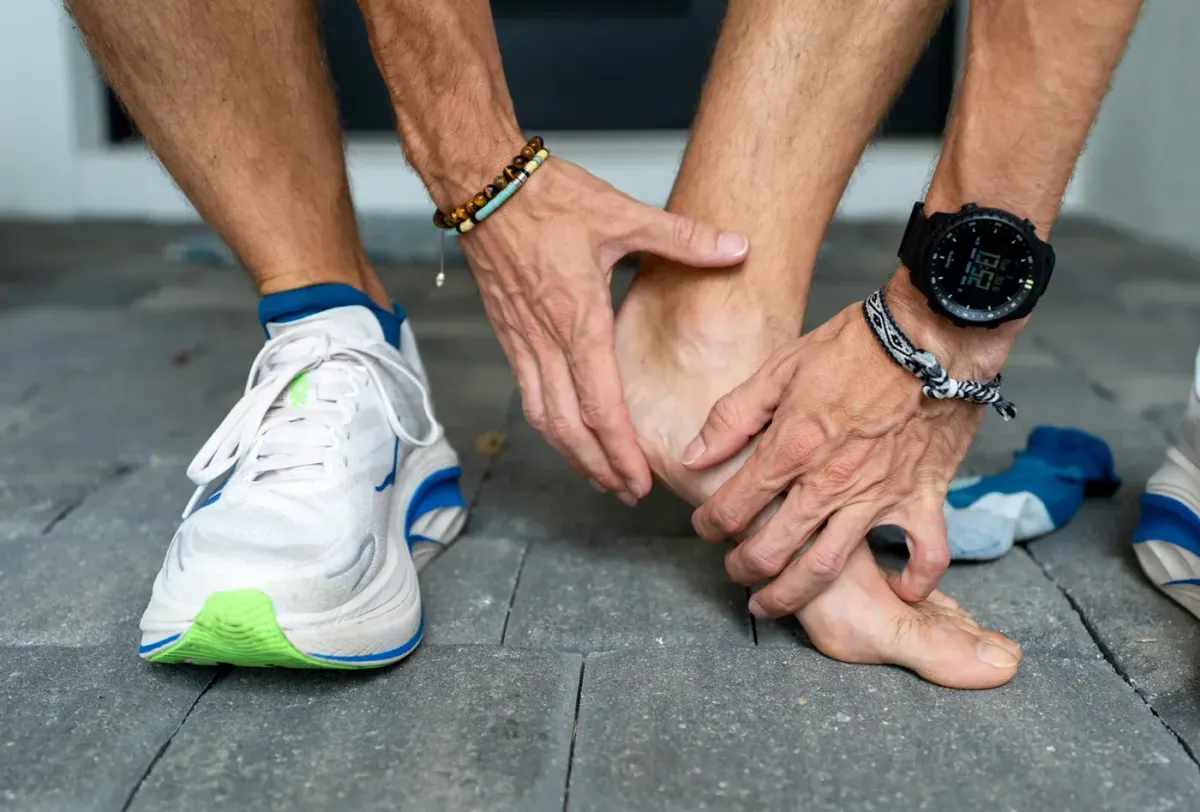
Two red flags deserve their own paragraph. If you felt a sudden pop or snap with immediate sharp pain and weakness, especially during a sprint or jump, that could be a partial or full Achilles rupture; stop everything and get seen urgently, not next week.
And if your pain is a single point on the bone that gets worse with activity rather than warming up, or wakes you at night, that pattern points toward a stress reaction and needs imaging before you run again.
And while I have you: I'm not a doctor. I just have plenty of firsthand experience with this injury. Use this roadmap alongside common sense, and get a physical therapist or sports doc to confirm what you're dealing with; better safe than six weeks sidelined.
Why runners keep getting this
The usual suspects I've seen (and felt):
- Sudden spikes in mileage, speedwork, or hill running (think, following a training plan that ramps you up too fast)
- Tight or weak calves that can't handle the load
- Shoes with worn-out midsoles, or zero-drop shoes before your tendons have adapted to them
- Too much running on hard surfaces, or too many uphills/downhills
- Overstriding and heavy heel striking
- Not enough recovery between hard efforts
For me it hits hardest when I do too many hill reps too intensively, or when my glutes, hamstrings, and calves are cooked from a big week and my form degrades; that sloppiness overloads the tendon.
It's rarely just "tight calves" for me. It's usually a load-management issue plus some sneaky weakness upstream.
Quick self-check you can do at home
Stand on one leg and do a slow heel raise. If it's painful, or you can't get full height on the affected side, that's a red flag.
Then gently pinch the tendon between the heel bone and 6 cm above it; if it's tender or thickened compared to the other side, you've found it, and you've also just located which type you have.
The recovery roadmap: three phases, no guessing
The logic is the same one behind my other injury roadmaps: calm the tissue, then strengthen it, then gradually reload it.
Tendons respond to progressive loading, not to rest and hope.
Phase 1: Calm it down (roughly weeks 1-3, or until walking is pain-free)
Your only goal here is to stop aggravating the tendon.
Relative rest. No running that hurts. Swap in pool running, easy cycling (low resistance; I love this for circulation), or the elliptical with minimal push-off if you have access to that machine.
Ice it. 10-15 minutes, 2-3 times a day after activity; a cheap frozen hot/cold pack like this one from Amazon, works well - it's what I use when I need to.
Short-term NSAIDs if your doctor okays them. I use them sparingly just because I'm not really into taking pain killers if I can help it (I like to know exactly what my body is trying to tell me); they manage pain, they don't fix anything.
A gentle compression sleeve or taping for daytime support.
Skip aggressive stretching for now. This is especially important for insertional cases, where deep dorsiflexion (toes pulled hard toward the shin) compresses the irritated attachment and makes things worse. Insertional sufferers often feel better with a small heel lift in their daily shoes during this phase, since it shortens the lever on the sore spot.
Most runners feel 50-70% better within 7-10 days, if they actually rest. That last clause is where most of us fail.
Phase 2: Rebuild strength and load tolerance (weeks 2-8)
This is where the real healing happens, and it starts once walking is pain-free.
Modern best practice is progressive loading: isometrics first for pain relief, then eccentric work to remodel the tendon.
Isometric heel raises (first two weeks). Rise to the top of a double-leg heel raise and hold for 30-45 seconds. 5 reps, 3-4 sets. Deceptively simple and amazing for reducing pain quickly.
Then the eccentric work, and here's where your tendinitis type decides the exercise:
- Mid-portion: the famous Alfredson protocol. Stand on a step, rise onto your toes with both feet, then slowly lower on the affected leg only (3-5 seconds down), letting the heel drop below step level. 3 sets of 15 with a straight knee plus 3 sets of 15 with a bent knee, twice daily. Start with bodyweight; add weight in a backpack once it feels easy.
- Insertional: same slow single-leg lowering, but on flat ground only, stopping at floor level. Never drop the heel below the step; that stretched position is exactly what irritates the attachment. Progress by adding load, not depth.
Calf raises on flat ground as a general progression: slow, controlled, full range.
Single-leg balance and glute work. Never skip this; your hips and core decide how the tendon gets loaded, and mine tends to flare when the chain above it is weak and tired.
I also used my Chirp TENS unit (read my full Chirp HALO review) twice a day on the calves and Achilles during this phase; it gets blood flowing and gives the muscles a gentle workout without impact. This doesn't directly help with the healing (the loading work is best for that), but I find it makes the process more comfortable and seems to speed recovery up.
Add gentle stretching only after pain settles: a wall calf stretch, 30 seconds, 3 times a day, ideally after warming the area with a heat pack. Insertional cases should keep stretches shallow indefinitely.
Do the loading work religiously and most runners see big improvements by week 6. Patience is everything; tendons heal slowly and don't care about your race calendar.
Phase 3: Return to running (start when single-leg heel raises are pain-free)
- Begin with 1 minute running / 2 minutes walking on flat ground.
- Follow the 10% weekly volume rule religiously.
- Keep doing your eccentrics 2-3 times a week even once you're running again.
- When you feel ready, do a trial run (my favorite test): flat terrain, your most comfortable cushioned shoes, total focus on form. Stop the moment it starts getting worse rather than better.
- Add hills and speed only after 3-4 weeks of easy miles feel completely solid. Hills load the Achilles harder than anything else you do.
Aim for 4-8 weeks total from when you started the program. Insertional cases often sit at the longer end; that's normal, not failure.
Best Running Shoes For Achilles Tendonitis: 8 Tested Picks
Shoes don’t cure Achilles tendonitis, but drop and rocker measurably reduce tendon strain. My 8 tested picks, plus what actually heals it.
 Alastair Dixon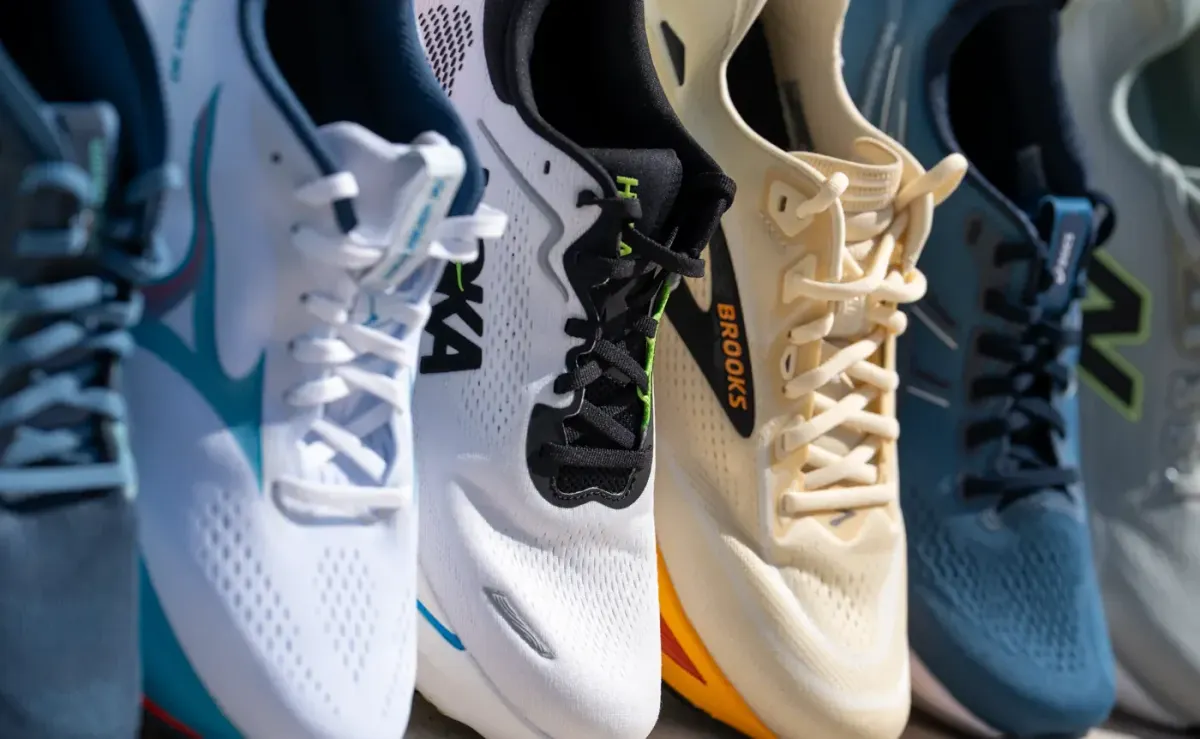
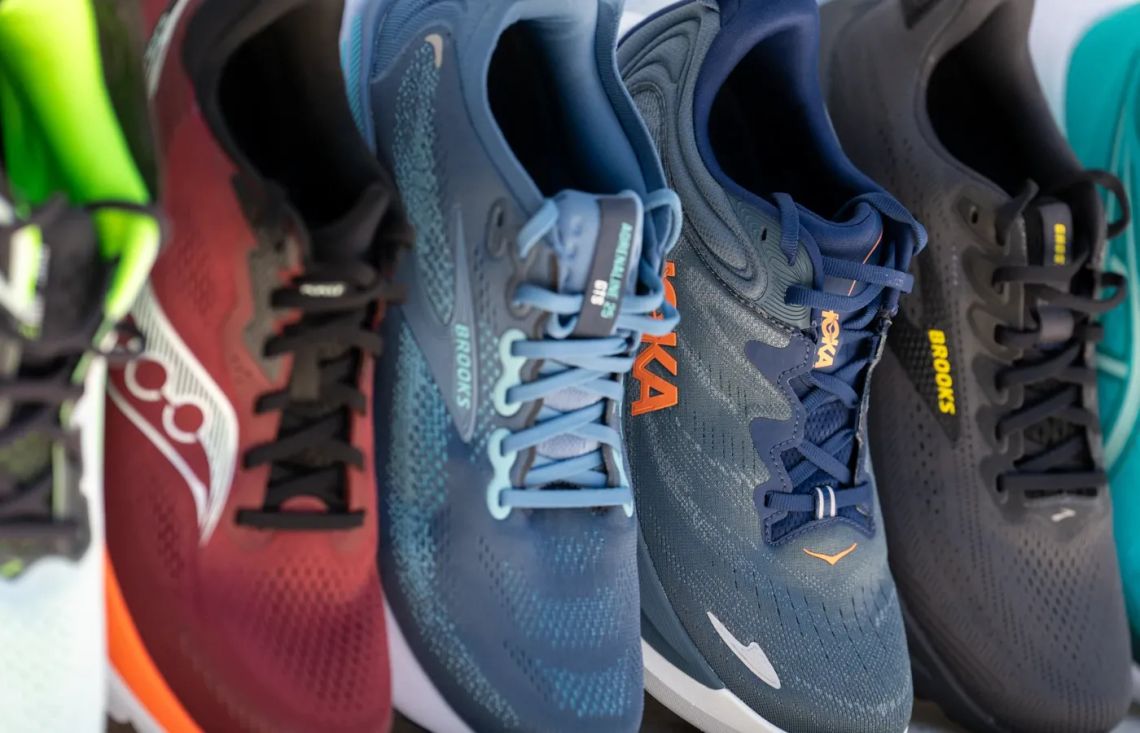
For the shoes that take load off the tendon while you work through this, my best running shoes for Achilles tendonitis roundup is the gear companion to this roadmap.
Morning stiffness: your early warning system
That first-steps stiffness happens because the tendon cools and stiffens overnight, then gets cold-loaded with your full body weight the moment you stand up.
Two things help here: do 10-15 gentle ankle circles and calf pumps before you get out of bed, and don't go barefoot on hard floors first thing; supportive footwear from the moment you stand. Long after you've recovered, morning stiffness remains your dashboard light. When it creeps back after a big week, back off before the tendon makes you.
Can you run with Achilles tendinitis?
Sometimes, cautiously, and only if it's mild.
The framework: pain at 3/10 or below that doesn't climb during the run and settles by the next morning is generally manageable at easy effort on flat ground. Pain that rises as you run, changes your gait, or is worse the next morning means you did too much.
Watch out for the warm-up trap. The tendon often eases 10-15 minutes into a run, which feels like improvement; it isn't, it's masking. The next morning tells you the truth. And insertional cases should be stricter across the board; that attachment punishes optimism.
What actually fixes it (and what doesn't)
What works, backed by evidence: progressive loading (isometrics, then eccentrics matched to your tendinitis type), sensible load management, keeping the calves strong year-round, and patience while the tendon remodels.
What helps as an adjunct: heel lifts (especially insertional cases), massage and soft-tissue work on the calves, TENS/e-stim and compression for comfort and circulation, ice after activity.
What doesn't work as a primary fix: passive rest alone (the tendon needs load to remodel), stretching alone (and aggressive stretching actively harms insertional cases), and cortisone injected into or around the Achilles, which most sports docs avoid because it weakens an already-degenerated tendon.
If you're not clearly improving after 6-8 weeks of consistent Phase 1 and 2 work, see a physical therapist; sometimes one good session unlocks a recovery that was stuck.
Shoes during Achilles recovery
Shoes can't fix a tendon, but they change how hard it works on every stride.
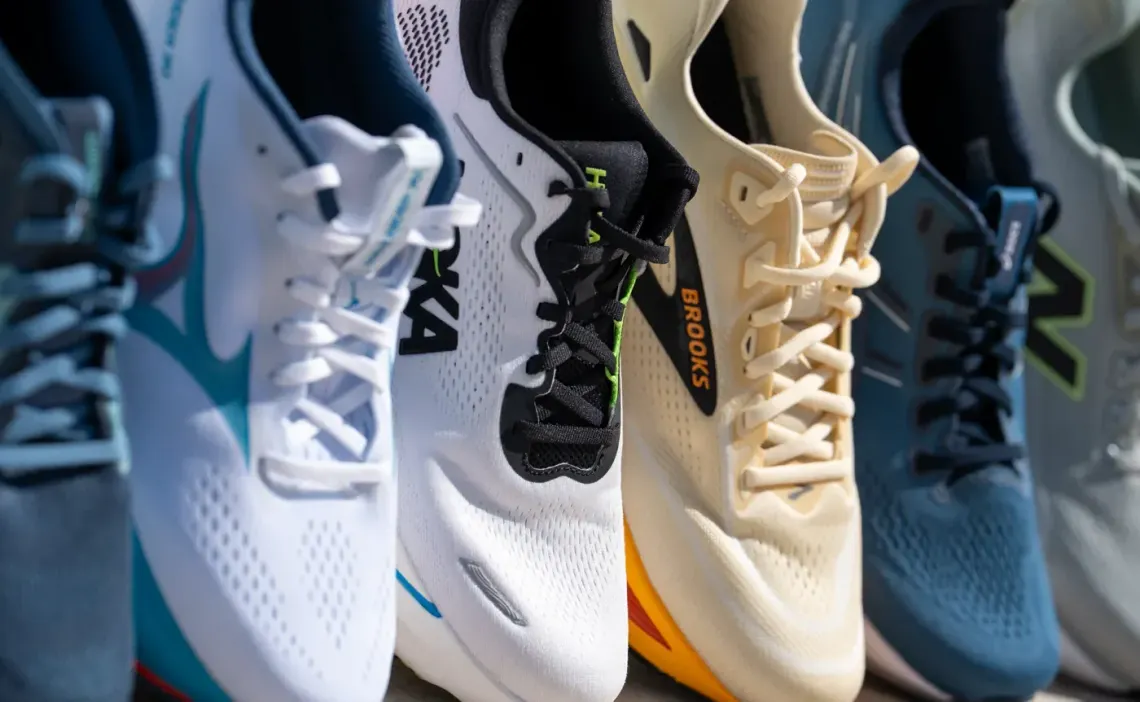
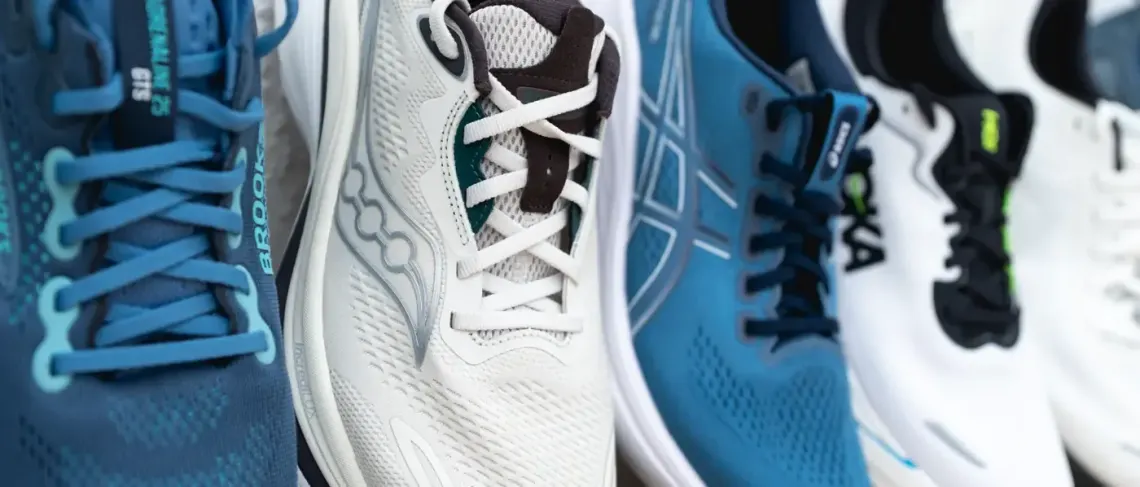
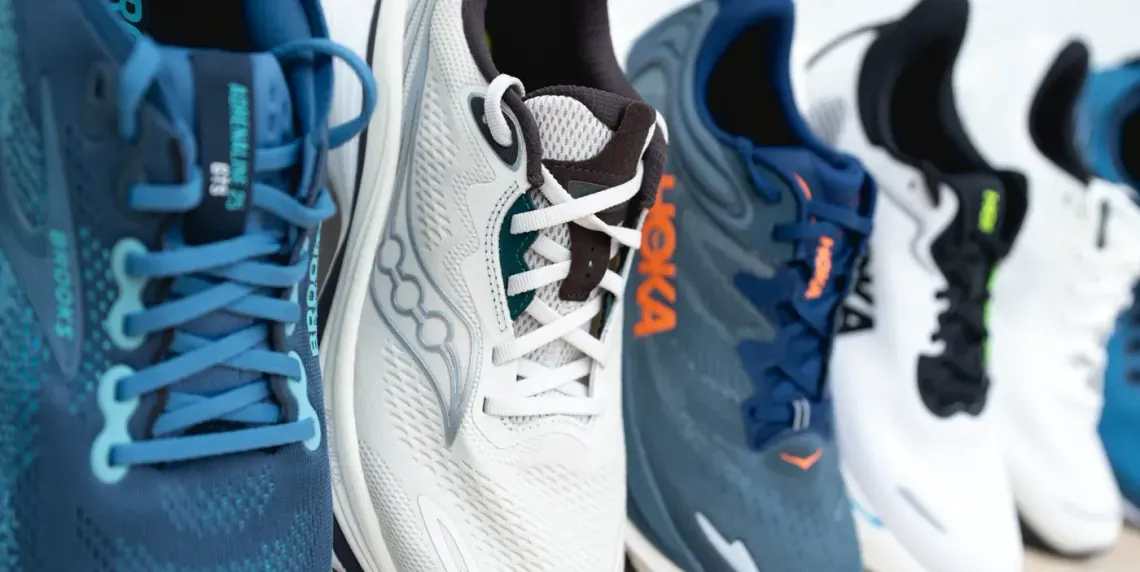
While you're recovering, favor a cushioned trainer with a moderate-to-higher drop (8mm or more), which shortens the tendon's working range and takes tension off the whole calf-Achilles chain; I explained the mechanics in my running shoe drops explainer.
Running Shoe Drops And Stack Heights Explained
This is how heel-to-toe differential and stack height can impact your running performance and comfort.
 Alastair Dixon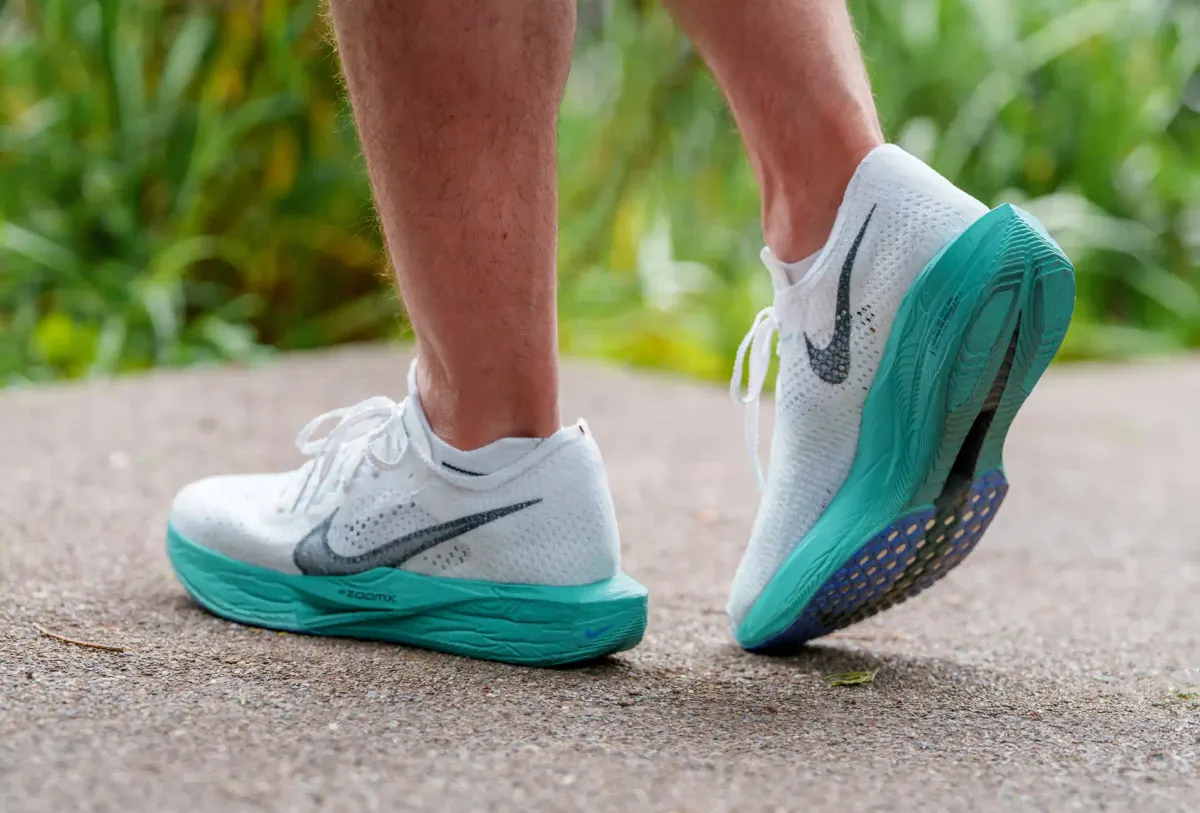
Rotate 2-3 pairs so no single day's fatigue pattern repeats.
And park the zero-drop and minimalist shoes until you're fully recovered; the increased stretch they put through the calf-Achilles chain is a classic trigger, and returning to them safely takes months of gradual adaptation, not weeks.
Prevention, so you never read this page again
- Keep your calves strong year-round: eccentrics twice a week as maintenance, forever
- Increase mileage no more than 10% per week
- Rotate your shoes, and replace them before the midsole dies
- Warm up properly with dynamic drills before anything fast or hilly
- Respect morning stiffness; it always speaks before the tendon shouts
How long does Achilles tendinitis take to heal?
Mild cases caught early: 4-6 weeks with consistent loading work. Typical cases: 6-12 weeks. Chronic cases that have been trained through for months, and stubborn insertional cases: several months is not unusual, because degenerated tendon tissue remodels slowly.
The single biggest factor is when you start doing the right things. Every week spent running through it without the loading work adds to the debt the tendon has to work off.
Frequently asked questions
Should I stretch my Achilles if it hurts? Not at first, and it depends on the type. Early on, stretching irritates more than it helps, especially insertional cases, where deep stretches compress the sore attachment. Add gentle, shallow calf stretches only once daily pain has settled, and let the loading exercises (not stretching) do the actual healing.
Is walking okay with Achilles tendinitis? Usually yes, and it's good for the tendon, provided pain stays low (3/10 or below) and isn't worse the next morning. Supportive shoes with some heel drop make walking far more comfortable than flat shoes or bare feet.
Do heel lifts work? As a short-term tool, yes, particularly for insertional cases; a small lift in both shoes reduces the working stretch on the tendon while it calms down. They're a bridge, not a fix; wean off them as the loading work takes over.
Can Achilles tendinitis rupture? A degenerated tendon is more vulnerable than a healthy one, which is exactly why you rehab it rather than repeatedly sprinting on it and hoping. If you ever feel a sudden pop with immediate weakness, treat it as an emergency and get seen the same day.
Tendinitis, tendonitis, tendinopathy: what's the difference? Tendinitis and tendonitis are the same word spelled two ways. Tendinopathy is the more accurate modern term, reflecting that the problem is tissue breakdown from overload rather than pure inflammation. Whatever you call it, the fix is the same: progressive loading.
The short version
Achilles tendinitis is an overload injury of the tendon connecting your calves to your heel.
It heals through three phases: calm it down with relative rest and cross-training, rebuild it with isometrics and then eccentric loading matched to your type (step drops for mid-portion, floor-level only for insertional), and return to running gradually while keeping the calf work forever.
Don't rest and hope. Don't run through it and hope. Both just extend the timeline.
Load it progressively and it's one of the most predictable running injuries to beat; the roadmap above got me back stronger both times, and it will do the same for you.
Got questions about the exercises or where you're at in the process? Drop them in the comments or reply to the newsletter; I actually read and answer them.
Keep the miles coming (smartly). -Alastair
If you haven't already, signup for my free newsletter, and subscribe to my YouTube Channel for more content like this. 👉🏼 And for an inside look at what's comes into my studio with unboxings, lace up reels, and short form reviews, follow me on Instagram, and TikTok. -Alastair
*Alastair is a runner and gear reviewer who has personally dealt with plantar fasciitis, Achilles tendinitis, IT band syndrome and shin splints across his running journey. He runs extensively in every shoe he reviews before publishing. This article is informational in nature; if your pain is severe, doesn't improve with self-management, or you suspect a rupture or stress fracture, please see a qualified physical therapist or podiatrist.
Written by

Subscribe to new posts
reviews, training tips, and thoughtful stories for runners








Member discussion