Suunto Run 2 review: a big upgrade that costs like one
After weeks of Florida training miles, here's whether the Run 2's new HR sensor, 2,000-nit screen, and offline maps justify $349+.

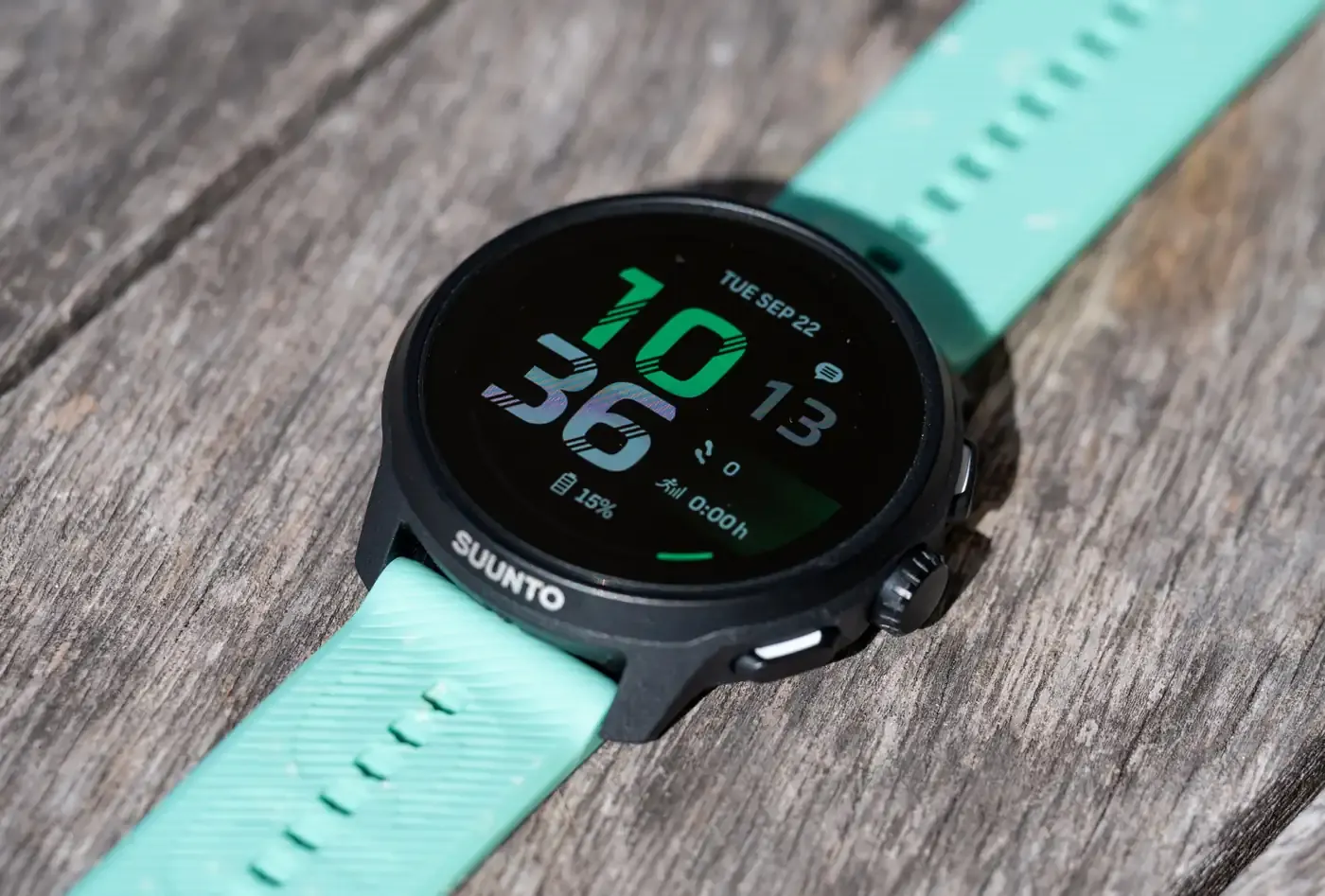
I've spent the last few weeks training with the new Suunto Run 2, wearing it around the clock for sleep and recovery tracking, and putting it through the usual mix of road and trail miles.
The short version is I'm loving it, and all the updates Suunto has introduced. This is a proper step up from the original Suunto Run, which I reviewed last year and rated as one of the best-value running watches you could buy.
The catch is that the value story is gone. The Suunto Run 2 costs $349 for the 4GB model and $399 for the 64GB version I've been testing, so it has to win on merit rather than price (even though to be fair it's still one of the less expensive running watches on the market right now).
Let's dig into whether it does...
The Best Running Shoe Finder 2026
Answer 5 quick questions and get matched to the best running shoe for your training style, ride preference, and foot shape. Updated to v5.5 May 2026
 Alastair Dixon
If you purchase gear through links in this article, I may earn a small affiliate commission. For my training tools, exclusive content, newsletter, and more perks become a member, (it's free!). -Alastair ✌🏼
Key specs (the ones that matter)
- Price: $349 (4GB) / $399 (64GB) at Suunto.com. Use code AFFR15TAK for 15% off your order at Suunto
- Weight / size: 35g case, about 54g with the silicone strap. Dimensions measure 46 x 46 x 11.7mm
- Display: 1.32" AMOLED, 466 x 466, up to 2,000 nits with auto brightness
- GPS: Dual-band (L1 + L5), all major satellite systems, up to 4 at once
- Battery: Around 10 days of daily use, up to 24 hours of dual-band GPS (18 hours with always-on display), 40 hours in power-save mode
- Maps: Free, full-color offline maps on both storage tiers, with route planning and turn-by-turn from the app
- Storage: 4GB or 64GB (maps plus offline MP3 music)
- Build: Stainless steel bezel, Gorilla Glass lens, glass-fiber reinforced polyamide case. 22mm quick-release silicone strap, two S/M straps in the box
- Water resistance: 50m (swim, shower, rain)
- Sport modes: 35, including road, trail, track, and treadmill running
What changed from the original Suunto Run
The silhouette is the same 46mm Nordic design, and the case is still feather-light. Underneath, the three things that matter most to runners all moved forward.
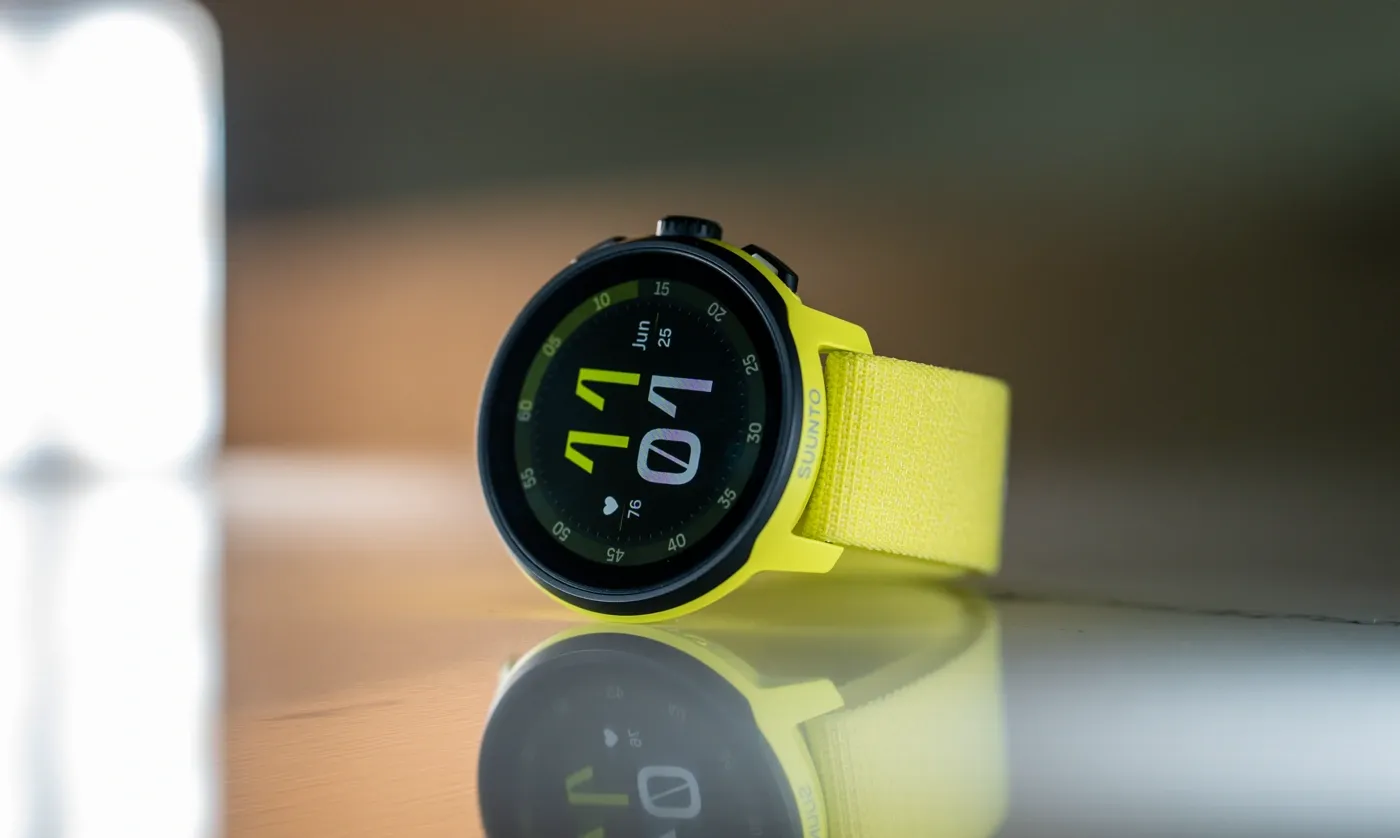
original Run (left), Run 2 (right)
| Suunto Run (2025) | Suunto Run 2 | |
|---|---|---|
| Launch price | $249 | $349 / $399 |
| Display | 600-nit AMOLED | 2,000-nit AMOLED |
| Wrist HR | Older sensor, chest strap advised for intervals | New 12-channel sensor behind curved glass |
| Offline maps | No (breadcrumb only) | Yes, free on both tiers |
| Dual-band GPS runtime | Up to 20 hours | Up to 24 hours |
| Storage | 4GB | 4GB or 64GB |
| Battery cell | 295mAh | 380mAh (+29%) |
| Strap | Nylon textile | Silicone (nylon-light feel is gone, grams are up slightly) |
| Charger | Unique to Run | Magnetic puck, shared with the Race 2 family |
On the wrist with the silicone strap you're at roughly 54g, and the original Run's was around 36g included its nylon strap.
So the Run 2 is a little heavier due to the more premium materials, but still very lightweight.
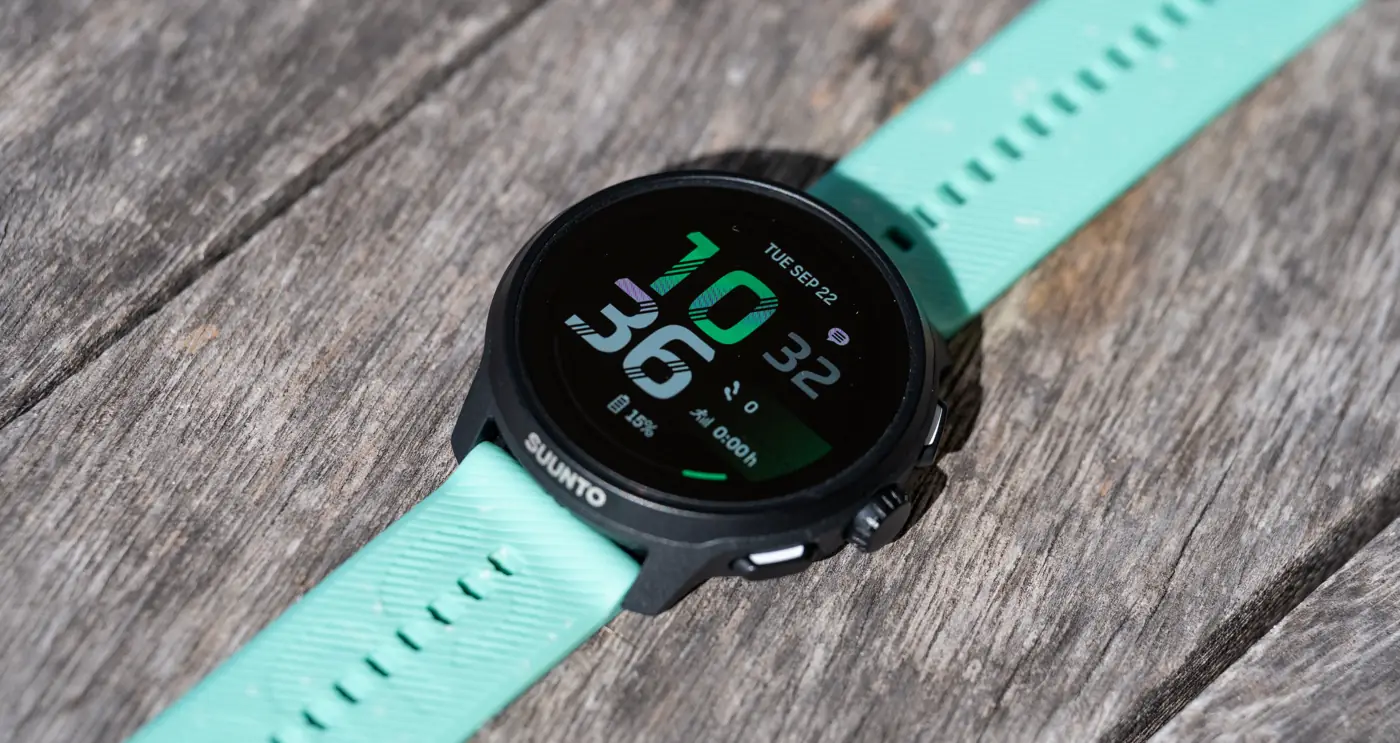
Design, display, and that Aloe Green strap
I've been testing the Aloe Green 64GB, and it's the best-looking watch Suunto has made in this class.
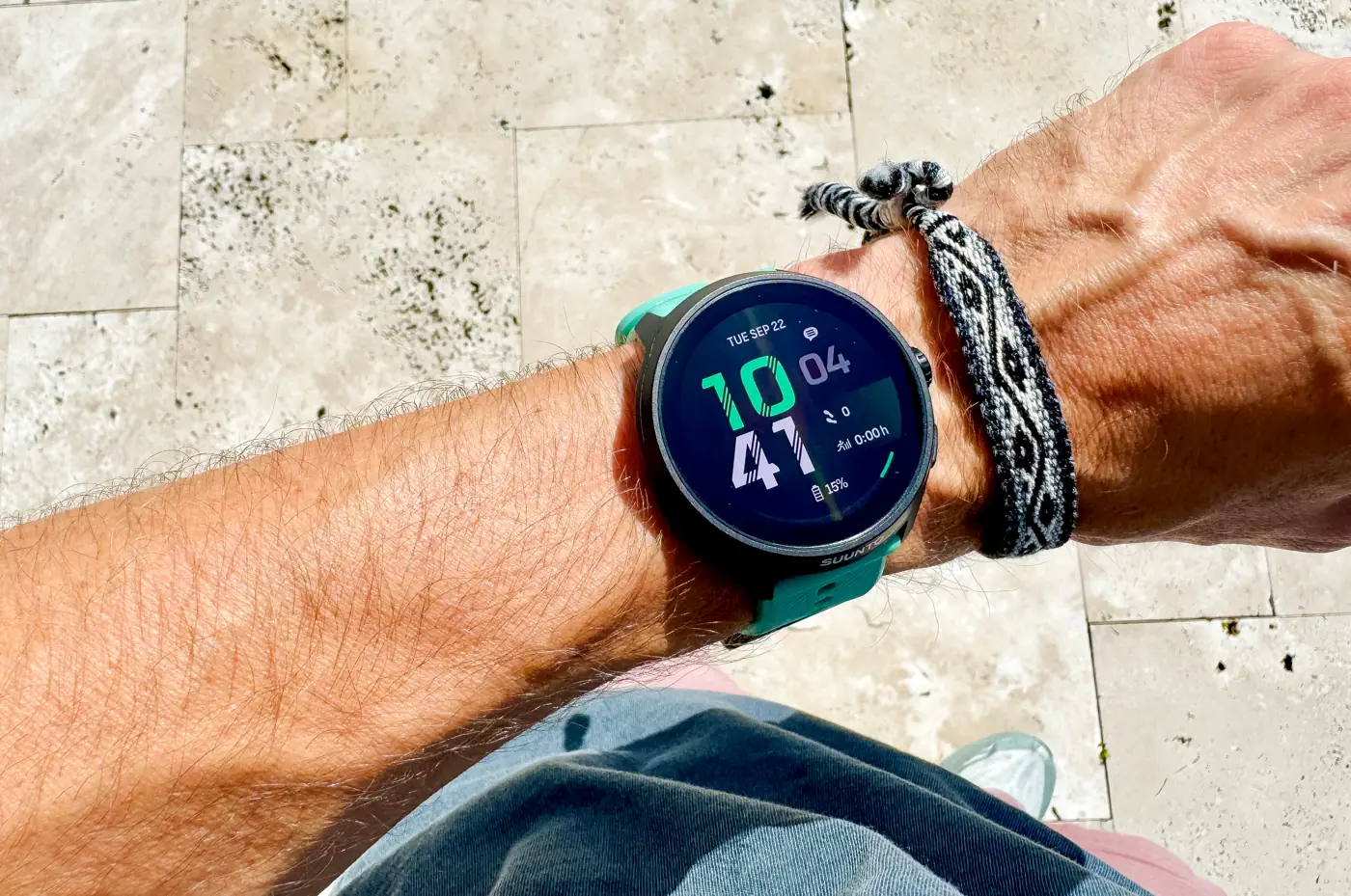
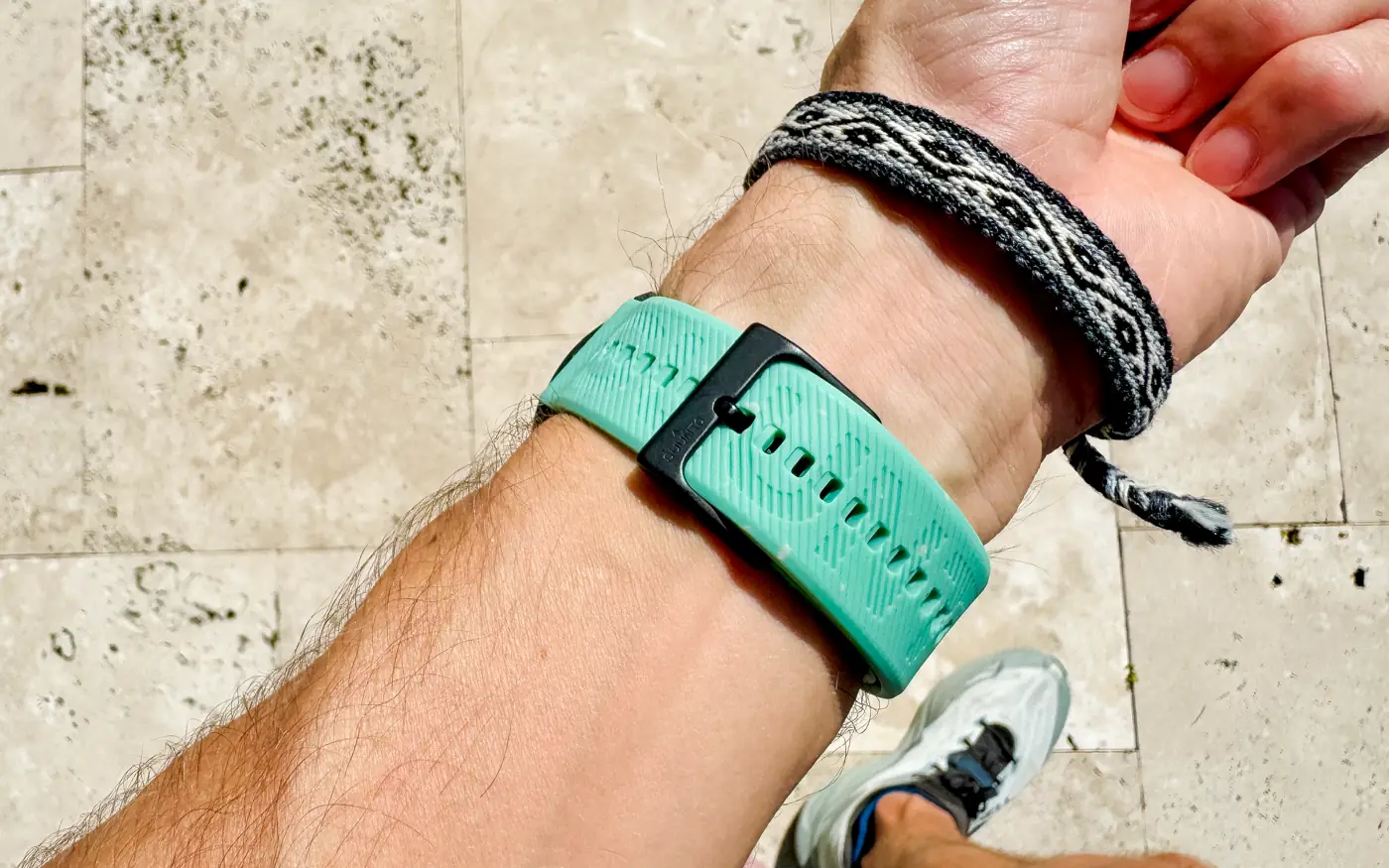
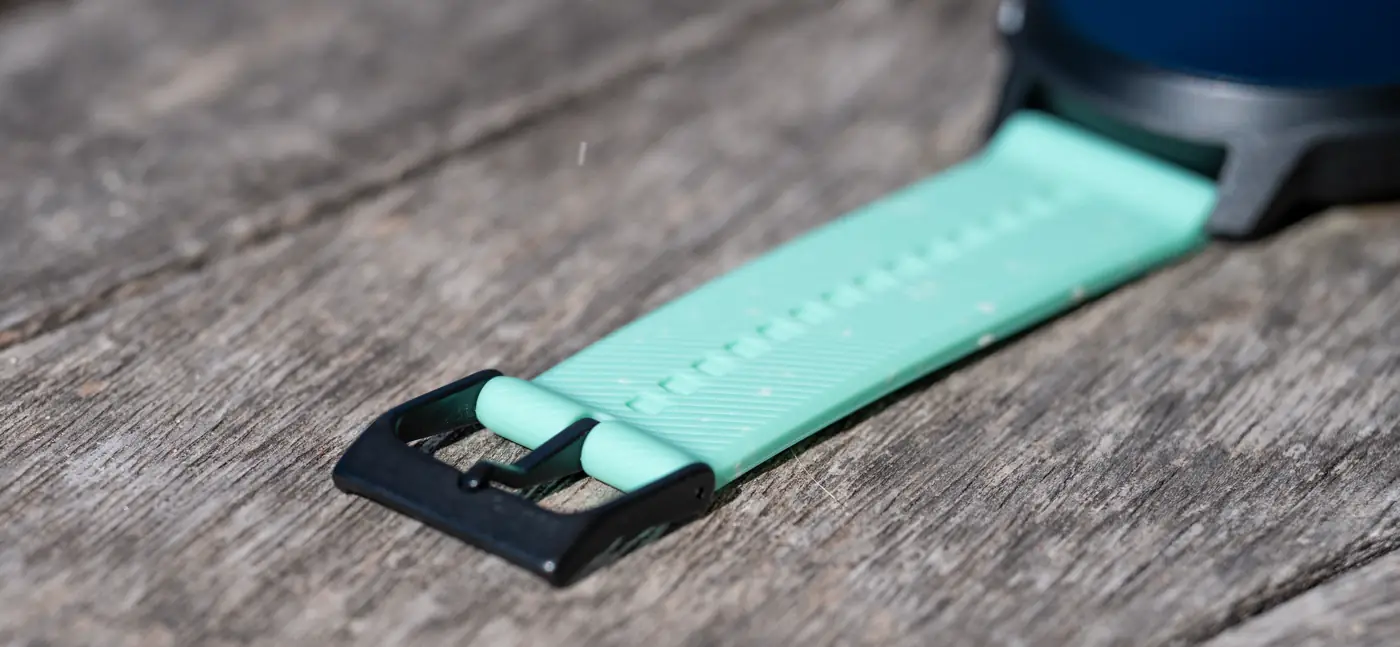
The color lives in the strap: a minty seafoam silicone band on a dark case with a stainless steel bezel, so it reads as a premium running watch rather than a black puck.
The strap has a nice stretch, swaps in seconds on 22mm quick-release pins, and has been comfortable through weeks of Florida sweat. My one niggle is the keeper (not the buckle) on the end of the strap has popped loose on me once.
The screen is the change you notice on every single run.
2,000 nits is more than three times the original's brightness, and on exposed paths in full sun, it's very easy to read.
Build quality punches above the price band too.
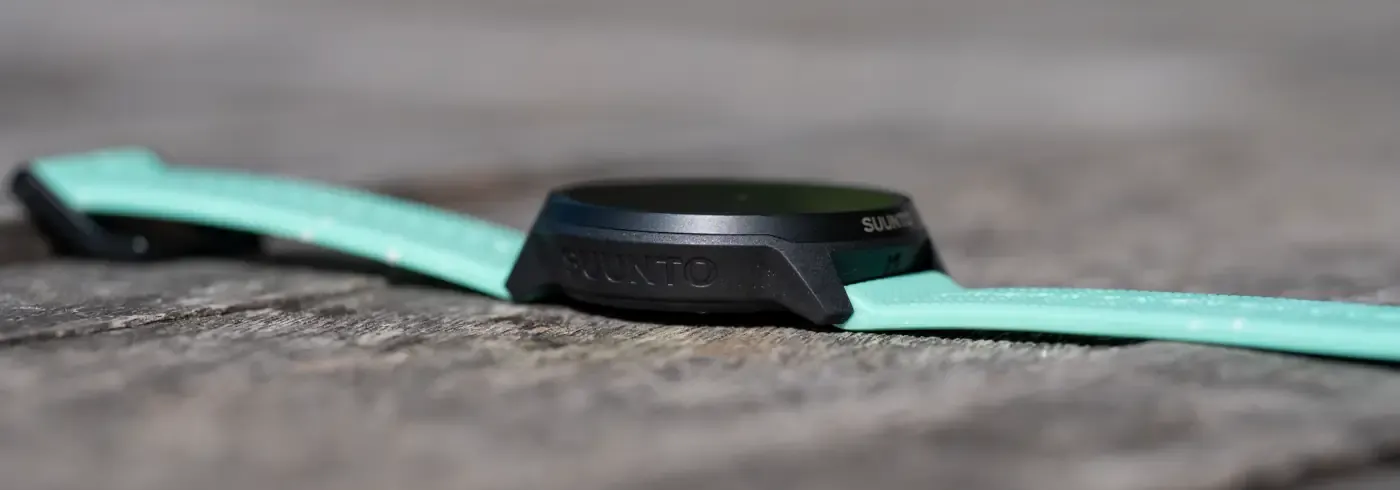
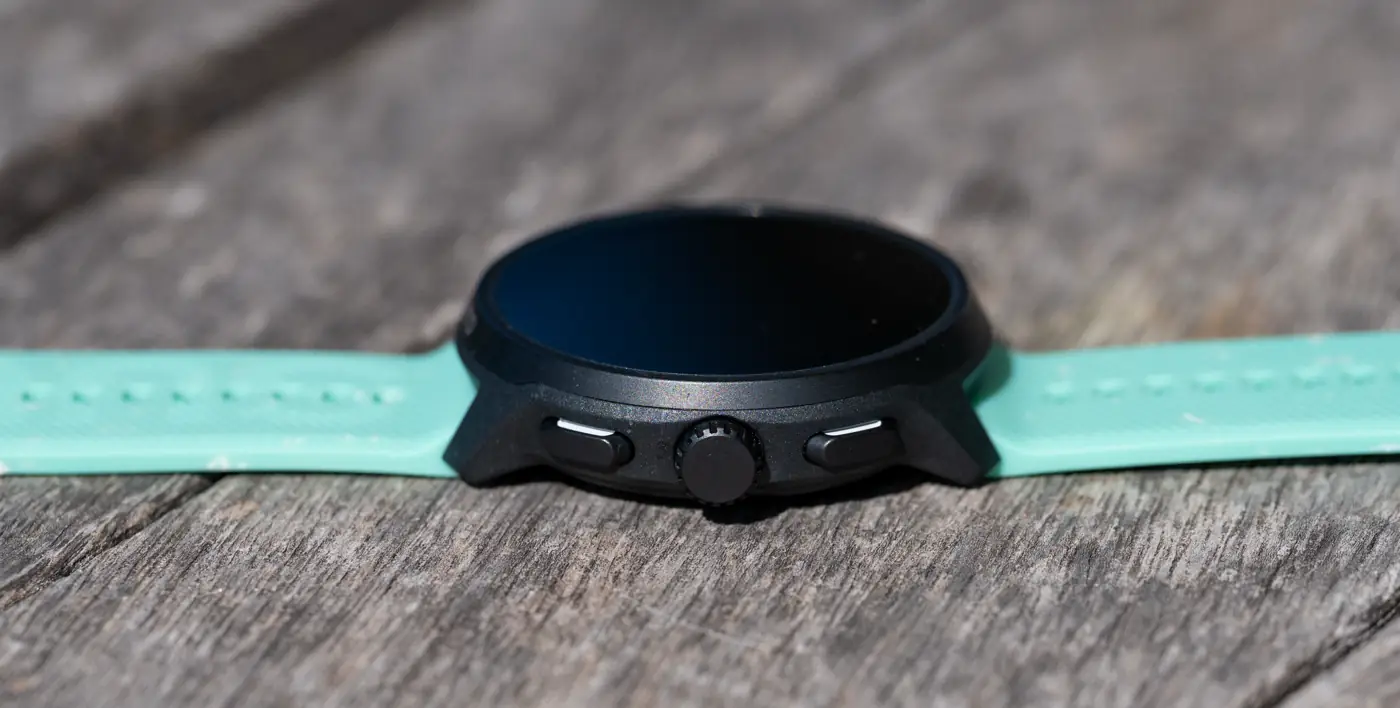
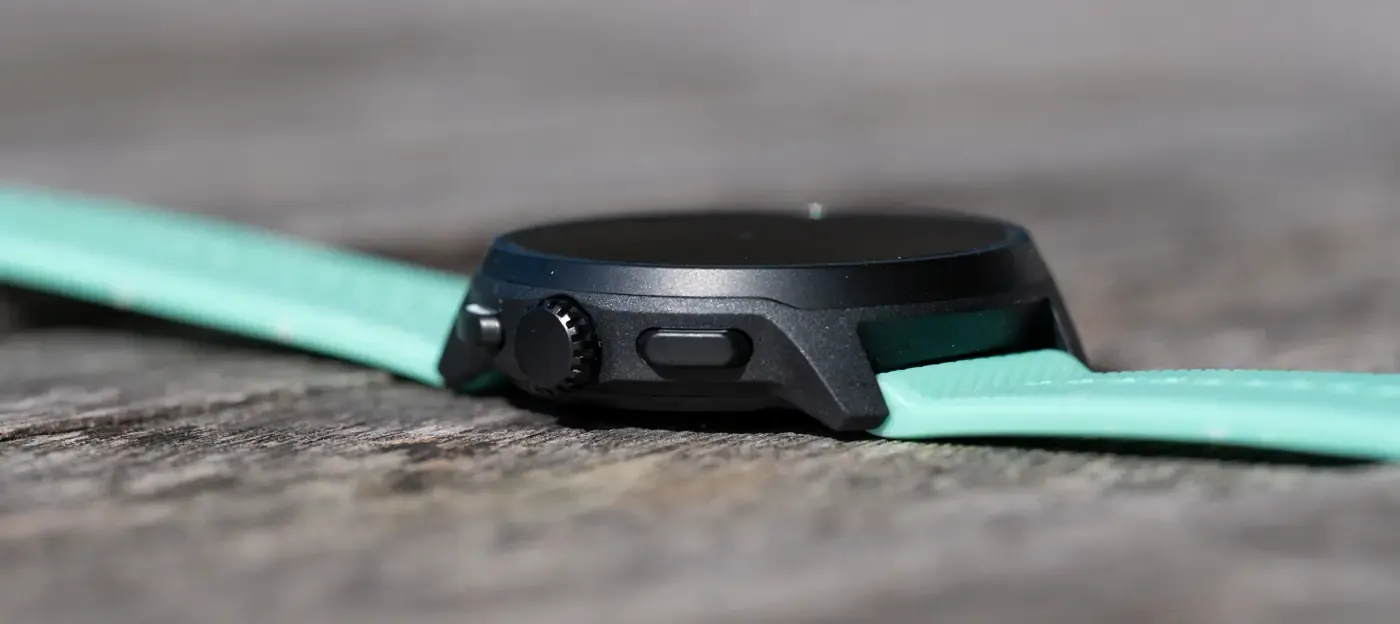
Steel bezel, Gorilla Glass, three physical buttons (one doubling as a scrollable crown) plus touch, and the on-watch software is noticeably smoother than the first Run's.
Wrist heart rate: the upgrade I actually feel
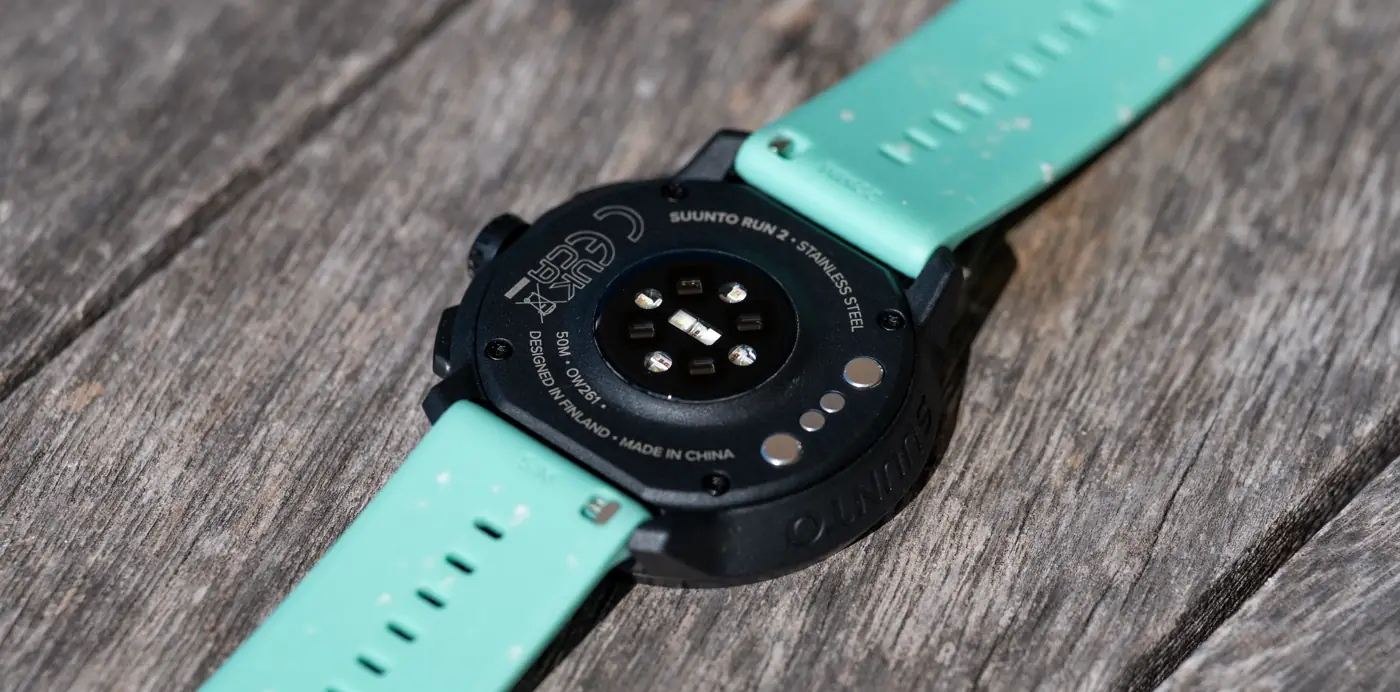
In my original Suunto Run review I said I'd still reach for a chest strap or armband for precision interval work. That caveat is gone.
The new 12-channel sensor sits behind curved glass, and through tempo runs and intervals it has tracked the way I'd expect a chest strap to; no lag on surges, no wild spikes, just believable numbers I can train from.
Two honest limits remain. Wrist HR on this watch (like every watch) gets wobbly during strength work with fast upper-body efforts, and if you want beat-to-beat data or ZoneSense's HRV-based intensity tracking, you'll still pair Suunto's Smart Heart Rate Belt 2.
For running though, this is the single biggest reason to upgrade from the original.
GPS accuracy
The original Run already had excellent dual-band GPS, and the Run 2 carries that standard forward. It locks on fast, holds clean lines under tree cover, and pace and distance have been consistent enough that I stopped checking it against anything else.
You get L1 + L5 dual-band across all the major satellite systems, with Performance, Endurance, and Power saving battery modes to trade accuracy for runtime on long days.
This is flagship-grade tracking in a watch that costs a fraction of flagship money, and it's not the area where anyone should hesitate.
Offline maps change how I plan runs
This is the headline feature, and it's the one Garmin won't match anywhere near this price.
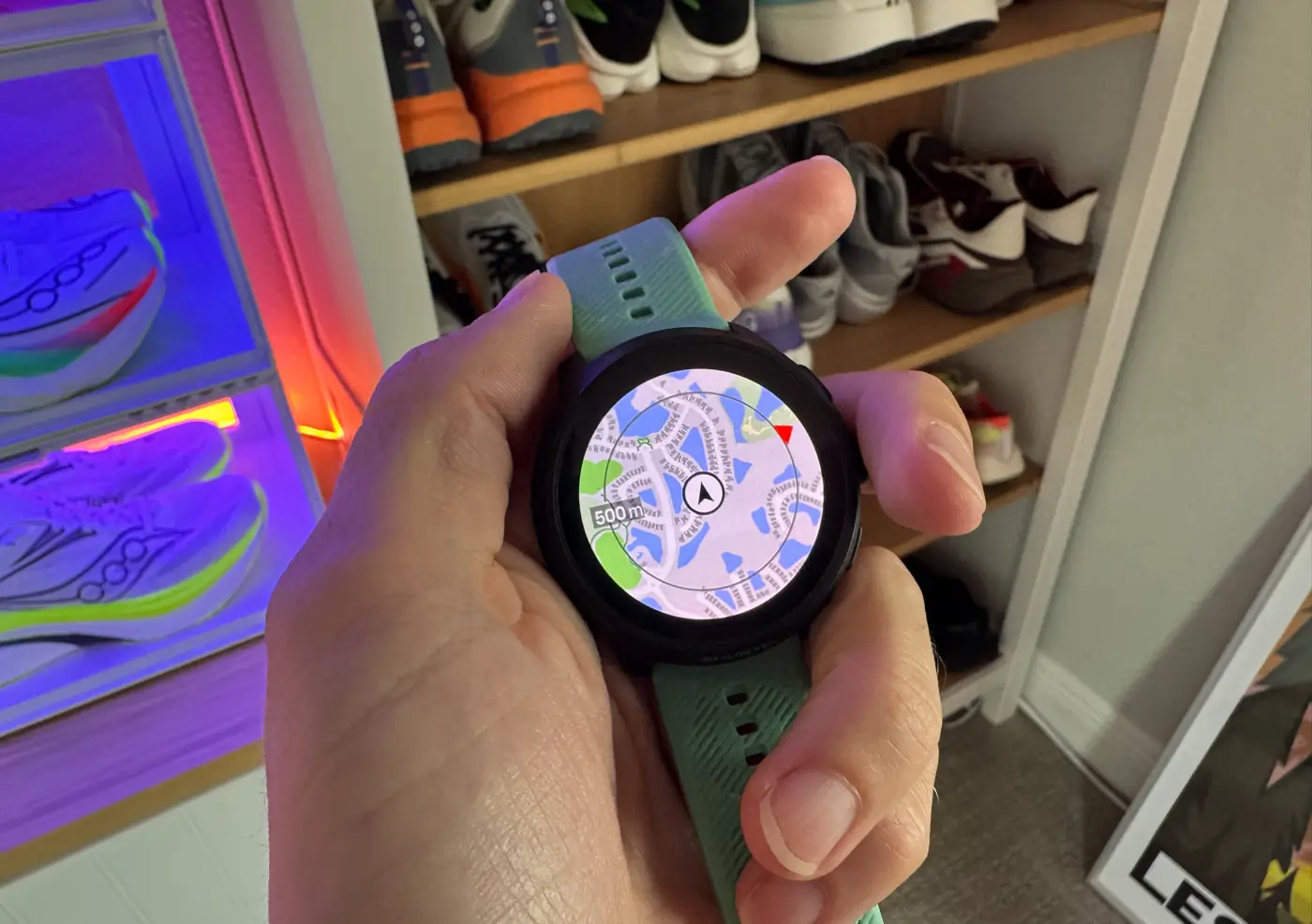
Full-color offline maps are free on both storage tiers, with route planning and turn-by-turn guidance built in the Suunto app. Being able to leave your phone at home and still explore a new route is the kind of upgrade you feel weekly, not just on race trips.
Two caveats include: Maps download over Wi-Fi with the watch sitting on its charger, and the setup is clunkier than it should be. So you don't just get maps already on the watch, you have to download them through the App before they show up; no biggie, just worth knowing.
And the maps skip street names, so this is orientation and guidance rather than full Garmin-style cartography; thats enough for many.
On storage: a state-sized map region runs around 0.5GB. So 4GB covers your home region and a little music, while 64GB is the version for downloading multiple regions, travel maps, and a real offline music library.
That's exactly why I'd point most buyers who want this watch's best trick at the 64GB model.
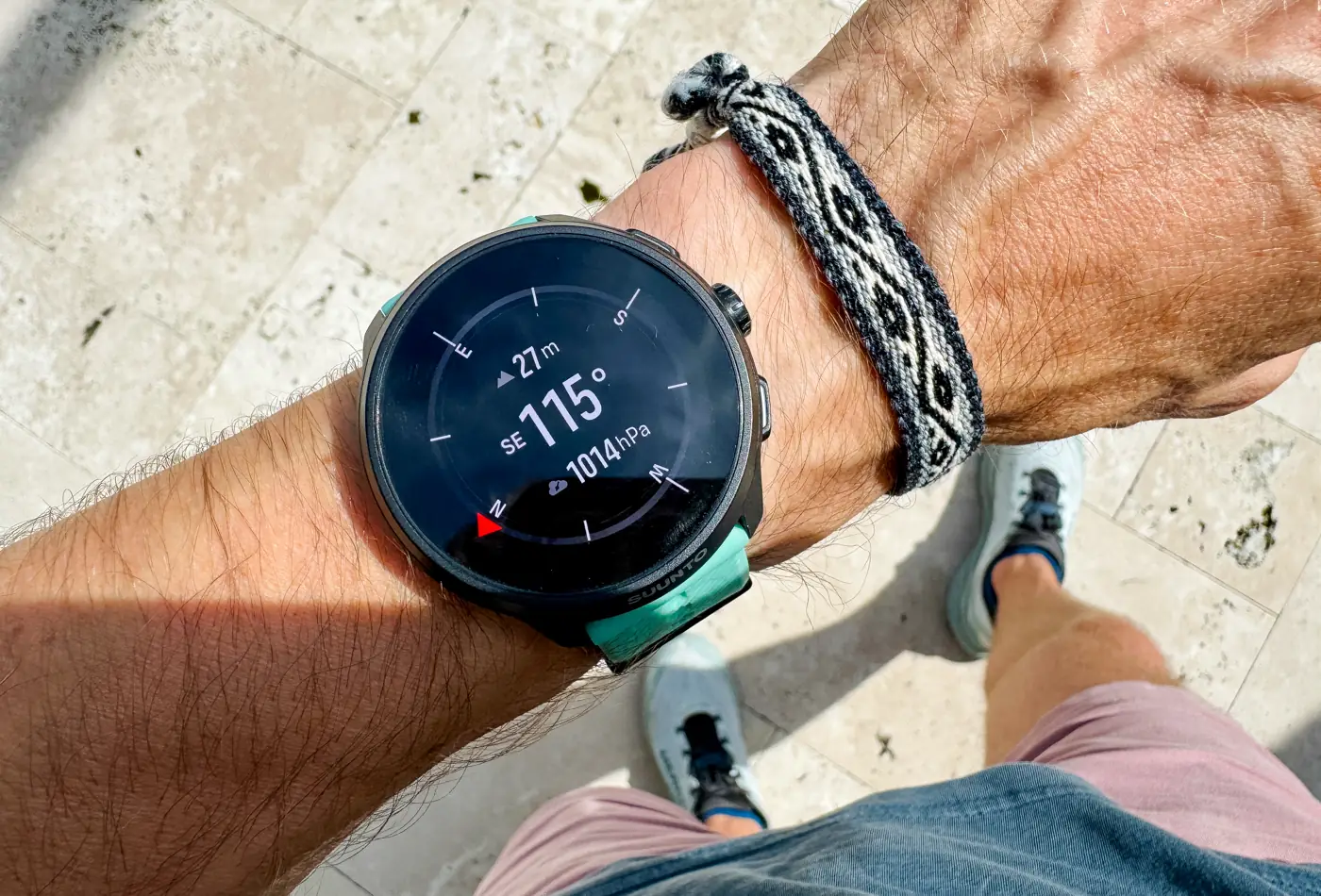
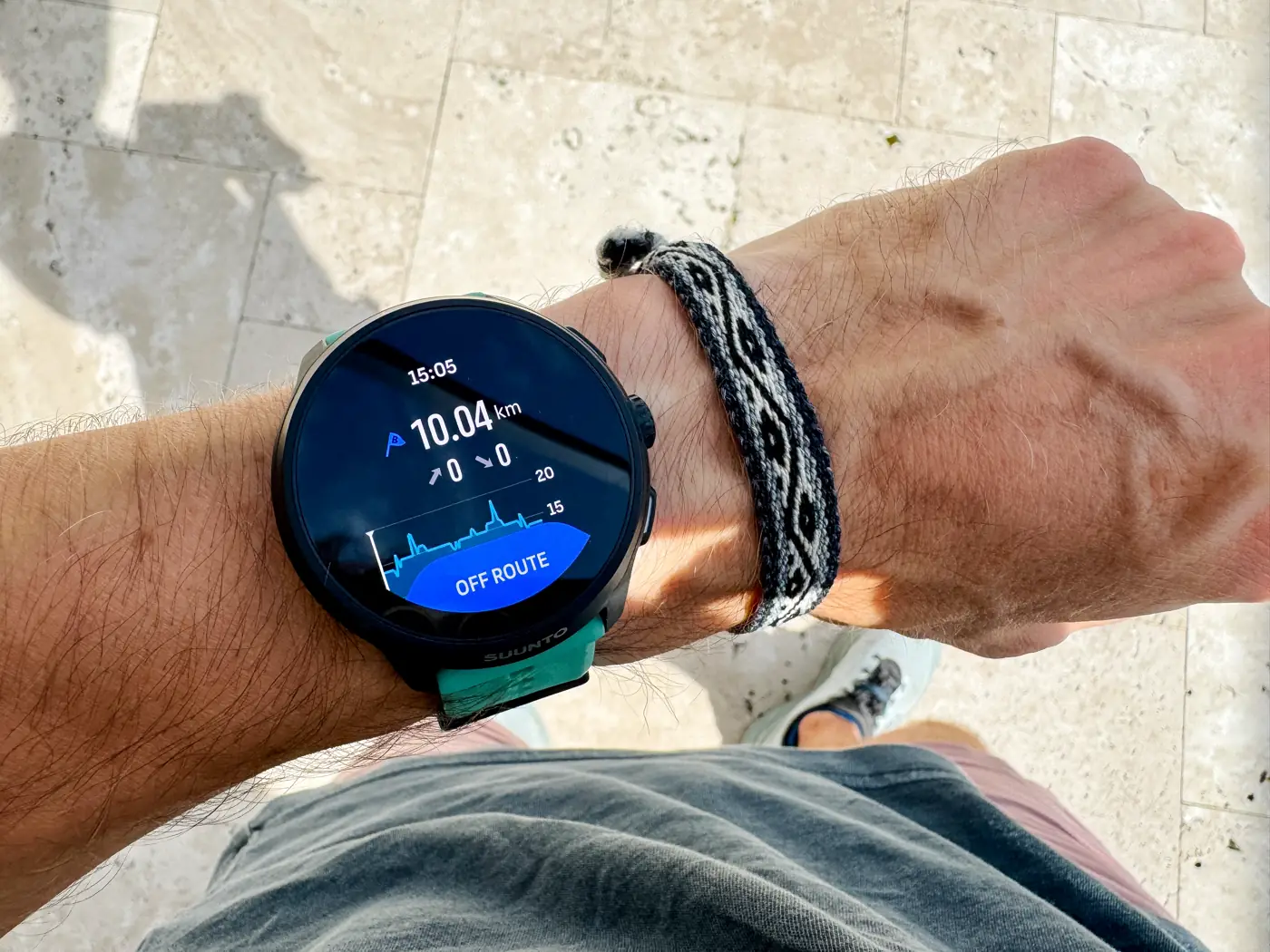
There's also a compass, and the ability to follow routes easily.
Battery life, honestly
The battery cell is 29% bigger, but don't read that as 29% more days if you already have the original Run watch. The brighter screen eats a lot of it.
Suunto claims around 10 days of daily use, and with raise-to-wake (that's the setting when you raise your write, and the screen comes on; otherwise it's off), notifications mostly off, sleep tracking every night, and five or six runs a week, I've been charging roughly once a week.
A quick note on the raise to wake responsiveness on the run; this would be alot better if it was a few milliseconds faster to show a fully bright screen. It would make metric readability much better on the run.
Turn the always-on display on and expect closer to 4 to 5 days.
Where the extra capacity will show up is GPS runtime: up to 24 hours of dual-band tracking versus 20 on the original, which comfortably covers marathon training and most ultra days.
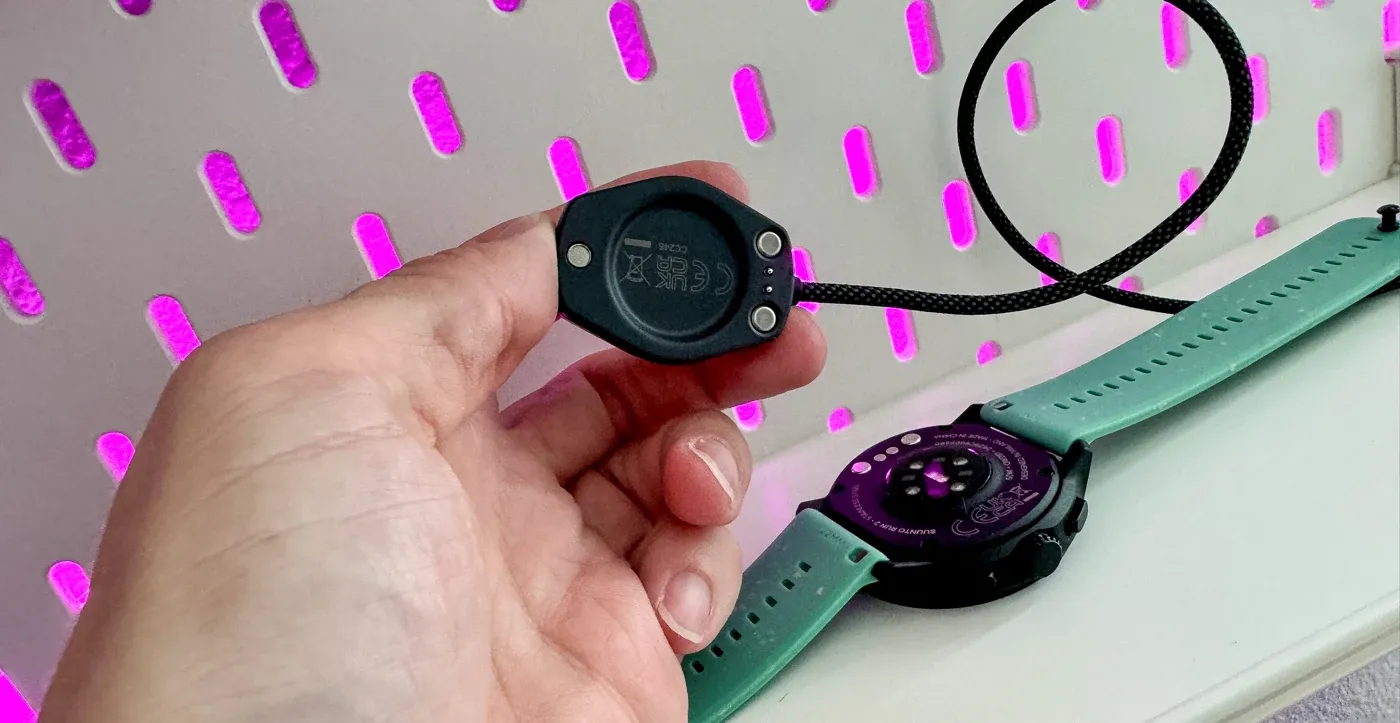
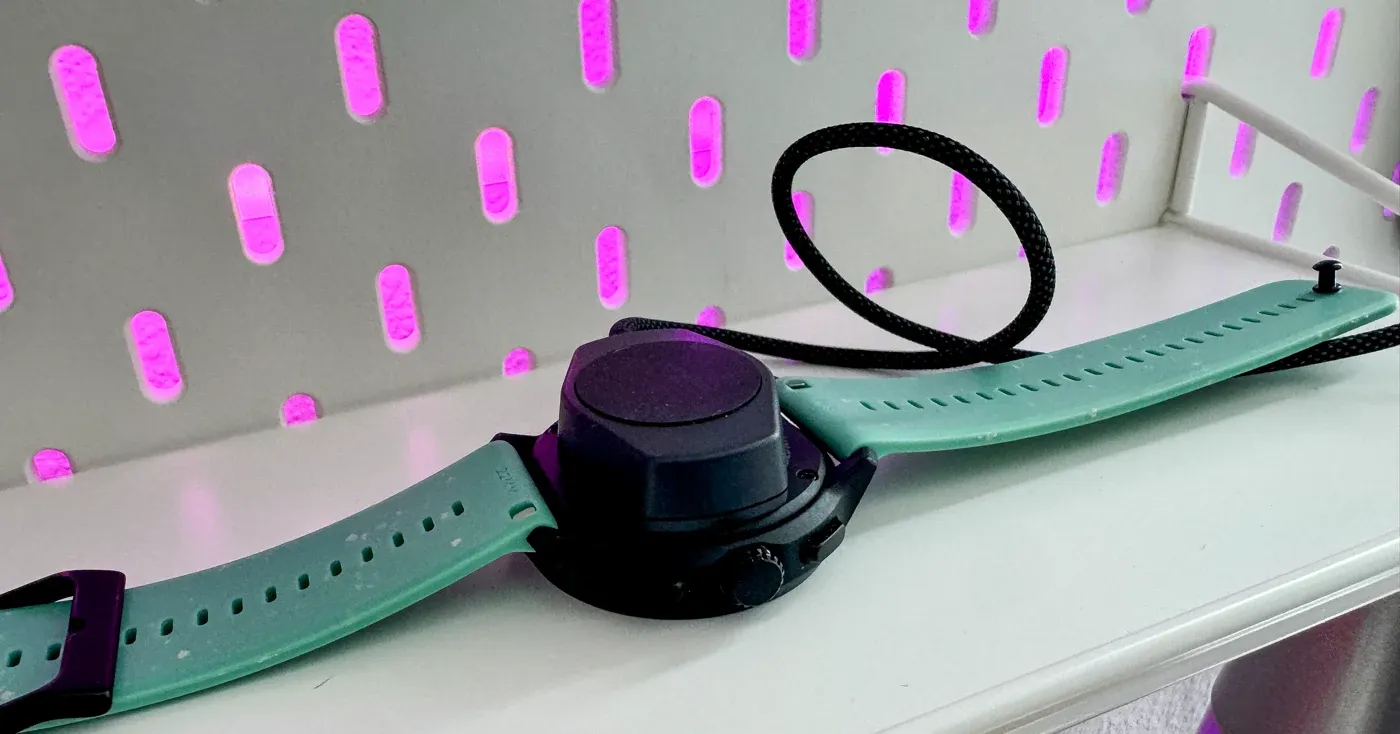
A full charge takes about two hours on the new magnetic puck.
It's the same charger family as the Suunto Race 2, which is convenient if you own one, and mildly annoying if you own the original Run, because the old cable won't fit.
Suunto Race 2 brings clarity and battery confidence to serious training
A bright, no-nonsense AMOLED training watch that feels built for runners who want control, not smartwatch chaos.
 Alastair Dixon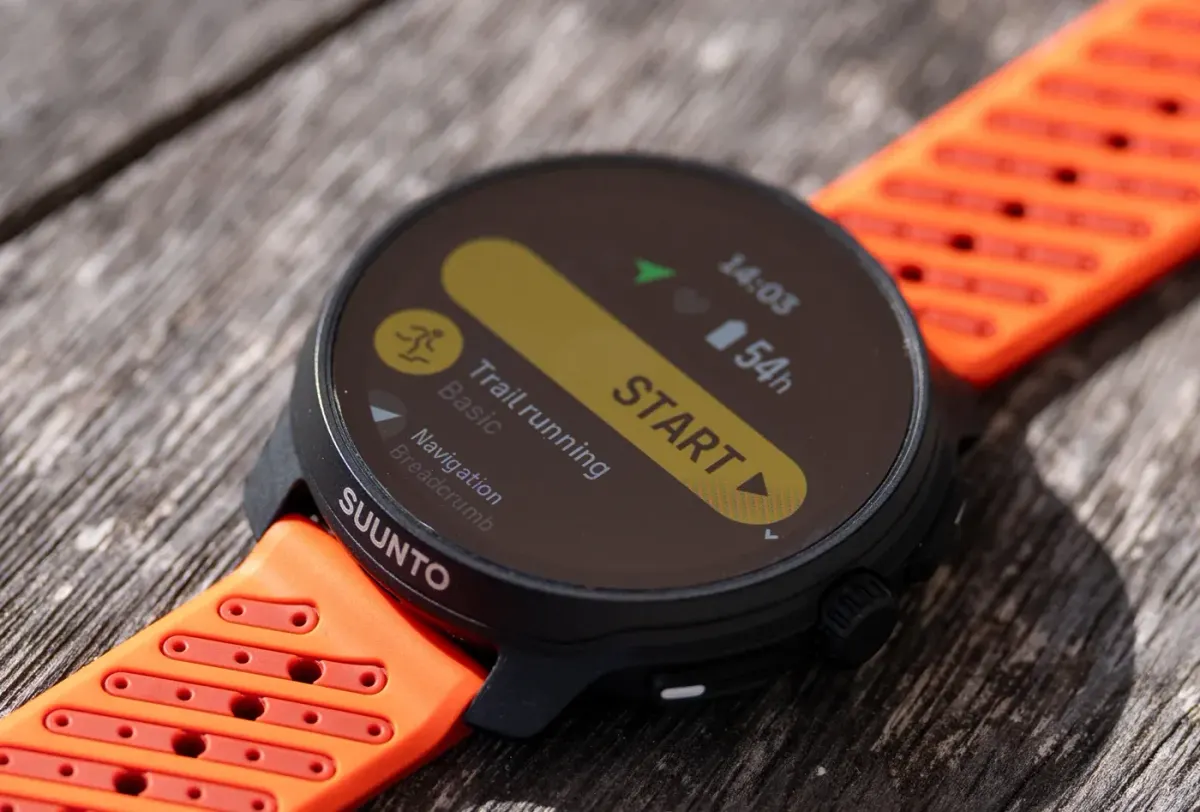
Training tools: EnergySense, Marathon Time, and the app
Suunto pitched this as a marathon training watch, and the race-day features back that up.
Marathon Time gives you a live finish-time projection that updates as you fade or surge, on dedicated marathon data screens. Ghost Runner and Virtual Pacer are here for tempo work, intervals are easy to build and follow, and there are 35 sport modes if your training week goes beyond running.
EnergySense is the interesting one: a live read of how hard you're working against what you have left, running-only and still labeled beta. On my long runs it has tracked the fade believably, but I treat it as a second opinion rather than gospel, and it feels like a beta.
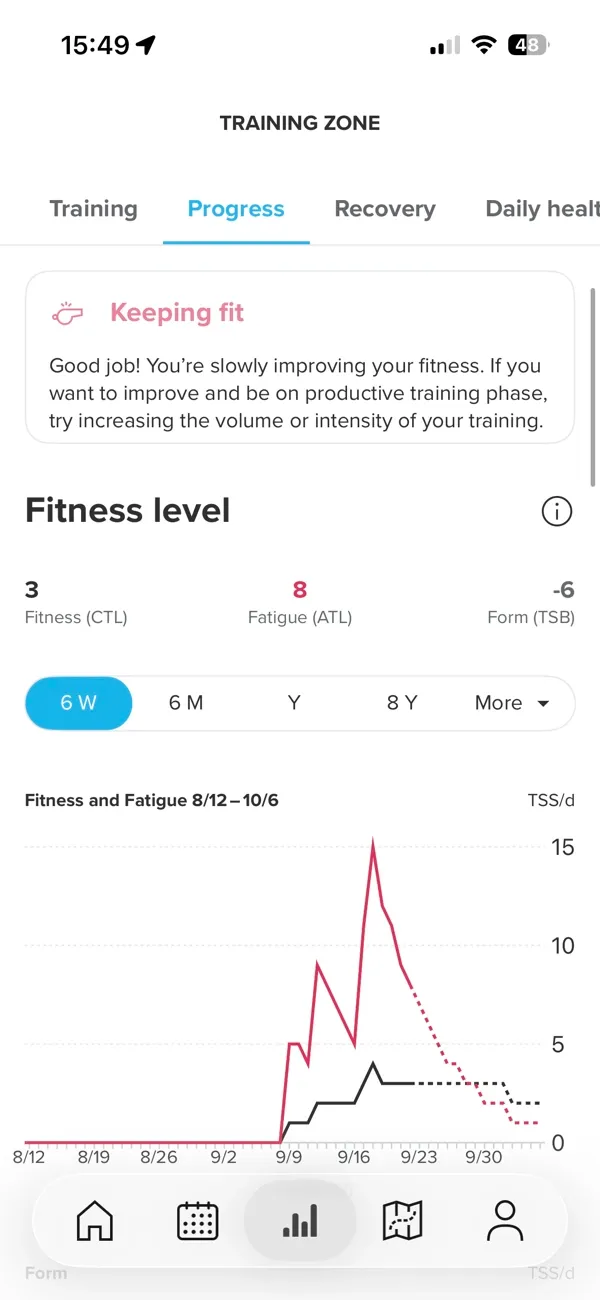
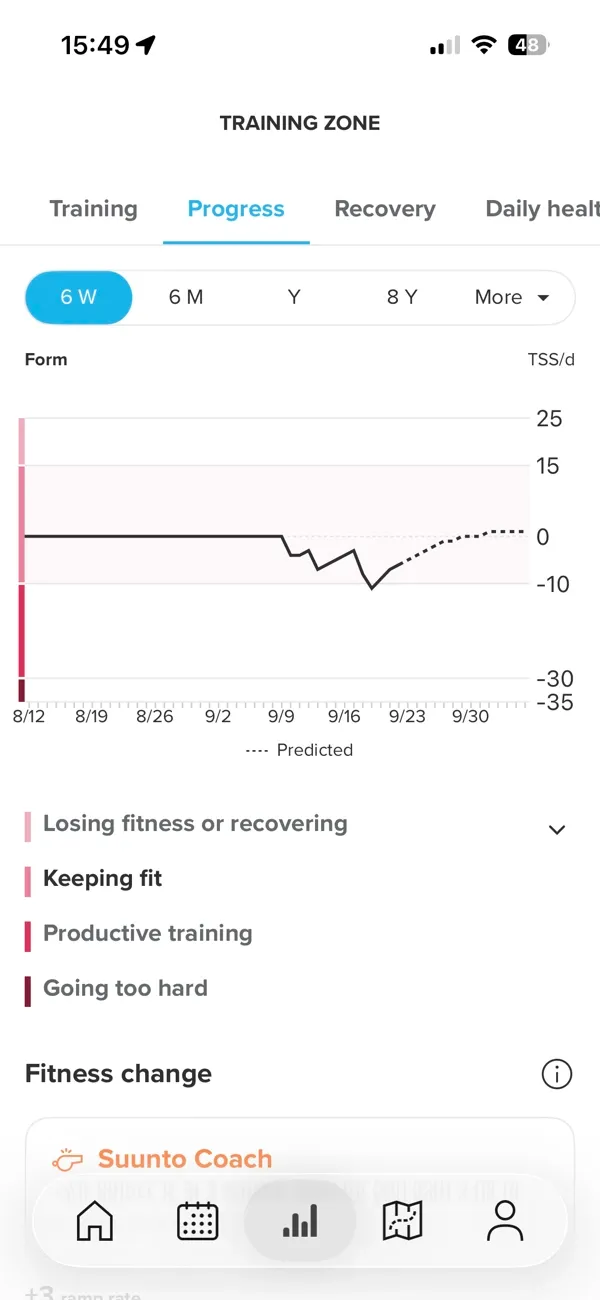
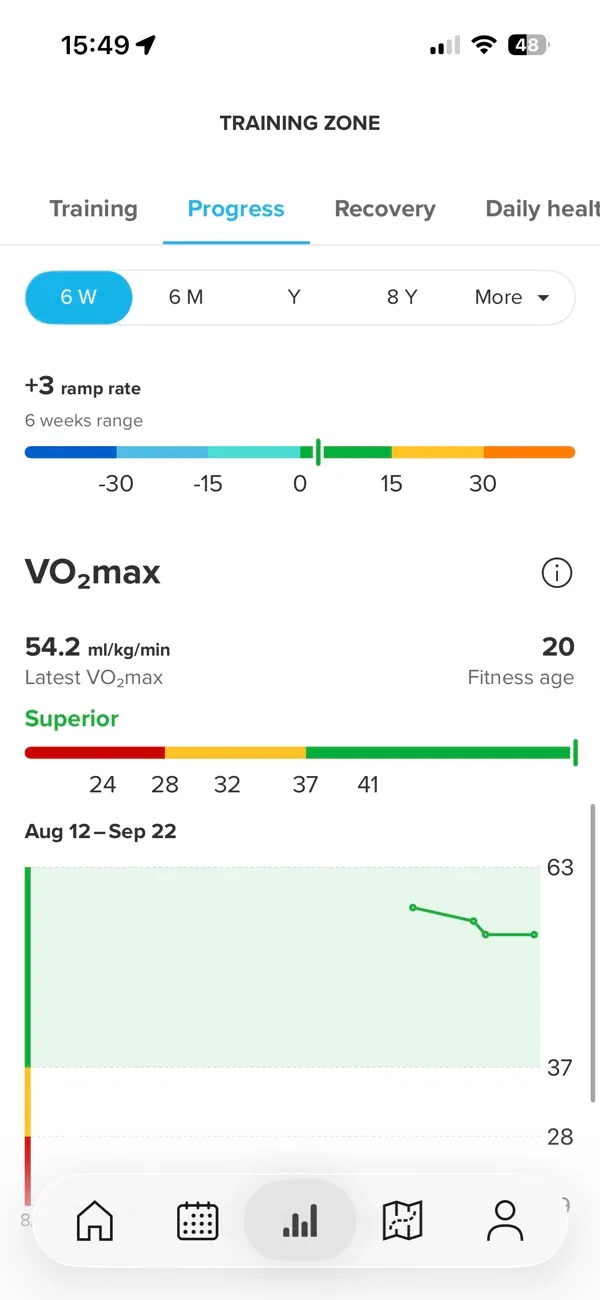
The Suunto app gives you training load, recovery, VO2max, lactate threshold estimates, and adaptive AI plans (also beta). It's powerful, but it leans on acronyms, and the race predictions started rough before dialing in after a couple of weeks of consistent runs.
If you want structure without the jargon, my training plan generator pairs nicely with a watch like this.
Running training plan generator — road & trail, 5K to 100M
Build a personalized running training plan around your actual race date, current mileage, and experience level. Road and trail, any distance.
 Alastair Dixon
Everything syncs cleanly to Strava and TrainingPeaks, though you can't import structured TrainingPeaks workouts onto the watch itself.
What the Run 2 is not
This is a running tool, not a mini-phone, and Suunto hasn't pretended otherwise.
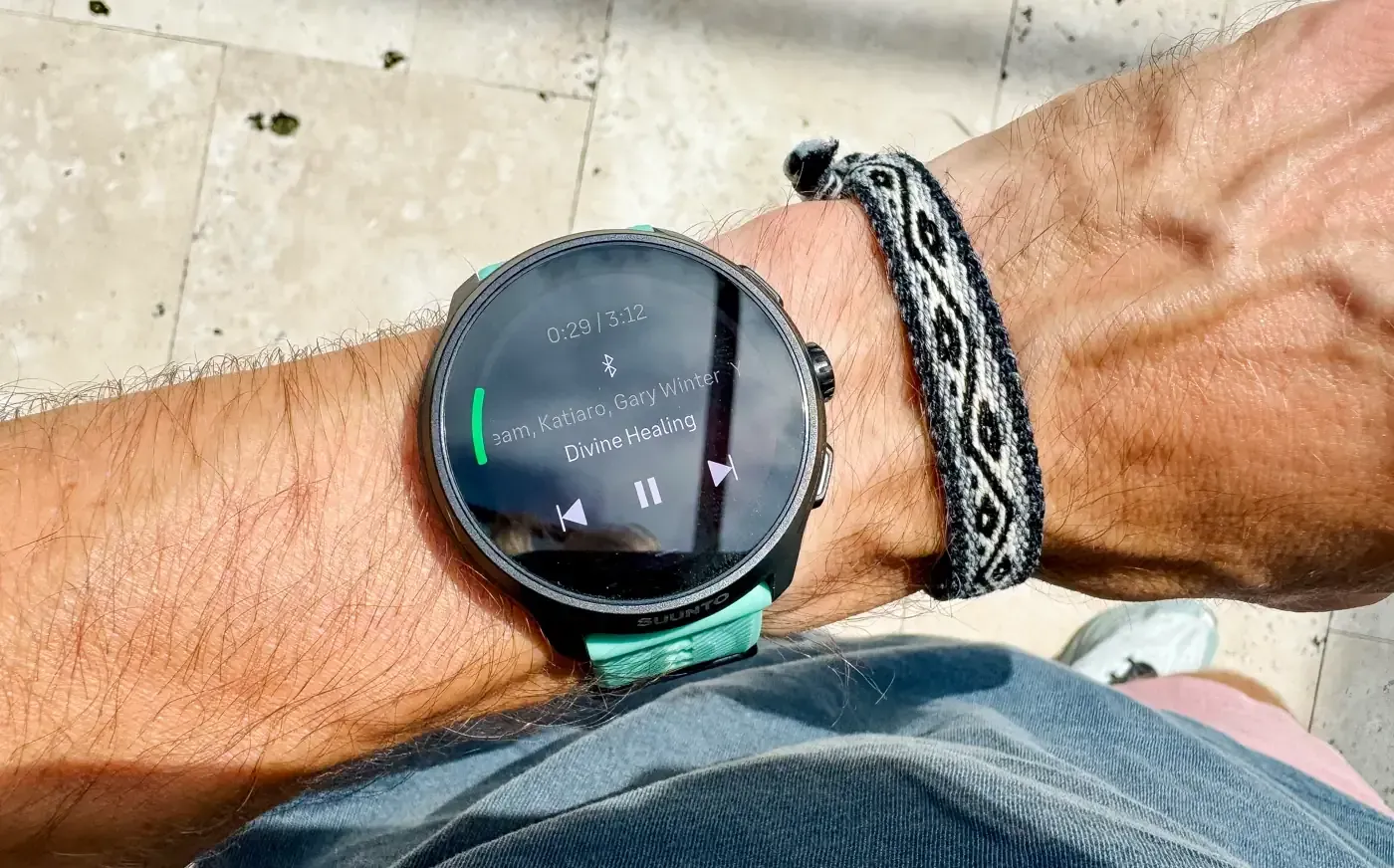
- Music is drag-and-drop MP3s played to Bluetooth buds if you want to leave your phone at home; but you can still control your phone music when it's connected to bluetooth. There's no Spotify or Apple Music app on the watch, so the 64GB model only helps if you still own your music
- No NFC payments
- Around 20 watch faces and no SuuntoPlus app store (those stay on the Race and Vertical class watches)
- Notifications are basic, which suits me fine because I turn them off anyway
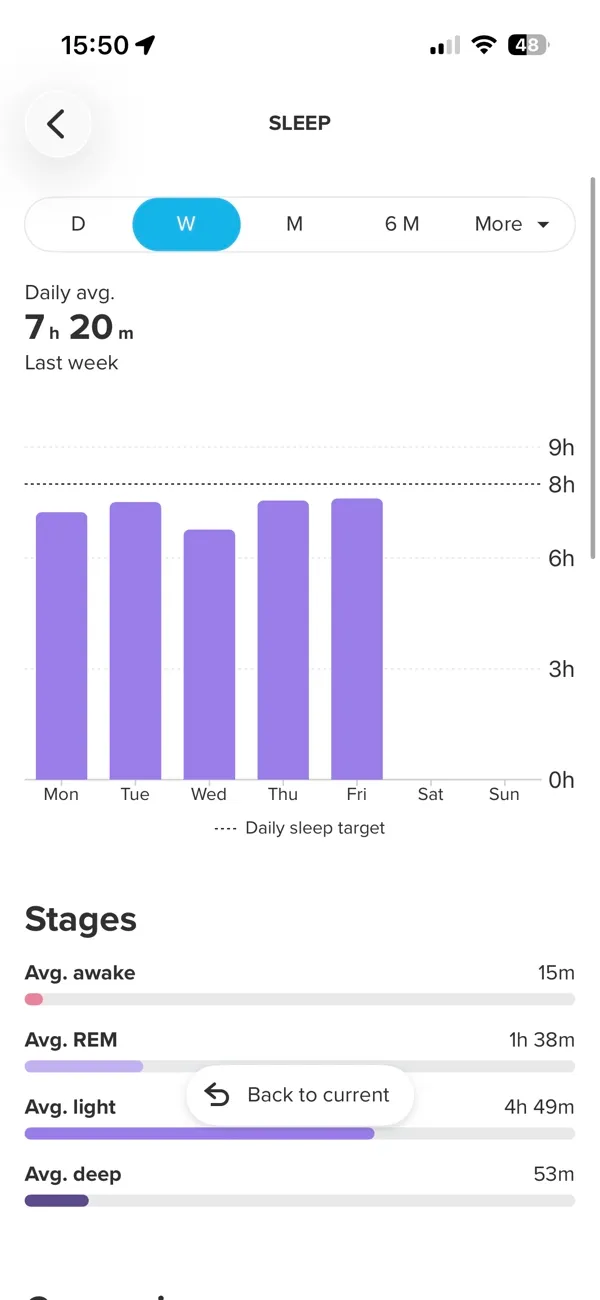
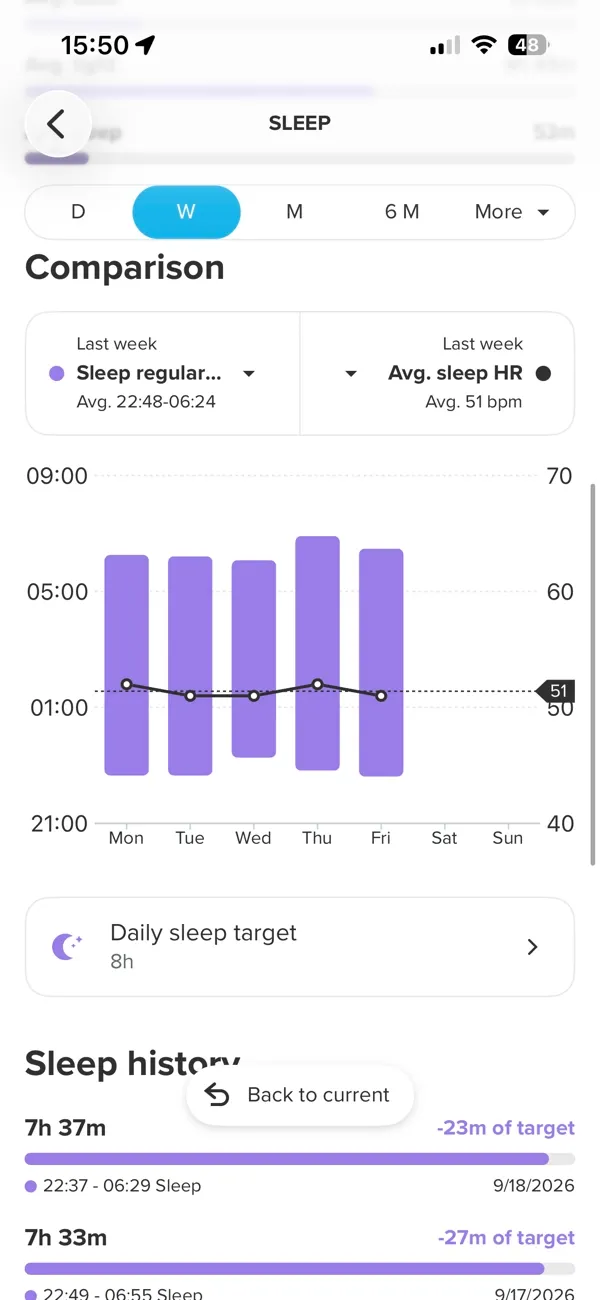
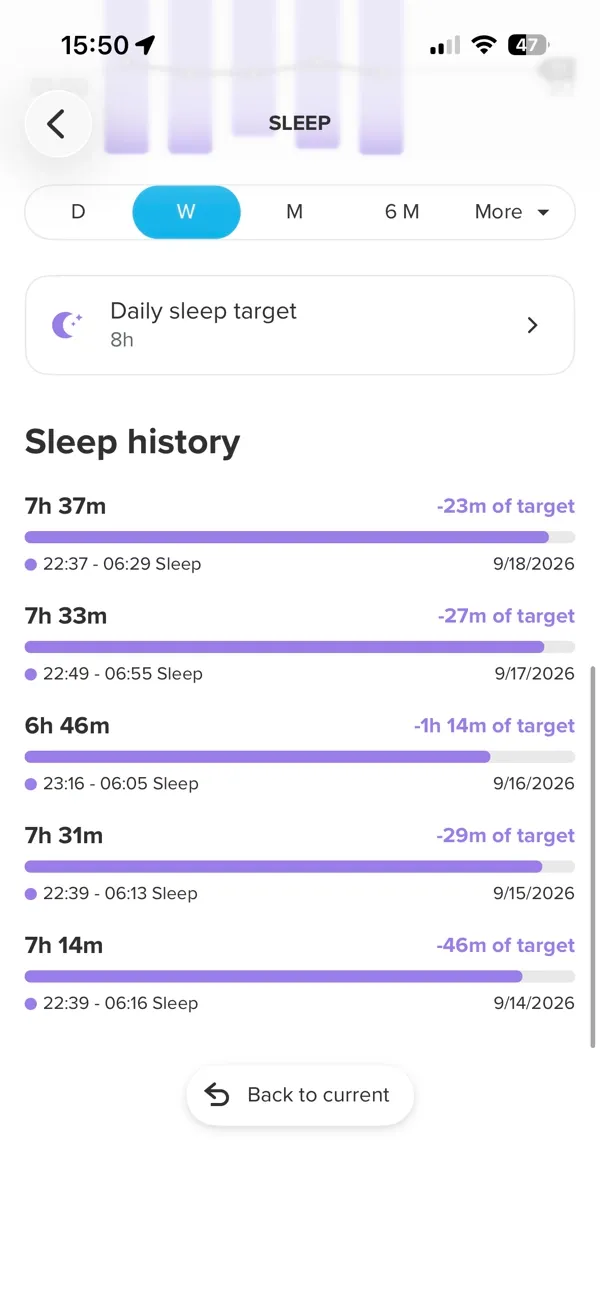
On the wellness side: it's light enough that I've happily worn it every night during sleep while, and the overnight HRV and recovery trends have been genuinely useful for deciding when to push.
I'd just stop short of buying it as a wellness watch, because step counts read a little low and the sleep-stage breakdowns are a rough sketch rather than a lab report but still fun to see!
If you want the full smartwatch life, the Apple Watch Ultra is the better tool and a very different proposition.
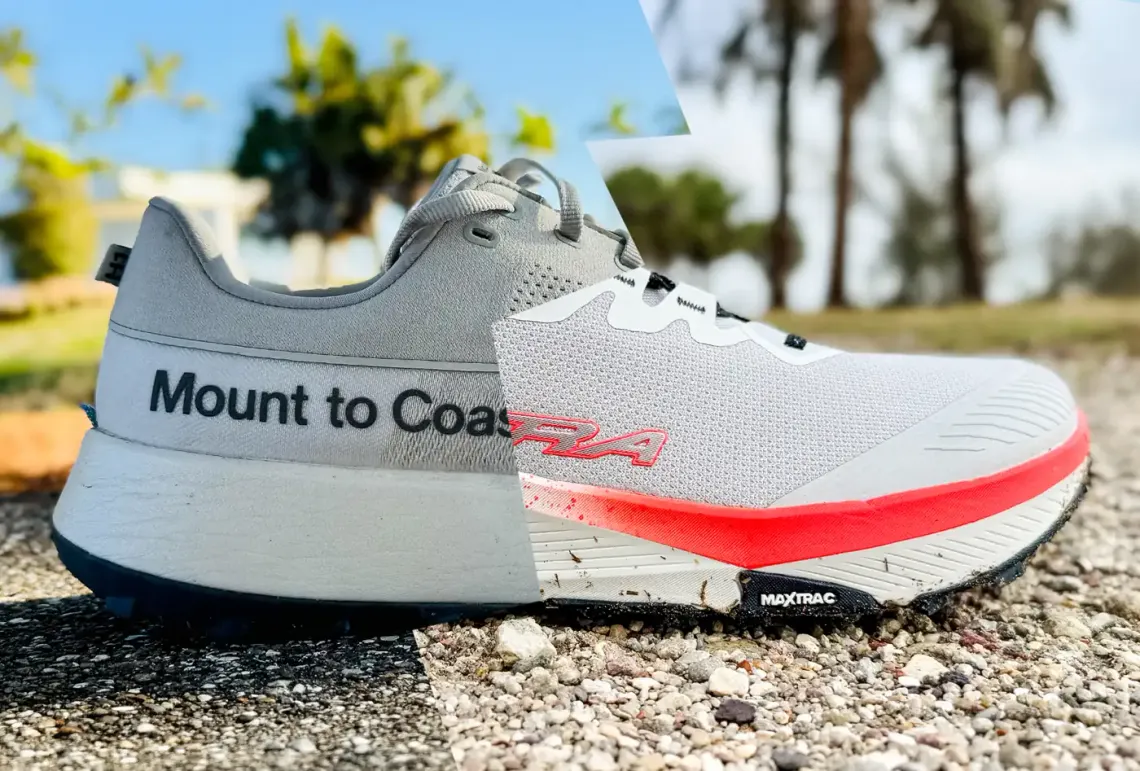
Apple Watch Ultra 3 review: A versatile adventure smartwatch with strong running capabilities
Two months of real-world testing on runs, hikes, and daily life. Satellite safety, health insights, and where it shines (or lags) against dedicated running watches.
 Alastair Dixon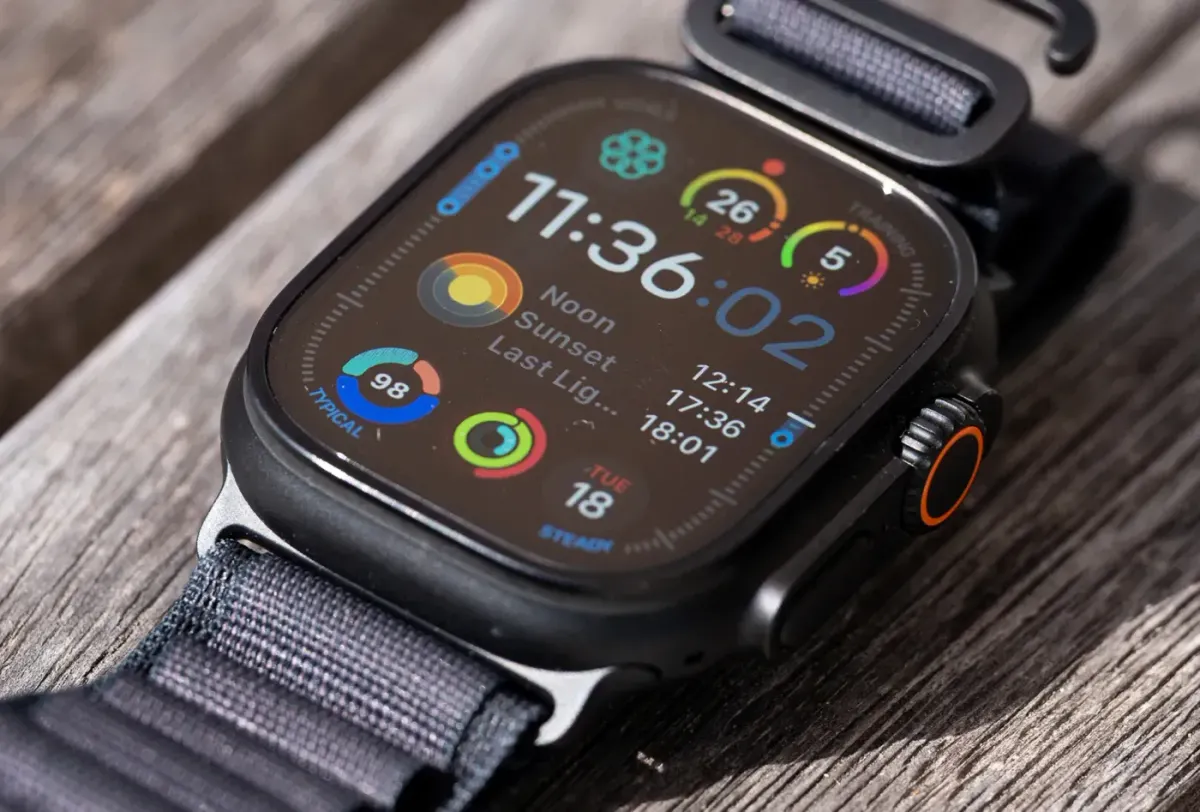
The price question
Here's the blunt part. The original Run cost $249 and now sells for around $199 making it a crazy good value proposition. The Run 2 costs $349, or $399 as tested, and that moves it into a crowded neighborhood.
The COROS PACE 4 undercuts it at $250 ($280 with music), runs longer between charges, and has gained maps of its own thanks to a recent software update.
COROS PACE 4 review: the ultralight AMOLED running watch I keep reaching for
If you want a dedicated running watch that feels featherweight, looks sharp, and doesn’t need constant charging, this one makes a lot of sense.
 Alastair Dixon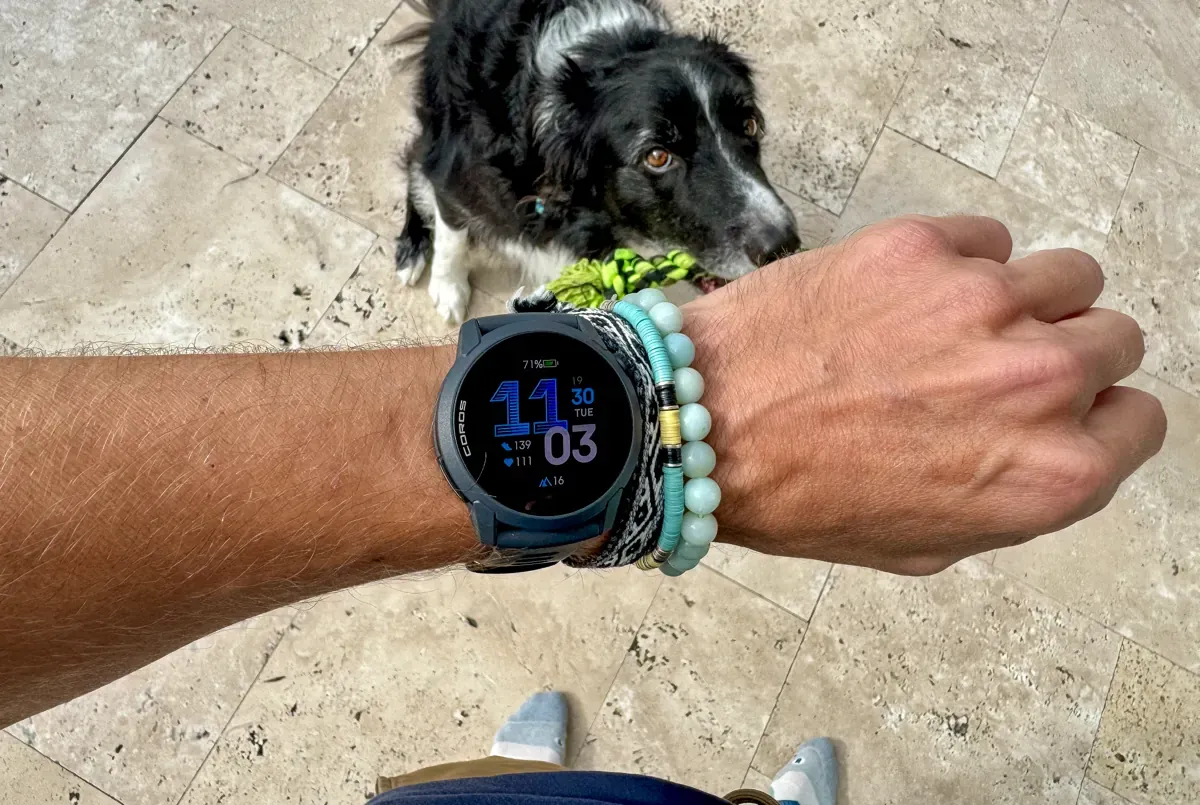
Garmin's Forerunner 170 sits at $300 with slicker coaching, contactless payments, and a more familiar ecosystem, but a plastic bezel, single-frequency GPS, but no maps.
What the Run 2 offers that neither can is free offline maps plus a steel-and-Gorilla-Glass build plus a 2,000-nit screen plus a wrist sensor this good, all in a 35g case. Garmin doesn't include maps in their watches for anywhere near this money.
So it's no longer the bargain buy but it's the cheapest way to get this specific combination, and whether that's worth $399 depends entirely on whether you'll use the maps.
Who I'd recommend it to
Get the Suunto Run 2 if you:
- want offline maps without paying flagship Garmin money
- run in serious sun and want a screen you can read at a glance
- are training for a half or full marathon and will use the race screens and finish prediction
- liked the original Run but never trusted its wrist HR
- will use the 64GB model's storage for travel maps and phone-free music
Skip it if you:
- just want maximum value, because the original Suunto Run still exists at around $199
- need Spotify, Apple Music, or tap-to-pay on your wrist
- buy watches mainly for steps and sleep-stage data
- want a maps-first watch for technical trail days, where the COROS NOMAD or COROS APEX 4 is built for exactly that
COROS NOMAD review: the maps-first watch I’m using for all my trail running
Offline maps and a huge battery life with a classic rugged build makes the NOMAD ideal for true trail runners looking to run further, and explore more.
 Alastair Dixon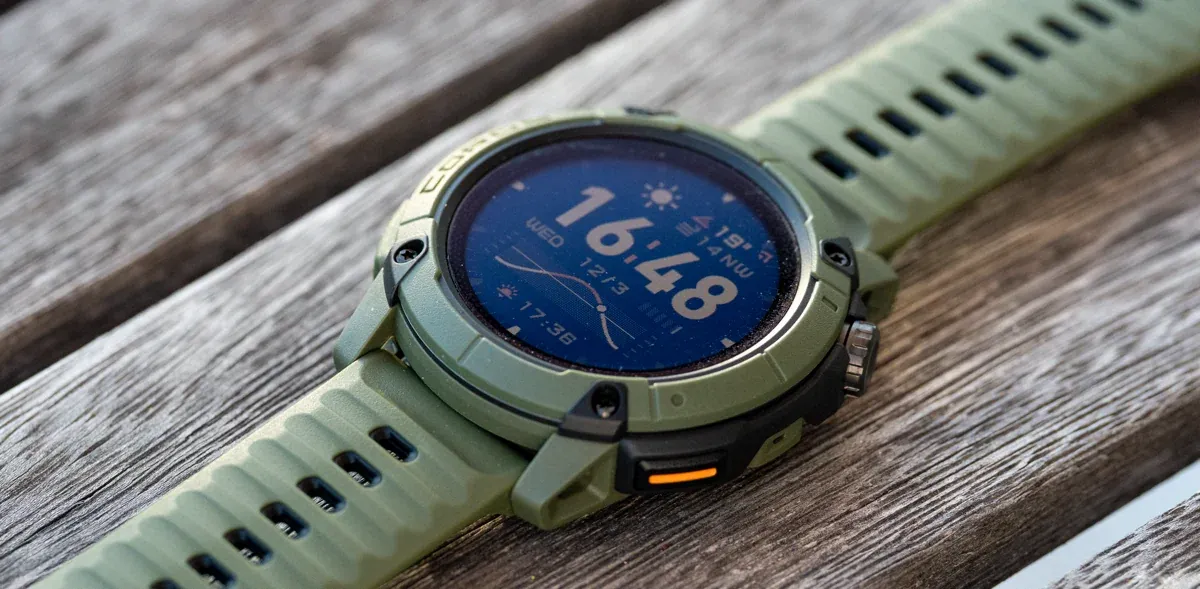
COROS APEX 4 makes long trail days simpler with battery life you stop thinking about
Big battery, fast offline maps, and a no-drama training ecosystem for runners who’d rather run than babysit a watch.
 Alastair Dixon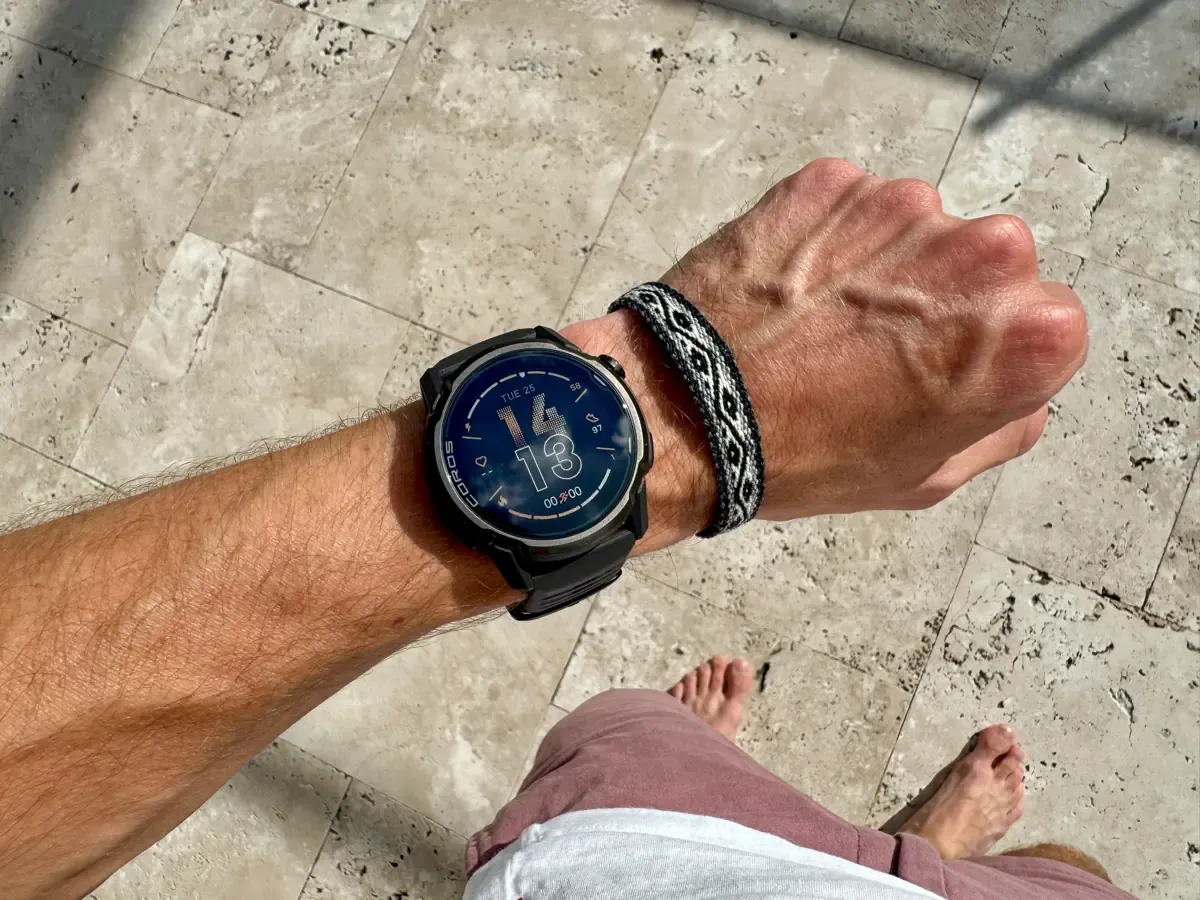
My verdict
The Suunto Run 2 is the watch the original Run should have been: a light, beautifully built, run-first AMOLED watch with heart rate I trust, GPS I don't think about, and maps that genuinely change how I plan routes.
It's also no longer cheap, and I'm not going to pretend $399 is an impulse buy. If you won't use maps or storage, buy the original Run or a PACE 4 and pocket the difference.
But if you want a true running instrument with the best screen, sensor, and mapping you can get at this price, the Run 2 is an easy watch to love. The Aloe Green 64GB is the version I'd pick.
Use code AFFR15TAK for 15% off your order at Suunto
FAQ
Is the Suunto Run 2 worth upgrading from the original Suunto Run?
Yes, if the original's wrist heart rate frustrated you or you want offline maps and a far brighter screen. If your Run still does everything you need and budget matters, the upgrade isn't urgent.
Should I buy the 4GB or 64GB Suunto Run 2?
A state-sized map region takes around 0.5GB, so 4GB covers a home region plus a little music. Get the 64GB if you travel, race away from home, or want a real offline music library on the watch.
Does the Suunto Run 2 play music?
Yes, but only your own MP3 files, loaded onto the watch or by controlling your phone when connected, and played to Bluetooth headphones. There is no Spotify or Apple Music App on the watch.
How long does the Suunto Run 2 battery last?
Suunto claims around 10 days of daily use and up to 24 hours of dual-band GPS. In my testing, with raise-to-wake and daily runs, it's roughly a week between charges, or 4 to 5 days with the always-on display.
If you haven't already, signup for my free newsletter, and subscribe to my YouTube Channel for all the latest running shoe reviews. 👉🏼 And for an inside look at what comes into my studio with unboxings, lace up reels, behind the scenes, and short form reviews, follow me on Instagram, and TikTok. -Alastair
Written by

Subscribe to new posts
reviews, training tips, and thoughtful stories for runners








Member discussion