
COROS PACE 4 Pro review: my new primary running watch
After a few weeks of training and sleep tracking, here's why the screen, maps, and battery made the PACE 4 Pro my number one watch, and who should save $200.

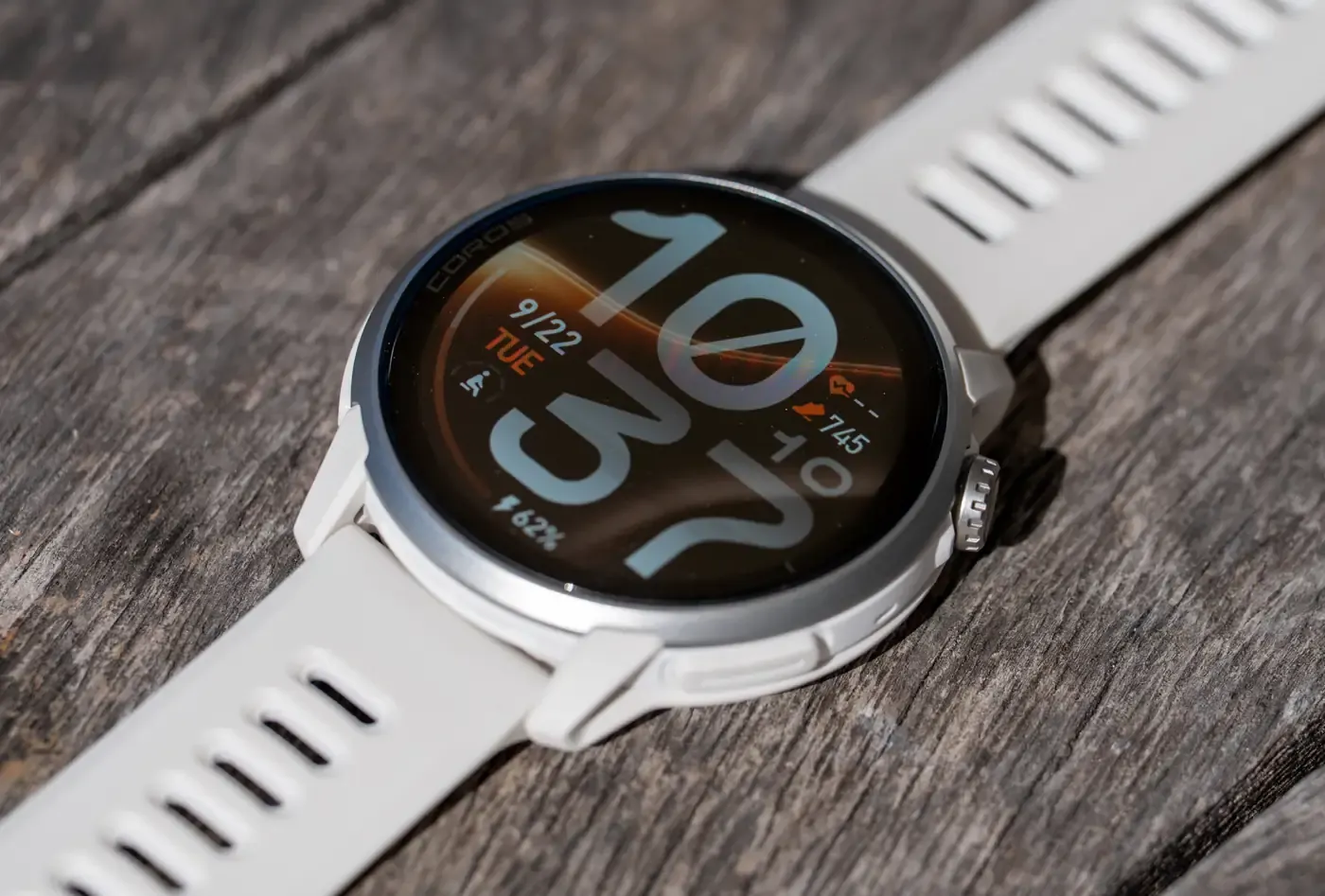
I've spent the last few weeks training with the new COROS PACE 4 Pro, and wearing it around the clock for sleep and recovery tracking too.
The short version is I'm loving it. This is a big step up from the COROS PACE 4, which I reviewed in January and still rate as one of the best-value running watches you can buy.
Here's the part that should hold most weight; the PACE 4 Pro is now my primary running watch. I have a lot of watches in my studio, so nothing earns that spot by default.
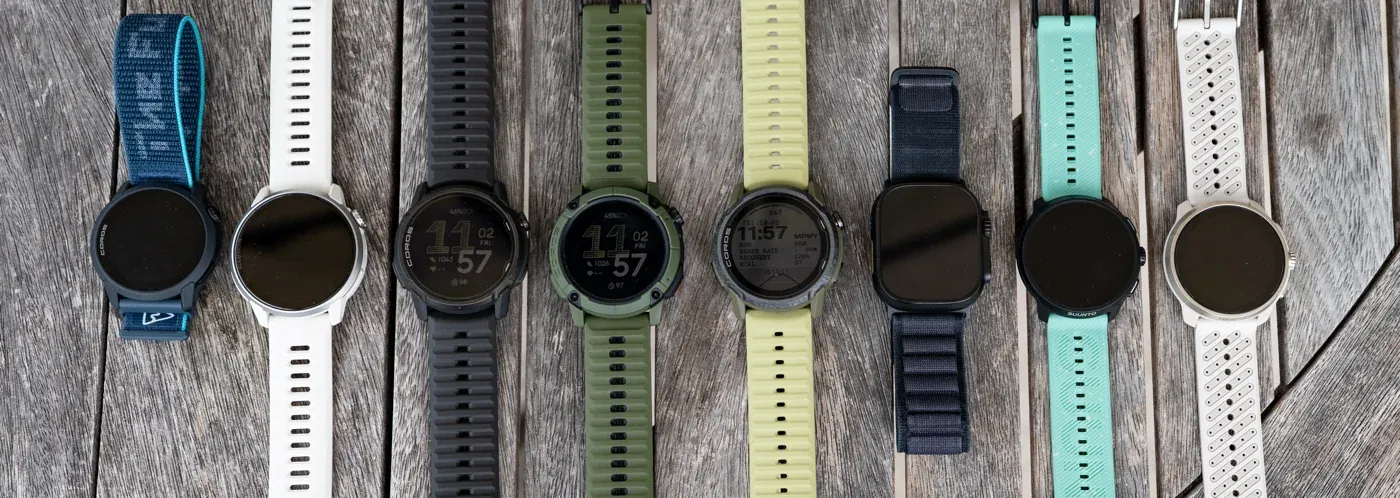
At $449 it costs $200 more than the PACE 4, and a lot less than the Garmin flagship options it will get compared to. Let's dig into whether the upgrades justify it...
If you purchase gear through links in this article, I may earn a small affiliate commission. For my training tools, exclusive content, newsletter, and more perks become a member, (it's free!). -Alastair ✌🏼
The Best Running Shoe Finder 2026
Answer 5 quick questions and get matched to the best running shoe for your training style, ride preference, and foot shape. Updated to v5.5 May 2026
 Alastair Dixon
Key specs (the ones that matter)
- Price: $449 at coros.com
- Weight / size: 43g with the nylon strap (51g with silicone), 47.6 x 47.6 x 11.8mm
- Display: 1.47" LTPO AMOLED touchscreen, 466 x 466, up to 3,500 nits, dimming as low as 2 nits at night
- Build: Titanium bezel, edge-to-edge sapphire glass, fiber-reinforced polymer case, 22mm quick-release strap
- GPS: Dual-frequency (L1 + L5) across five satellite systems, with an Auto mode that switches between single and dual frequency
- Battery: 21 days of daily use, up to 60 hours of all-systems GPS, 40 hours in dual-frequency mode
- Maps: Offline landscape and topo maps with street names, trail names, contour lines, and turn-by-turn on a synced route
- Storage: 32GB for maps, music, and activity history, plus double the RAM of the PACE 4
- Audio: Microphone and speaker (new for the Pace line): spoken alerts, voice notes, hands-free calls through your phone, offline MP3 playback
- Sensors: 4th-gen optical heart rate, ECG for HRV Wellness Checks, SpO2, barometric altimeter, compass, thermometer
- Water resistance: 5 ATM
- Sport modes: 40+, including run, trail, track, triathlon, and multi-sport
Comparing it to the PACE 4
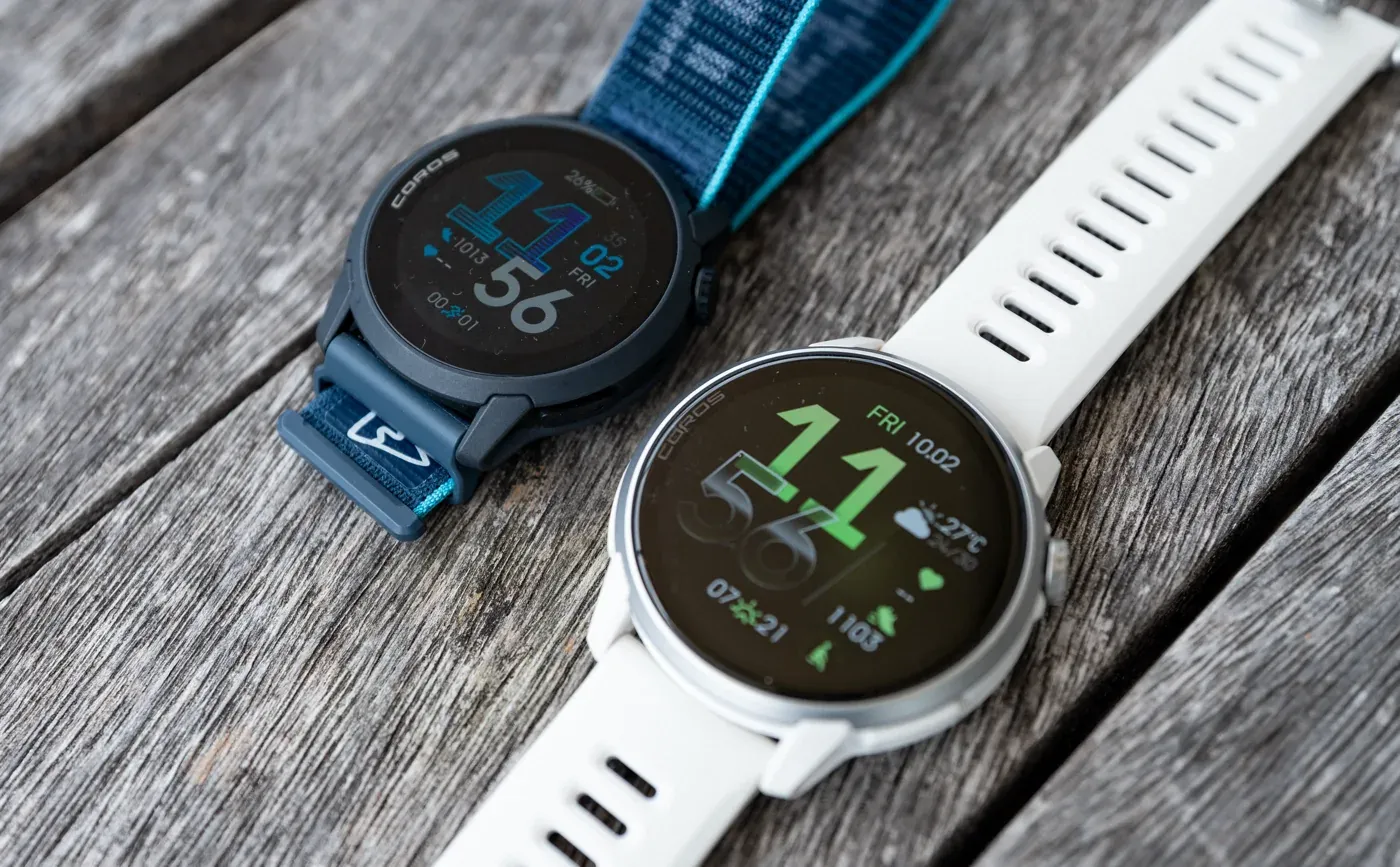
The PACE 4 launched less than a year ago, so COROS moving this fast surprised me. The Pro isn't a replacement though, it's a premium tier sitting above it, and the hardware gap is real and noticeable on the run.
| PACE 4 | PACE 4 Pro | |
|---|---|---|
| Price | $249 ($279 aluminum) | $449 |
| Display | 1.2", 390 x 390, ~1,500 nits | 1.47", 466 x 466, 3,500 nits |
| Glass / bezel | Mineral / polymer or aluminum | Sapphire / titanium |
| Weight (nylon) | 32g | 43g |
| Thickness | 11.8mm | 11.8mm |
| All-systems GPS | 41 hours | 60 hours |
| Dual-frequency GPS | 31 hours | 40 hours |
| Daily use | 19 days | 21 days |
| Storage | 4GB | 32GB |
| RAM | Baseline | Double |
| Audio | Mic only | Mic and speaker |
| ECG (HRV check) | No | Yes |
| Offline maps | Yes, via a September update | Yes, bigger and much faster |
Add it up and you get 22.5% more screen, almost 50% more all-systems GPS time, and 11g of extra weight in a case that is no thicker. More watch, barely more bulk.
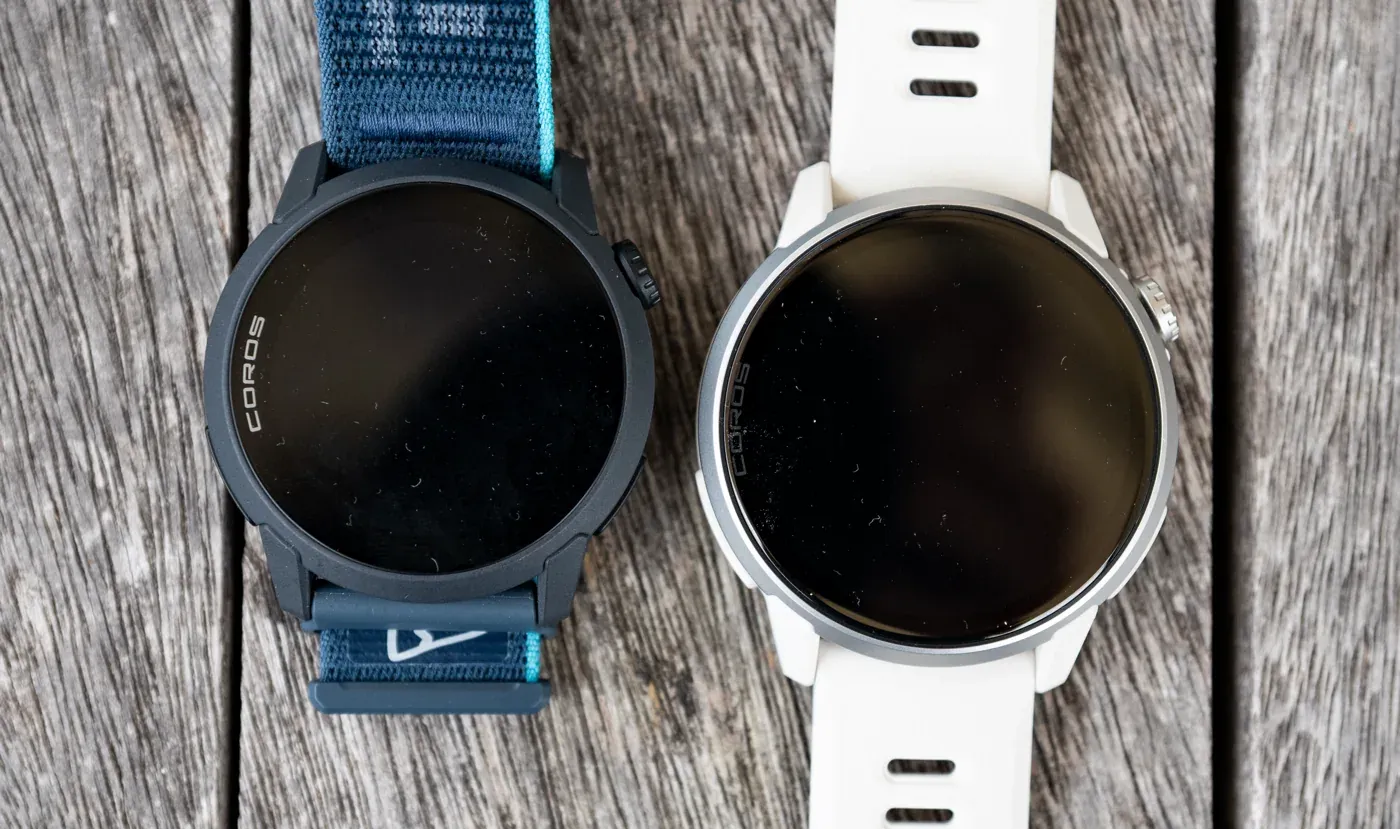
One important note is that maps are no longer a Pro exclusive, because the PACE 4 gained them in a September firmware update. The Pro argument is how the maps look and how fast they move, and I'll get into that below.
It also effectively replaces the COROS Pace Pro at the top of the line, with a brighter screen, better materials, and much longer runtimes than that watch ever had.
The screen is the upgrade you feel on every run
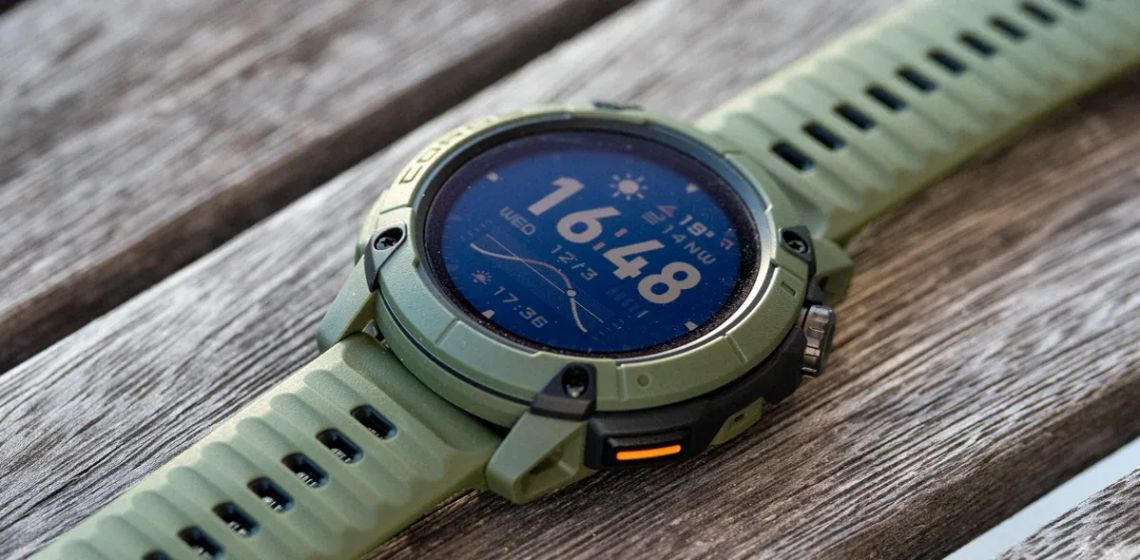
The display is bright and high resolution, and the bezel is small, so the face uses a lot of the available space.
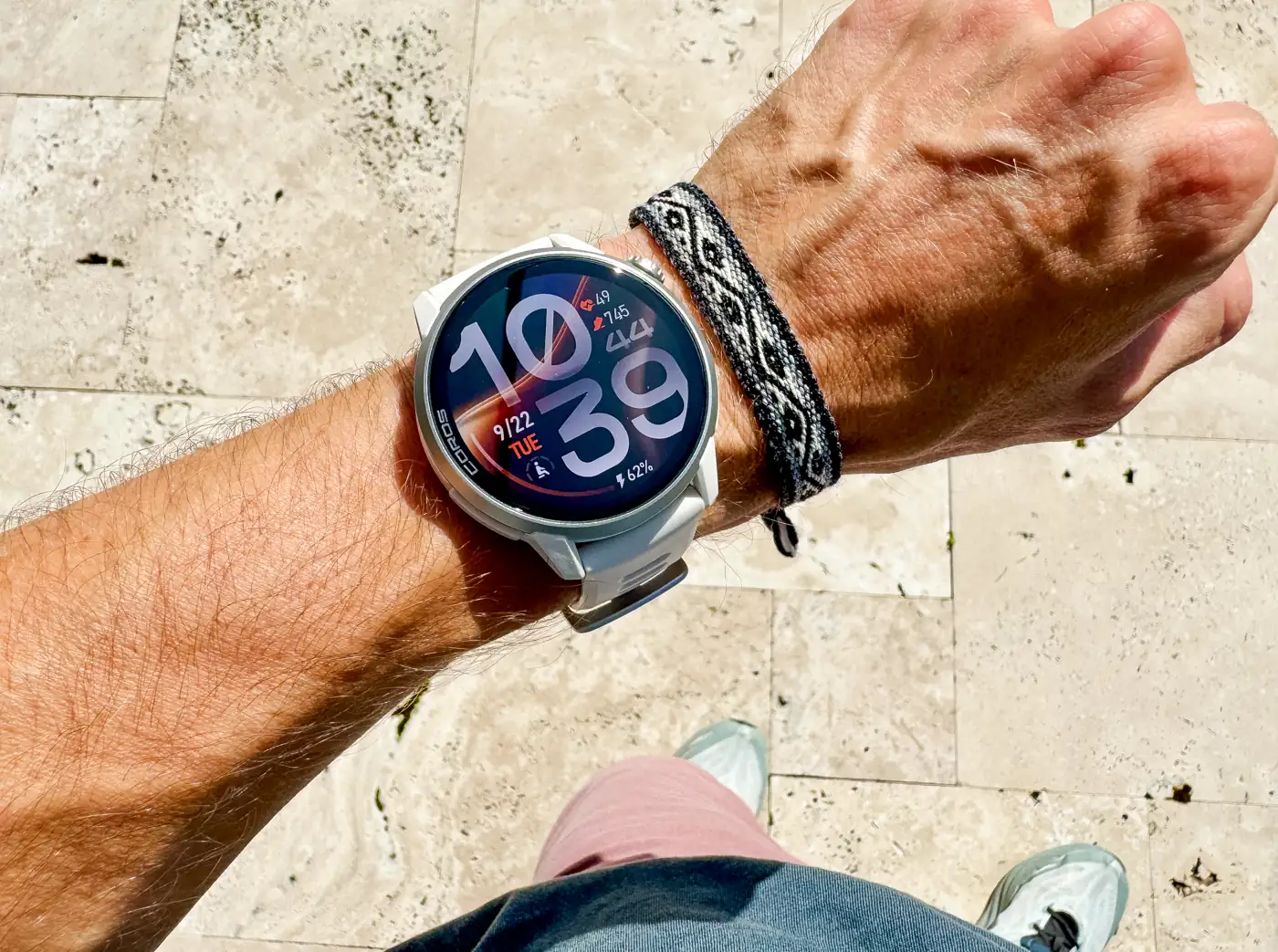
What that means is that data is incredibly easy to read at a glance mid-run (the raise to wake feature is very responsive so there's no waiting for the screen to brighten when you check it), and touch response is quick.
That's my experience after weeks of Florida sun, and the numbers back it up. This is a 1.47" panel, the largest COROS has ever put on a watch, at 466 x 466 resolution and a peak of 3,500 nits.
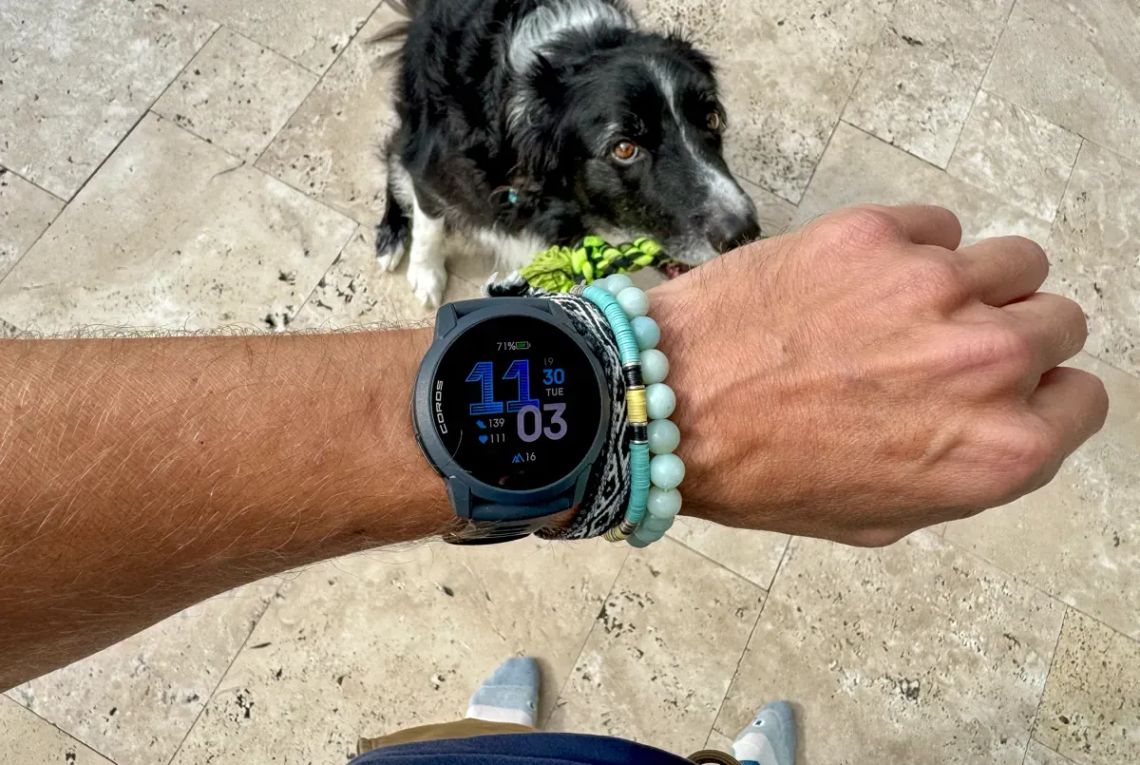
COROS PACE 4 review: the ultralight AMOLED running watch I keep reaching for
If you want a dedicated running watch that feels featherweight, looks sharp, and doesn’t need constant charging, this one makes a lot of sense.
 Alastair Dixon
For context, the PACE 4 and the old Pace Pro top out around 1,500 nits. On exposed paths in full sun, numbers stay legible without cupping a hand over the face.
The part I keep noticing is how little of the case is wasted. The 47.6mm case isn't small, but the titanium ring around the sapphire is slim, so even a crowded multi-field data page stays readable on the move.
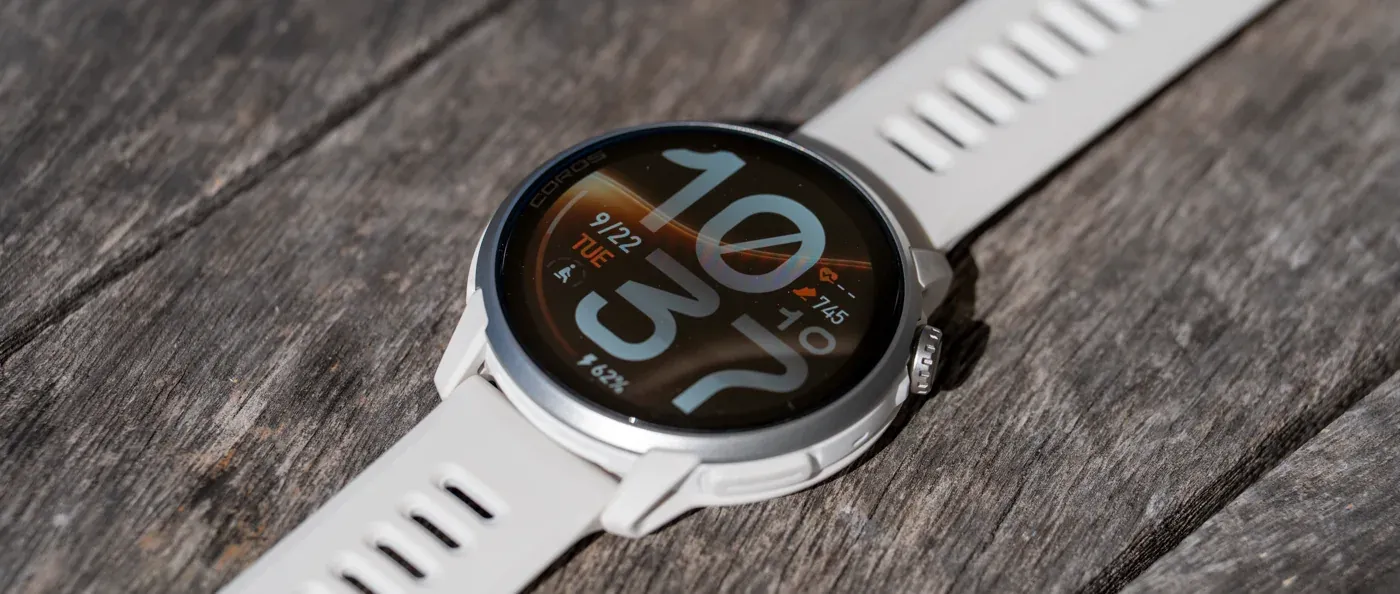
It's an LTPO panel too, which means it can idle at a low refresh rate and jump to 60Hz when you interact with it. That's what makes the always-on option realistic rather than a battery party trick, and because auto brightness drops as low as 2 nits at night, it never blasts your eyes in a dark bedroom, when you activate it.
Build, and the White silicone option
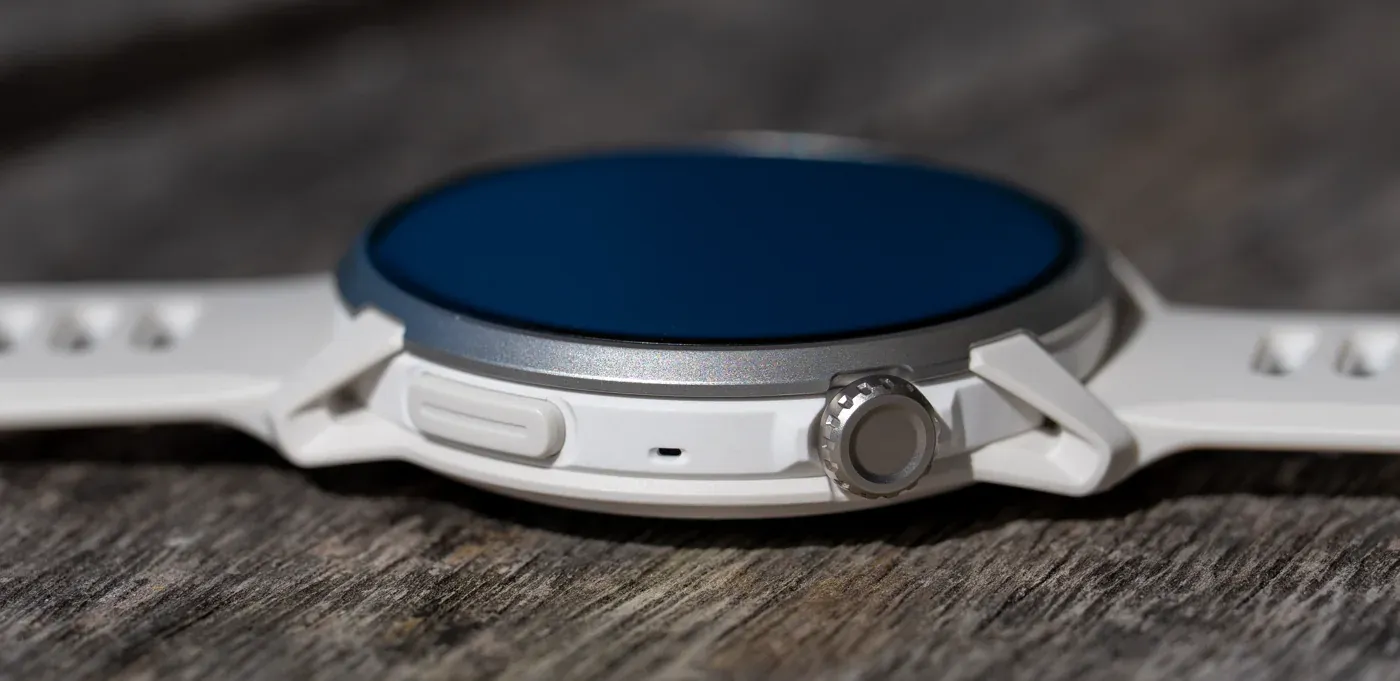
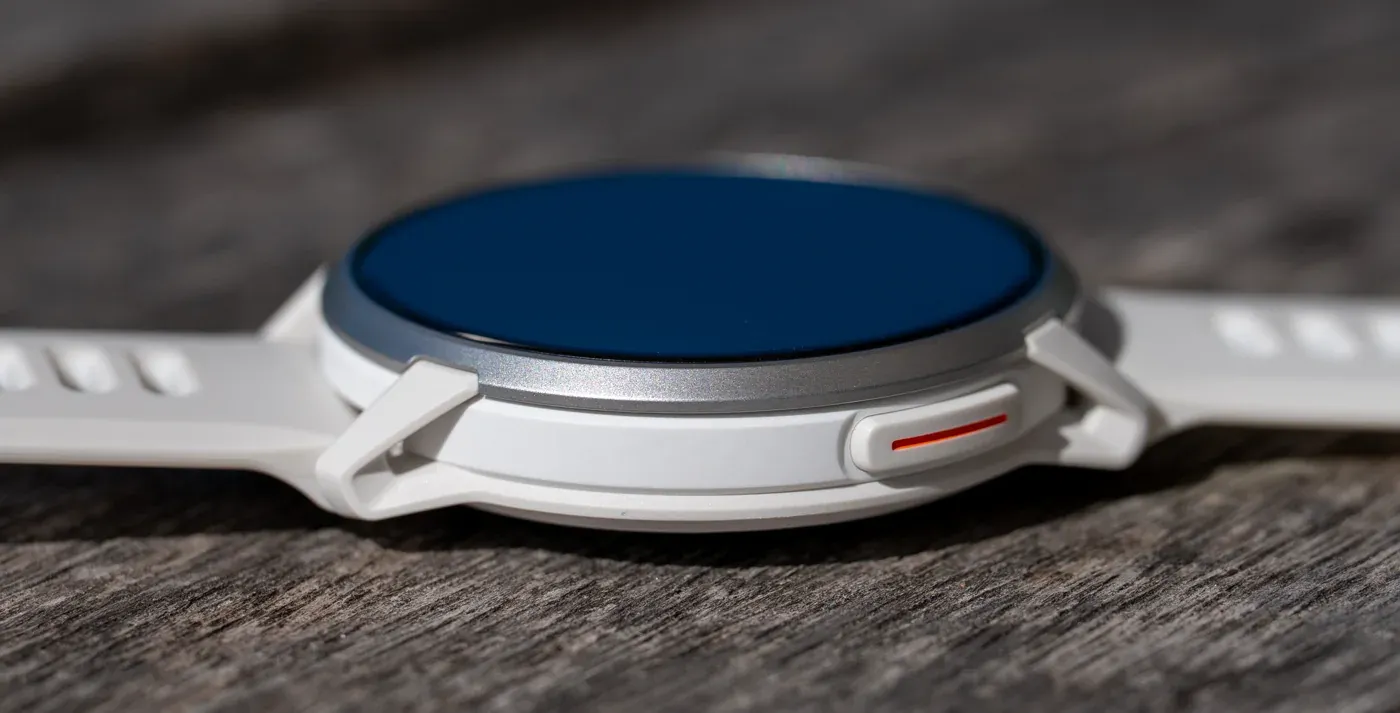
Sapphire glass and a titanium bezel change the character of the Pace line. This is the first Pace that feels premium on the wrist rather than just lightweight.
I've been testing the White case with the silicone strap, and it looks sharp on the wrist: a clean, premium take on a watch this capable.
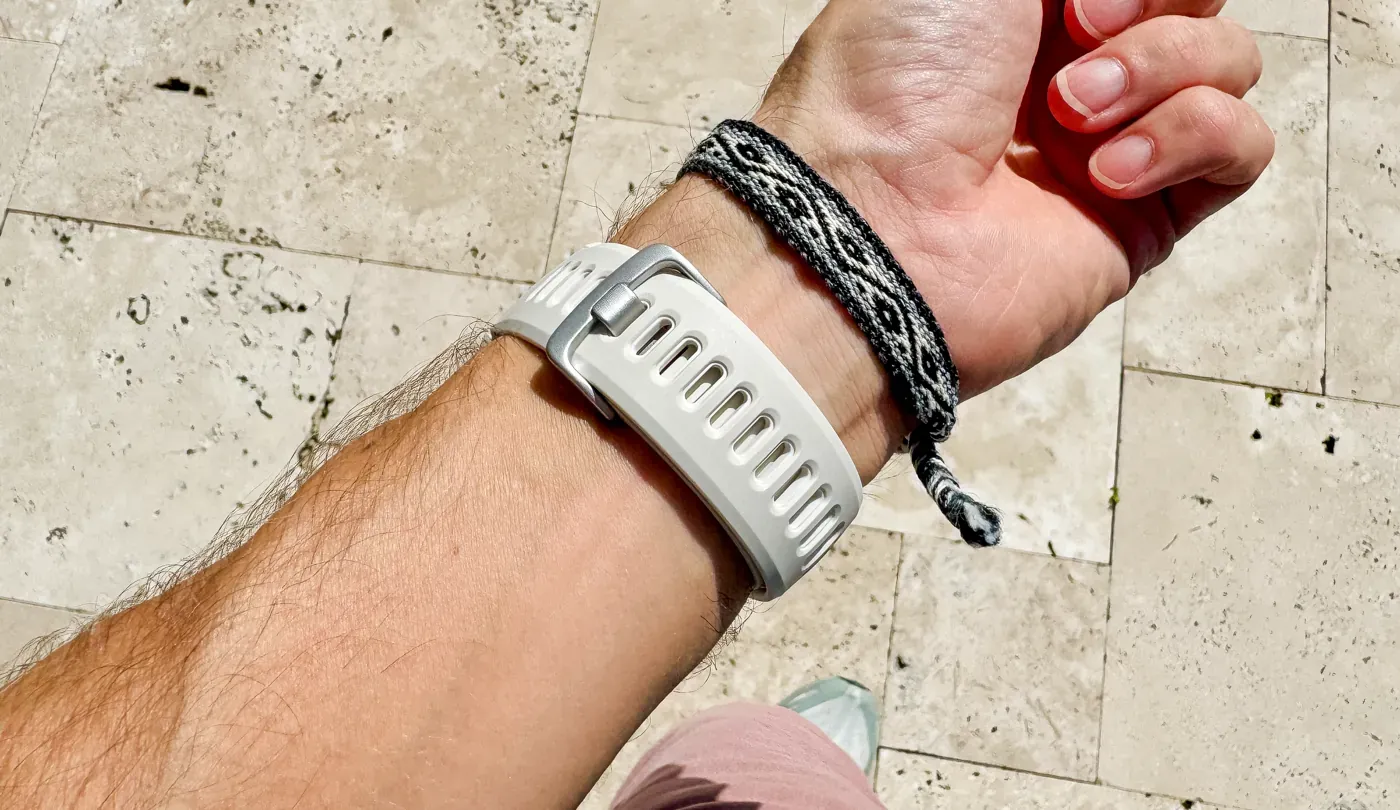
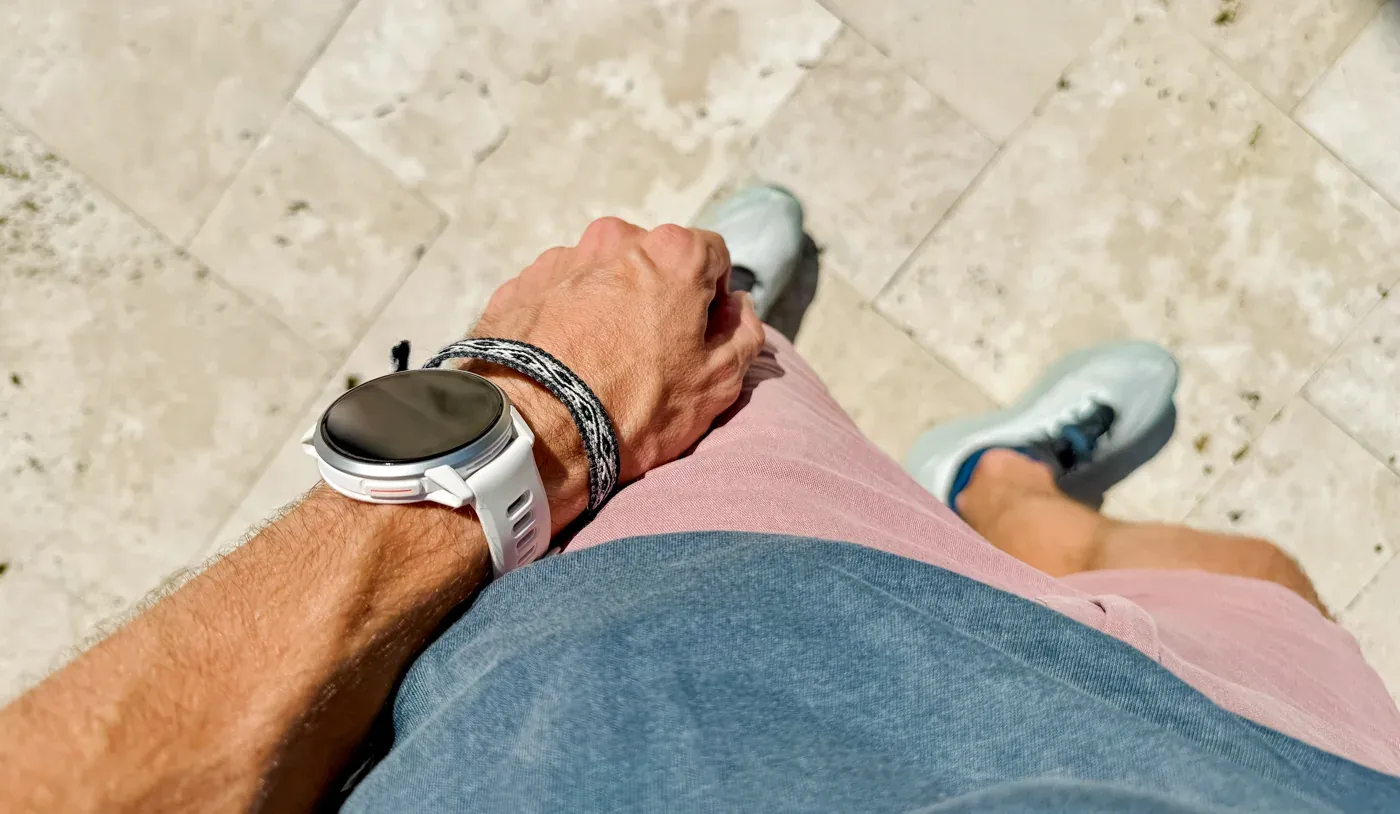
With silicone you're at 51g, and at the same 11.8mm thickness as the PACE 4 it still disappears once you're moving. If you want the weight play, the nylon strap drops it to 43g and dries quickly after sweaty runs.
One practical tip: the straps use push-button quick releases, so make sure each side clicks fully home when you swap bands.
You get three buttons, one of which is a digital crown, plus the touchscreen. Between them, getting around the watch is fast and intuitive.
Maps finally feel finished on a Pace
The maps are nice now, and the watch is super responsive. That's the Pro story in one line.
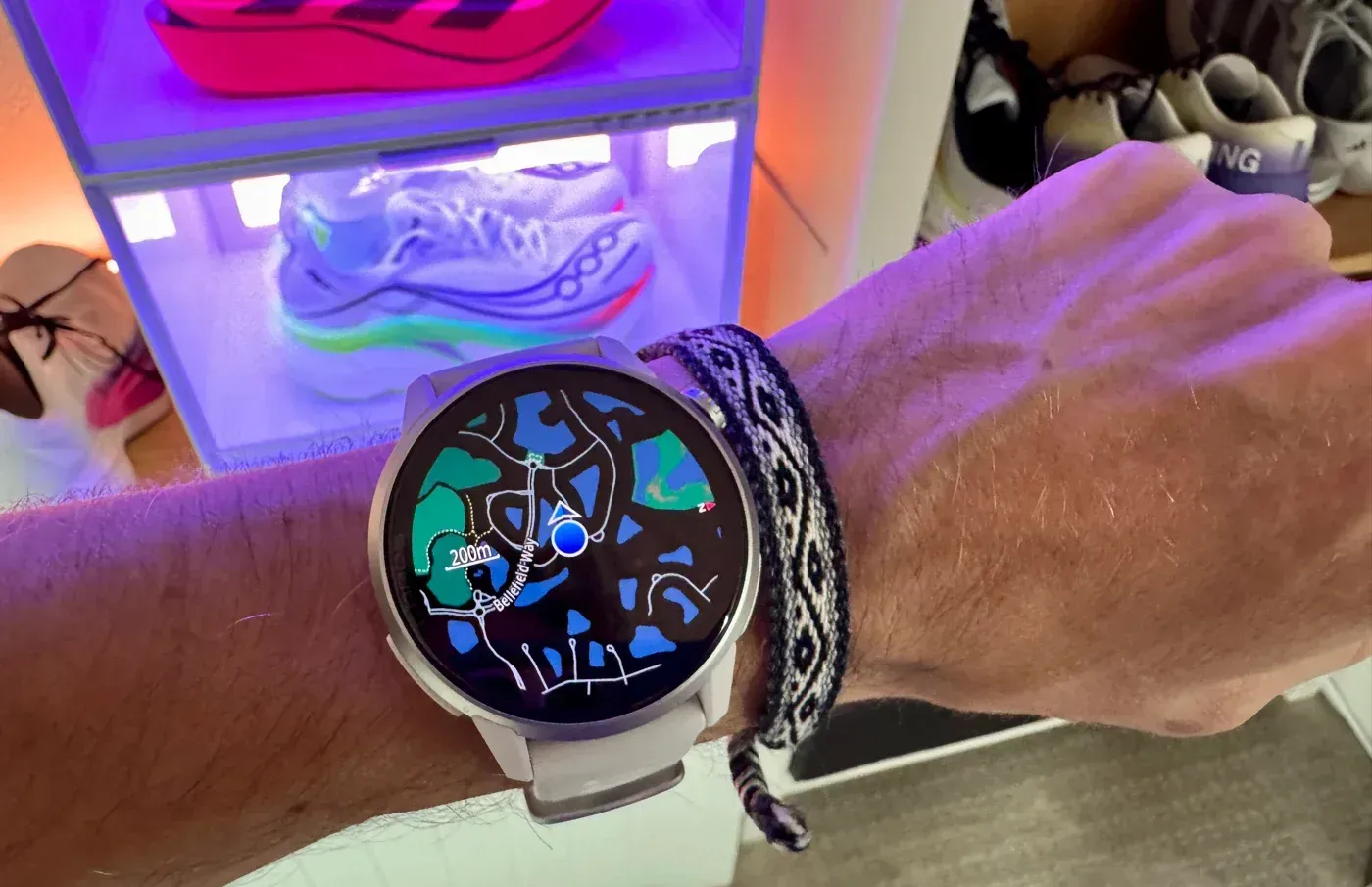
COROS doubled the RAM versus the PACE 4, and paired with this panel, the result is mapping that pans and zooms with almost no lag. Street names, trail names, and contour lines are actually readable at a glance.
Turn-by-turn prompts on a synced route work well, and they keep running alongside Pace Strategy, so you can glance, confirm the turn, and keep moving. Deviation alerts, Back to Start, and an elevation plot with Hill Alerts round out the safety net.
Maps aren't preloaded. You download regions in the COROS app over Wi-Fi, and it's a quick, painless process. Routes come from the app's Route Builder, or sync in from Strava, AllTrails, and Komoot.
The honest limit: these are not routable maps in the Garmin sense. You can't tap roads on the watch to build a new route on the fly; you follow a route you already have, or navigate back the way you came.
For how I actually use navigation on the run, that trade has been easy to live with. But if on-watch routing is a must, that's still Forerunner territory.
GPS accuracy
You get dual-frequency (L1 + L5) across five satellite systems, plus an Auto mode that switches between single and dual frequency depending on conditions.
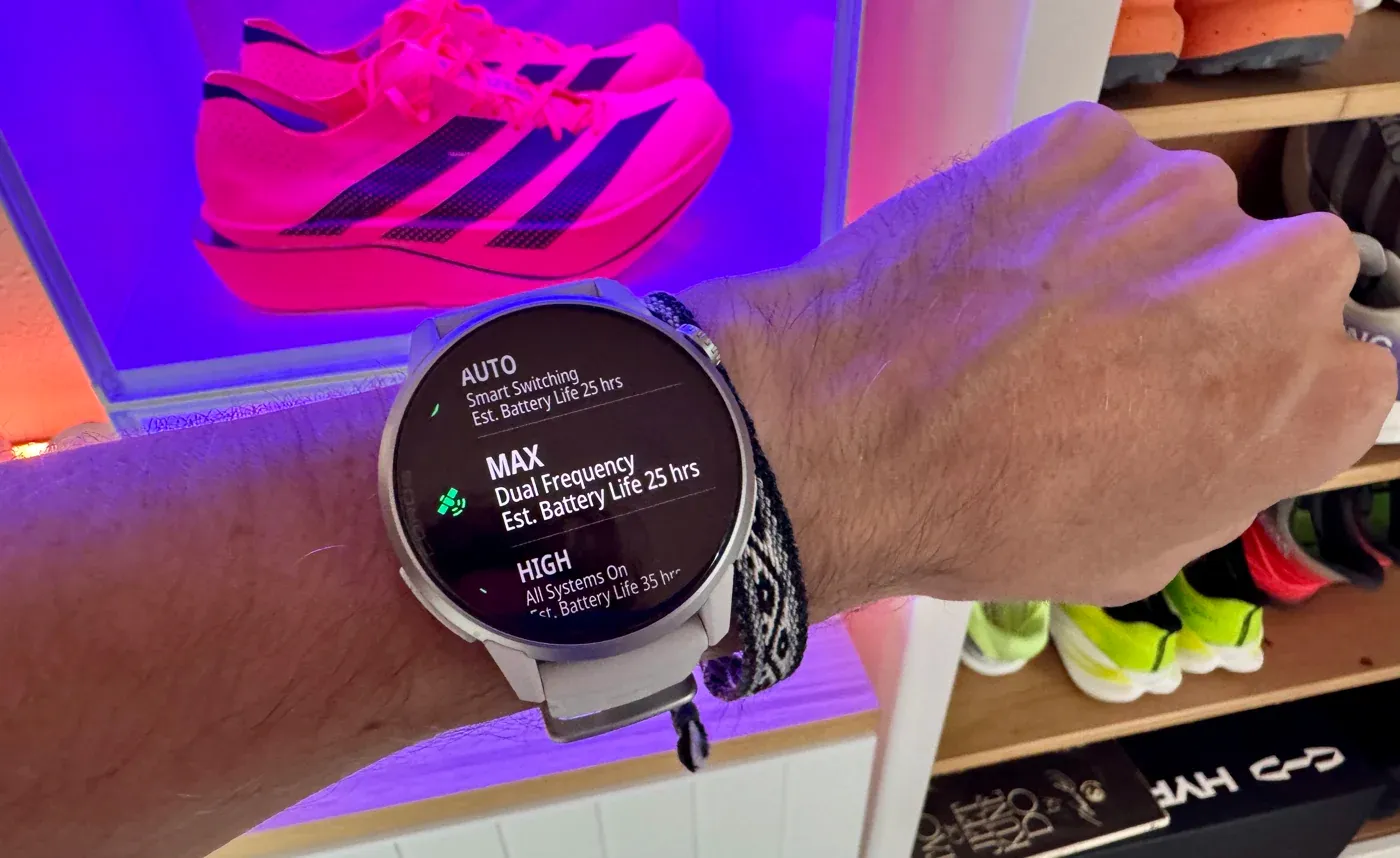
I've been running it in High (all systems) mode, which is also the 60-hour battery setting, and it's been all I need: fast lock, clean tracks, and pace that lines up with the best watches I've tested. Max (dual-frequency) is there if you want the tightest possible track under tough cover, for a battery cost.
The usual caveat applies under dense tree cover, where any watch can read a touch short.
But pace and distance have been consistent enough that I've stopped checking them against anything else, which is really the only test that matters for training.
Heart rate and sleep tracking
The 4th-generation optical sensor sits flush against the wrist, and for daily training it has been dependable: steady runs, tempo work, and everyday wear all read believably.
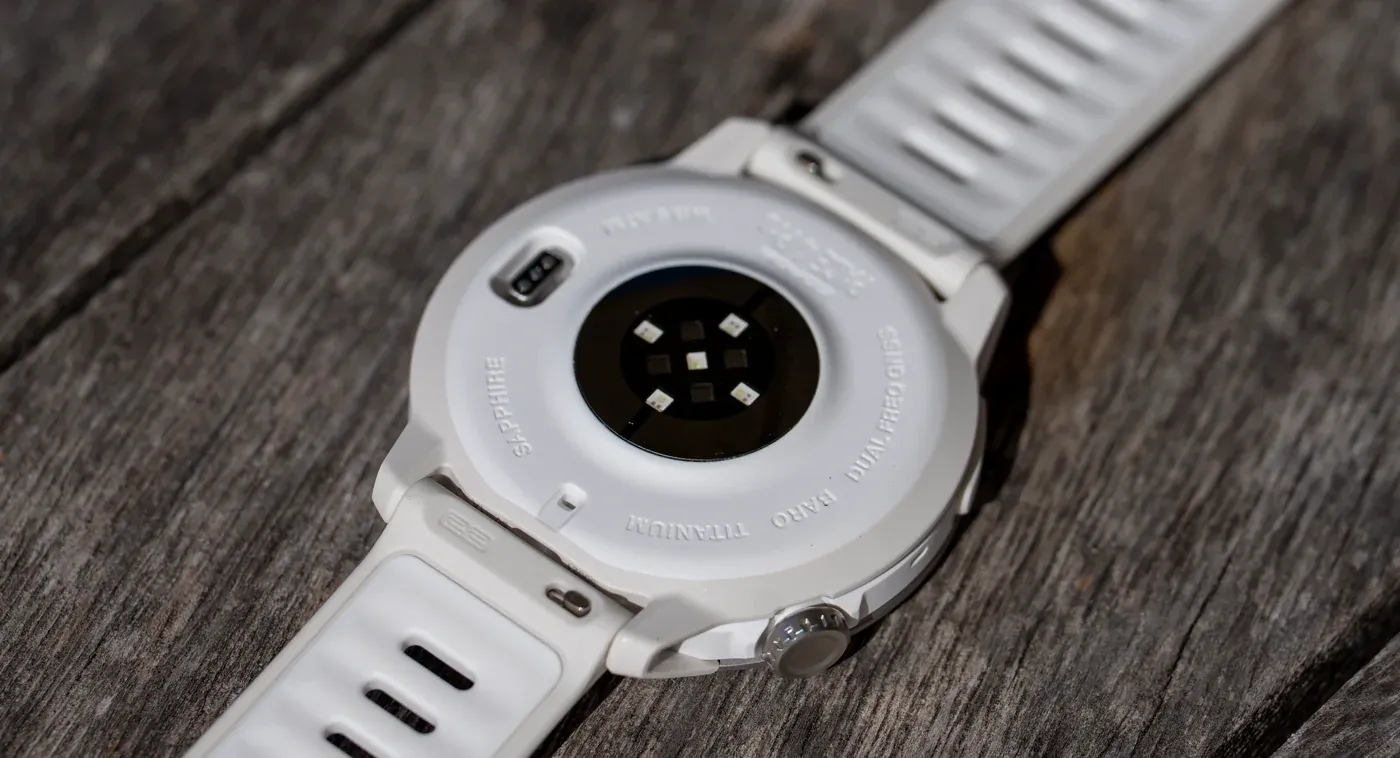
Wrist heart rate here is very good but for hard intervals in the cold, or strength work with lots of arm movement, I'd still snug the strap or pair the COROS Heart Rate Monitor for the cleanest data.
There's also an ECG sensor now, but set your expectations: it powers an HRV Wellness Check, not a medical-grade heart screening feature.
On the wellness side, I've worn it every night for sleep tracking, and it's light enough that I forget it's there.
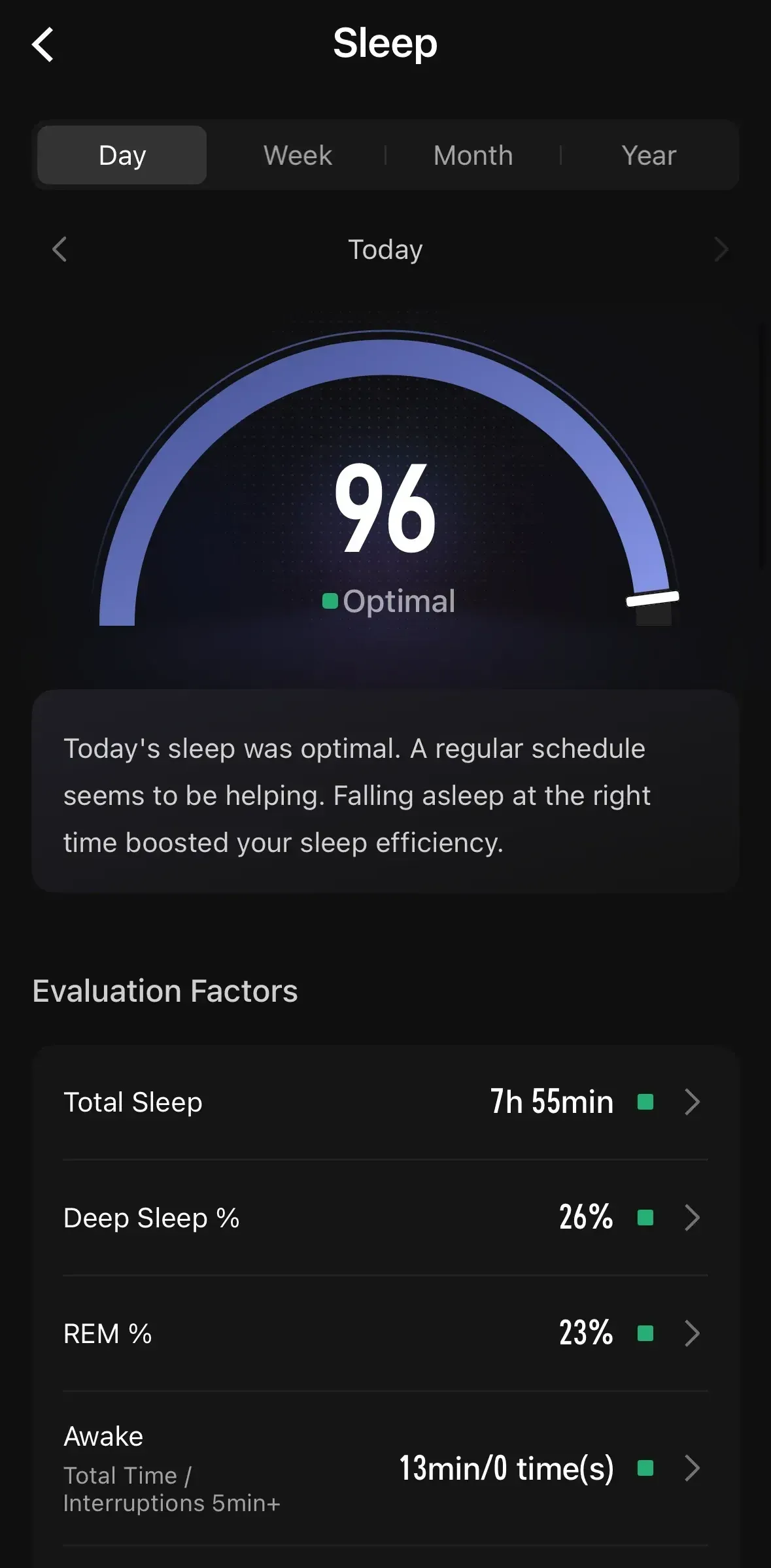
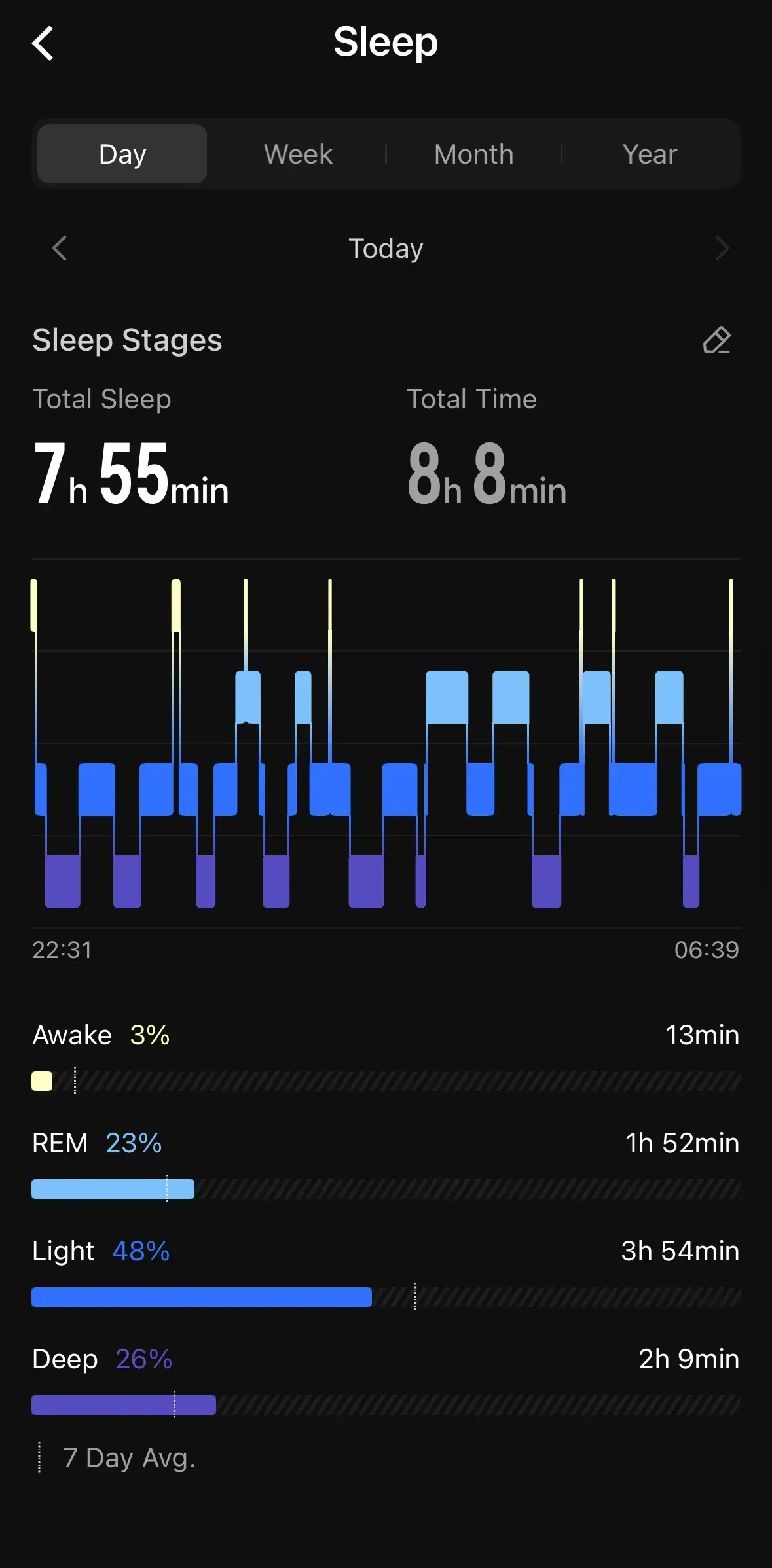
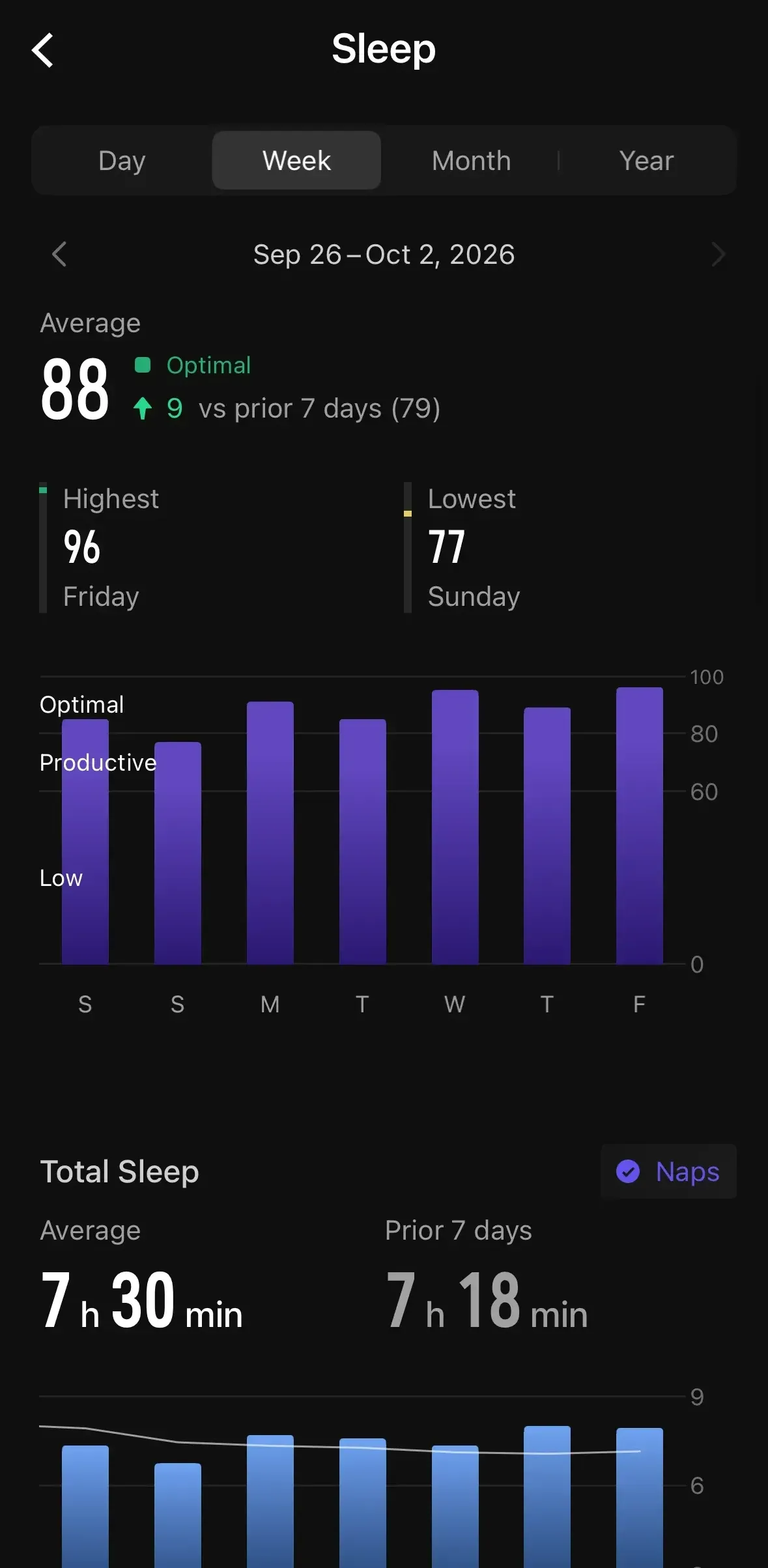
Sleep stages with REM, overnight HRV, and daily stress feed into recovery trends that have been genuinely useful for deciding when to push.
Battery life didn't pay a price for the screen upgrade
This is the spec that surprised me most. A panel this big and bright usually costs you runtime, and here it went the other way.
COROS rates it at 60 hours of all-systems GPS (the High mode I run), 40 hours in dual-frequency mode, and 21 days as a daily watch. That's 19 more GPS hours than the PACE 4, from the watch with the far bigger, brighter screen.
In real training weeks, with gesture backlight, nightly sleep tracking, and near-daily runs, charging has been a rare event rather than a routine. Always-on display changes the math, taking daily use to about 7 days and trimming GPS runtimes, so I leave it off.
Two numbers worth knowing: offline music playback cuts GPS time hard (to around 15 to 17 hours), and a 30-minute charge buys roughly 10 hours of GPS. A full charge takes about 1.5 hours, and you can even top up mid-activity without stopping the recording.
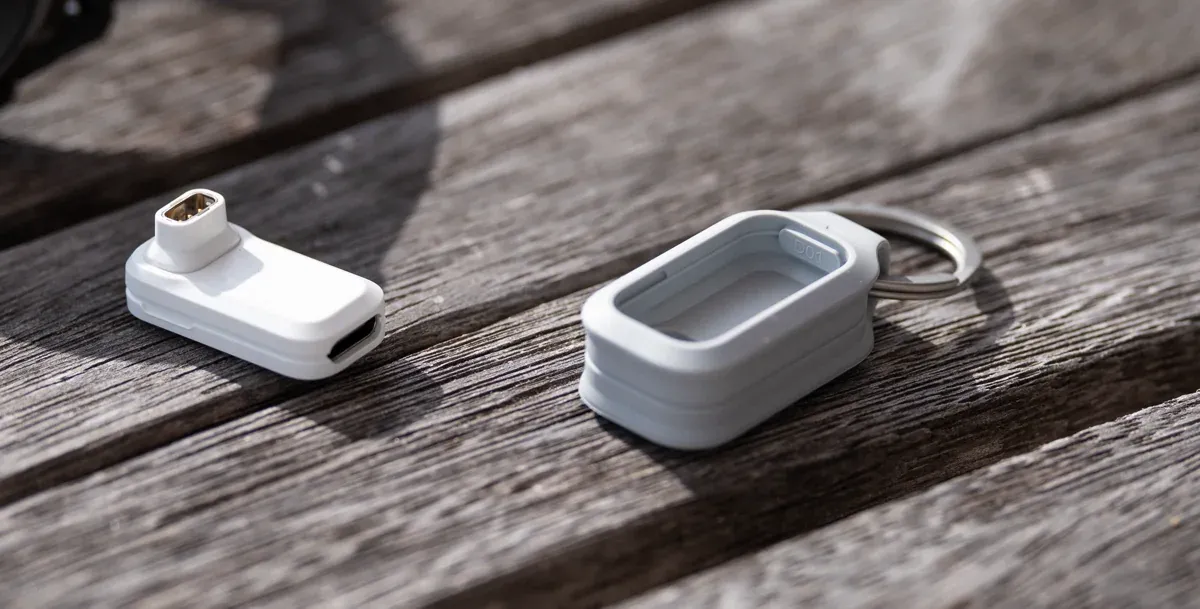
One small heads up: the box includes the charging puck in a neat silicone keychain case, but no USB-C cable. Any standard USB-C cable works.
Speaker, voice notes, and music
The PACE 4 has a mic but no speaker. The Pro has both, and it unlocks more than I expected.
You get spoken pace, distance, and heart rate alerts, plus hands-free calls through your paired phone. Voice notes are the feature I actually use: quick geotagged pins like "gel taken" or "legs heavy here" that get transcribed in the app for post-run review.
For music you have two options. You can control whatever's playing on your phone from the watch, Spotify included, or go phone-free with files loaded onto the watch itself: offline MP3s and audiobooks stored inside the same 32GB that holds your maps.
What you can't do is stream or download Spotify directly to the watch.
Training tools: the same COROS stack, easier to use
Nothing on the software side is exclusive to the Pro, and that's fine, because the COROS training stack is already one of my favorites.
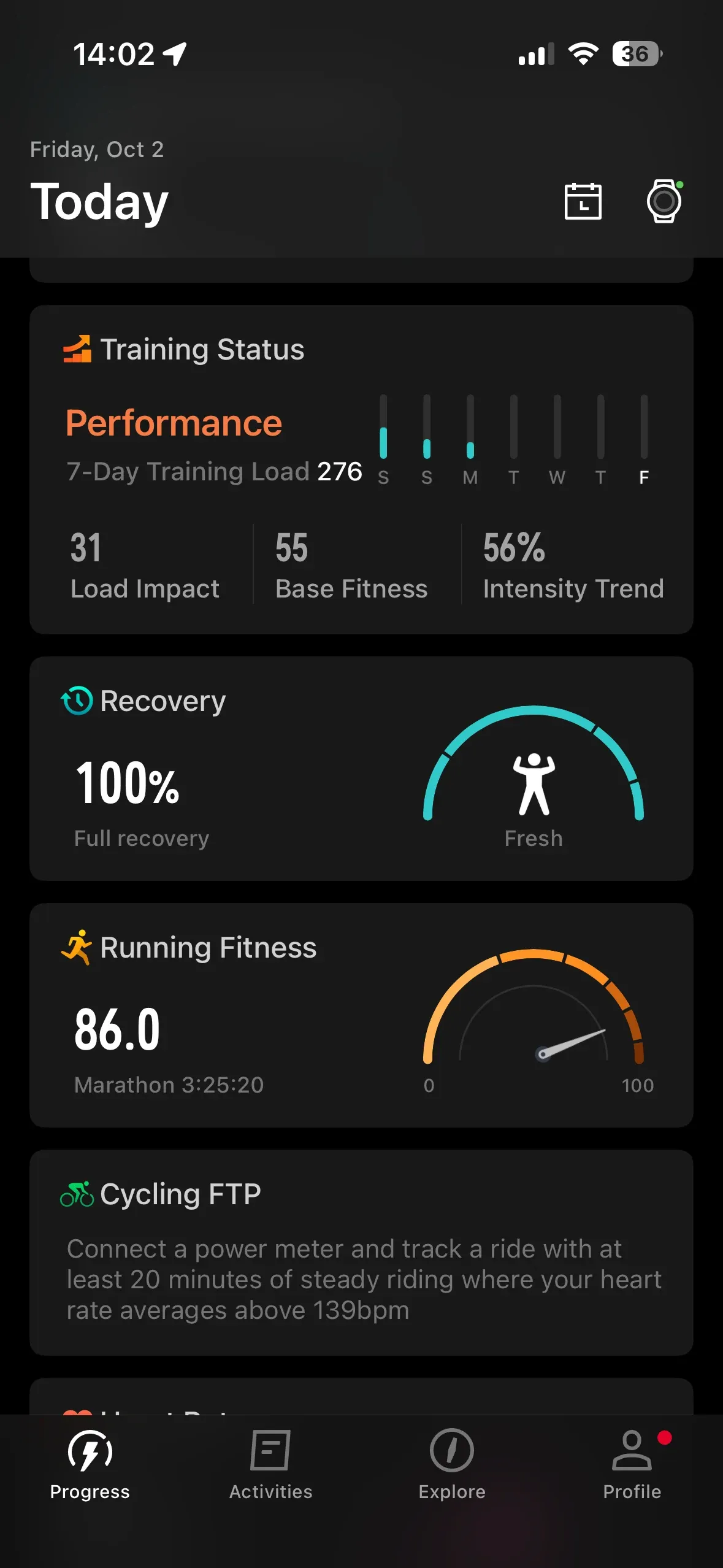
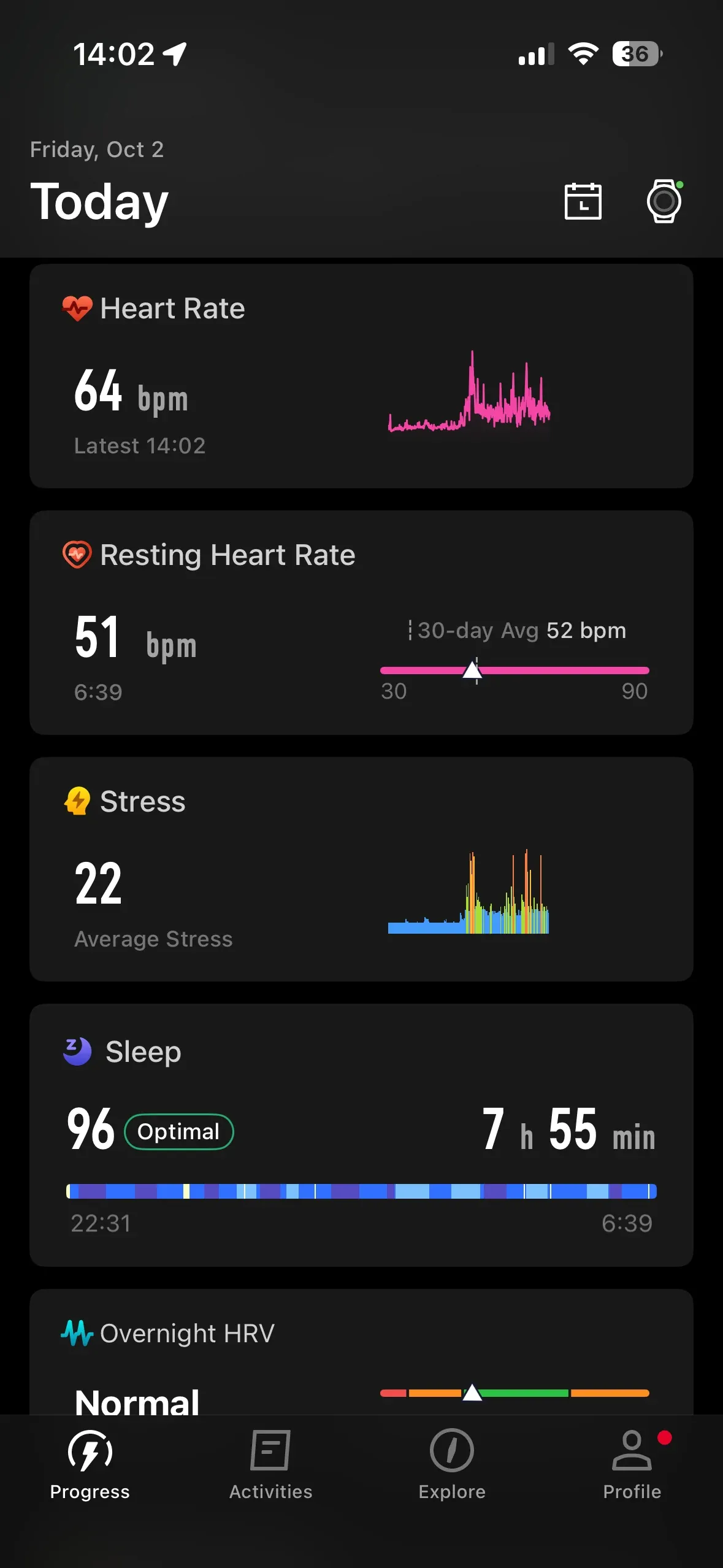
Training Load, Pace Strategy, Effort Pace, Virtual Pacer, the race predictor, and EvoLab's recovery and fatigue tracking are all here, with workouts and full training plans you can push to the watch, and no subscription walls. Triathlon and multi-sport modes cover long-course days too.
What the Pro changes is how these tools feel.
A route with turn-by-turn next to Pace Strategy, or a stacked data page mid-interval, is simply easier to read on this screen. If you want structure without the jargon, my training plan generator pairs nicely with a watch like this.
Running training plan generator — road & trail, 5K to 100M
Build a personalized running training plan around your actual race date, current mileage, and experience level. Road and trail, any distance.
 Alastair Dixon
What the PACE 4 Pro is not
A few limitations do exist:
- One size only. The 47.6mm case wears thinner than it sounds, but on a smaller wrist the 43.4mm PACE 4 is the best alternative
- Maps follow routes, they don't build them. No on-watch routing like a Forerunner 970 but thats not a feature i personally need - I plan my route first, then I run it.
- No NFC payments and no music streaming; meh so what
- The flashlight is the screen turning white, not a dedicated LED
- Wrist heart rate is good, but not a replacement for a chest or arm monitor on hard sessions, hence the chest strap advice above
- I've had it for weeks, not a full season, so long-term durability is still an open question, even if sapphire and titanium stack the odds in its favor
The price question
$449 is a lot of money for a Pace, a line built on value, and the PACE 4 at $249 remains the better pure value.
But look at what $449 buys next to the watches this one actually competes with. A Garmin Forerunner 570 is $549, and the Forerunner 970, the watch the Pro most resembles on paper, is $749.
Against the 970 you give up tap-to-pay, on-watch routing, a readiness score, and an LED flashlight. You gain a bigger, brighter screen, a thinner case, dramatically longer battery life, and $300 in your pocket; many will see that as a much better buy (I do).
On the Suunto side, the Suunto Run 2 and the soon to be released Race 3S (currently in for testing) are the other map-and-battery watches worth cross-shopping in this bracket.
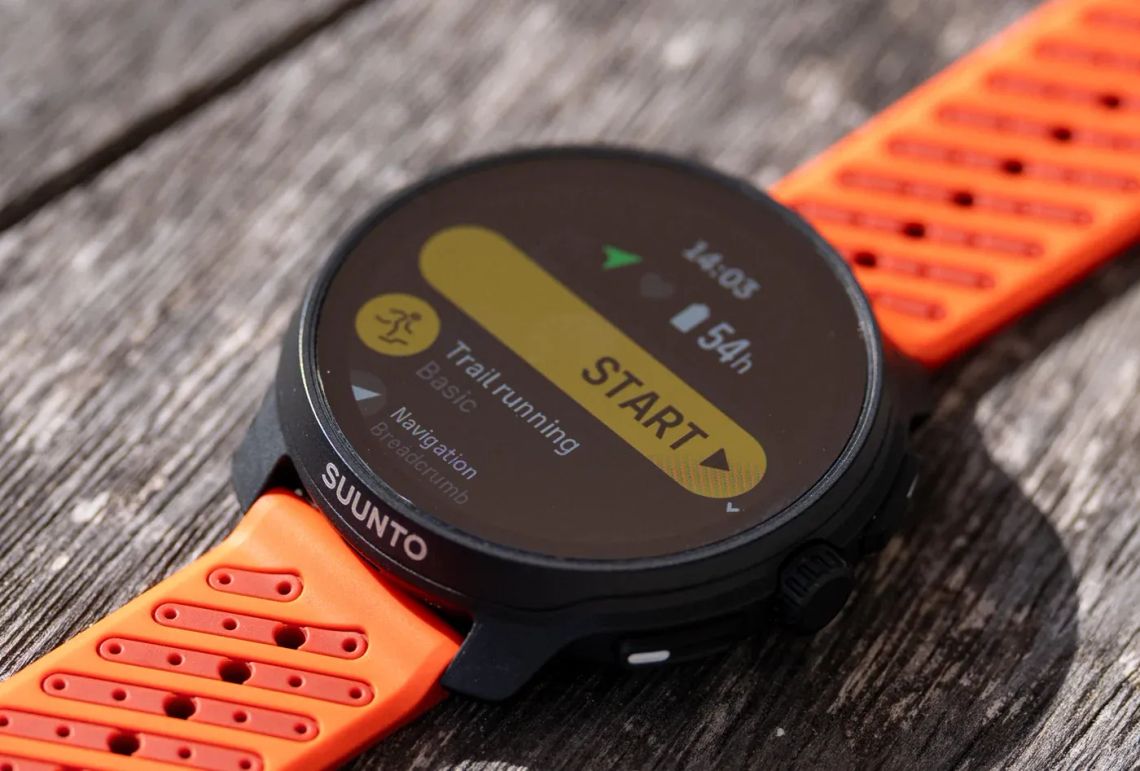
Suunto Run 2 review: a big upgrade that costs like one
After weeks of Florida training miles, here’s whether the Run 2’s new HR sensor, 2,000-nit screen, and offline maps justify $349+.
 Alastair Dixon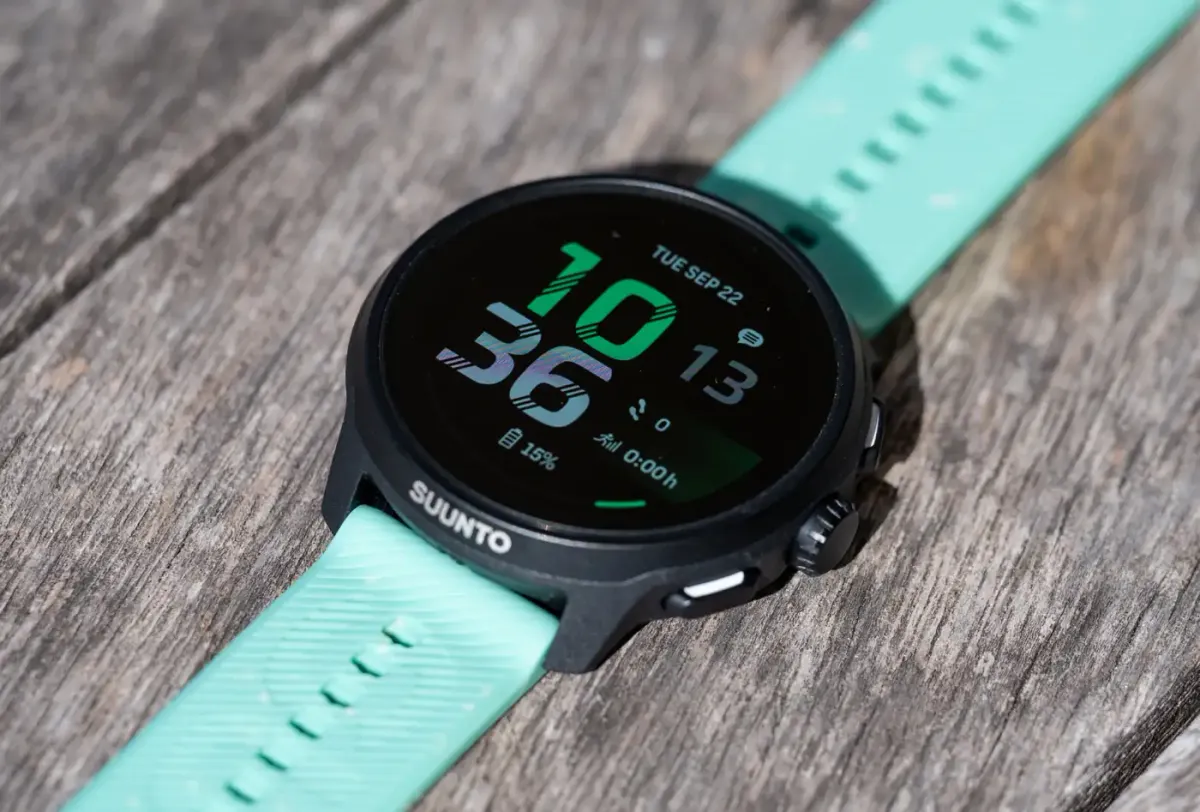
So no, it's not a bargain the way the PACE 4 is. It's something different; serious flagship hardware at a price that makes the flagships look expensive.
Who I'd recommend it to
Get the PACE 4 Pro if you:
- want the brightest, most readable screen on any run-first watch, and you run in real sun
- will actually use maps, and want them fast, legible, and lag-free
- are training for marathons, ultras, or triathlon and want battery you never think about
- are coming from a PACE 3, Pace Pro, or an older AMOLED watch, where this is a generational jump
Skip it (or buy something else) if you:
- have a smaller wrist or a tighter budget, because the PACE 4 gets you the same training brain for $200 less
- need on-watch routing, tap-to-pay, or streaming music, which is Forerunner and Apple Watch Ultra 3 territory
- want a rugged maps-first tool for technical trail days, where the COROS NOMAD or COROS APEX 4 is built for exactly that
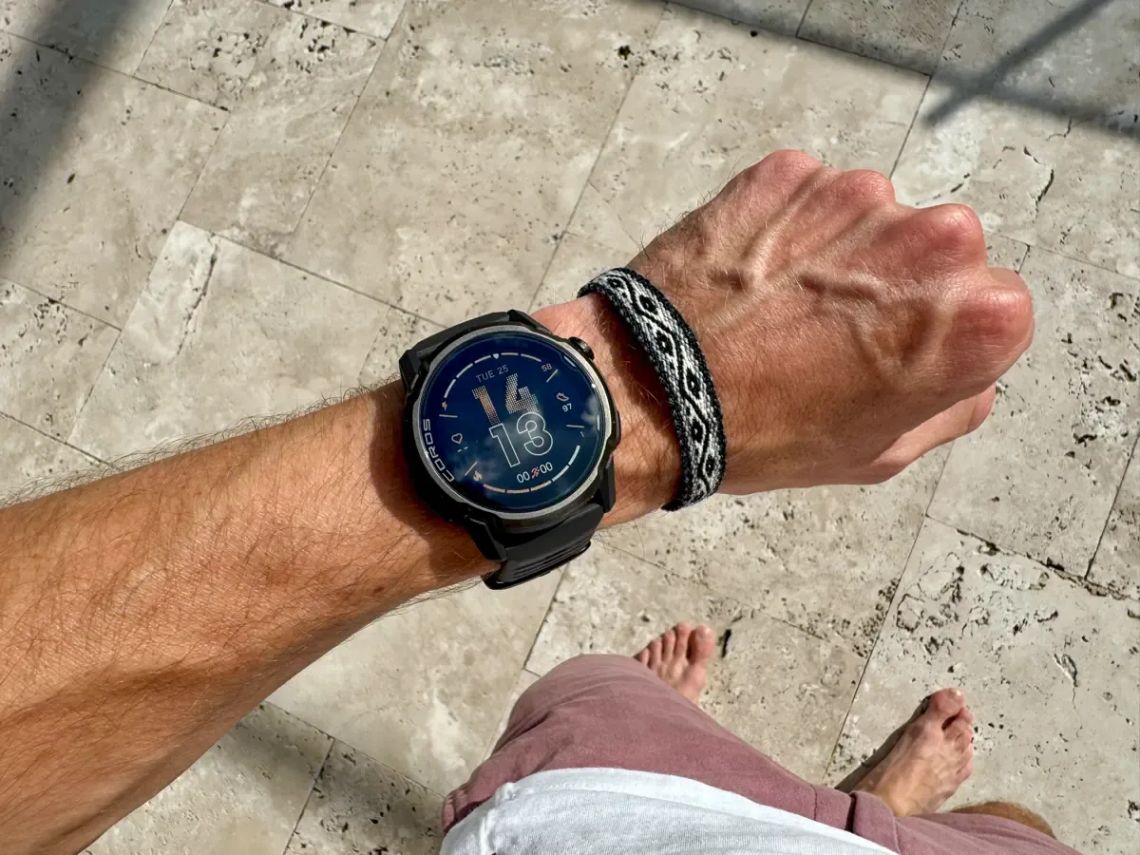
COROS APEX 4 makes long trail days simpler with battery life you stop thinking about
Big battery, fast offline maps, and a no-drama training ecosystem for runners who’d rather run than babysit a watch.
 Alastair Dixon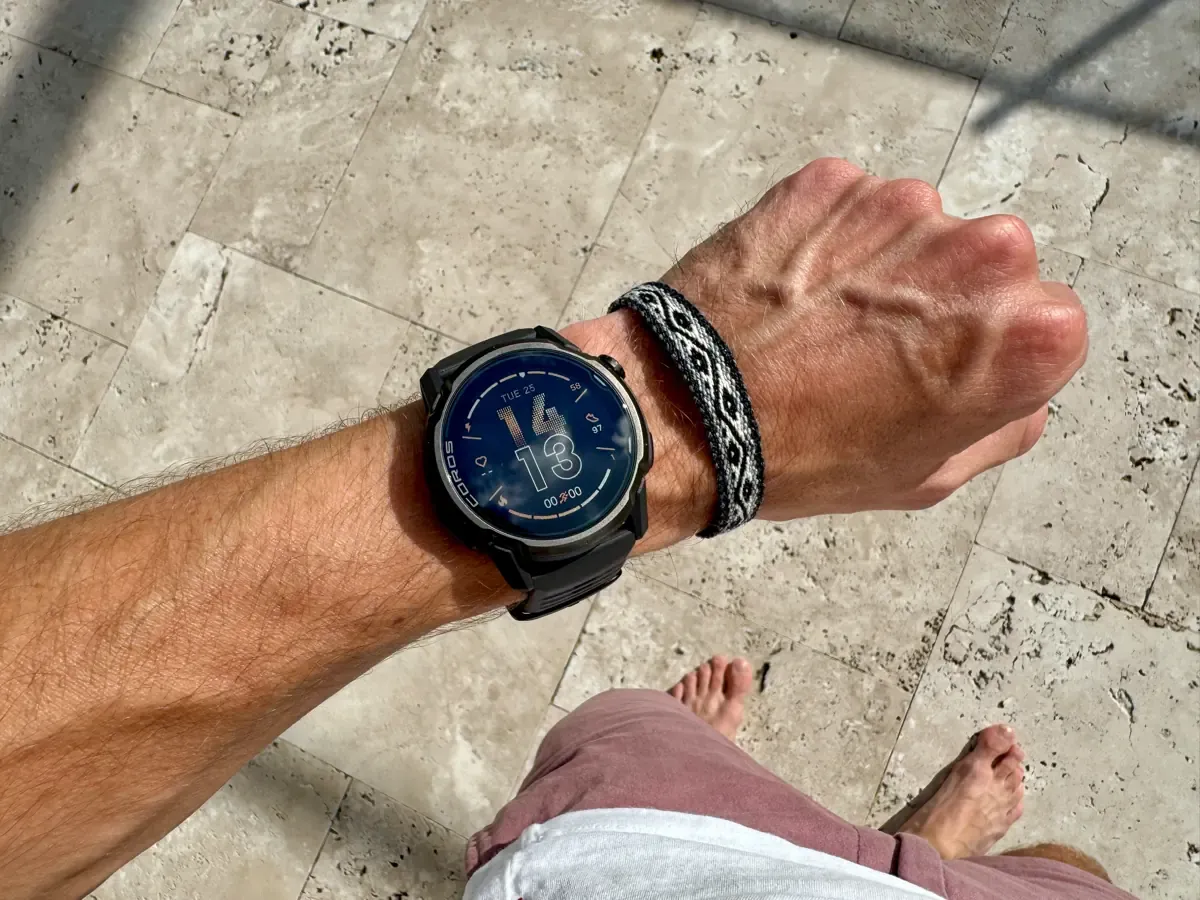
My verdict
The PACE 4 Pro is the best watch COROS has made, and it's the Pace to buy if the screen and the maps matter to you on the run.
It fixes the two things that kept the Pace line feeling like a budget choice, the display and the materials, without giving up the battery life and low weight that made it great in the first place. That combination is why it has taken over as my primary running watch.
If you won't use the maps and a 1.2" screen has never bothered you, buy the PACE 4 and pocket the $200. For everyone else, this is $449 spent very well, and it makes the $700+ flagships a much harder sell.
FAQ
Is the COROS PACE 4 Pro worth it over the PACE 4?
Yes, if the screen and maps matter to you. You get a much bigger, 3,500-nit display, sapphire and titanium, a speaker, and up to 60 hours of GPS. If you have a smaller wrist or just want the best value, the PACE 4 covers the same training features for $200 less.
Can the PACE 4 Pro create routes on the watch?
No. You follow routes built or imported in the COROS app (including from Strava, AllTrails, and Komoot), with turn-by-turn, deviation alerts, and Back to Start. On-the-fly routing on the watch itself remains a Garmin advantage.
How long does the PACE 4 Pro battery last?
COROS rates it at 21 days of daily use, 60 hours of all-systems GPS, and 40 hours of dual-frequency GPS. In my testing, with gesture backlight, near-daily runs in High mode, and nightly sleep tracking, charging has been a rare event.
Does the PACE 4 Pro play music or support payments?
Yes: it controls the music playing on your phone (Spotify included), and for phone-free runs it plays your own MP3 files and audiobooks to Bluetooth headphones from its 32GB of storage. There's no streaming directly on the watch though, and no NFC payments.
If you haven't already, signup for my free newsletter, and subscribe to my YouTube Channel for all the latest running shoe reviews. 👉🏼 And for an inside look at what comes into my studio with unboxings, lace up reels, behind the scenes, and short form reviews, follow me on Instagram, Facebook, and TikTok. -Alastair
Written by

Subscribe to new posts
reviews, training tips, and thoughtful stories for runners








Member discussion