
Best Shoes for Hyrox (2026): A Shoe Tester's Honest Picks
What Hyrox actually demands from a shoe, and the five tested picks from my review library that fit. Grip, stability, and 8km of responsive cushioning.

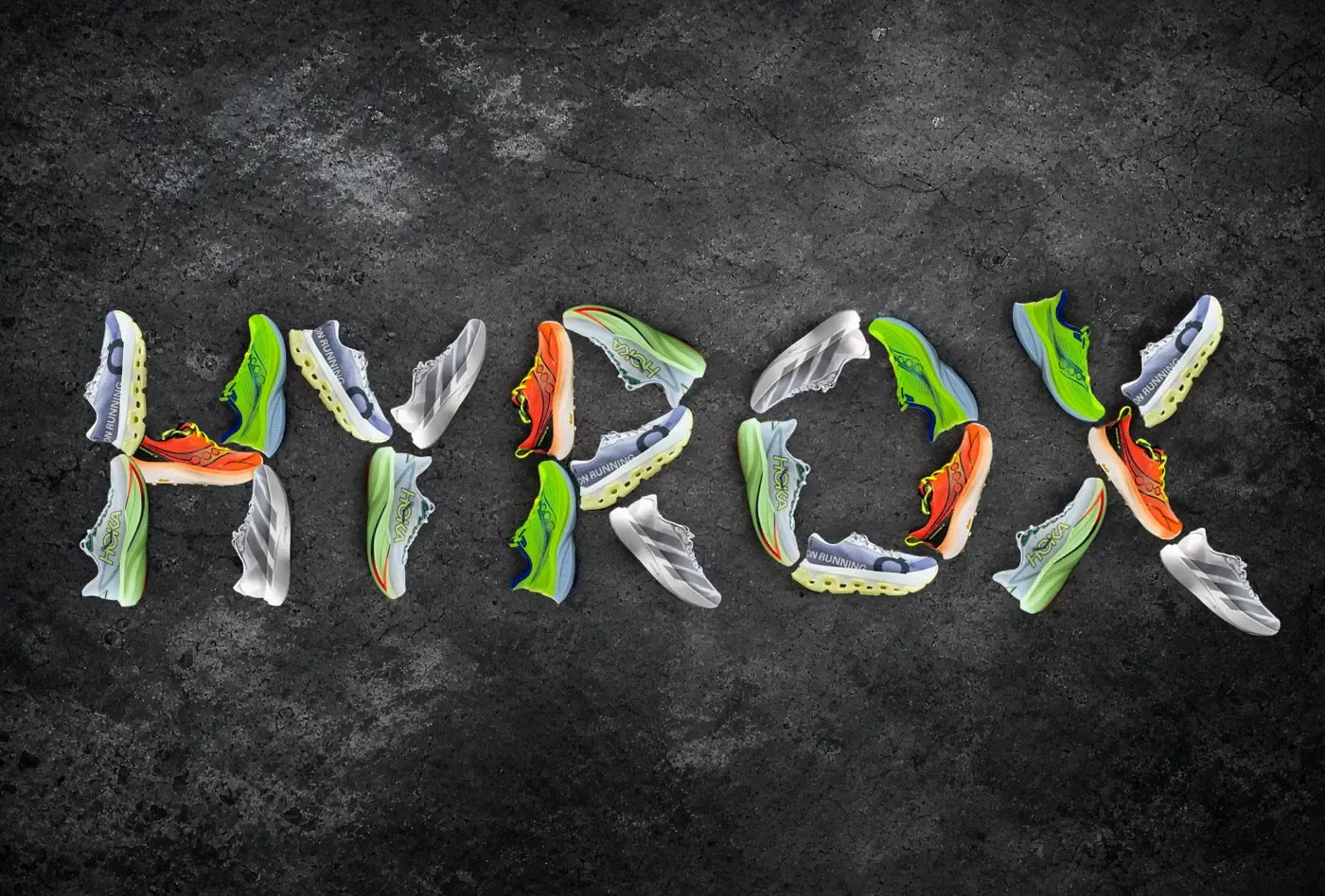
Let me be upfront about something most Hyrox shoe lists won't tell you: I don't race Hyrox. What I do is test running shoes for a living, hundreds of pairs over 15+ years, and Hyrox athletes keep landing in my inbox asking which of them can survive a race that's half running and half sled-shaped punishment.
So this guide does two things honestly; first, it breaks down what the Hyrox format actually demands from a shoe, because those demands are specific and partly contradictory.
Second, it matches those demands against shoes I've personally put real miles into, so every pick below comes with firsthand knowledge of how it fits, grips, flexes, and cushions, applied to Hyrox's requirements.
If you purchase gear through links in this article, I may earn a small affiliate commission. For my training tools, exclusive content, newsletter, and more perks become a member, (it's free!). -Alastair ✌🏼
The Hyrox shoe problem
Hyrox is 8 x 1km of running with eight functional stations in between: SkiErg, sled push, sled pull, burpee broad jumps, rowing, farmers carry, sandbag lunges, and wall balls.
The runs want a cushioned, efficient running shoe, and running makes up the majority of your race time.
The stations, especially the sleds and lunges, want a firmer, flat, grippy, stable platform you can drive force through on potentially slick gym flooring.
Running training plan generator — road & trail, 5K to 100M
Build a personalized running training plan around your actual race date, current mileage, and experience level. Road and trail, any distance.
 Alastair Dixon
A marshmallow marathon shoe fails the sled; a flat cross-trainer punishes you across 8km. The best Hyrox shoes live in the gray area between, and that gray area is where several genuinely good running shoes already sit, as per my testing.
Quick picks
- Best overall: Saucony Endorphin Speed 5, the shoe I actually recommend when Hyrox athletes ask me on my Youtube channel
- Best without a plate: Hoka Mach 7, sticky forefoot grip, low drop, light and stable
- Best value: Adidas Adizero Evo SL, race-family foam and Continental grip for $150
- Best for run-dominant athletes: On Cloudmonster 3 Hyper, super-trainer cushioning that stays controlled
- The grip wildcard: Saucony Peregrine 16, the trail-shoe route with best-in-class Vibram Megagrip
Best Running Shoe Brands 2026: Ranked by 17 Category Wins
After testing every major running shoe brand this year, here are the brands making the best running shoes right now, ranked by category wins.
 Alastair Dixon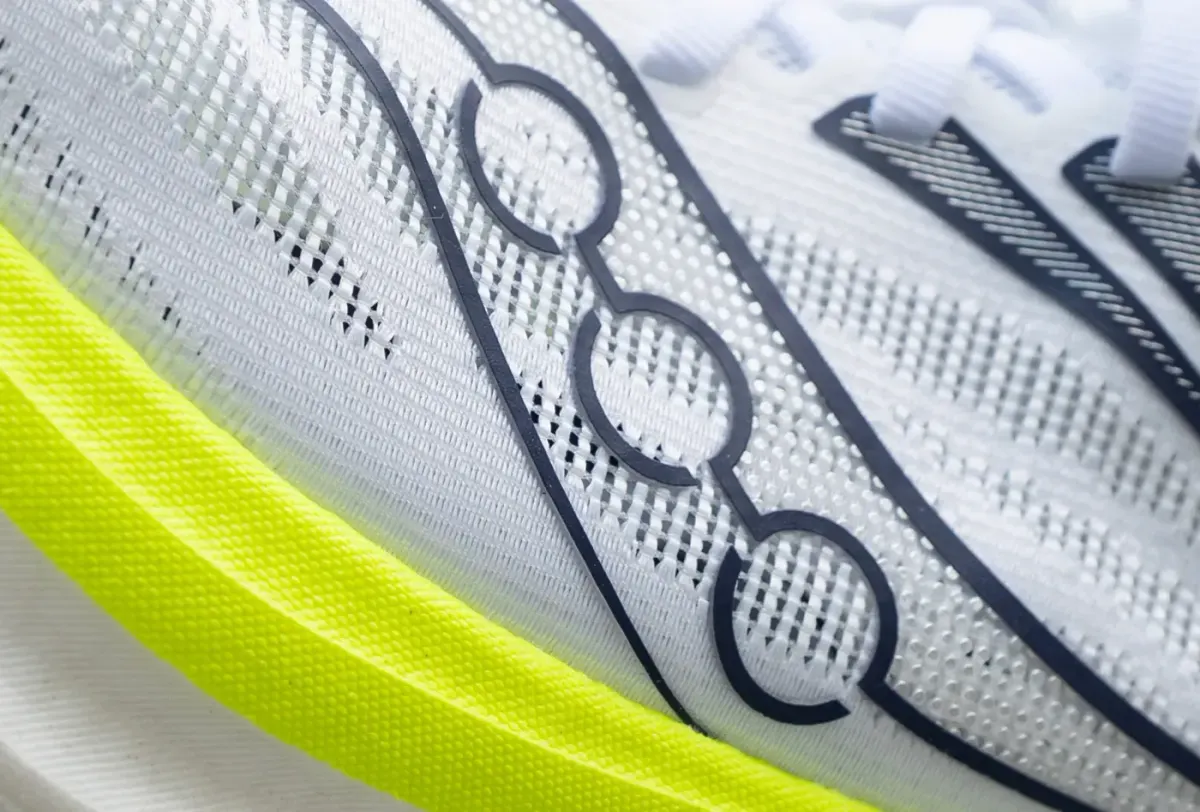
Curious which brand is winning overall? My best running shoe brands ranking tallies the podiums from all seventeen of my category roundups.
What Hyrox actually demands from a shoe
- Grip is non-negotiable, and it's a forefoot story. Sled pushes and pulls happen on rubber mats and polished flooring that gets slick with sweat, driving through your toes at a hard forward lean. A shoe with generous rubber coverage under the forefoot holds; exposed foam slips exactly when you're loading hardest. This single criteria eliminates more running shoes than any other.
- A firm-enough midsole and a stable platform. Sleds, sandbag lunges, farmers carries, and wall balls all load the shoe in ways road running never does. Soft, tall, narrow midsoles roll and leak force sideways; firmer well balanced foams on wider bases transfer your effort into the floor providing more power, stability, and traction.
- Moderate drop, roughly 4-8mm. High-drop shoes tip you away from the aggressive toe-drive position sled work rewards, while zero-drop shoes tax your calves across 8km of running. The middle band does both jobs.
- Real cushioning for 8 x 1km under fatigue. Running is most of your race. Whatever survives the stations still has to protect your legs on run five, six, seven, and eight, which is why pure cross-trainers backfire for most athletes.
- A forefoot that bends, and a heel that's locked. The sled wants your shoe to flex where your toes flex, so very stiff plates can fight you there, and a firm heel counter stops the maddening heel-lift some shoes develop mid-push.
- Nothing brand new on race day. Whatever you choose, train the full station circuit in it first. Grip, lockdown, and blister behavior only reveal themselves under load.
1. Saucony Endorphin Speed 5 (Best Overall)
Price: $170 at Saucony.com
Saucony Endorphin Speed 5 review: Still The Tempo G.O.A.T.
Small updates, same magic ride — the Endorphin Speed is an excellent speed training shoe, that just keeps getting better.
 Alastair Dixon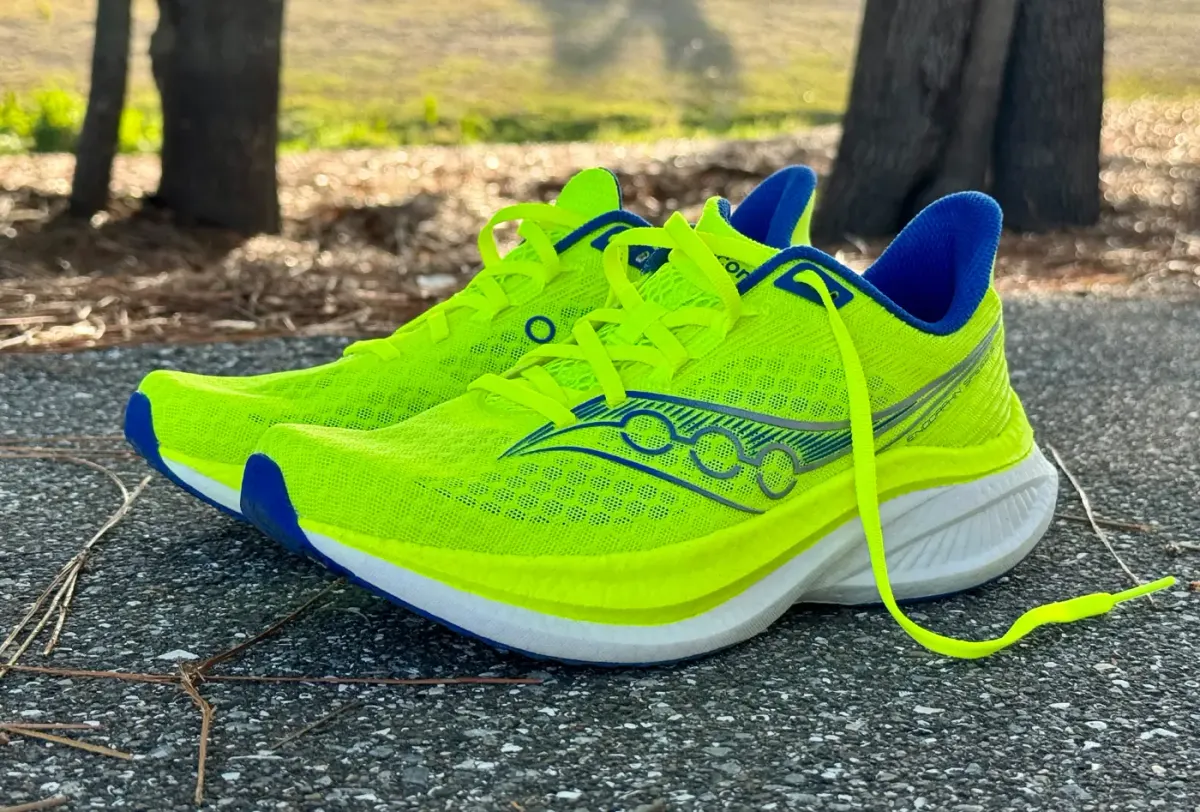
Weight: 8.6 oz (244g) · Drop: 8mm (36mm / 28mm) · Midsole: PWRRUN PB with a winged nylon plate
Hyrox athletes ask me what I recommend for Hyrox on my YouTube channel all the time, and the Endorphin Speed 5 is the shoe I recommend, every time.
Its stack sits low enough to stay planted and stable when you load it sideways, the ride is genuinely fast for the runs (PEBA foam, SPEEDROLL geometry, real pop at toe-off), and its plate is flexible nylon rather than rigid carbon, so the forefoot still bends into the toe-drive position the sled demands instead of fighting it.
The fit is the other Hyrox win; it's secure through the midfoot and heel with a squared-off toe box that gives your foot room to work. The honest caveat is underfoot: rubber covers the heel and perimeter, but there's exposed foam through the midfoot, so your sled contact patch is the forefoot rubber; drive through your toes (which is good technique anyway) and it holds.
Buy them for: the fastest overall package from my library, doubles athletes, anyone whose run splits decide their race. Skip them if: you want maximum rubber underfoot or your sled technique loads the midfoot.
2. Hoka Mach 7 (Best Without a Plate)
Price: $145 at REI
Hoka Mach 7 review: fast, light, but did it lose its edge?
The Mach 7 is lighter, more refined, and better built than ever. But if you loved the Mach 6’s tempo snap, there’s something you should know before buying.
 Alastair Dixon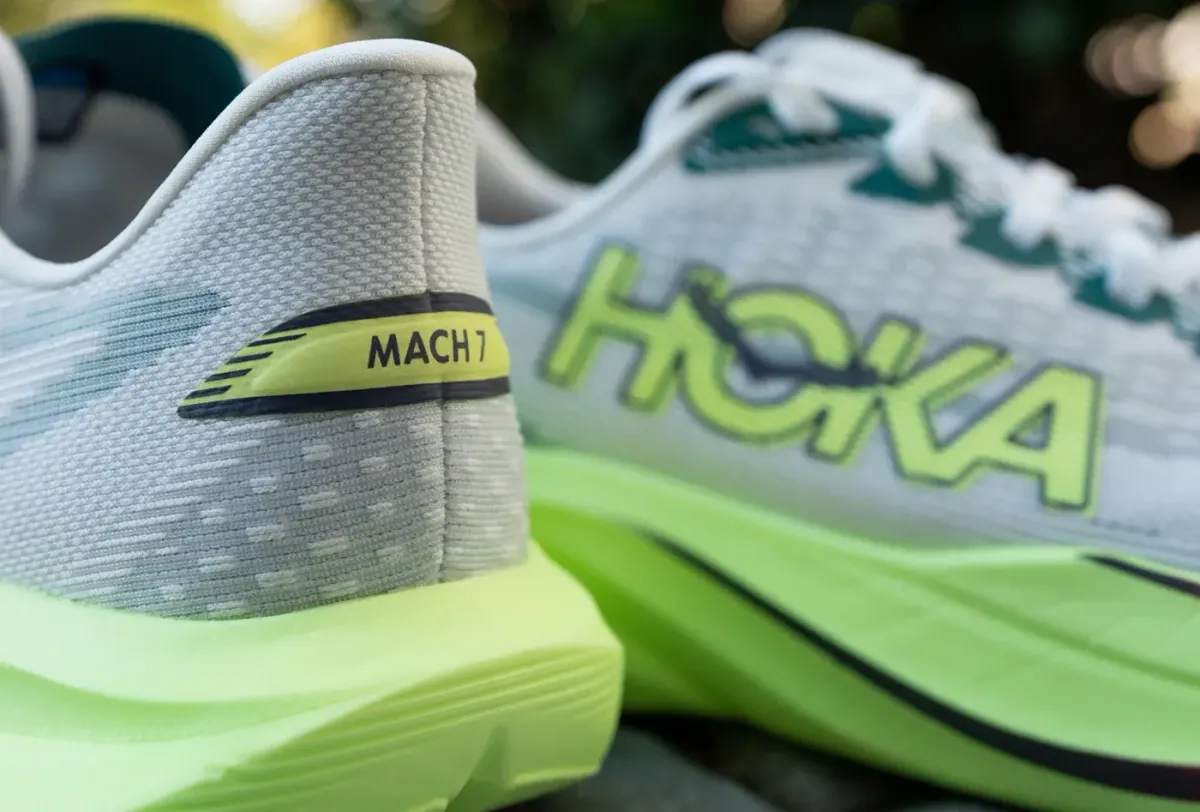
Weight: 7.5 oz (213g) · Drop: 5mm (37mm / 32mm) · Midsole: supercritical EVA, unplated
Read the criteria list above and the Mach 7 sounds purpose-built: 5mm drop, a firm-leaning supercritical midsole that doesn't wallow, no plate to argue with the sled, one of the lightest packages here for the runs, and, crucially, a dual-compound outsole with genuinely sticky rubber under the forefoot.
In my road testing that front rubber grips confidently even on wet pavement, which is exactly the compound behavior slick gym flooring rewards.
The lockdown is excellent, the toe box runs slightly snug (wide forefeet should consider going up a half or grabbing the 2E), and the ride is comfortable across easy and moderate paces, which is what kilometers five through eight feel like anyway.
Buy them for: the best all-rounder balance in this list, athletes who prefer an unplated shoe, forefoot-grip priority. Skip them if: you want plated pop on the runs or a roomier standard fit.
3. Adidas Adizero Evo SL (Best Value)
Price: $150 at Adidas
Adidas Adizero EVO SL review: fast, fun, versatile
Full Lightstrike Pro, lightweight, and a smooth rocker make the EVO SL one of the most interesting fast-paced daily trainers at $150.
 Alastair Dixon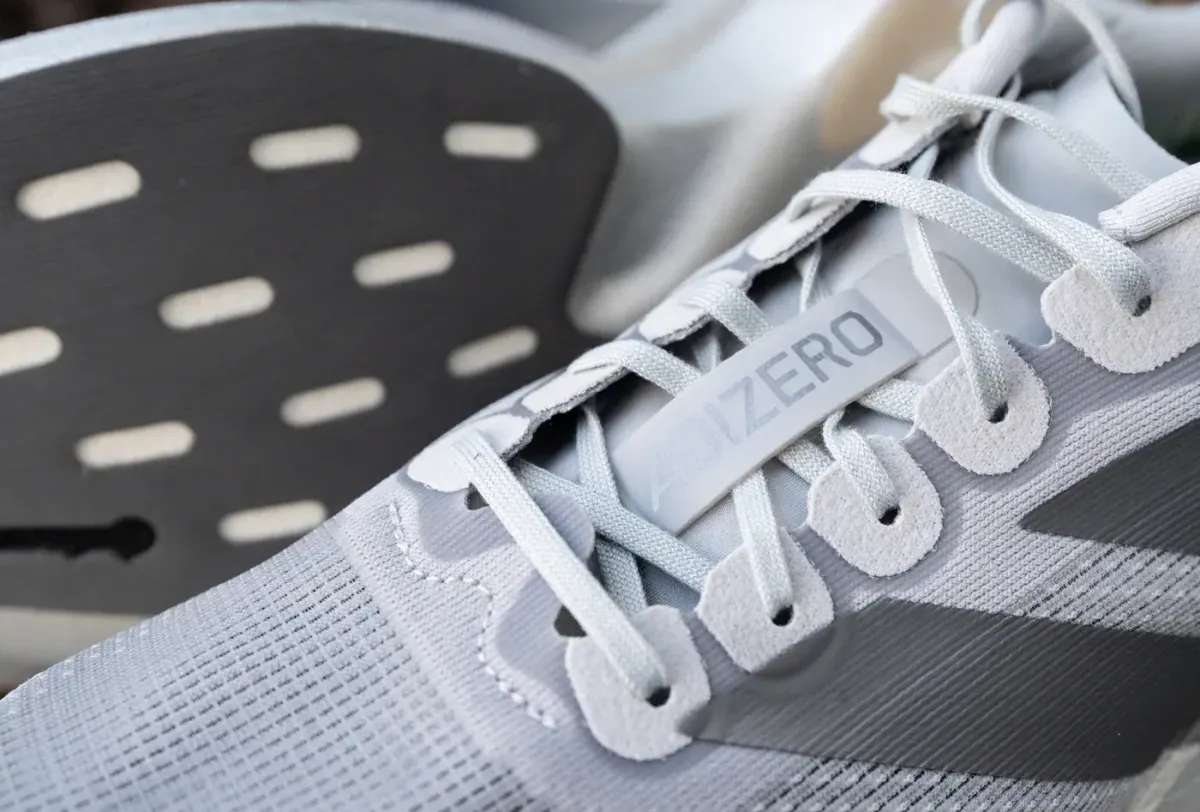
Weight: 7.9 oz (224g) · Drop: 6mm · Midsole: full-length Lightstrike Pro, no plate
The Evo SL is one of the easiest recommendations I make at this price for regular running, and its case for Hyrox is strong too.
You're getting a full-length slab of Lightstrike Pro, the same premium foam family behind Adidas' race line, in a $150 plateless package: springy, smooth, and energetic without ever being wild, with a pace range wide enough to cover easy kilometers and the fast ones in the same shoe. Across 8 x 1km, that foam quality brings you an advantage.
The Hyrox specifics stack up well; no plate means the forefoot flexes freely into the sled's toe-drive, the 6mm drop sits right in the sweet-spot band, and the Continental rubber outsole grips pavement in all conditions, which translates confidently to gym flooring.
The trade-off comes up top, and I flagged it in my review: the minimalist tongue and laces are genuinely annoying, and the light upper is the least confidence-inspiring part of the package.
That matters more under a hard sled lean and lateral station load than it does on the road, so use the lace-lock eyelet and dial your lacing in before race day, and be sure to size down a half size (US sizing).
Buy them for: the best foam-per-dollar on this list, one-shoe simplicity, plateless speed. Skip them if: you want a locked-down, structured upper for aggressive station work.
4. On Cloudmonster 3 Hyper (Best for Run-Dominant Athletes)
Price: $220 at On
On Cloudmonster 3 Hyper review: the long-run super trainer to beat
High stack, smooth rocker, and a fresh-legs ride that works best for big weekly mileage and marathon training blocks.
 Alastair Dixon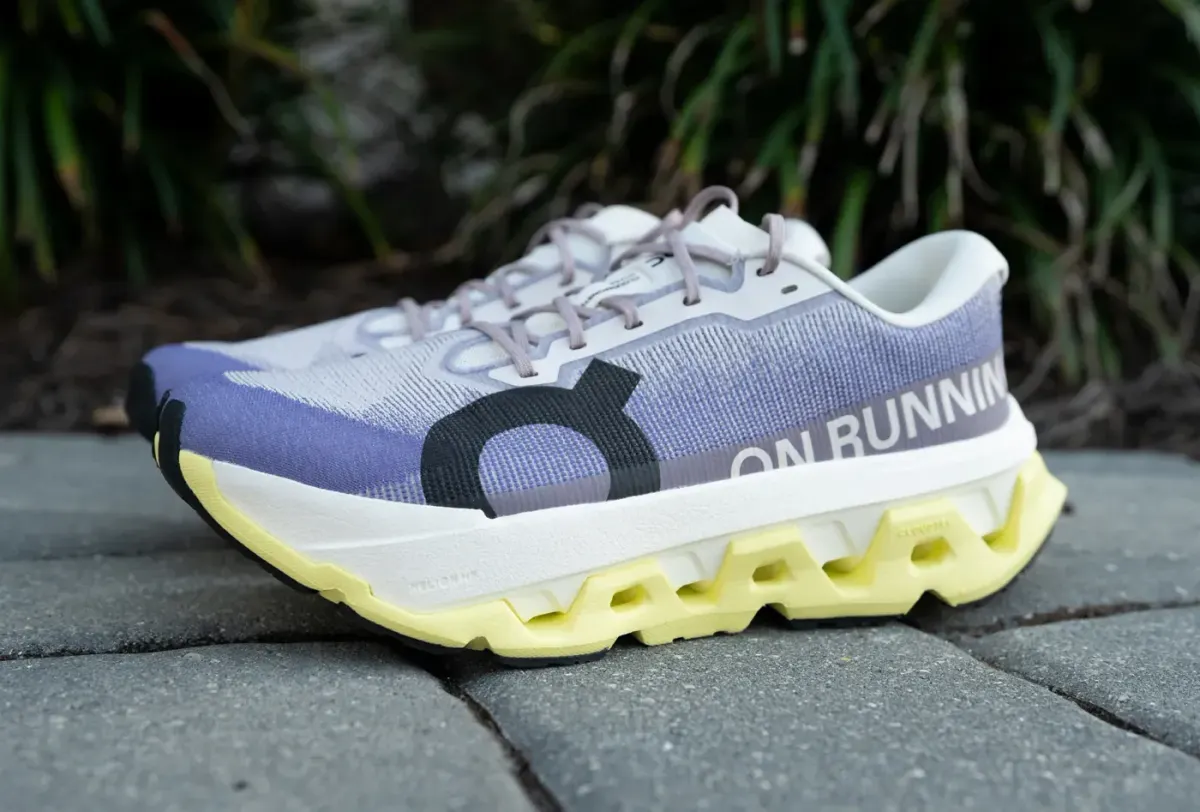
Weight: 266 g / 9.4 oz · Drop: 6mm (45mm / 39mm) · Midsole: Helion HF over CloudTec, no plate
If your Hyrox race is won or lost on the runs, this is the cushioning pick, and it earns the slot for a reason most max-stack trainers can't claim: in my testing it stays protective without ever turning into a soft, wobbly cruiser, and it stays controlled precisely when fatigue starts creeping into your stride, which describes runs six through eight of a Hyrox perfectly.
The Helion HF and CloudTec combination gives you steady bounce and a rear-rockered roll-through that keeps kilometers cheap, there's no plate to fight the sled's toe-flex, and the legs-feel-fresher-the-next-day quality that made it my long-run super trainer to beat translates directly to a format built on accumulated fatigue.
The trade-offs to own knowingly: 45mm is still 45mm under a heavy sandbag lunge, so this is for athletes with clean station technique who want maximum running economy, and its road outsole is competent rather than special on slick flooring, so drive through your forefoot on the sled.
Buy them for: run-first racers who prioritise underfoot protection, doubles relay runners, anyone who wants their legs freshest on the final runs. Skip them if: stations are your weakness, or lateral stability under load worries you at all.
5. Saucony Peregrine 16 (The Grip Wildcard)
Price: $150 at Saucony
Saucony Peregrine 16 review – softer, grippier, and finally complete!
Upgrades include more cushioning, Vibram Megagrip traction, and it keeps the same fast all-mountain feel that made the Peregrine one of my favorites!
 Alastair Dixon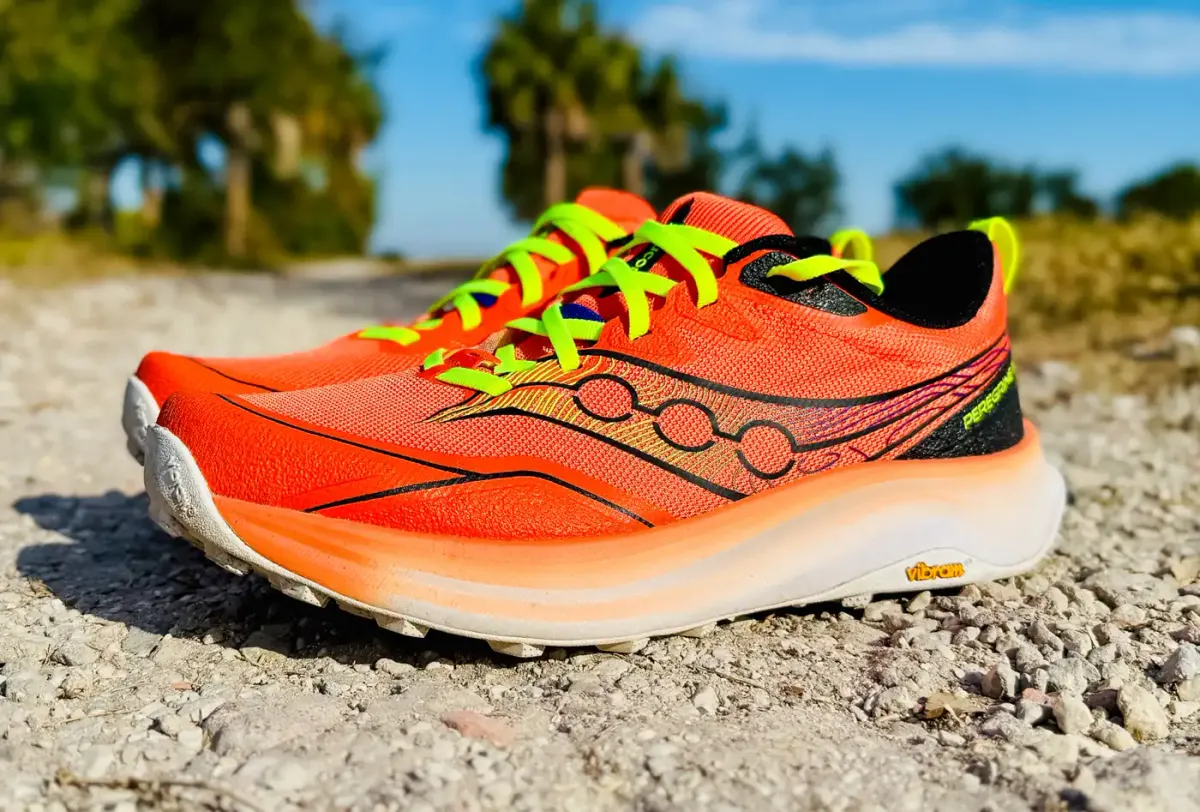
Weight: 9.8oz (278g) · Drop: 4mm (32mm / 28mm) · Midsole: PWRRUN, no plate · Outsole: Vibram Megagrip with Traction Lug
Some competitive Hyrox athletes quietly race in trail shoes for one reason: traction, and if you're tempted by that route, this is the version of it I'd actually endorse.
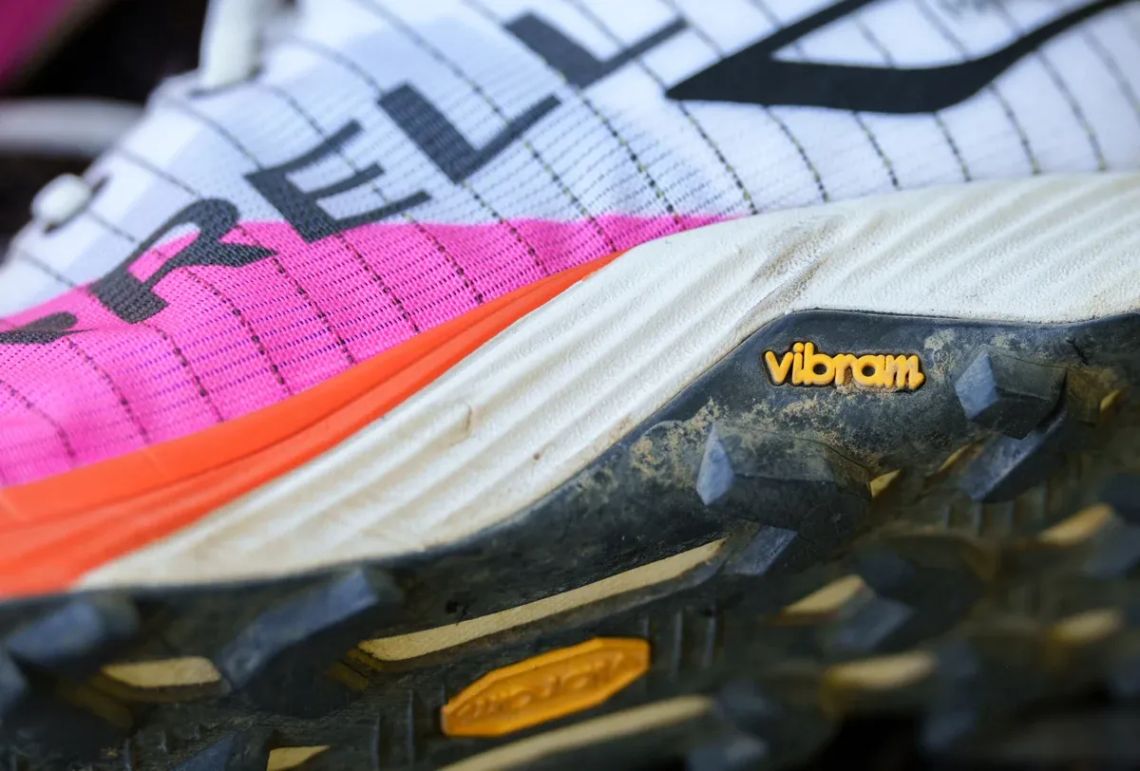
The Peregrine 16 swapped Saucony's in-house rubber for Vibram Megagrip, the best grip compound in running, and the one I trust above everything else in wet, slick, unpredictable conditions. On a sweat-slicked sled lane, that's the highest traction ceiling on this list, full stop.
The rest of the shoe cooperates with the format too. There's no plate, so the forefoot flexes naturally into the sled's toe-drive position, the moderate 32/28mm stack keeps you planted and controlled under lateral load, and this version's softer midsole finally gives the Peregrine enough forgiveness to be comfortable deep into accumulated kilometers.
Helpfully, Saucony also reduced the lug depth this generation, so it rides hard flooring far more politely than most trail shoes.
The trade-offs: the 4mm drop sits at the bottom of the Hyrox-friendly band, so calves work a little harder across the runs (fine if you're adapted to lower drops, worth a gradual transition if not), and even modest lugs are still lugs underfoot on concrete.
Buy them for: maximum traction insurance, athletes who have ever slipped mid-sled and sworn never again, station-dominant racers. Skip them if: run speed is your priority, or you're not adapted to lower-drop shoes.
What I'd avoid for Hyrox
Soft, tall, narrow max-cushion cruisers (beautiful for recovery runs, unstable under a sandbag), anything with a 10mm-plus drop for sled-heavy racing, rigid carbon racers unless you've specifically confirmed their grip and stability at the stations, aggressive-lug trail shoes, worn outsoles (faded rubber on slick flooring is the most avoidable mistake in the sport), and anything you haven't trained the full circuit in.
The community favorites: two I haven't tested, and one I have
In the interest of a complete picture: the Puma Deviate Nitro Elite is Hyrox's official shoe and the community's default answer, largely on the strength of its PUMAGRIP outsole (and also the official Hyrox collab color that they launched (though that alone is no reason to go for it), and Metcon-style trainers remain the station-first choice for athletes who accept slower runs.
I haven't put personal miles into either, so they're listed for completeness rather than recommended firsthand, and if Hyrox content resonates with you all, testing them is on my list.
The Saucony Endorphin Pro 5, though, I have tested (Endorphin Pro 5 review), and this is where my list breaks from the community consensus: I wouldn't pick it, for Hyrox or even for pure running, because its heel counter never got comfortable for me.
In a sport where sled pushes punish any heel that isn't perfectly settled, that's disqualifying. The Speed 5 above gives you the Endorphin family's Hyrox virtues without that heel, which is exactly why it's my answer instead. The full family breakdown is in my Saucony Endorphin range explained guide.
Saucony Endorphin range, explained: Azura vs Trainer vs Speed 5 vs Pro 5 vs Elite 2
A straightforward guide to what each Endorphin is for, how they feel on the run, and which one fits your training.
 Alastair Dixon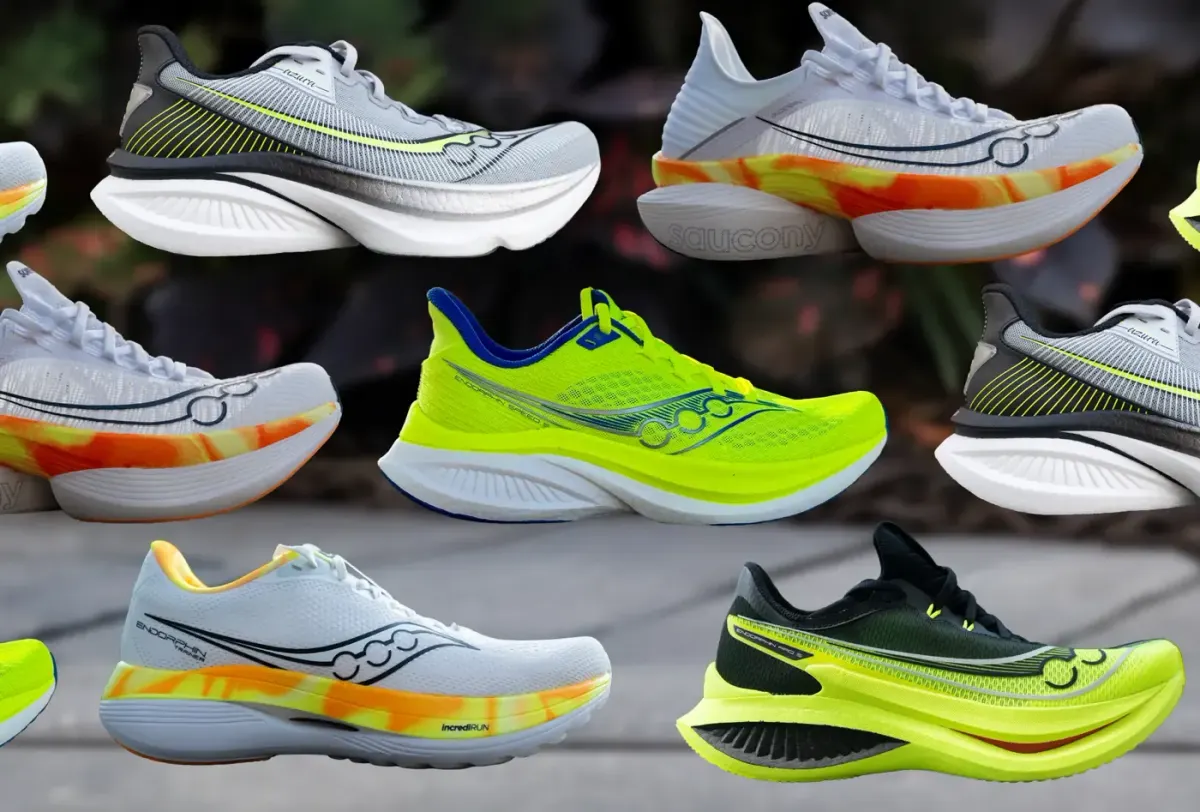
Frequently asked questions
Can you wear carbon plate shoes for Hyrox? The community says yes if the shoe has the grip and stability to survive the stations, and the plate itself isn't the problem; inadequate rubber and unstable platforms are.
My firsthand take adds one caveat: I tested the carbon-plated Endorphin Pro 5 and its heel counter never got comfortable for me, so my recommendation stays with the flexible-plated Endorphin Speed 5, which delivers most of the speed with none of the heel argument. My best carbon plate running shoes roundup covers the road-racing side of that decision.
Best Carbon Plate Running Shoes 2026: 15 Tested Racers
The 15 best carbon plate running shoes of 2026, race-tested by me. Max-cushion marathon supershoes and snappy 5K-to-half racers, ranked.
 Alastair Dixon
Are Metcons or cross-trainers good for Hyrox? They're excellent at the stations and punishing across 8km of running, which is most of your race time. Unless stations are decisively your priority, a stable running shoe beats a cross-trainer for overall time.
Can I just wear my daily trainers? If they have solid forefoot rubber, a moderate drop, and a stable platform, quite possibly; that describes several shoes above. If they're soft, tall, and narrow, or the outsole is worn smooth, the sled will find them out.
Should I use different shoes for training and race day? Plenty of athletes do: a stable hybrid for station training, a faster shoe for race day. Just make sure the race-day pair has been through full circuits, sleds included, before you pin a bib on.
The Best Running Shoe Finder 2026
Answer 5 quick questions and get matched to the best running shoe for your training style, ride preference, and foot shape. Updated to v5.5 May 2026
 Alastair Dixon
If you haven't already, signup for my free newsletter, and subscribe to my YouTube Channel for all the latest running shoe reviews. 👉🏼 And for an inside look at what comes into my studio with unboxings, lace up reels, and short form reviews, follow me on Instagram, and TikTok. -Alastair
Written by

Subscribe to new posts
reviews, training tips, and thoughtful stories for runners








Member discussion