
Suunto Race 2 brings clarity and battery confidence to serious training
A bright, no-nonsense AMOLED training watch that feels built for runners who want control, not smartwatch chaos.

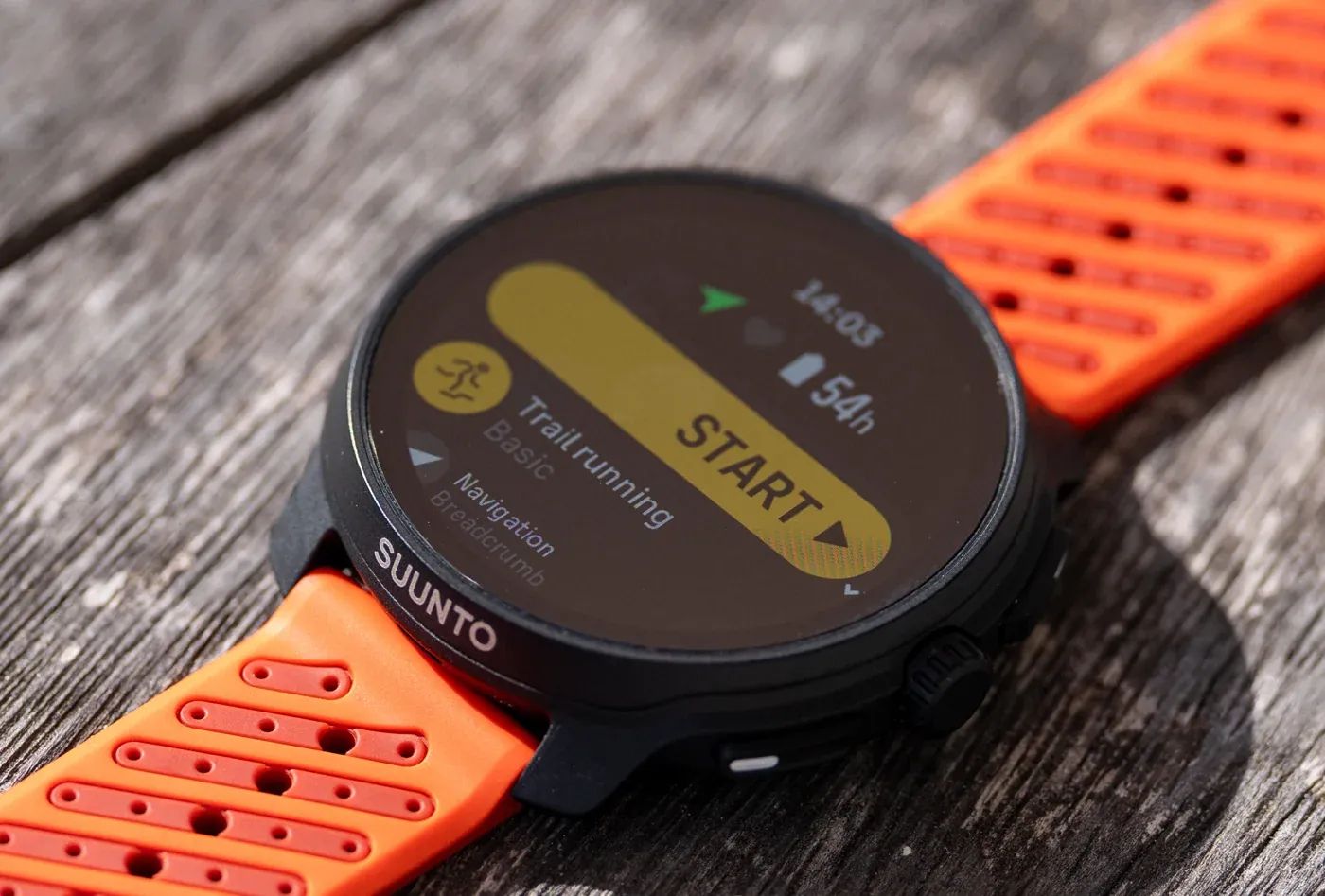
The question I kept coming back to while testing the Suunto Race 2 was simple: would I actually choose this for the stuff that matters most… daily runs, long trail days, and race efforts, without feeling like I’m babysitting it?
After a few weeks of real use, I think Suunto’s nailed the core brief: a genuinely readable screen, proper endurance battery, and mapping that makes you calmer on unfamiliar routes.
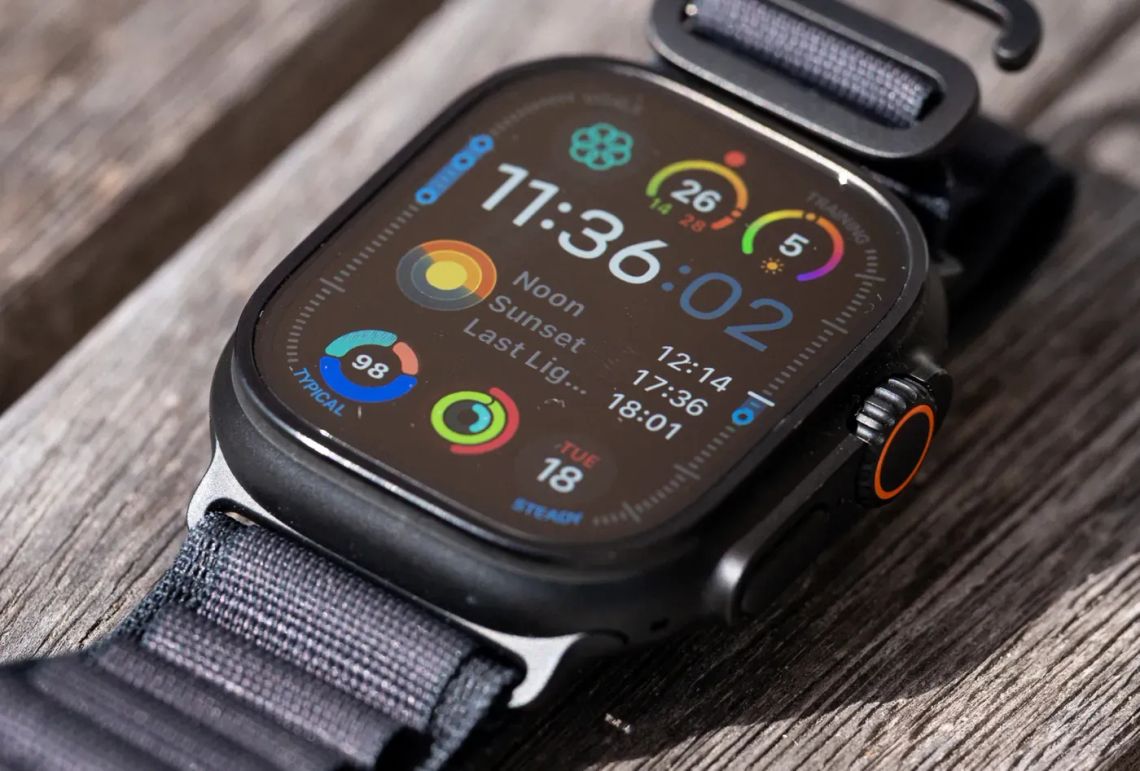
It’s not trying to be a wrist phone like the Apple Watch Ultra 3, and it’s not drowning you in lifestyle features either.
It’s basically a training tool first, and that’s why runners will love it most.
👋
If you purchase gear through links in this review, I may earn a small affiliate commission. If you enjoyed this review, become a member of my site, (it's free!). -Alastair ✌🏼
Key specs (the ones that influence running life most)
- Price: $499 at suunto.com (stainless steel) the one I am reviewing, $599 (titanium bezel)
- Display: 1.5" LTPO AMOLED, 466 × 466
- Brightness: up to 2000 nits
- Size/weight: 49 × 49 × 12.5mm, 76g (steel)
- Battery: up to 55 hours in Performance GPS (dual-band), up to 200 hours in Tour
- Storage: 32GB for offline maps
- Water resistance: 100m
- Smart features: notifications + music controls (no onboard music)
On paper it looks like “big watch energy,” and yeah… it is. But it’s big for a reason: screen readability and battery life.
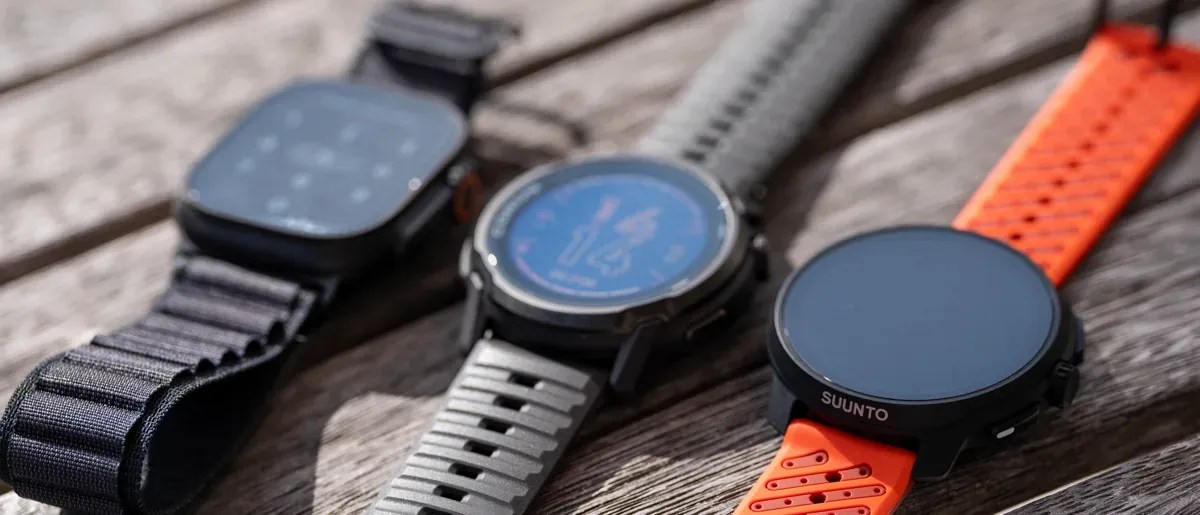
The first 10 minutes setup that makes it feel like your watch
Suunto’s defaults are fine, but they’re conservative. A few changes make the Race 2 feel more like a training partner.
Display + power (how I’d set it for most runners)
- Auto brightness on
- Raise-to-wake on
- Always-on display off (unless you’re fine charging more often)
- Night-time DND window so it’s not lighting up at 2am
This keeps the screen responsive when you need it, without quietly taxing the battery.
Apple Watch Ultra 3 review: A versatile adventure smartwatch with strong running capabilities
Two months of real-world testing on runs, hikes, and daily life. Satellite safety, health insights, and where it shines (or lags) against dedicated running watches.
 Alastair Dixon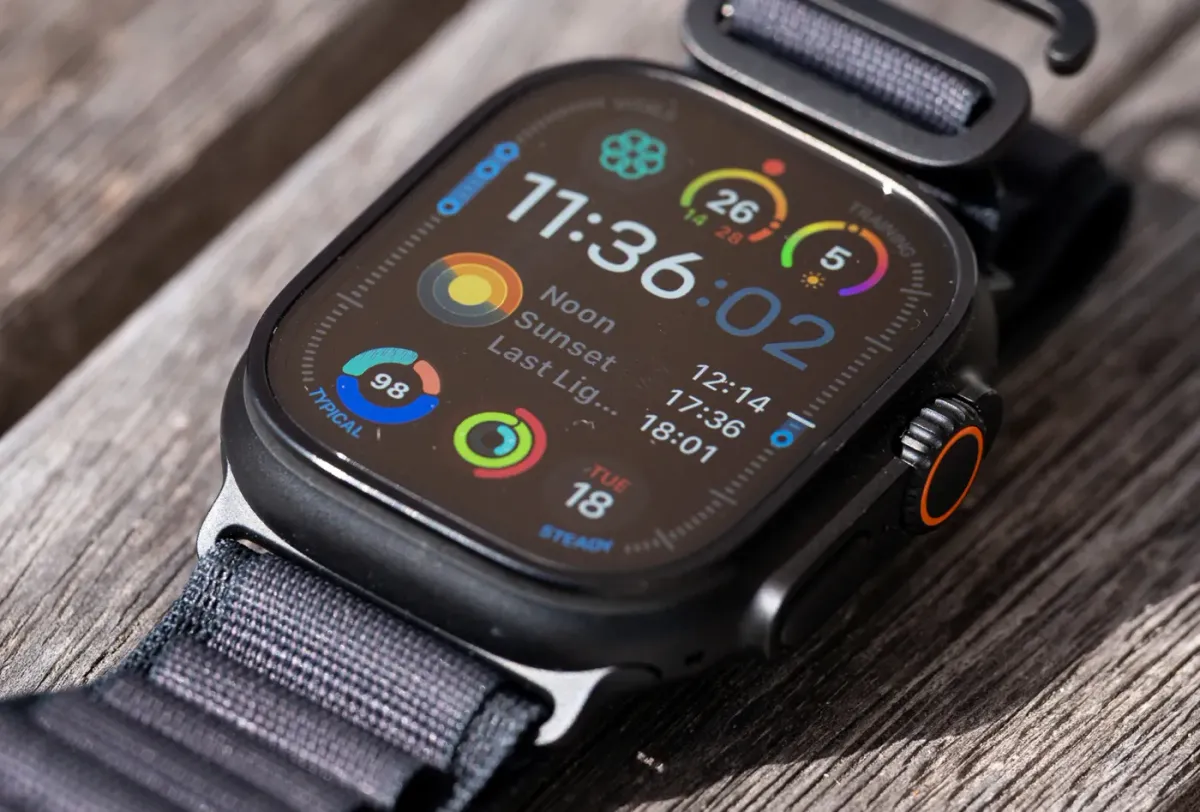
Buttons + “stop the chaos” shortcut
Suunto’s touchscreen lock shortcut is one of those tiny things you only appreciate mid-run.
I map a quick lock so sweaty hands / rain / mud don’t turn my watch into a touchscreen roulette wheel.
Zones + training metrics (if you do any structured work)
If you train with intent, it’s worth setting:
- your HR zones and power zones manually (instead of rolling with defaults)
- ZoneSense enabled (via SuuntoPlus) so you can see how intensity actually shifts during longer efforts
This matters most for tempo progression runs, long steady efforts, and anything where you’re trying to keep the effort honest.
Run screens (make the watch useful when you’re tired)
My go-to fields for the Race 2 are:
- ZoneSense
- ascent / descent
- vertical speed (trail days)
- current power
- estimated finish time (for races or long workouts)
It turns the watch into something you can use in the moment, not just review later.
Maps + heatmaps (only if you’ll actually use them)
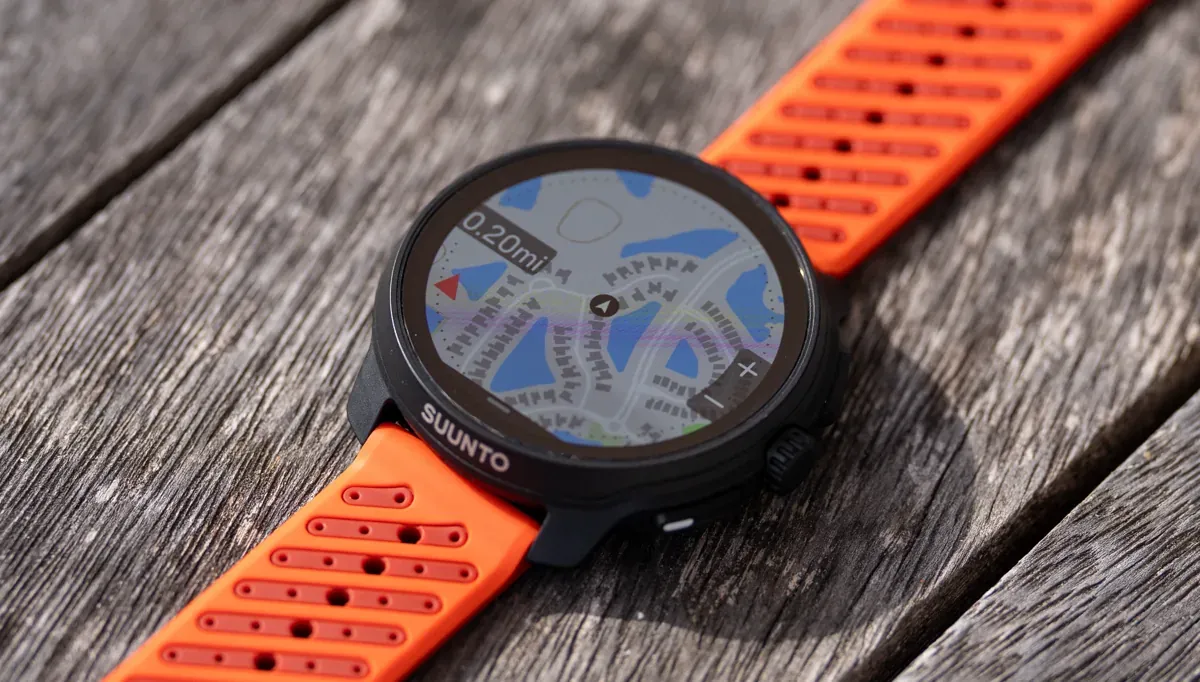
Before big trail sessions, I download offline maps and enable heatmaps. It’s especially helpful if you’re:
- exploring new areas
- running routes backwards
- trying to choose “popular and safe” vs “quiet and unknown”
50K Training Plan + ULTRA RACE GUIDE
In this guide, I’m sharing ALL my 50K Ultra Marathon training plans, tips, and racing secrets.
 Alastair Dixon
What it feels like on runs
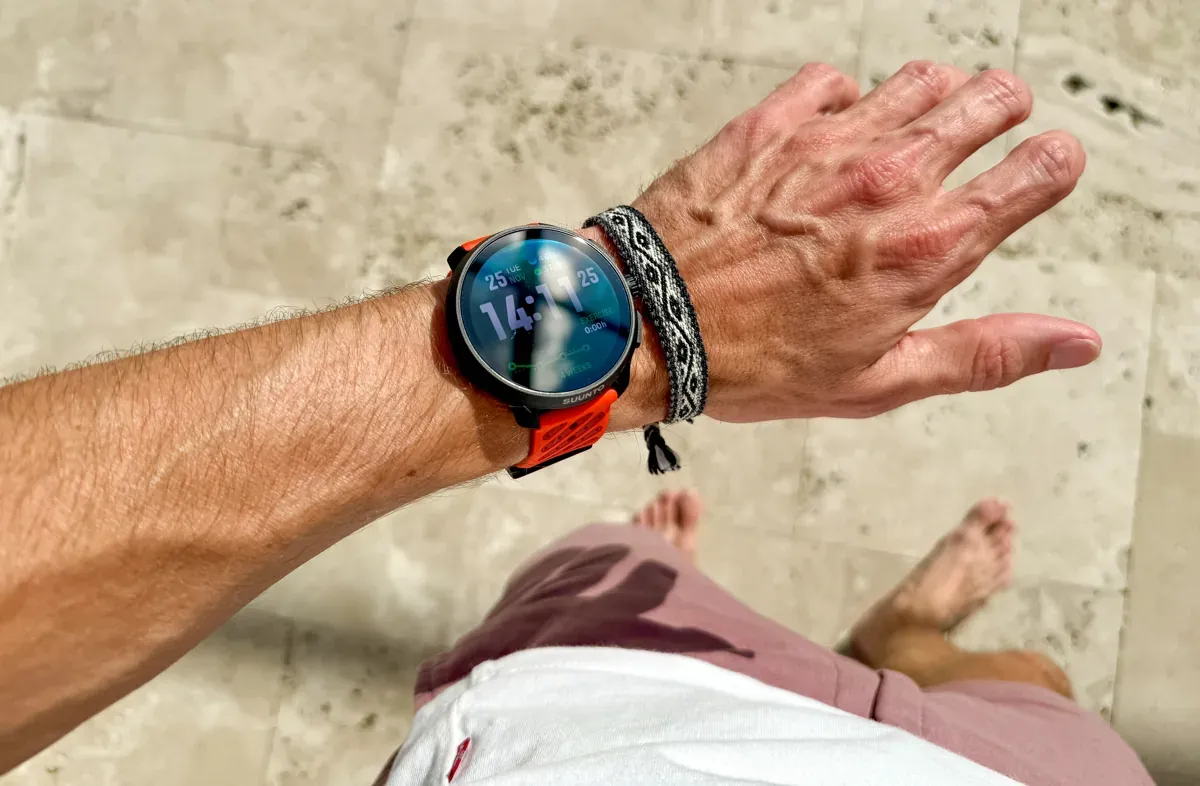
Screen clarity (this is the headline)
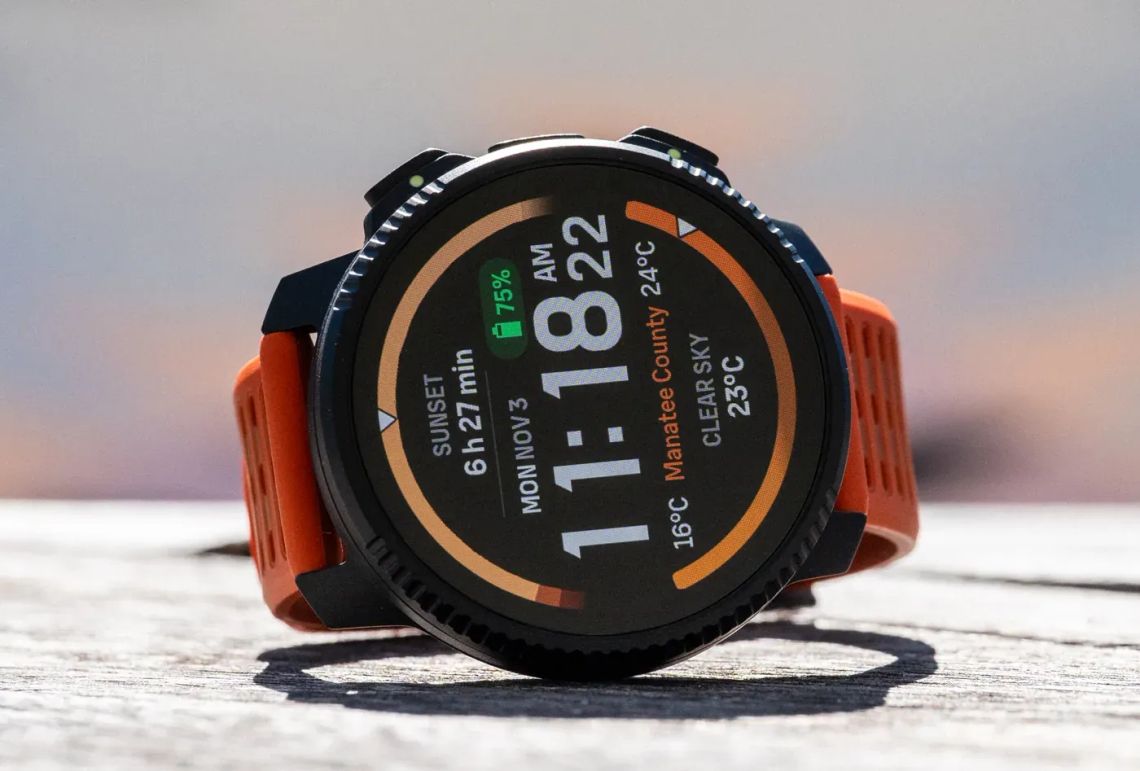
That 1.5" AMOLED isn’t just pretty, it’s also incredibly functional; in bright sun, it stays readable.
On the move, it’s smooth, and for navigation, that matters more than most people realise until they’re deep into a long run and mentally cooked.
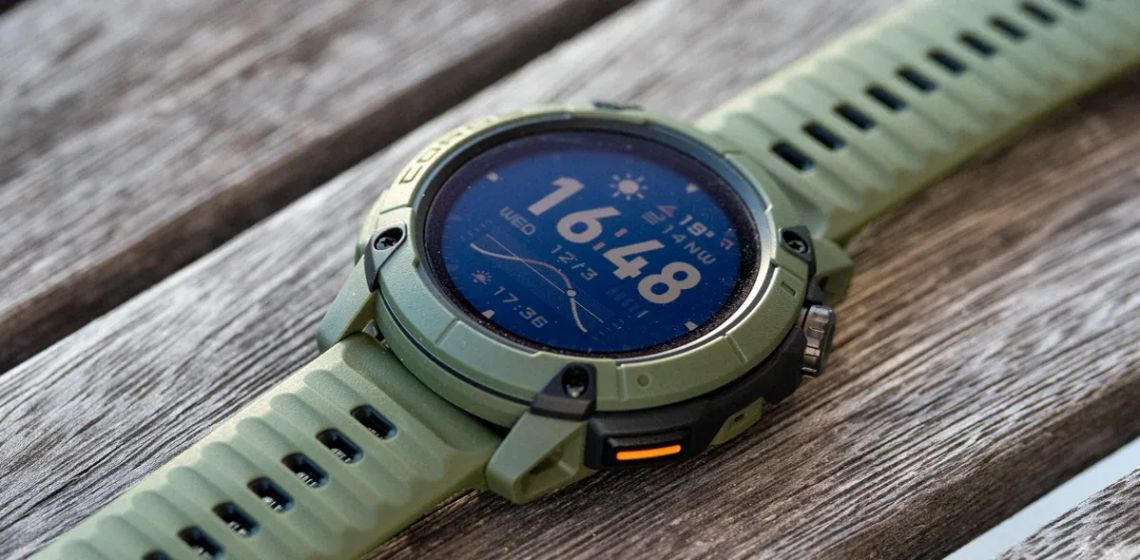
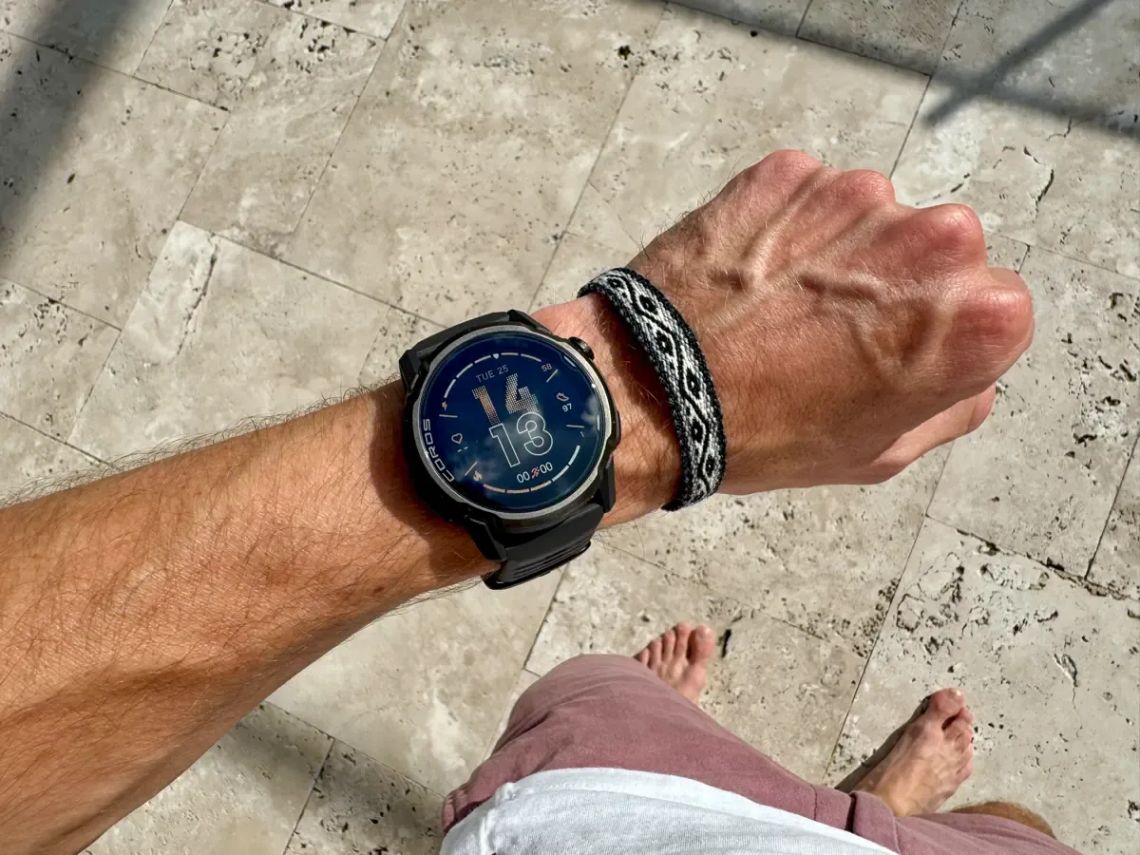
If you’ve used a MIP watch like the COROS APEX 4, the Race 2 will feel more “modern” and more map-friendly.
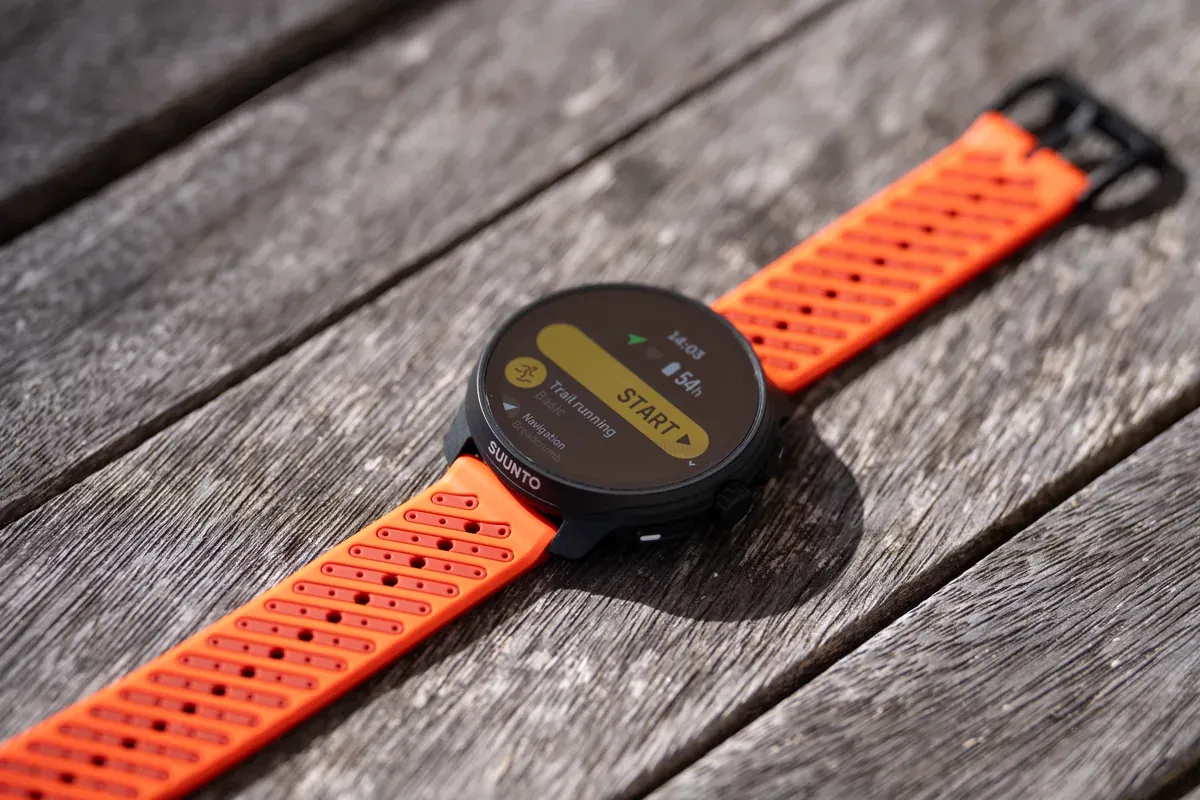
Battery that fits real training blocks
This is the other big win for the RACE 2.
In dual-band GPS, I’ve been seeing the kind of battery life that makes the Race 2 realistic for heavy weeks and long trail days without the constant charging loop.
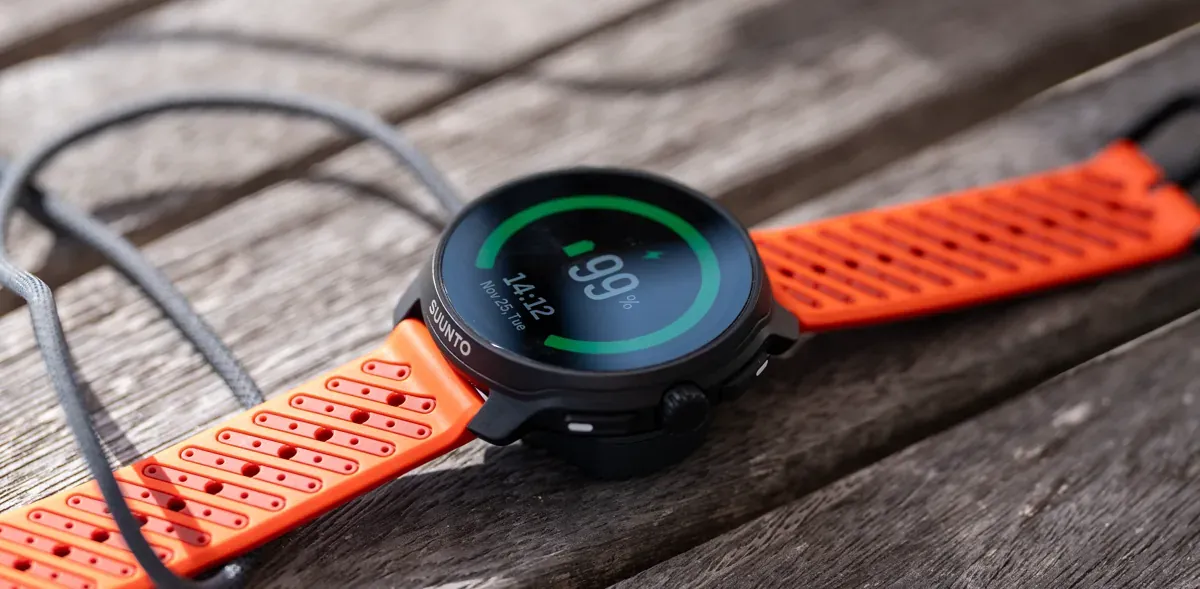
And charging is fast in my experience:
- 0 → 100% in ~45–60 minutes
- 0 → ~70–80% in ~20 minutes
- a 10–15 minute top-up can be enough for a big GPS day
That’s exactly the kind of behaviour you want if you train frequently, travel, or sometimes just… forget.
Build + buttons (quietly excellent)
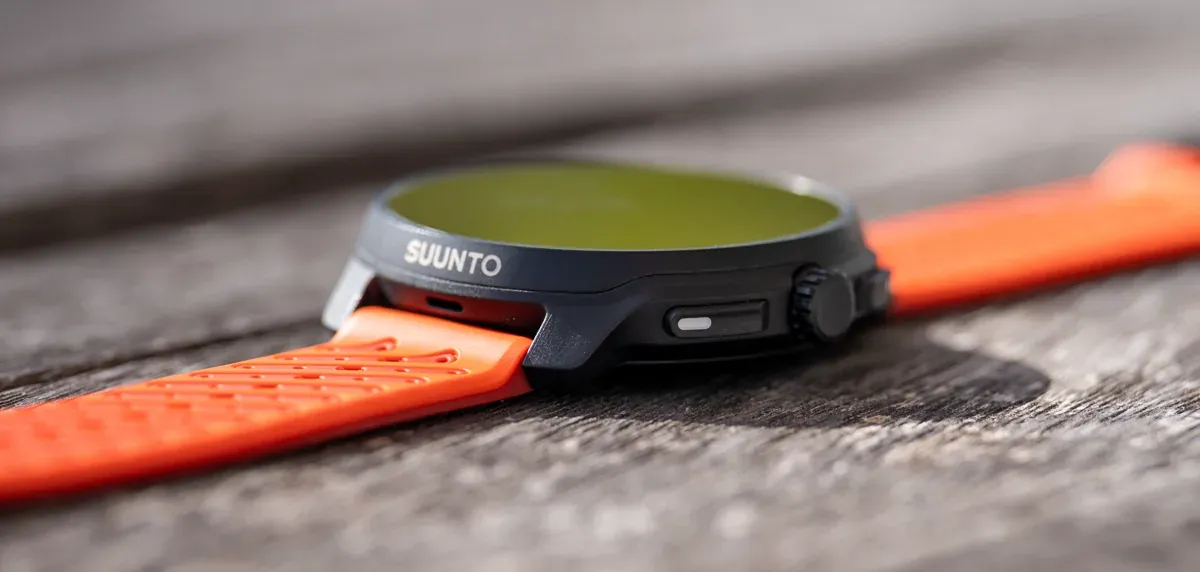
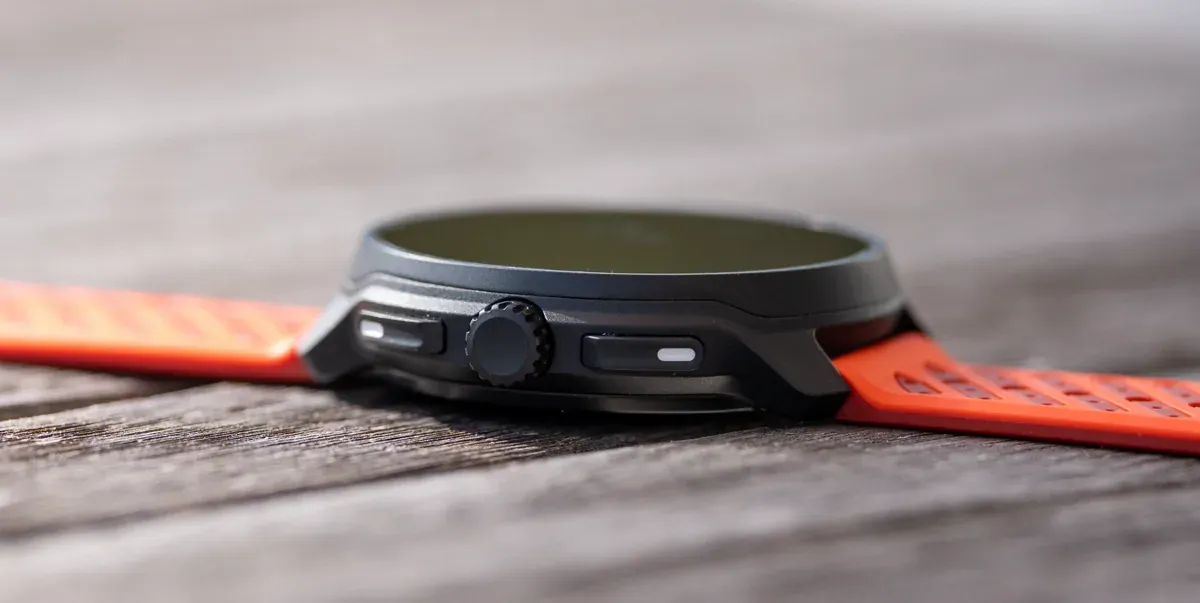
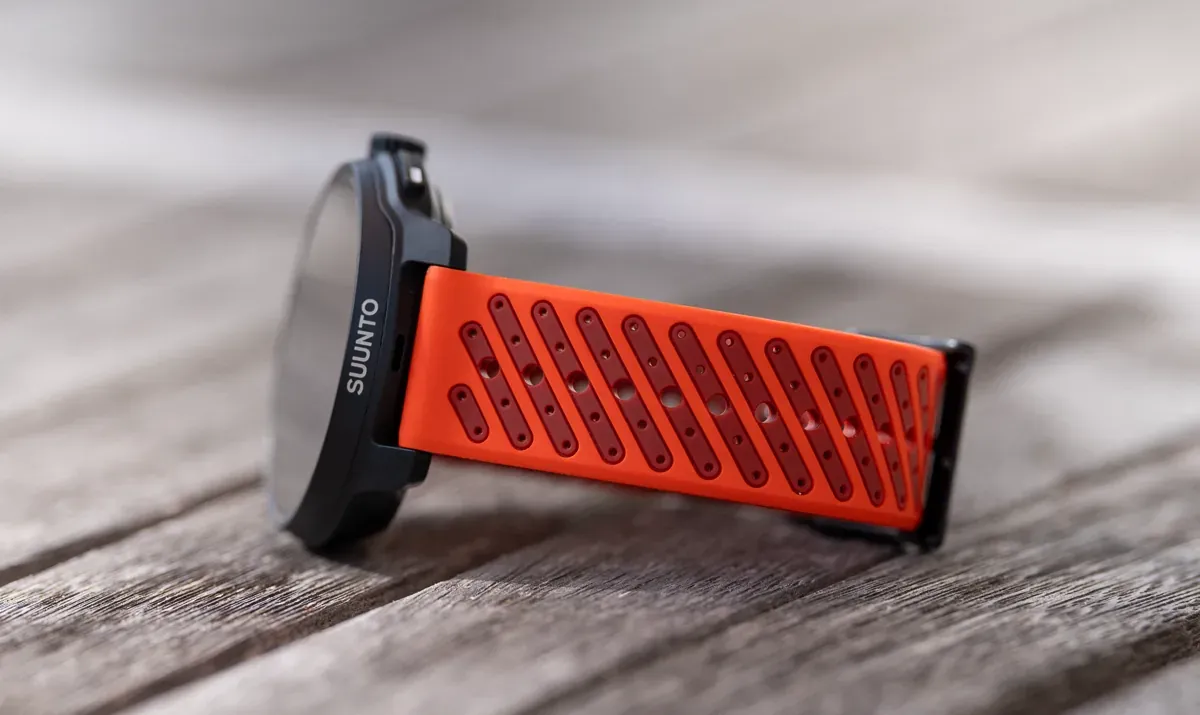
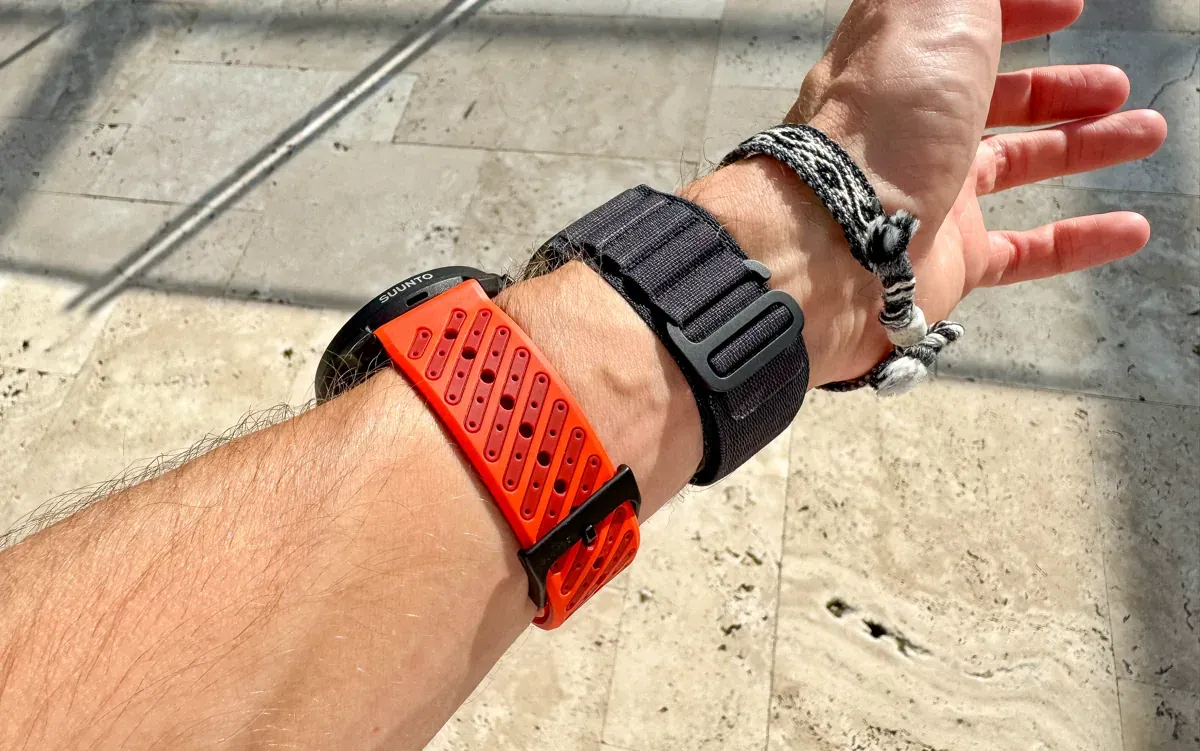
It feels premium without being fussy: sapphire, stainless bezel, solid case materials.
The buttons are big, clicky, and easy to use when you’re sweaty or moving.
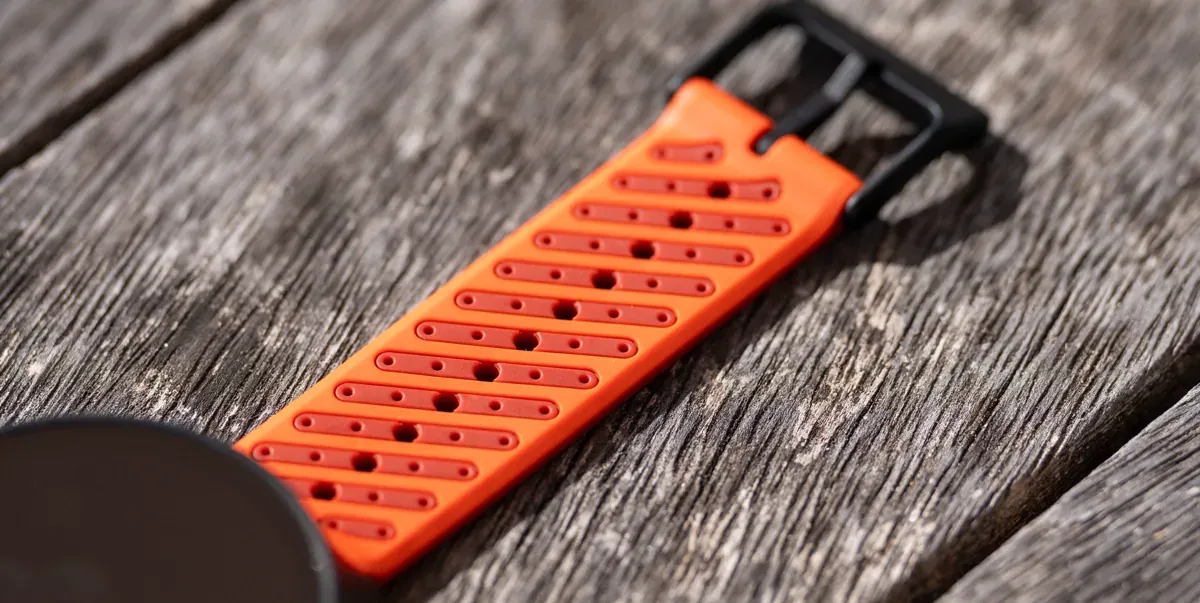
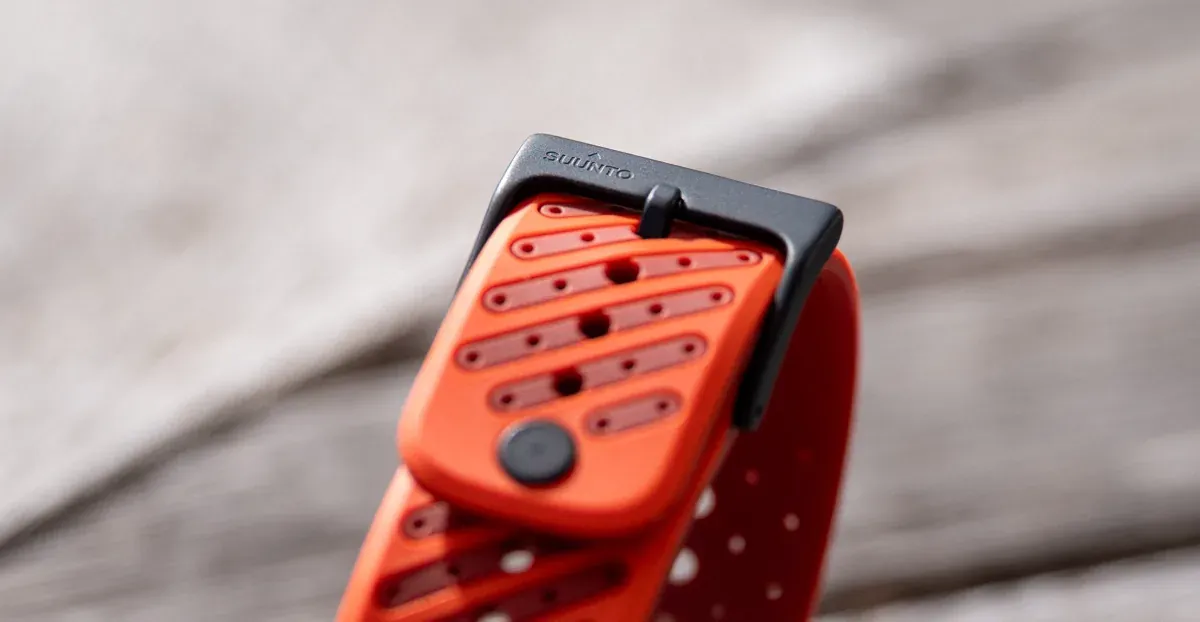
I also rate the stock silicone strap more than I expected; grippy without irritation, and it dries fast.
Wrist HR (better than older Suuntos)
From what I’ve seen so far, the improved sensor is finally good enough that I’ll trust it for steady runs without automatically reaching for a chest strap.
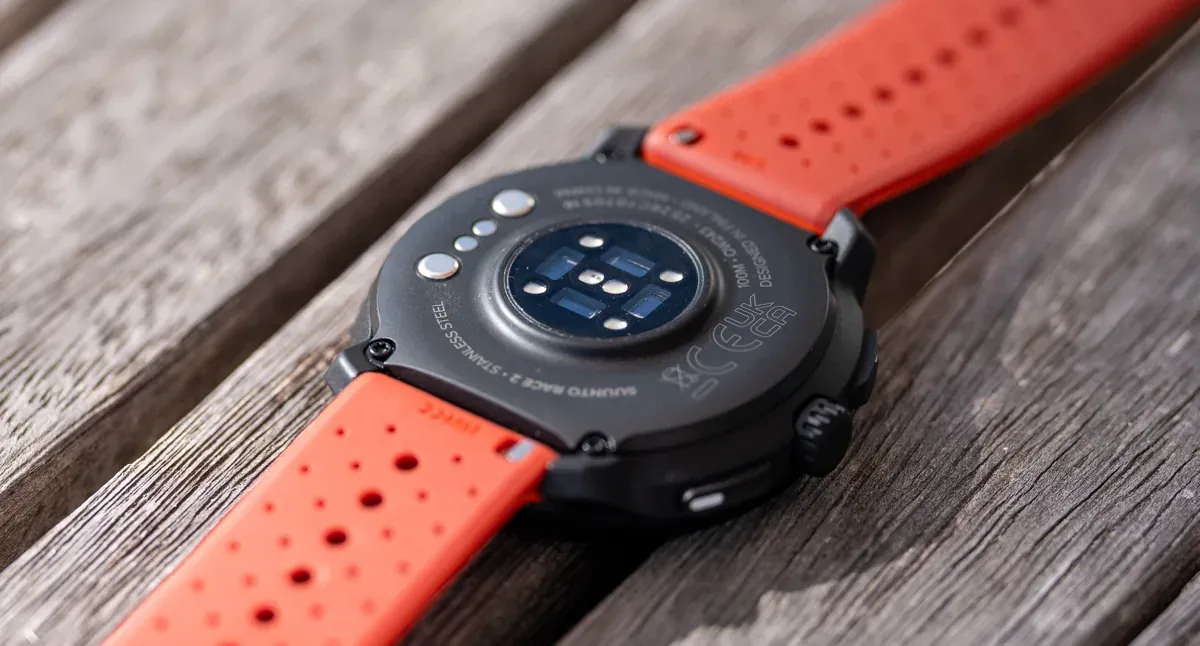
Intervals are still where wrist HR can get weird on any watch, but this one has been more usable than previous Suunto sensors in my testing.
Trail Running For Beginners (Part 1) | Alastair Running
Why trail running feels so different to road running, and how to start slow, stay safe, and fall in love with running beyond the pavement.
 Alastair Dixon
Maps and downloads (the one annoyance)
I love having offline maps on-wrist, but I don’t love the process of getting them on this watch.
You have to download maps manually, and on my Wi-Fi, a 1GB map tile took over an hour which is way too long in 2026.
Once it’s on there, the experience is great, however, it’s just the “getting there” part that feels slower than it should.
The ecosystem stuff: helpful without being bossy
I like the vibe of Suunto’s training features because they feel less like the watch is judging you, and more like it’s interpreting trends.
ZoneSense and Suunto Coach can add context to effort and recovery without pushing you into a rigid “today is a bad day” type of dashboard.
If you’re used to Garmin style training readiness stacks, Suunto can feel simpler and more fluid. Whether that’s better or worse depends on your personality.
What the Race 2 is not
If you want:
- onboard music
- payments
- calls/mic/speaker
- deep smartwatch integrations
…that’s not the Race 2. Notifications are basic, it’s deliberately not trying to replace your phone.
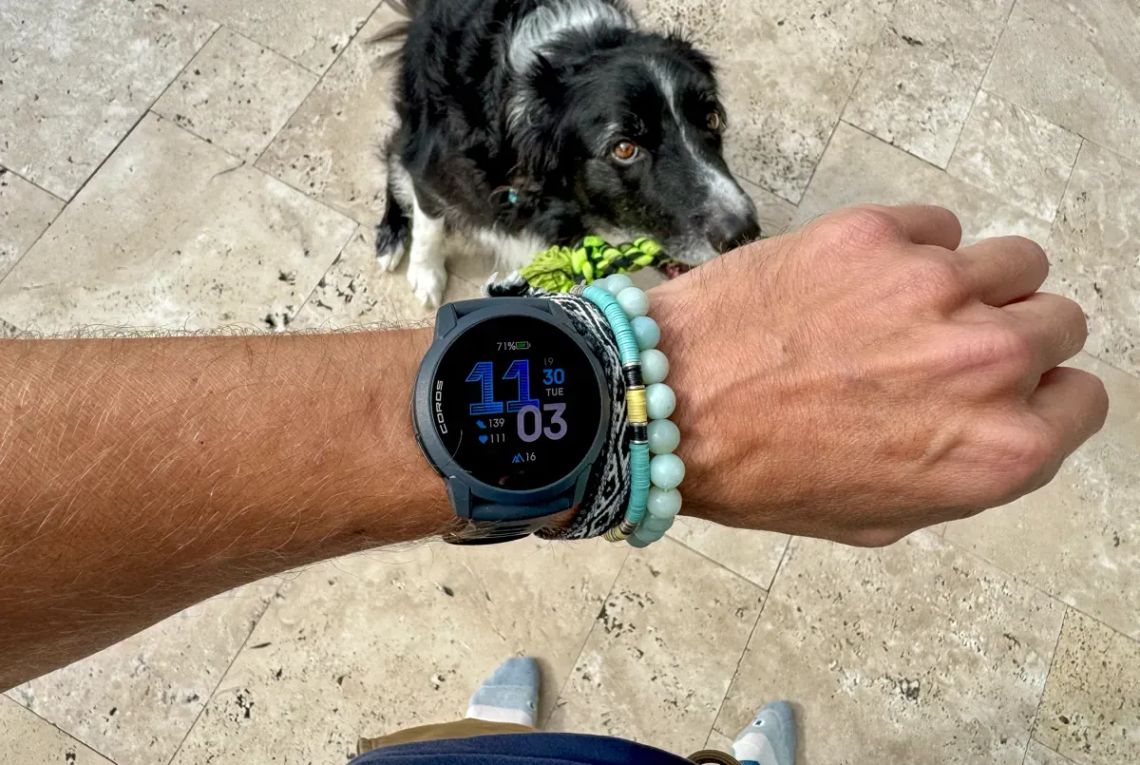
And the 49mm case is big. It sits well on my wrist, but if you’ve got smaller wrists or just hate chunky watches, I’d seriously look at the COROS PACE 4 instead.
Alastair’s Top-Rated Running Gear Of 2025 / 2026
Road, trail, racing, recovery, this is the essential running gear I choose to use for my training, and all the products listed here have outperformed the competition, during testing.
 Alastair Dixon
Who I’d recommend it to
Get the Race 2 if you’re the runner who:
- trains consistently (mostly on trails) and wants battery you can trust
- values screen clarity for pacing + maps
- does long runs, long trail days, or races where navigation stress is real
- likes control over settings, screens, and zones
Skip it if you want:
- integrated smartwatch life (go Apple Watch Ultra 3)
- the most feature-dense coaching ecosystem possible, go with a Garmin or COROS APEX 4 instead
- a smaller case, go PACE 4 instead
My verdict
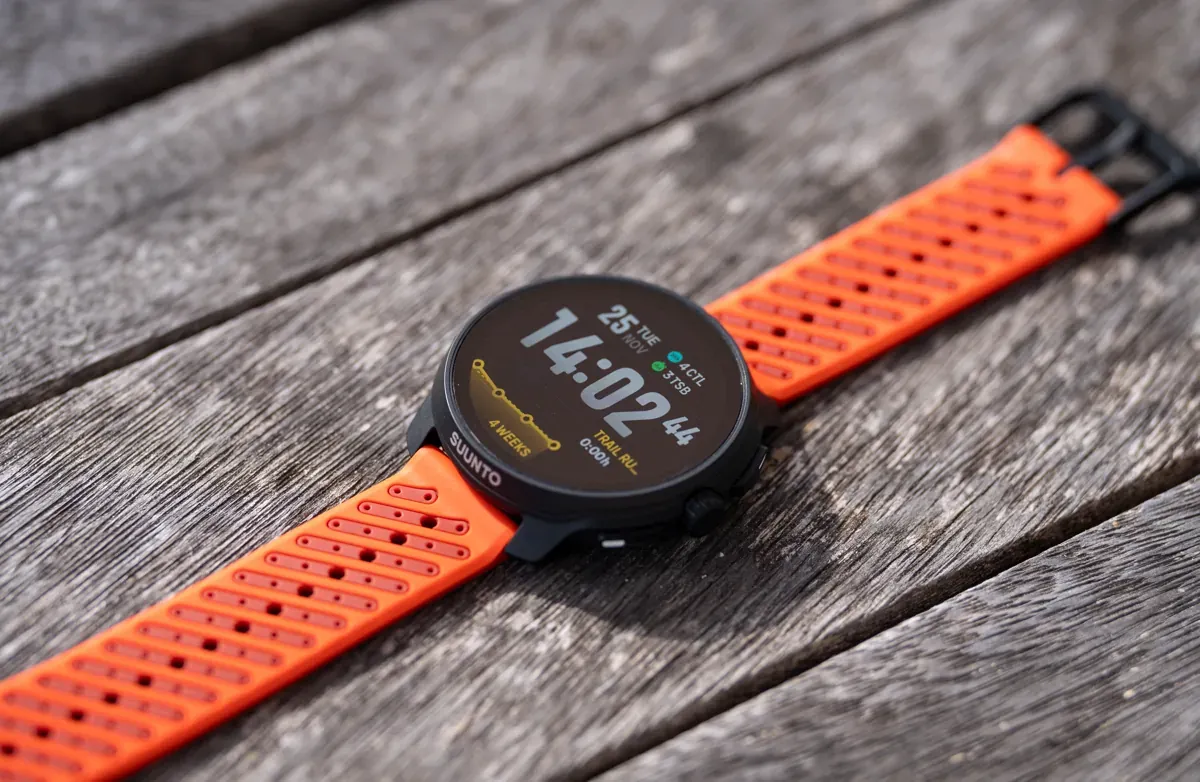
The Suunto Race 2 feels like Suunto hitting the balance that a lot of runners actually want nowadays: modern screen clarity, real endurance battery, and a training-first experience that doesn’t try to become your phone.
It’s easy to read, hard to kill because it's so durable, and it supports the rhythm of training without demanding too much of your attention.
Written by

Subscribe to new posts
reviews, training tips, and thoughtful stories for runners






Member discussion