


Most max-cushion trail running shoes make an obvious trade-off: you get comfort, but you lose a bit of control when the ground gets rocky, off-camber, or just plain gnarly.
The Salomon Ultra Glide 4 sits in a really nice middle ground for me, and it's one of the best all-mountain trail running shoes you can get right now.
It’s comfort-forward (no question there), but it doesn’t turn into a clunky sofa once the trail gets technical, it has response.
Through this review, I'm going to do my best to articulate why it has become one of my favorite cushioned “all-mountain” trail shoes for cruising pretty much any trail.
I keep reaching for it when I want to run long, vary the terrain, and not think too hard about what’s underfoot.
It also feels like a refined continuation of the line rather than a total reinvention, the big “modernized” upgrade is the upper, and it pairs really well with the high stack platform and that odd-looking (but genuinely practical) Relieve Sphere dimple geometry.
And honestly… it looks great on foot; Salomon nailed the styling here so much so that I wear them casually too.
Key specifications
- Price: For the best price and colorway options get them here - $160 at Salomon.com
- Weight: 9.7oz (275g) in US M9 (my pair)
- Drop: 6mm - stack height of 41mm heel / 35mm forefoot
- Upper: Engineered Mesh (textile/synthetic) with SensiFIT and endoFit™ internal sleeve
- Midsole: optiFOAM (EVA) + Relieve Sphere geometry
- Outsole: All Terrain contaGRIP + Relieve Sphere “dimpled” layout
- Lugs: 4mm deep
- Extra attributes: quickLACE™ + lace garage, high foot protection, “maximal” cushioning
Sizing and fit
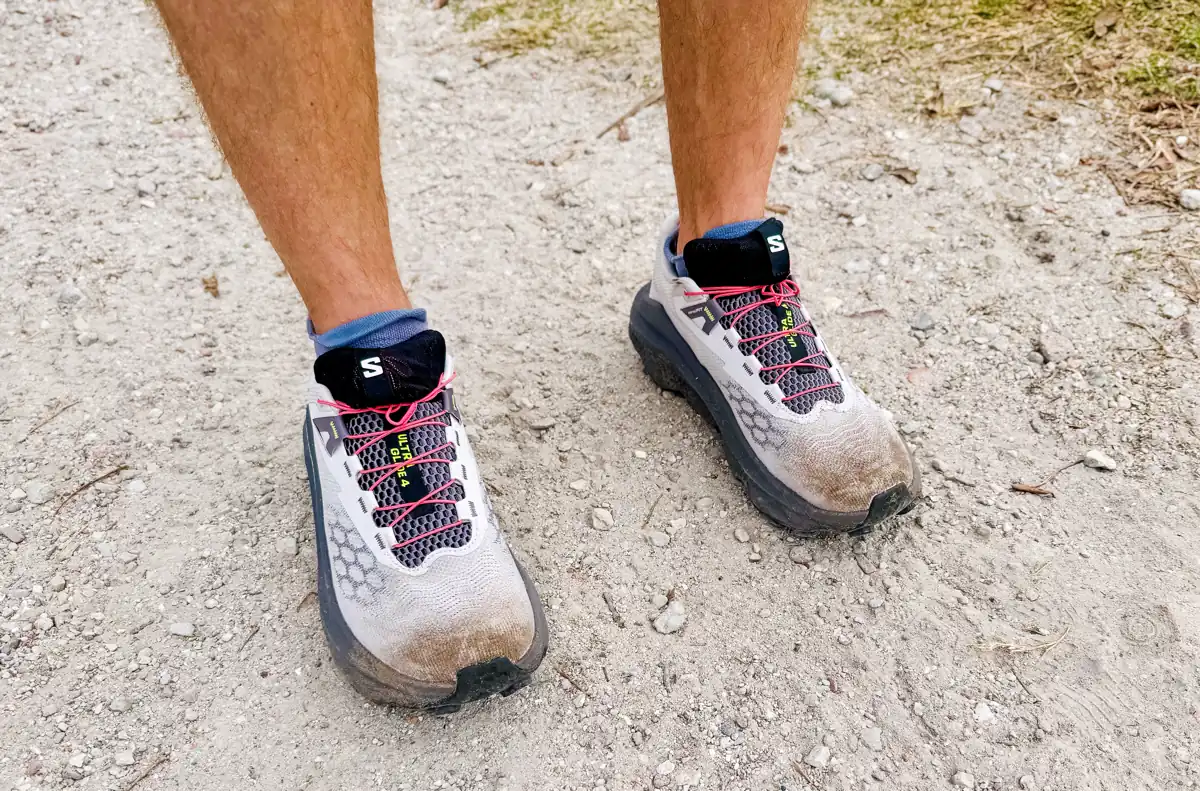
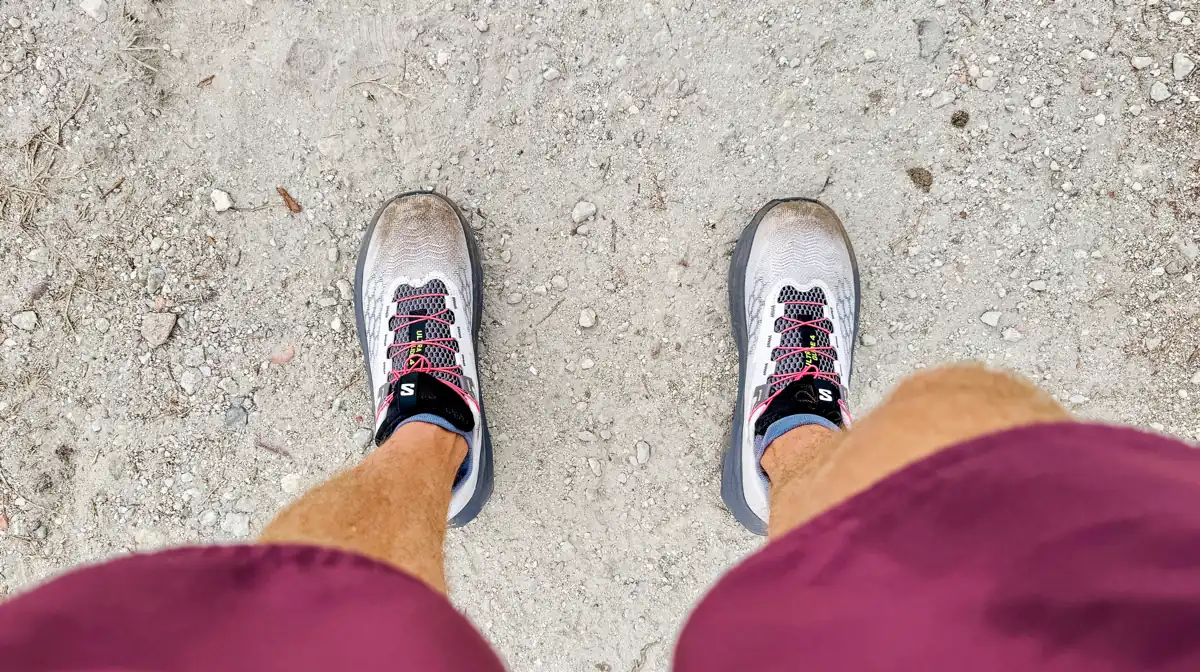
They fit true to size (when you follow US sizing), with a medium width.
They feel secure and long-run friendly, locked in without that overly race-tight squeeze.
There's a nice amount of wiggle room in the toe box area for some swelling, and to gain extra control and power from your toes when navigating technical trails or running uphill.
Breathability is average but it does feel improved and better suited to damp, unpredictable trail days.
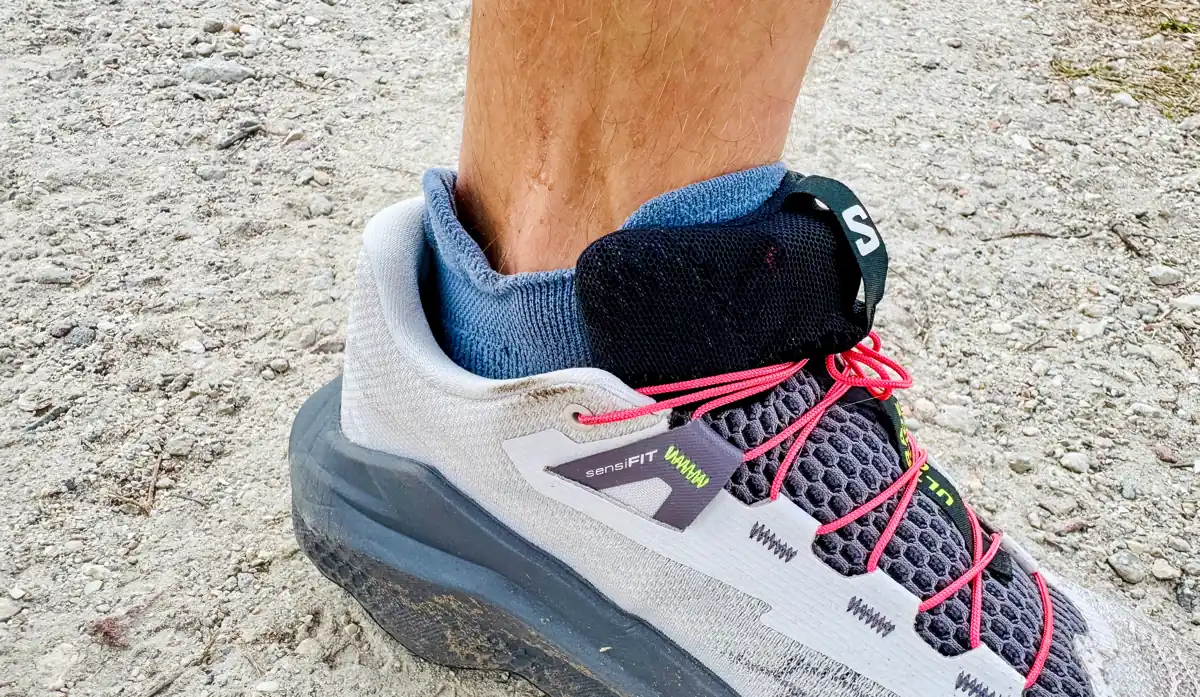
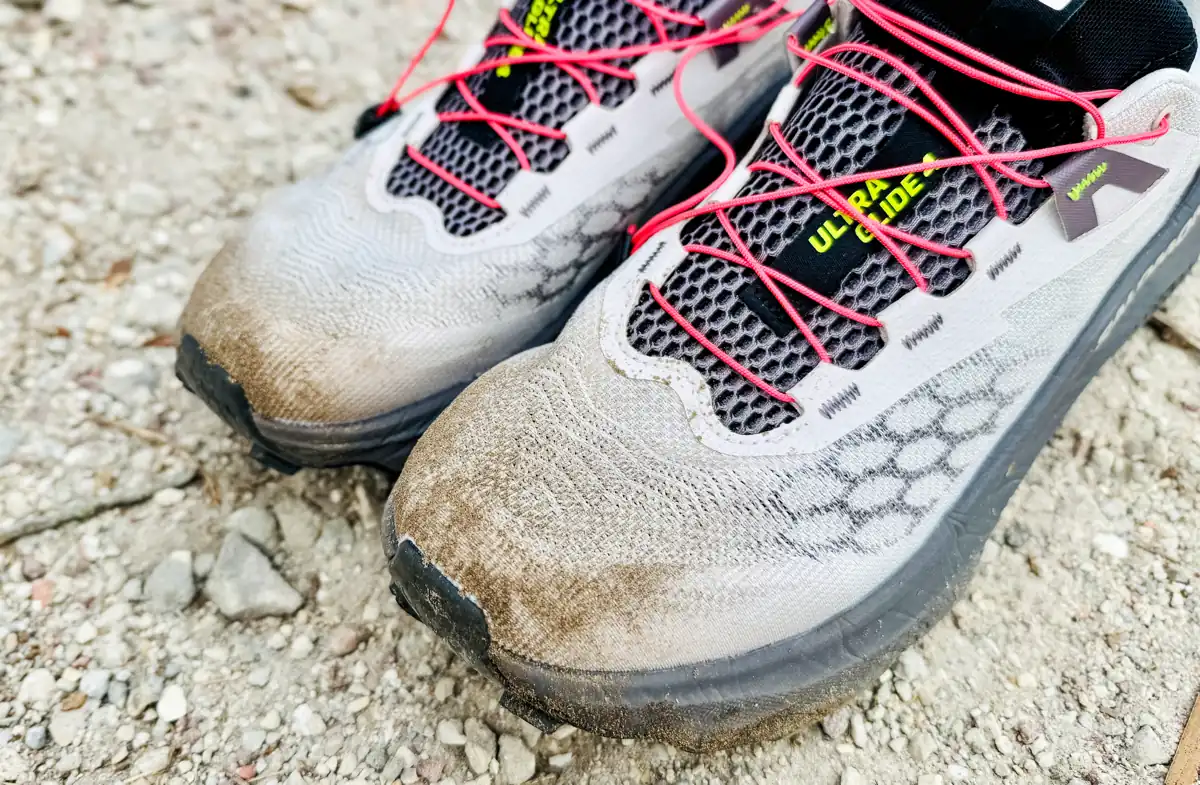
Heel lock down (left), Breathable upper mesh (right)
Performance review
Relieve Sphere is there for rough trails
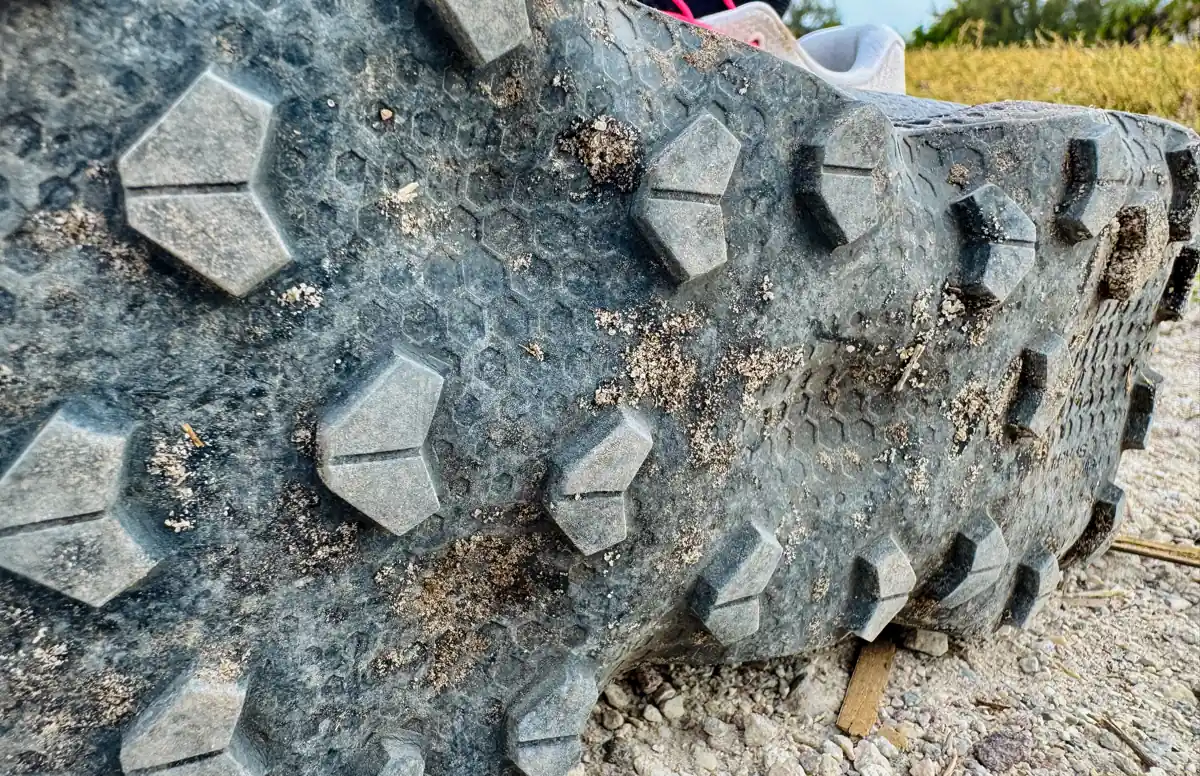
I expected the Relieve Sphere dimples to be a bit of a marketing gimmick before I tried them for the first time on the S/Lab Ultra Glide; in practice, it’s one of the reasons this shoe is so unique.
On hard packed / rocky trails, where you’re constantly landing on little bits of trail debris, Relieve Sphere noticeably spreads pressure out and takes the sting out of repeated impacts.
The longer the run goes, the more I appreciate it. My feet feel less beat up than I’d expect from long miles, but the shoe still feels connected enough that I’m not losing control or 'trail feel'.
If you run the kind of routes where the ground is always leaning towards technical (rocks, roots, chunk, broken hardpack), this is the part of the Ultra Glide 4 that quietly does a lot of work.
 Alastair Dixon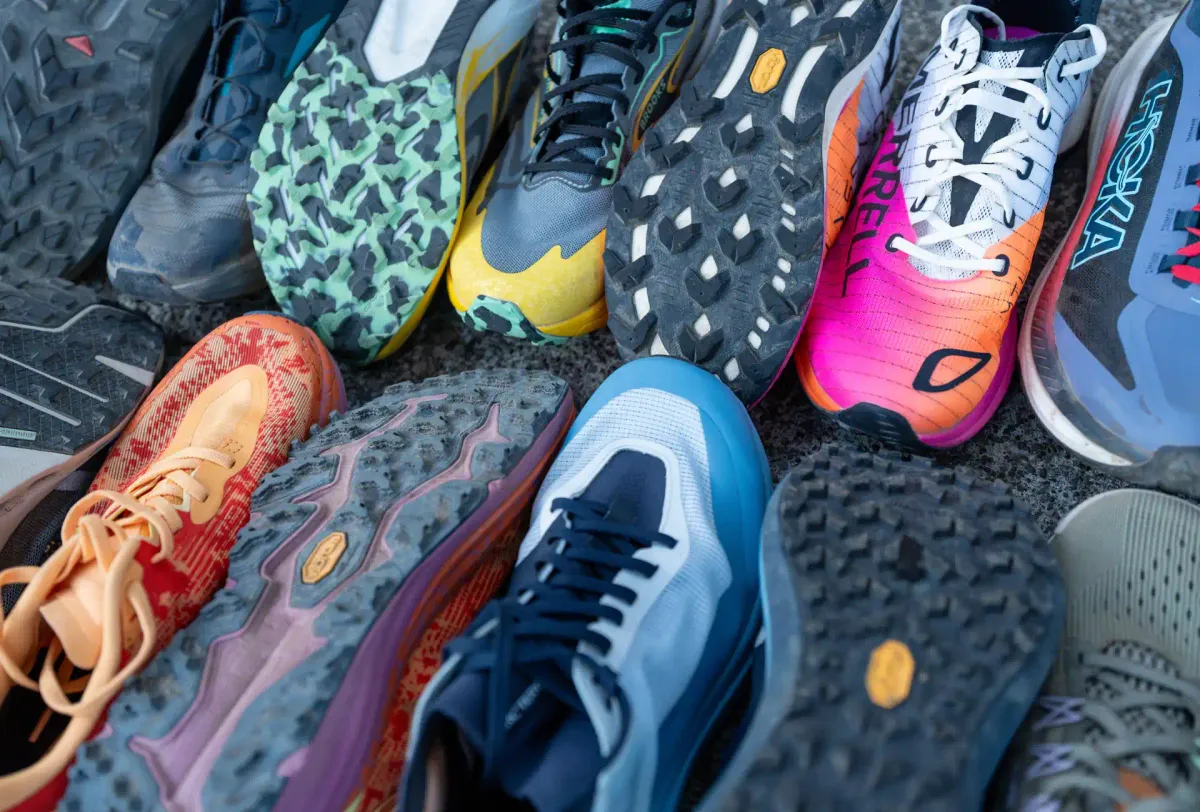
Cushioning that stays consistent (soft enough, but not sloppy)
With a 41/35mm stack height, this is clearly a max-cushion shoe, but it doesn’t behave like a marshmallow once you’re moving; you still have control, a good amount of stability, and response.
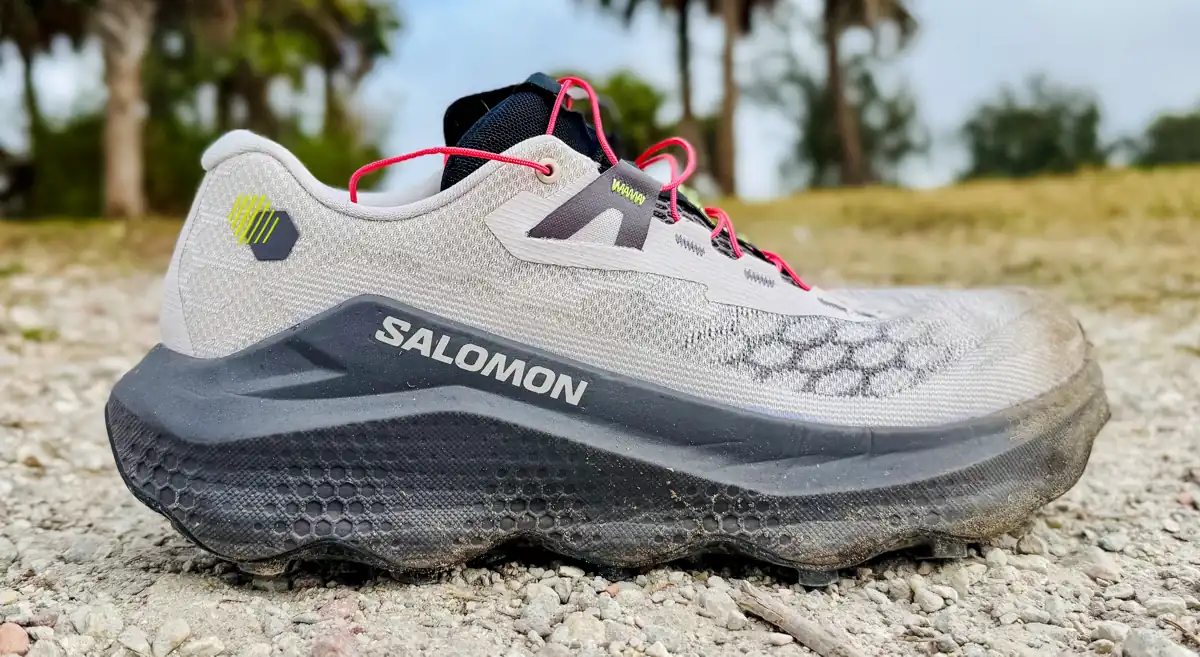
The ride stays smooth, forgiving, and consistent, especially at the steady “cruise pace” where a lot of long trail running actually happens.
If you're an ultrarunner, you probably know that running little saying: "start slow, finish slower". That said, these can take some extra pace if you do want to pick it up!
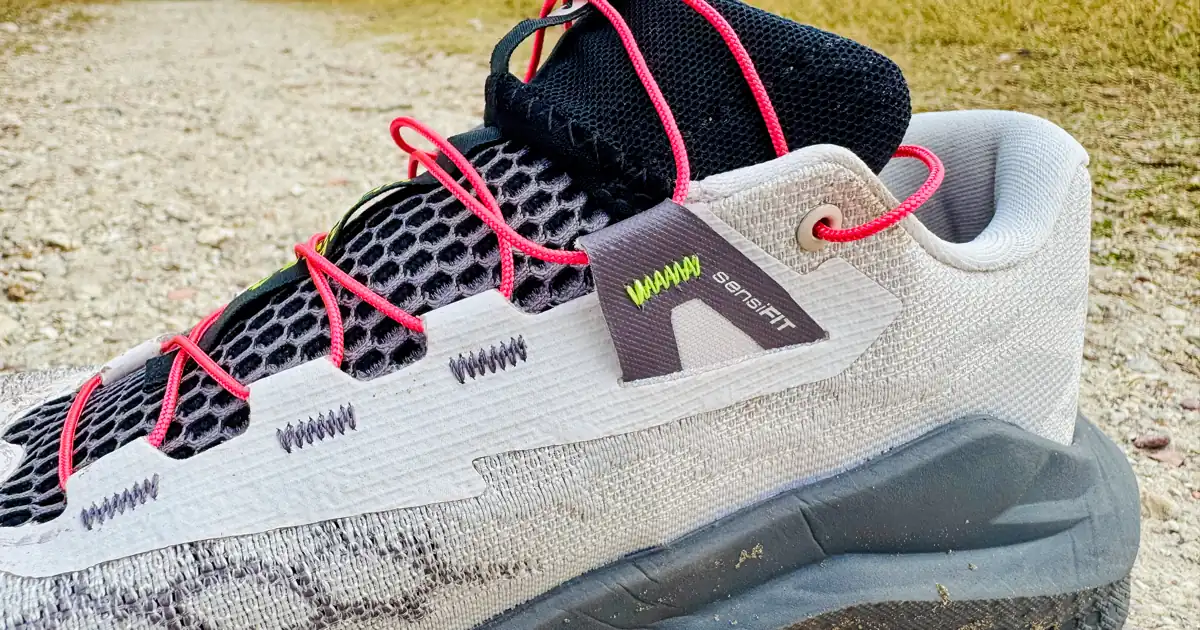
Step-in comfort is fantastic (thank you sensiFIT and endoFIT!), the heel collar cushioning and padded tongue do their job well.
I like that the midsole cushioning doesn’t fall apart when the trail gets awkward.
It’s soft enough for long efforts, without turning mushy or unstable when you’re landing on weird angles.
This is the kind of cushioning that makes you want to keep going, not the kind that makes you feel like you’re losing control or losing pressure energy return.
 Alastair Dixon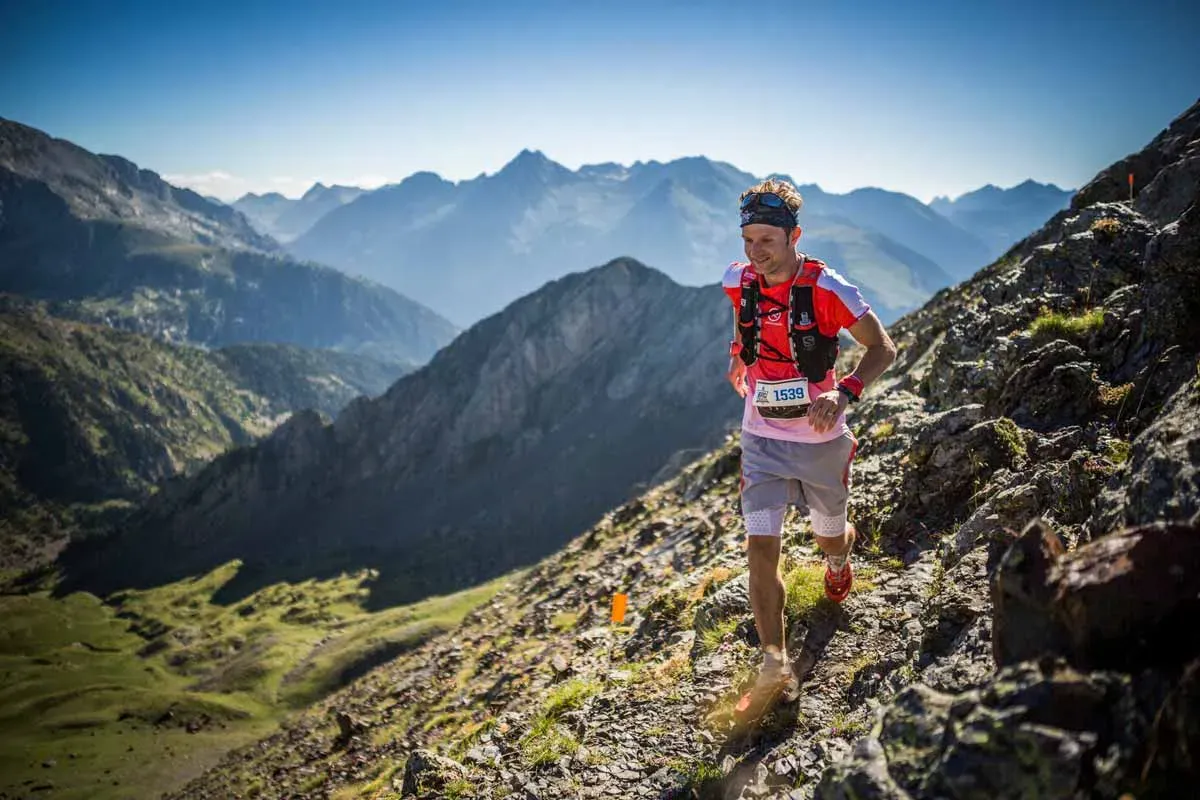
Composure on uneven ground (better than most max-cushion trail shoes)
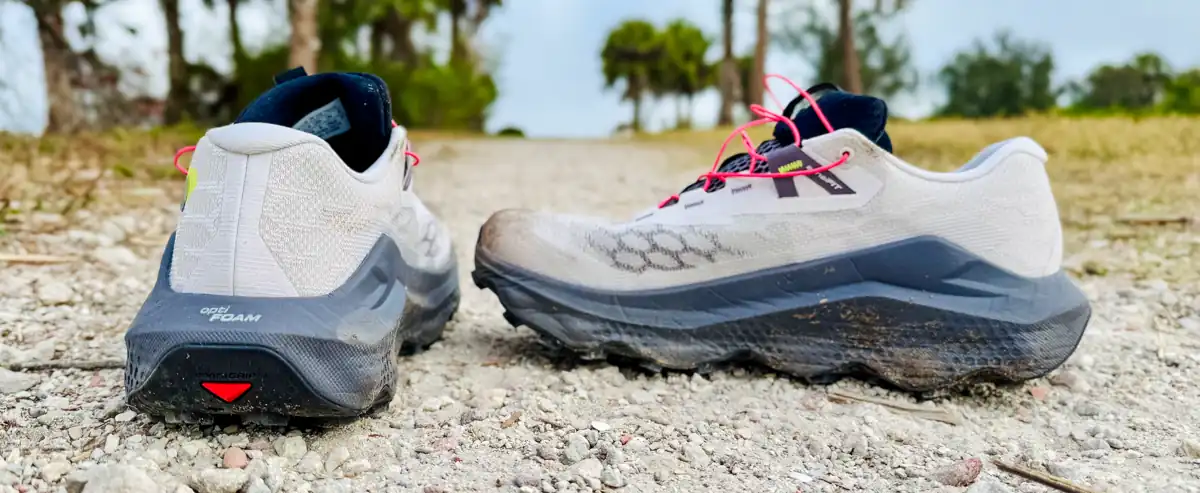
For the amount of cushioning underfoot, it stays surprisingly composed on uneven terrain.
And it’s not doing it by just being overly wide in it's footprint; although there is just the right amount of width to aid stability, without making them clunky or imprecise on gnarly terrain.
The stability feels more like a system: the way the outsole/midsole flexes under load, plus how the upper holds me in place, keeps things together when the ground is off-camber or broken up.
That’s why I’d call it genuinely “all-mountain”.
A lot of max-cushion trail running shoes are great… as long as the trail stays fairly smooth. This one feels happy cruising technical singletrack too, as long as you’re not trying to dance down sketchy switchbacks with intense amounts of precision.
Grip and braking confidence across mixed terrain
All Terrain contaGRIP has been really trustworthy for me here.
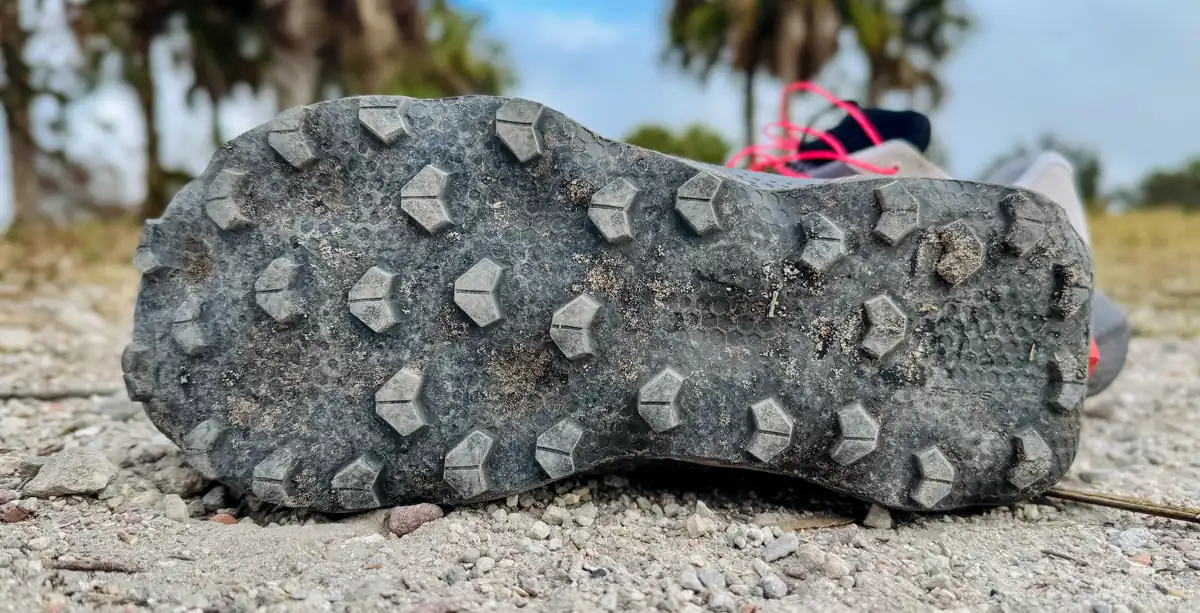
Across mixed terrain like hardpack, loose stuff, and even wintery mud, it feels tacky and confidence-inspiring; I've never had total confidence with ContaGrip on slick wet rocks though, so be cautious of that.
Muddy descents can still get slippery (that’s just trail shoe reality, and one you can learn to control with time), but overall traction has been a net positive.
If I'm being really picky, the forefoot lug layout could be improved by having more bite under the big toe / ball of foot for toe-off.
I get the logic but the placement of the RelieveSphere in this area would be better served with more traction, rather than a dimple.
Upper comfort, lockdown, and airflow over long miles
This is the big “modernized” part of the shoe for me.
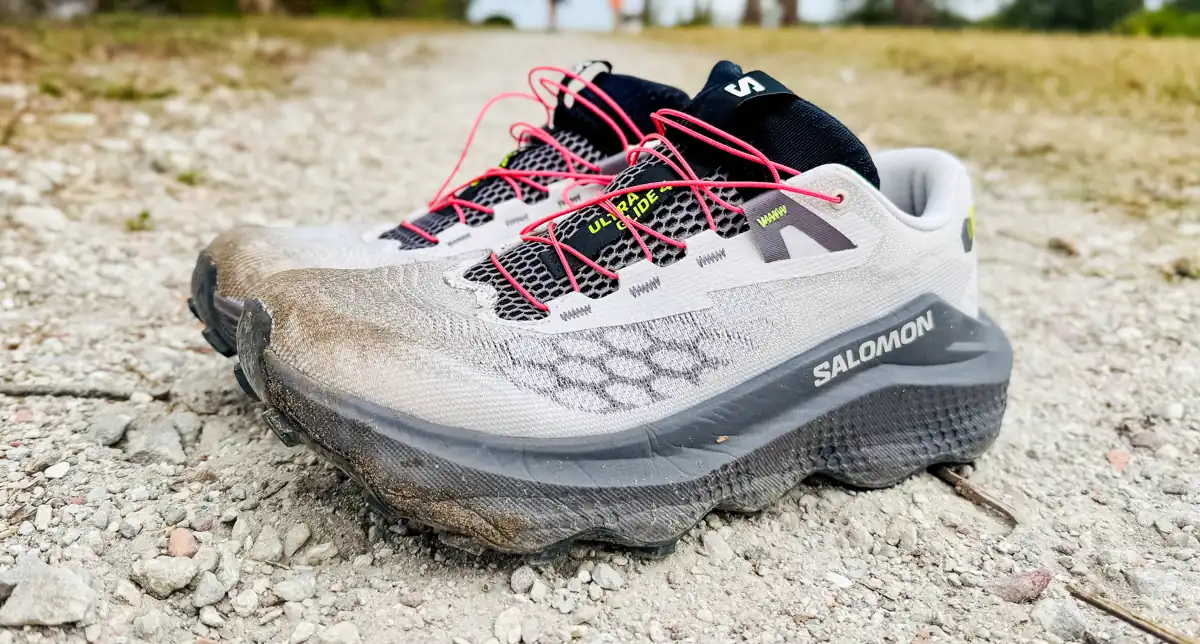
The engineered mesh upper feels airier and better suited to humid or damp days, and the lockdown is secure without feeling over-structured.
On long runs, it stays comfortable and holds shape well, and there are no hot spots from any overly stiff overlays.
 Alastair Dixon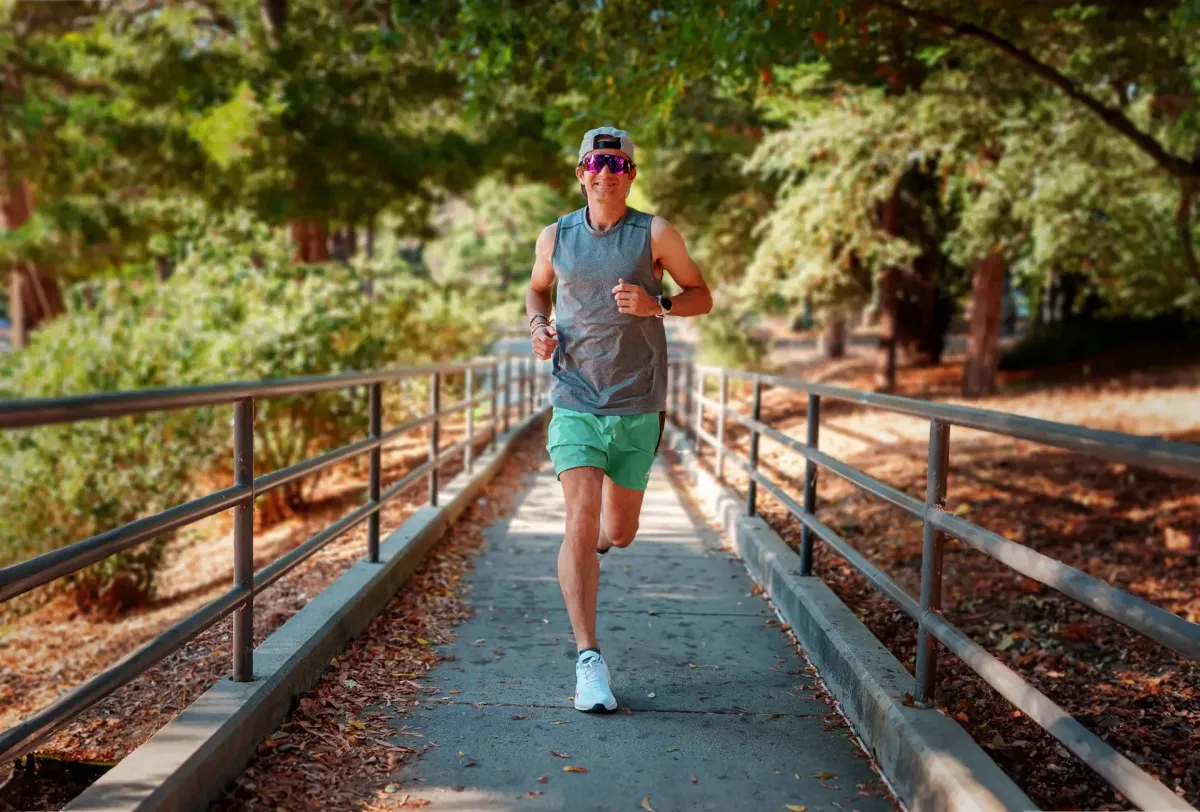
QuickLACE is fast and clean, but dial it before a long run
I really like the QuickLace system, for fast and accurate lacing adjustments, and there's even a little garage to stow the flappy laces away when running, which ensures they don't get snagged on the trails.
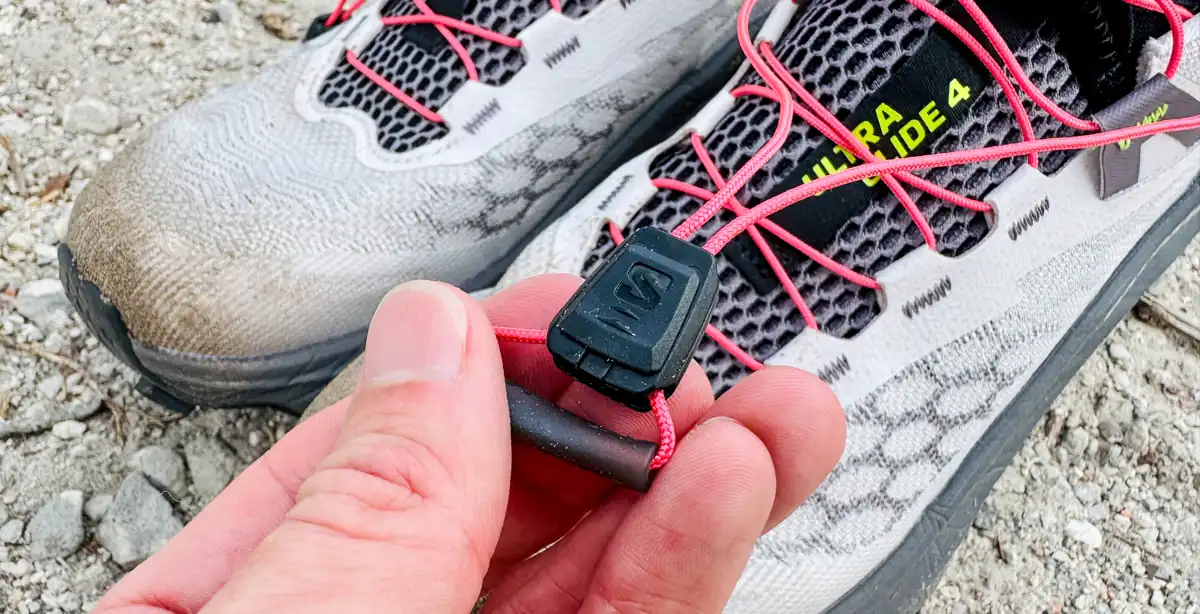
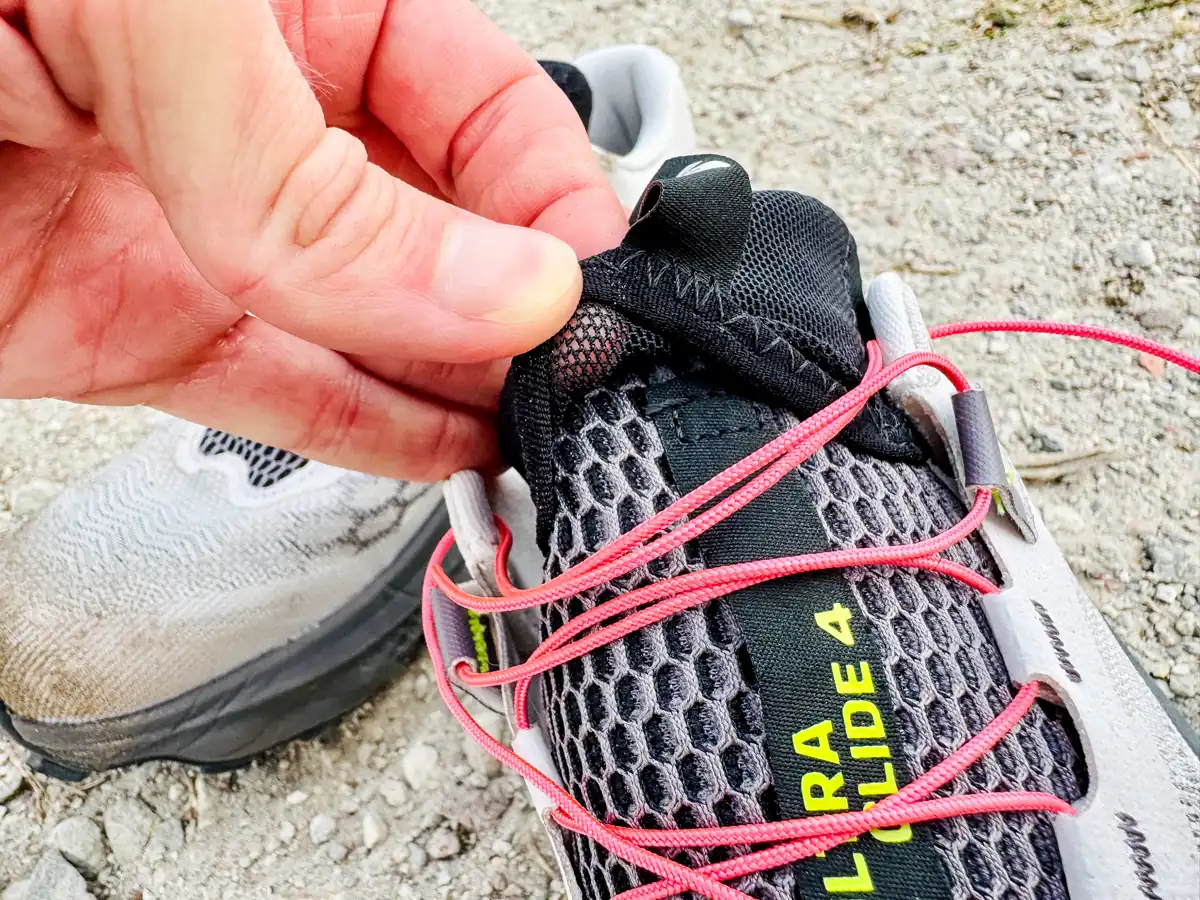
That said, I can see why some runners find it fiddly to get the tension perfect, especially the difference between “secure” and “slightly too tight” over long miles.
My move is simple: dial it in carefully before you start, and don’t treat it like something you’ll micro-adjust perfectly mid-run.
Once it’s set right, it disappears (in a good way).
My verdict
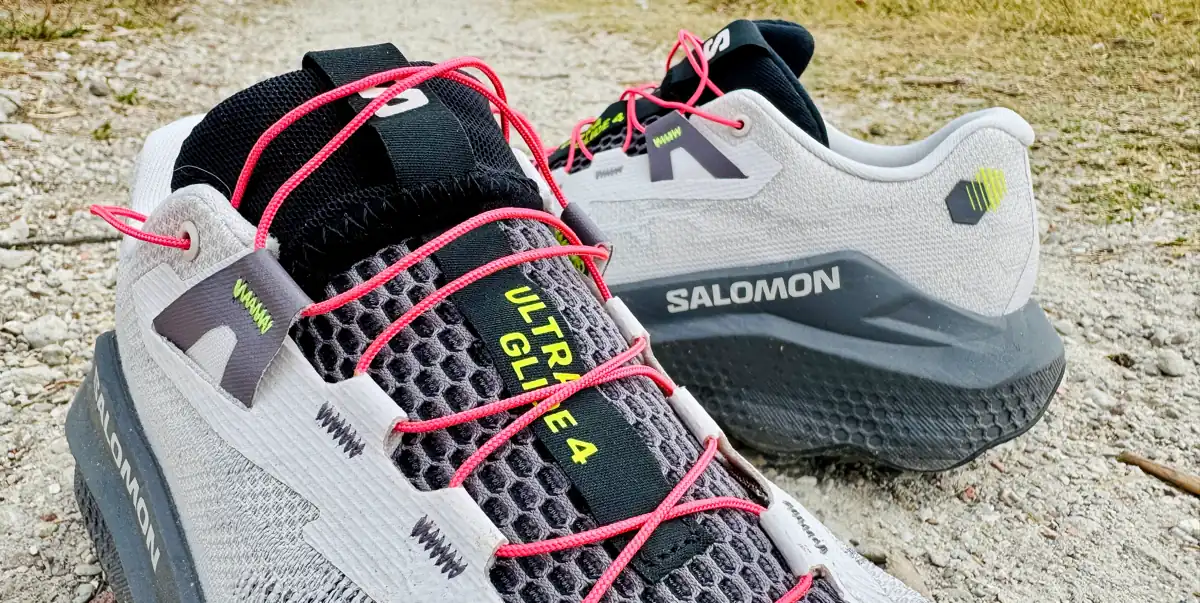
If you told me I could only own one cushioned trail shoe for the kind of trail running I like to do; a mixture of long miles, mixed terrain, technical singletrack at sensible speeds, the Ultra Glide 4 would be super high on the shortlist.
What I keep coming back to is how it blends comfort + capability without feeling clunky at a very reasonable price.
It reminds me a lot of the Saucony Xodus Ultra 4 (reviewed here) in that “cushioned yet capable capable, cruise-anywhere” lane.
I could interchange these two all-mountain trail shoes all year long and be a very happy trail runner.
And on value, for what it delivers: comfort, traction, protection, versatility; $160 is excellent value in the max-cushion trail category.
I recommend buying these at Salomon.com for the most competitive prices + often sales up to 40% off • S/PLUS loyalty rewards • Free ground shipping for S/PLUS members • Easy 45-day returns • New email sign-ups get 10% off
I’d recommend it for:
- Daily trail miles, long runs, trail races on mixed terrain
- Cruising technical trails when you still want protection and comfort
- Runners who want max cushion without feeling disconnected from the trail
- Fast hiking days where grip + comfort matter
I’d skip it if:
- You want maximum ground feel and precision on steep, sketchy switchbacks. A shoe like the Peregrine 16 is much better suited to this.


