
Nike ACG Pegasus Trail review: the best Peg Trail yet
The Peg Trail gets more foam, better grip, and a wider toe box under Nike's new ACG banner. Here's how it runs.

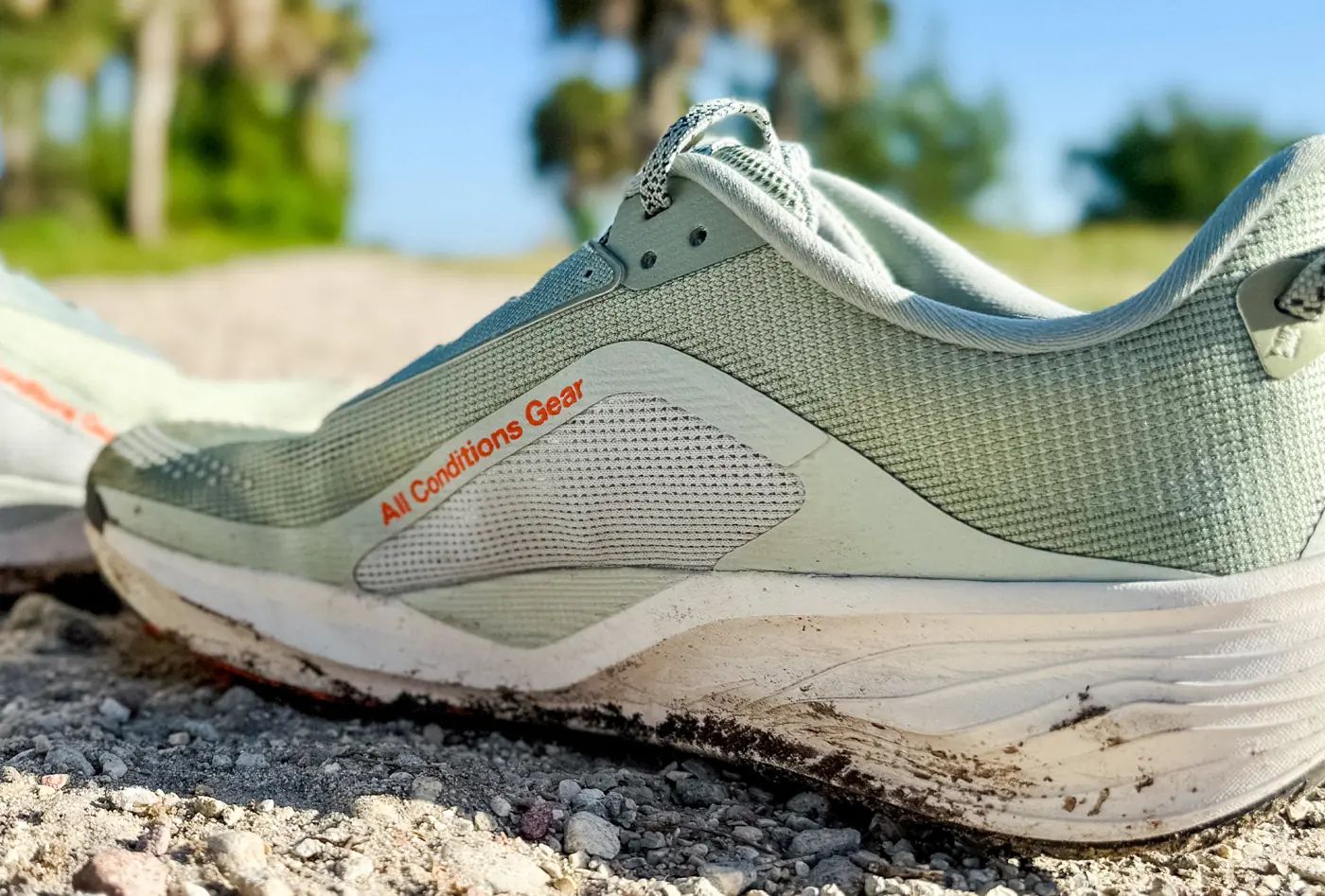
The Pegasus Trail has always been my go-to recommendation for runners who don't want to think too hard about which shoes to grab. You head out the door, hit the pavement, turn onto a fireroad, veer onto a dirt trail, and the shoe handles all of it without complaint.
The Pegasus Trail 5 was already one of my top three road-to-trail picks, and I raved about it at length. So when Nike relaunched the line under the revived ACG (All Conditions Gear) banner, with meaningful updates across the midsole, outsole, and fit, I was curious whether they'd actually improved things or just changed the name.
After putting in miles across mixed surfaces in my pair, I can confirm: this is the best version of the Pegasus Trail formula yet. The ACG label isn't cosmetic. The updates are real, and they matter.
If you purchase gear through links in this article, I may earn a small affiliate commission. For my training tools, exclusive content, free newsletter, and more perks become a member, (it's free!). -Alastair ✌🏼
Key specifications
- Price: $155 (nike.com) - 5 colorways to choose from
- Weight: 10.1 oz / 286 g (US men's size 9, single shoe, scale measured)
- Drop: 8 mm
- Stack height: 35 mm heel / 27 mm forefoot
- Upper: Lightweight engineered mesh with zonal breathability, quick-drain properties, durable overlays, rubber toe bumper and wrap, and a heel finger loop
- Midsole: ReactX foam (TPE-based) with increased volume over the Peg Trail 5
- Outsole: Nike Trail All Terrain Compound (ATC) 2.0 with hybrid lug pattern (~3.5–4 mm depth)
- Stability: Neutral, no rock plate
- Best for: Road-to-trail transition running, light to moderate singletrack, mixed-surface daily training
Running training plan generator — road & trail, 5K to 100M
Build a personalized running training plan around your actual race date, current mileage, and experience level. Road and trail, any distance.
 Alastair Dixon
Sizing and fit
These fit true to size in length when you go by US sizing.
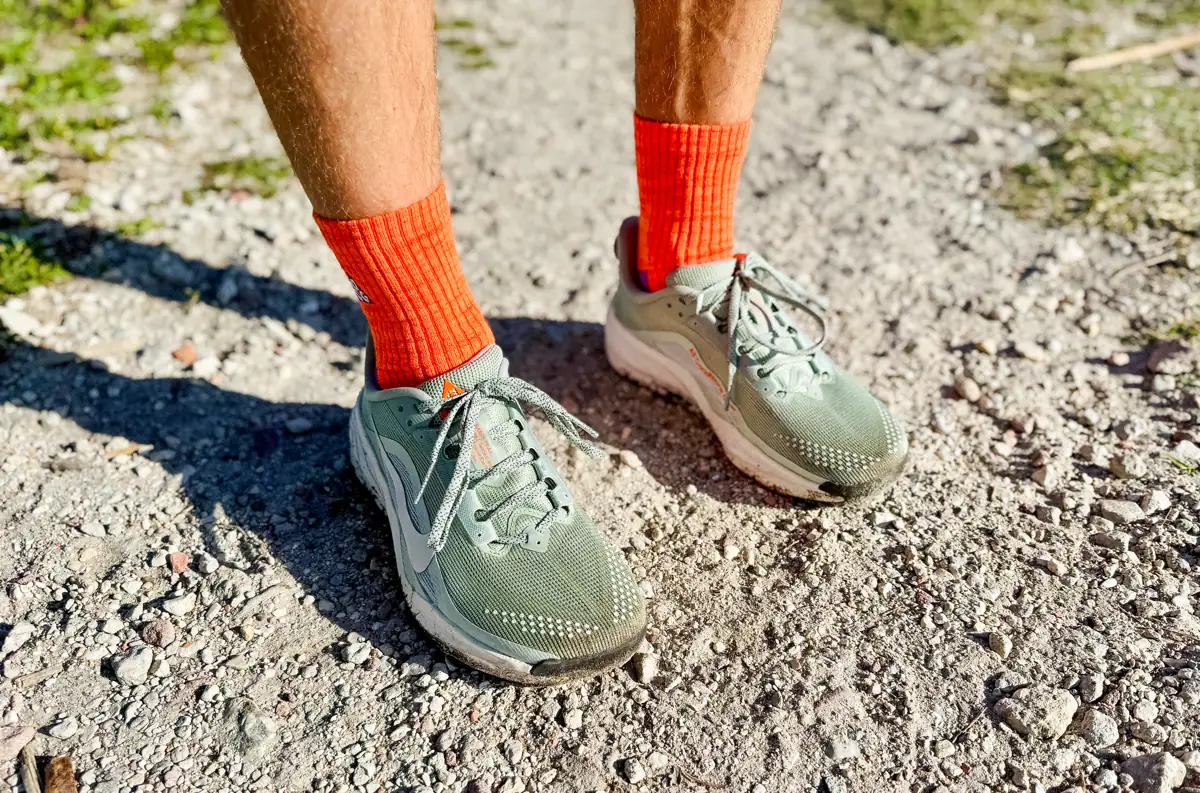
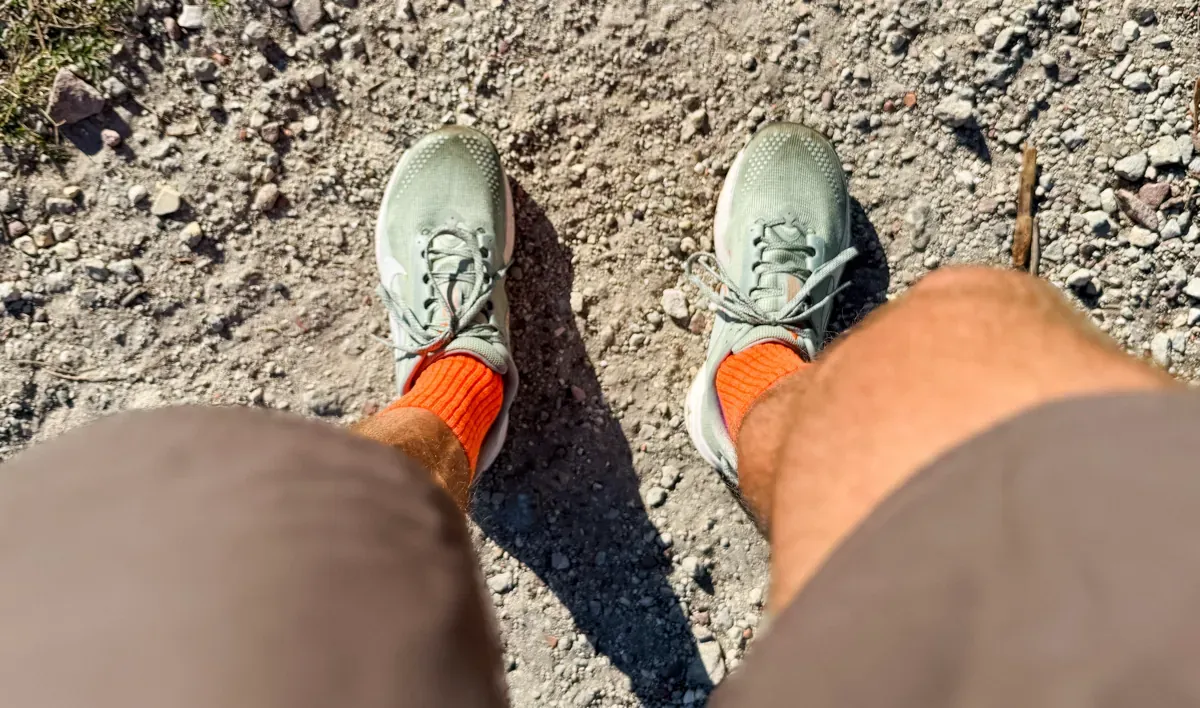
The medium-width (D) will suit most runners, but the bigger story here is the toe box: it's noticeably wider and taller than the Peg Trail 5's, which had a slightly snug forefoot that I'd flagged as a mild gripe.
The ACG version fixes that, there's now genuine room for toe splay and natural swelling on longer efforts without any sloppiness in the midfoot.
Heel lockdown is excellent from the first run, courtesy of the redesigned collar and eyelets that adapt with foot expansion rather than fighting it.
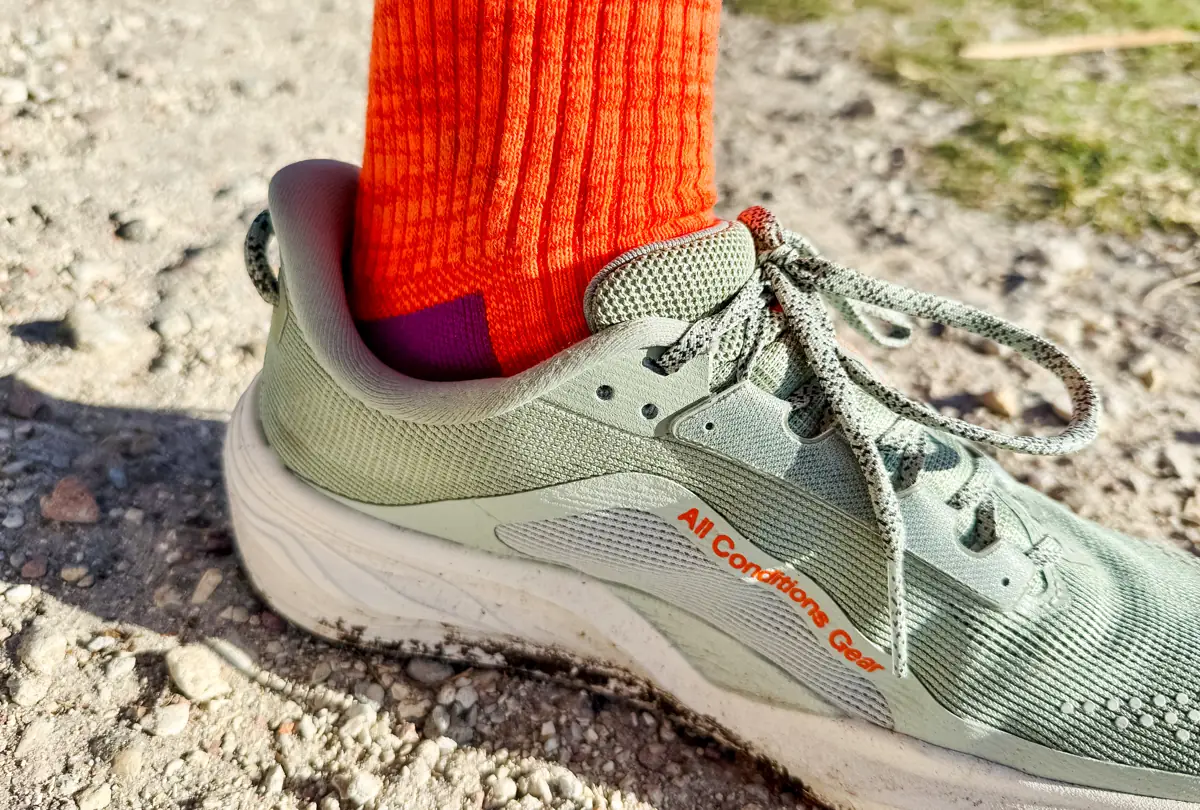
I had zero heel slip on uphills, technical sections, or fast descents. If you ran in the Peg Trail 5, go with your usual US size and expect a more comfortable forefoot experience.
Performance review
The ATC 2.0 outsole: already great, now better
I was a genuine fan of the original ATC rubber on the Peg Trail 5. It was sticky, versatile, and held its own on wet grass, damp trails, and slick rock in a way that surprised me for a hybrid outsole that didn't feature Vibram Megagrip.
The ATC 2.0 on the ACG version builds on that foundation with claimed improvements of 30% better wet traction and 25% improved abrasion resistance. From what I've run in so far, those numbers feel credible.
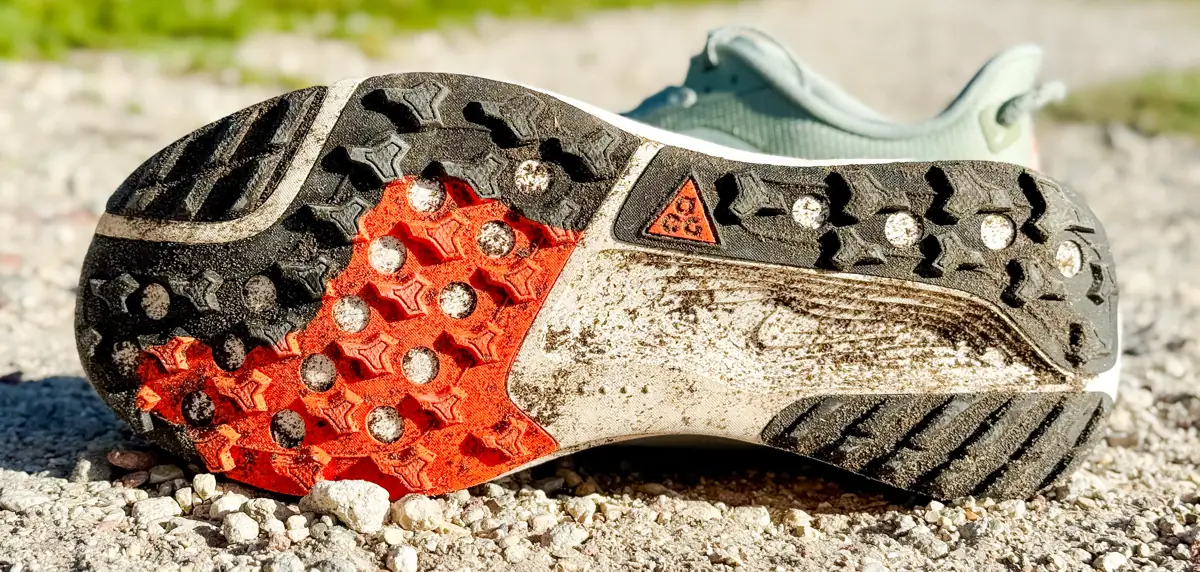
The hybrid chevron/hex lug pattern (~3.5 mm depth) is designed to do two things simultaneously: grip on dirt without clunking on asphalt. It succeeds at both.
On road sections and packed gravel, the shoe rolls smoothly and quietly. Move onto wet dirt, root-covered singletrack, or damp fireroads, and the lugs engage immediately with confident bite.
On climbing sections, traction is very good; sticky on wet grass, secure on slick rock, and reliable on loose gravel where shallower lugs tend to skate.
The one honest caveat is the same one I noted on the previous version: if you're regularly on very wet deep mud, the lug depth isn't aggressive enough to keep up. But for the mixed-surface runner this shoe is designed for, the ATC 2.0 is about as good as it gets at this price point.
Cushioned, grounded, and never mushy
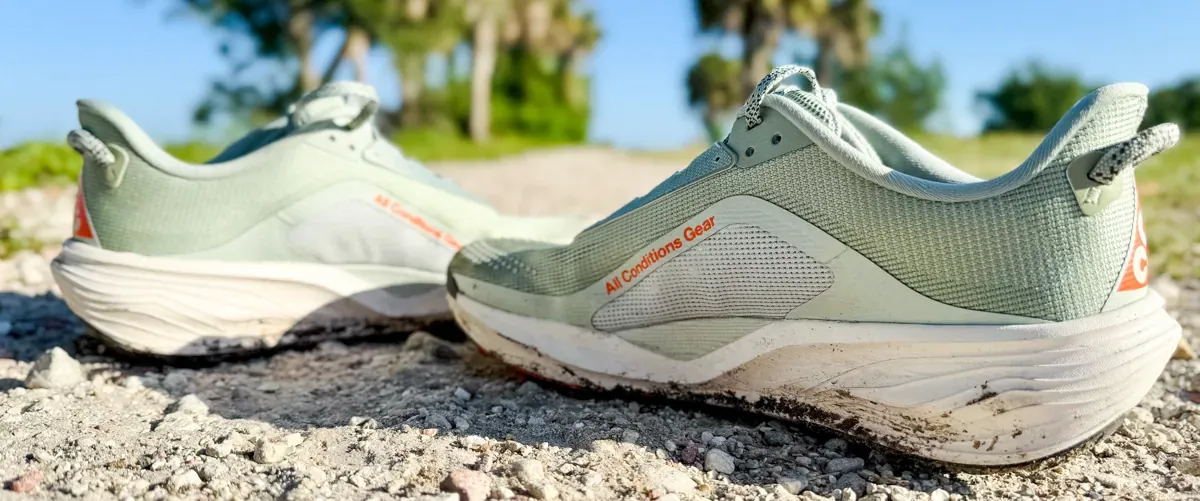
The ReactX midsole carries a little more foam volume than the Peg Trail 5, and the ride somewhat reflects that: protective, cushioned, and a little more forgiving underfoot on rocky and rooted terrain.
What I want to be clear about, though, is that this isn't a plush, sink-into-it midsole. The ReactX compound stays lively and springy with enough firmness that the shoe feels dialled in rather than soft.
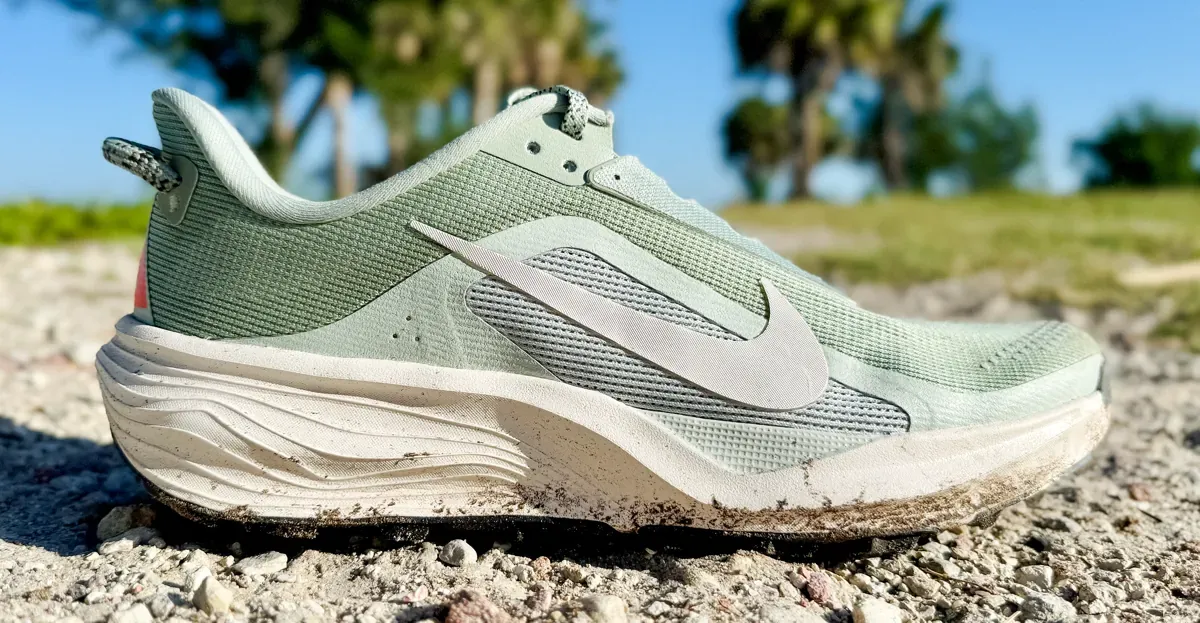
The lower 8mm drop (down from 9.5 mm on the PT5) contributes to a more grounded, connected ride, particularly on uphills where the reduced heel bias lets the forefoot load more naturally.
On flat surfaces at easy and moderate paces, the shoe is energetic without being twitchy. For pure speedwork or race-day snappiness, there are livelier options, but that's not what this shoe is for. As a daily mixed-surface trainer, the balance between protection and response is excellent.
The 12 Best Road-To-Trail Running Shoes, Right Now
All-terrain, transition running shoes are capable on a mixture of light trails, such as parks, forest trails and gravel tracks, as well as road surfaces
Alastair Dixon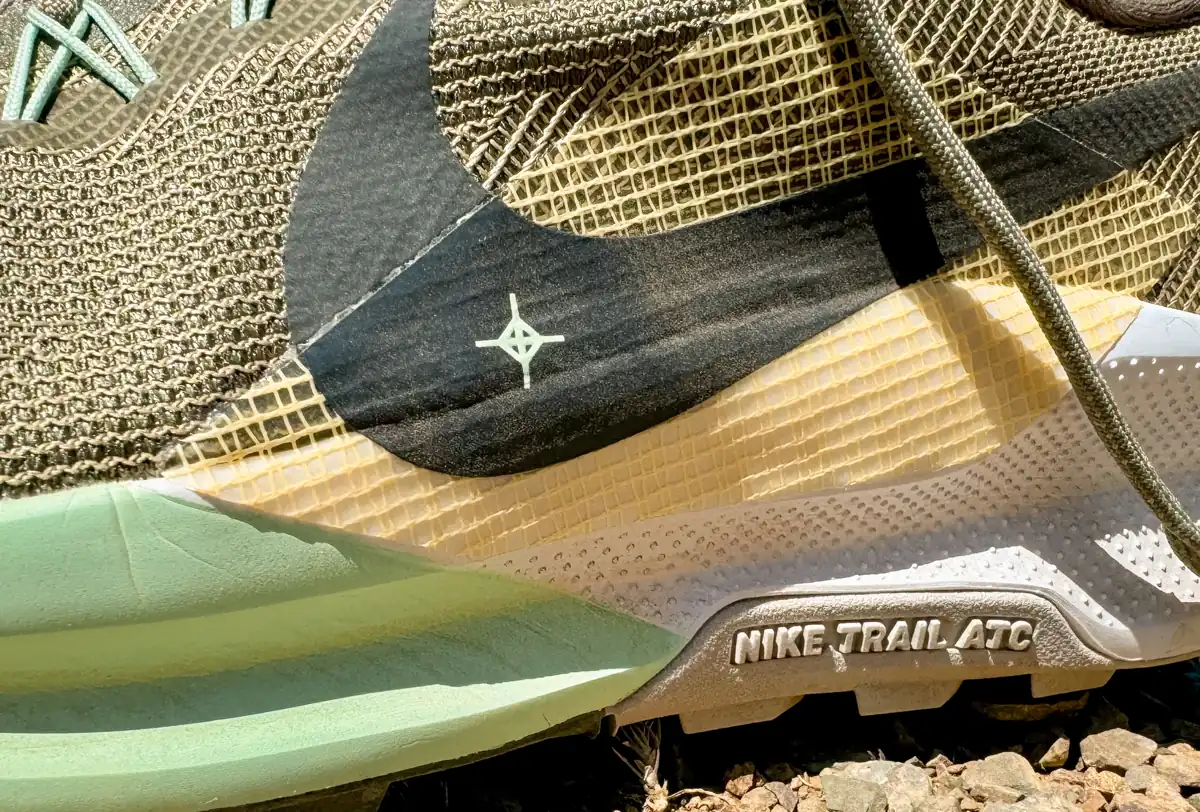
Heel lock, upper comfort, and all-conditions versatility
The upper is one of the more quietly impressive aspects of this shoe.
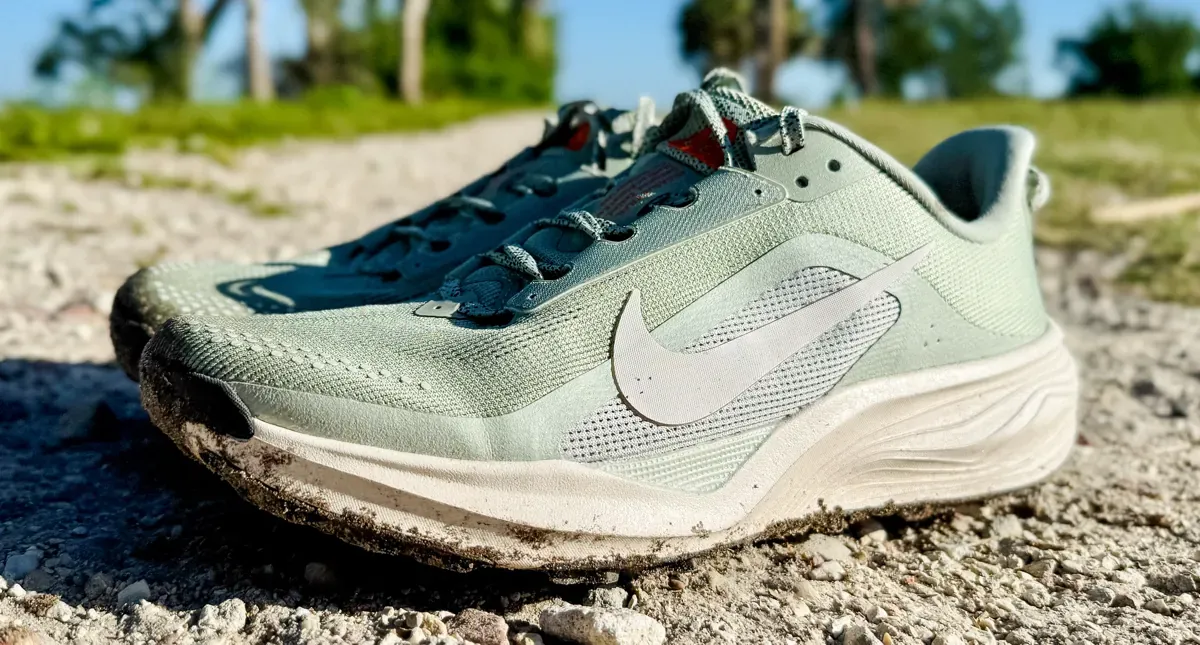
The zoned engineered mesh breathes well for a hybrid, handles water quickly, and dries noticeably fast after crossings or rain.
If you need the opposite of quick-drain, a shoe that keeps rain out entirely, my best waterproof running shoes guide covers when a membrane is the right call.
It's not the best breathability I've experienced in the heat, but the quick-drain design makes it a far more capable all-conditions shoe than the name alone might suggest.
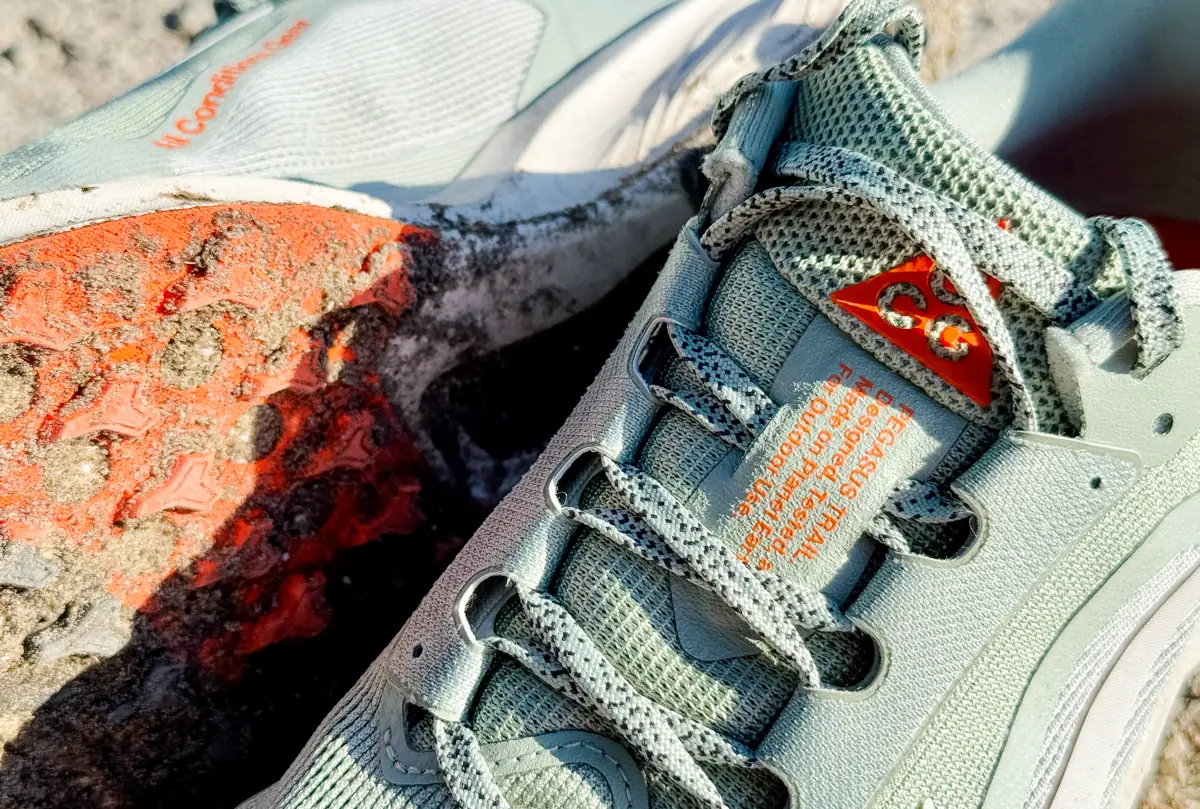
The new lacing system creates a snug, adaptive midfoot hold that tightens into the foot rather than across it but some may miss the flywire eyelets found in the previous version.
The redesigned soft collar grips the heel without pressure points, and the vertical heel loop is a practical touch that works well.
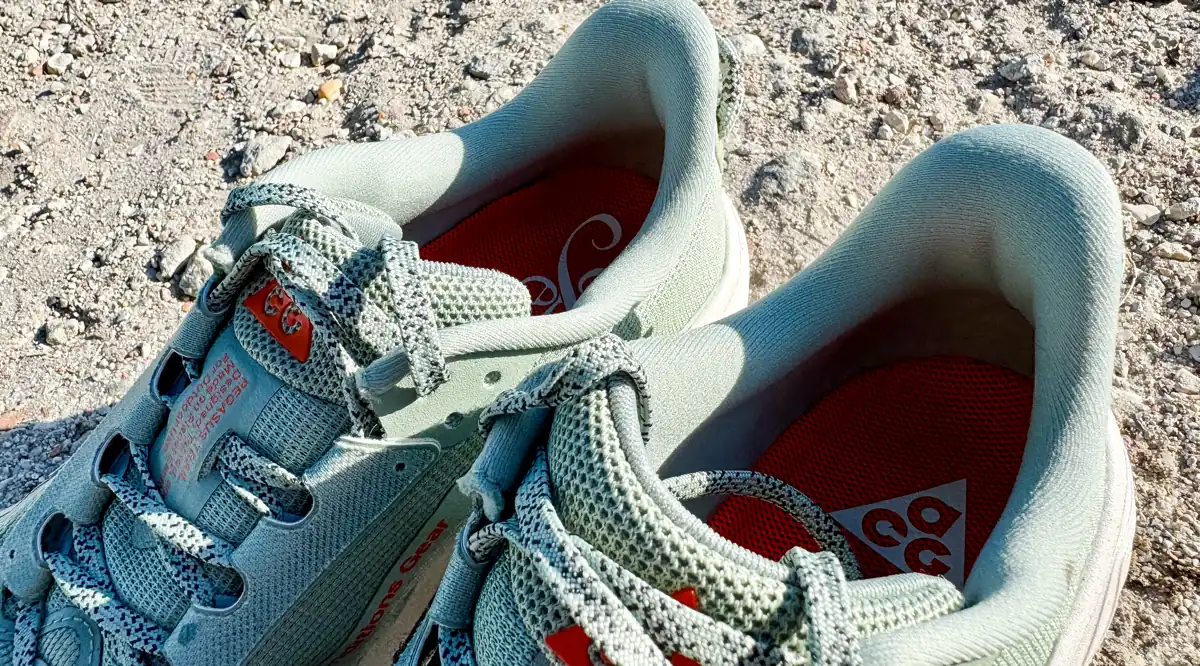
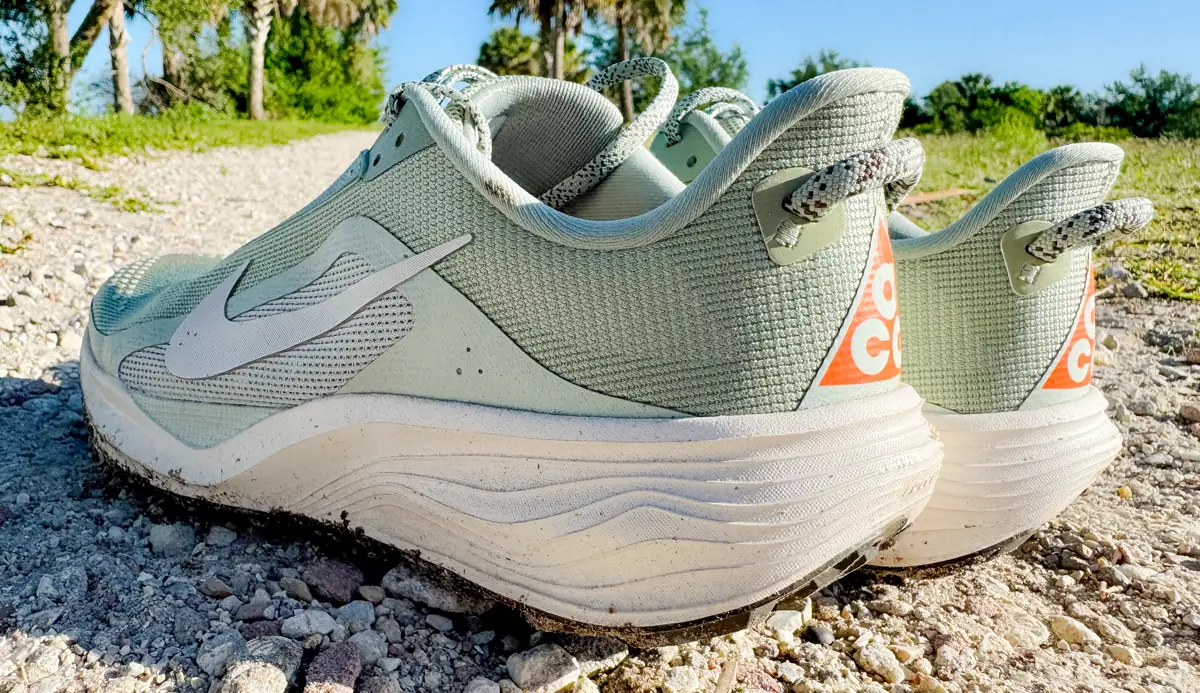
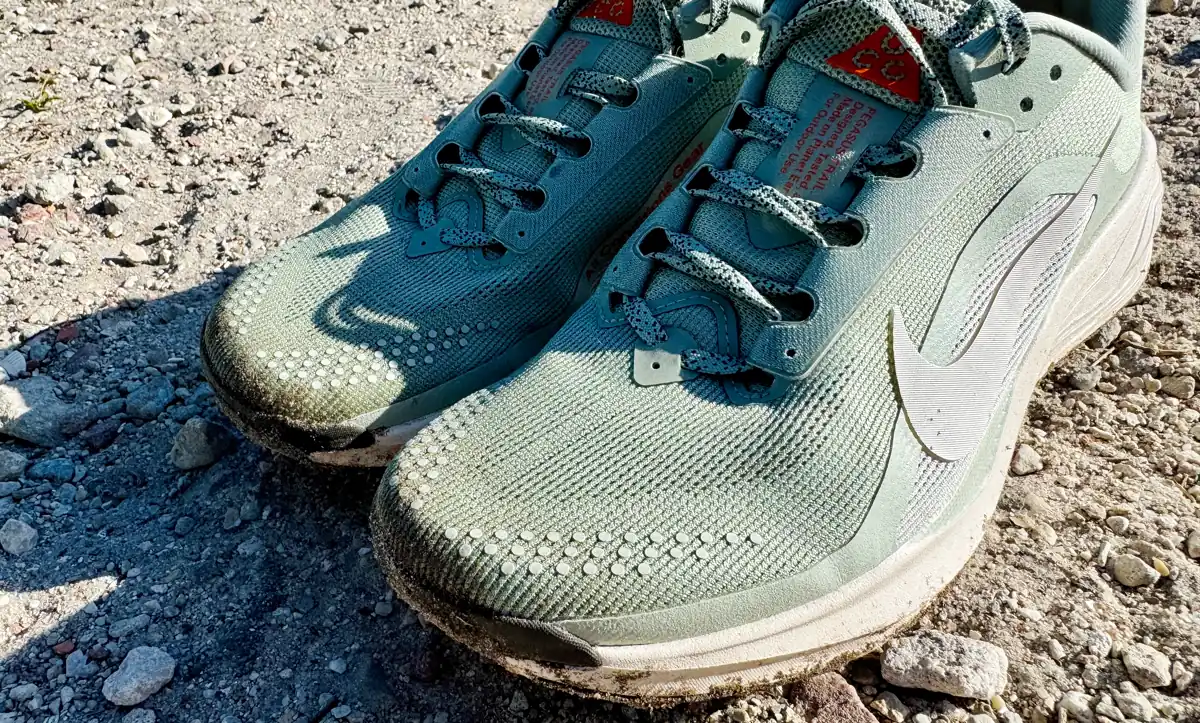
The rubber toe bumper wraps enough of the forefoot to provide protection against trail debris and rock strikes without adding noticeable bulk. After multiple runs in varied terrain, there's been no hot-spotting, no blistering, and no break-in period to speak of.
Stability and protection on technical terrain
With the wider forefoot base and increased stack volume, the ACG Peg Trail is oddly more stable underfoot than its predecessor. On high-frequency rocky sections, there's less lateral roll and a more planted feel.
Proprioception is still present, which I value on technical ground. This isn't a foam brick that disconnects you from the trail; it's a cushioned shoe that lets you feel what you're standing on without punishing you for it.
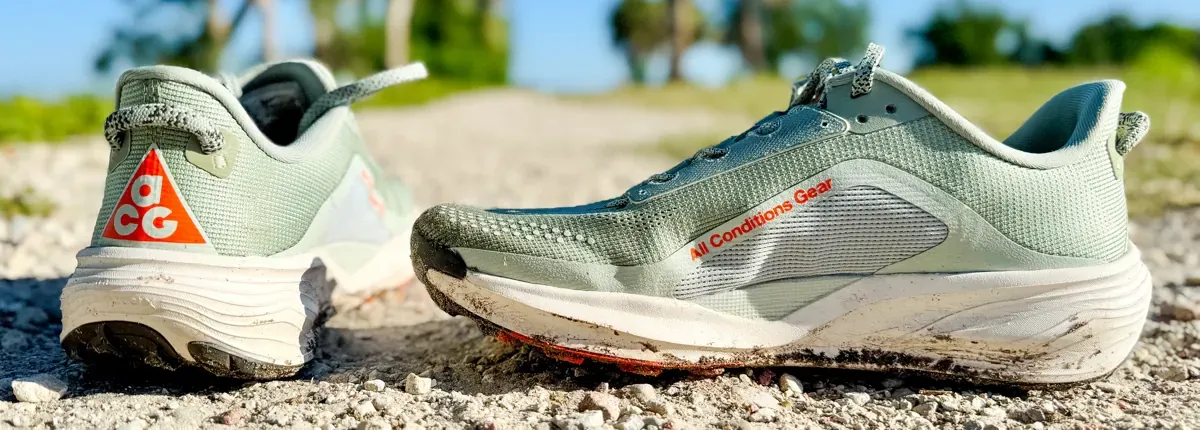
On moderate singletrack with roots, embedded rocks, and uneven camber, the shoe handles confidently. No rock plate, and I haven't felt like I needed one.
For very rugged or technical mountain trails with sustained sharp rock gardens, you'd want something more purpose-built. But the ACG Peg Trail sits well above average for a road-trail hybrid on all-terrain protective performance.
Descents: the most fun part
This is where the shoe earns its reputation. The combination of ATC 2.0 grip, reactive foam, and a more grounded ride geometry makes descents genuinely enjoyable.
The shoe is agile and bouncy, tracks the trail well, and inspires confidence at pace without feeling twitchy or unpredictable. On steeper drops where footing gets uncertain, the outsole bites and holds.
I've said it about the Peg Trail line before: the downhills are where this shoe earns its smile. The ACG version is no different.
My verdict
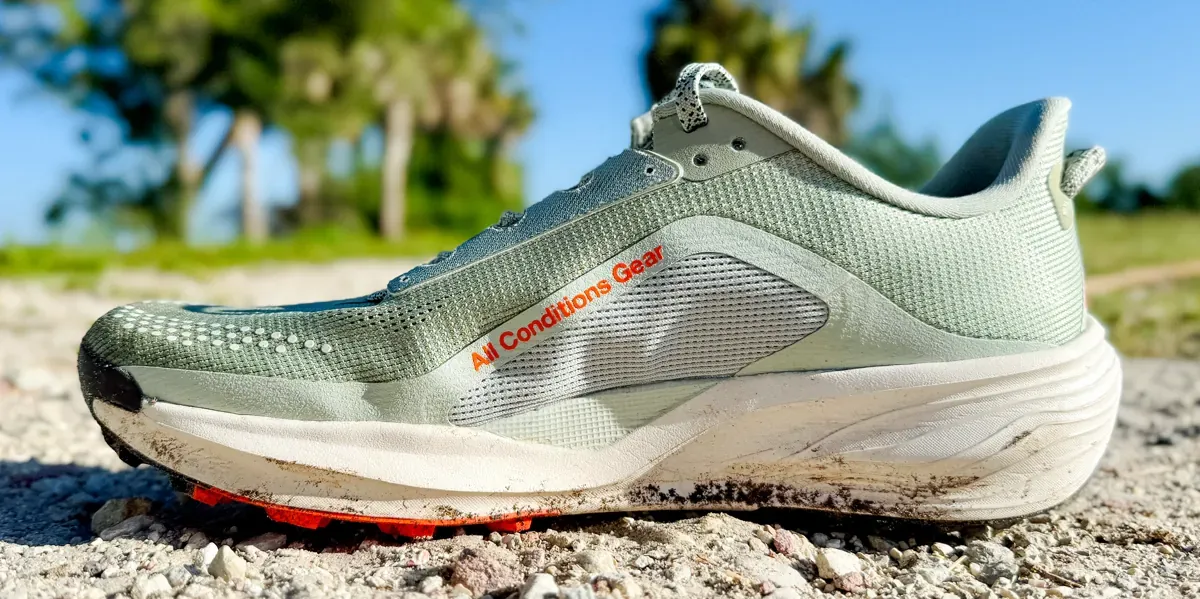
The Nike ACG Pegasus Trail is the Peg Trail 5 with everything turned up slightly: more foam volume, better grip, a more natural drop, and a wider toe box that fixes the one fit gripe I had with the previous model.
It doesn't reinvent the formula, and it doesn't need to.
At $155, it's $5 more than the PT5 (a standard increase across most running shoes this year) and earns every penny of the increase.
It's back in my top three road-to-trail shoes, and for anyone who runs the kind of mixed-surface routes where you want one versatile pair that handles everything from the pavement warm-up to the dirt miles back, this is one of the best options you'll find. If you're already a Peg Trail convert, upgrade without hesitation.
You'll love it if: you're a mixed-surface runner, door-to-trail commuter, all-terrain daily trainer, or someone who moves between roads and light-to-moderate singletrack without wanting to swap shoes mid-run.
Skip it if: you're a deep mud specialist, technical mountain racer, runner who prioritizes maximum breathability in extreme heat, or anyone after a fast-turnover speed shoe.
If you haven't already, signup for my free newsletter, and subscribe to my YouTube Channel for more content like this. -Alastair
Written by

Subscribe to new posts
reviews, training tips, and thoughtful stories for runners









Member discussion